
Blog

2026 Best 3 Phase Socket Types for Global Buyers?

Choosing the right 3 Phase Socket in 2026 requires more than comparing prices and pin counts. Global buyers must match the socket with voltage, frequency, current, phase configuration, and installation conditions. A product suitable for a European workshop may not fit a North American machine room. That assumption fails quickly.

This guide examines practical socket types used across industrial, commercial, and infrastructure projects. It considers IEC 60309 options, regional industrial connectors, four-pin and five-pin designs, grounding methods, and common ratings from 16A to 125A. Details matter. A blue or red housing can suggest voltage, but color alone should never determine a purchase. Buyers should check technical sheets, test reports, ingress protection ratings, temperature limits, and certification marks from recognized bodies.

Real-world use also changes the decision. A dusty factory may need IP67 protection, while a clean indoor panel room may require less protection. A construction site needs strong housings and secure locking. A food-processing facility may prioritize smooth surfaces and easy cleaning. Small errors can create expensive delays. Connector orientation, cable entry, phase sequence, and replacement availability deserve equal attention.

The strongest choice is not always the newest design. It is the most compatible, documented, and maintainable option. Supplier claims still need verification. Samples should be inspected before bulk orders. Local electrical professionals must confirm final suitability and installation requirements. This overview offers a reliable starting point, though regional standards and project conditions can differ. That limitation matters.
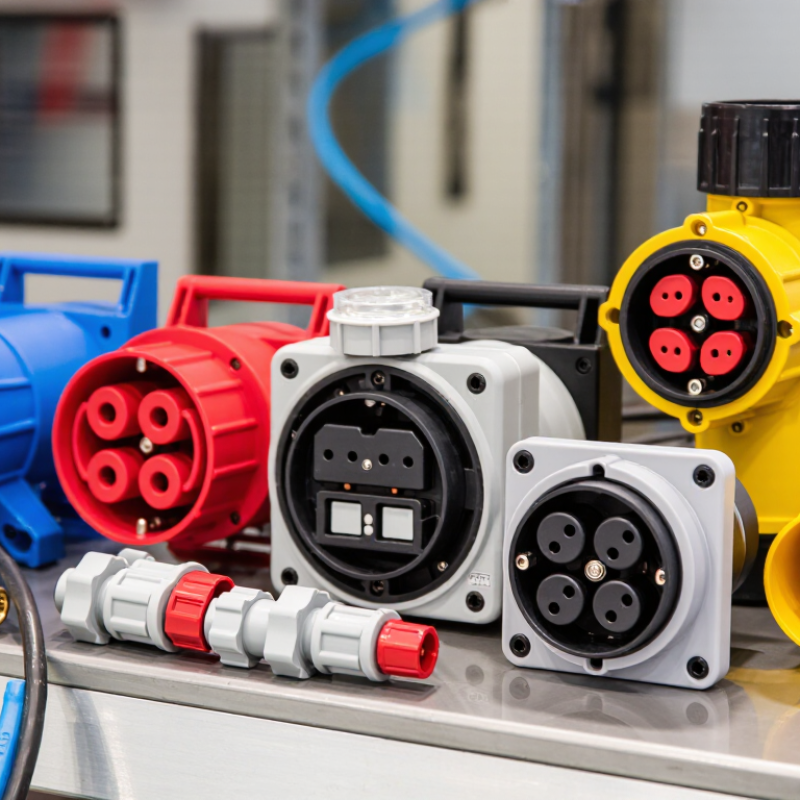
2026 Best 3 Phase Socket Types for Global Buyers?

What Is a Three-Phase Socket and How Does It Work?

A three-phase socket is a connection point for equipment that uses three alternating-current lines. These lines reach their voltage peaks 120 degrees apart. This timing creates a smoother rotating magnetic field, which helps motors start reliably and run with less vibration. The socket may include three phase contacts, an earth contact, and sometimes a neutral contact. Neutral is needed for certain mixed loads, but not every three-phase machine uses it.

Common socket designs differ by pin layout, current rating, voltage, and environmental protection. Industrial versions often use keyed positions to prevent incorrect connections. Some have locking rings or interlocks, so power cannot be connected while the plug is exposed. An IP rating also matters. A dusty workshop and a rain-exposed installation need different protection levels. Do not select a socket by pin count alone. That shortcut can cause expensive mistakes.

A qualified electrician should verify phase sequence, voltage, frequency, earthing, and conductor size before use. A phase-sequence tester can reveal reversed rotation, which may make a pump or compressor run backward. I have seen specifications that looked compatible until the neutral requirement was checked. That detail is easy to miss. Global buyers should compare the socket’s standard, enclosure material, temperature range, and certification requirements with the destination installation. The best choice is not always the highest-rated model; oversized parts can still create poor fit, difficult handling, and unnecessary cost.

How to Compare Global Three-Phase Socket Standards

2026 Best 3 Phase Socket Types for Global Buyers?

How to Compare Global Three-Phase Socket Standards

Choosing a three-phase socket starts with the machine, not the catalogue image. Check its rated voltage, frequency, current, phase arrangement, and grounding method. A workshop using 400 V at 50 Hz may require a different configuration from equipment designed for 208 V at 60 Hz. Confirm these values on the equipment nameplate and technical manual.

Pin count matters. Three-phase sockets commonly use three live pins with earth, or three live pins, neutral, and earth. A five-pin design does not automatically suit every installation. Compare the pin layout, keying position, contact size, and enclosure rating. Clock-position coding can prevent connection to an incompatible voltage. It is a small detail, but easy to miss.

Look for recognized testing documentation, clear markings, and materials suited to the environment. Outdoor equipment may need stronger ingress protection than a clean indoor panel. For dusty workshops, inspect the cover seal and cable gland, not only the socket face. I have seen buyers compare amperage while overlooking cable size and upstream protection. That approach is incomplete. Local electrical rules can also differ, even when the socket follows an international standard. Ask a qualified installer to verify the complete circuit, then test voltage, phase sequence, insulation, and earth continuity before operation. Mistakes happen. Careful comparison reduces them.

2026 Best 3-Phase Socket Types for Global Buyers

Comparison of typical line-to-line system voltages used with common three-phase industrial socket standards.

IEC 60309 and AS/NZS 3123 installations commonly use approximately 400 V at 50 Hz, while GB/T industrial socket systems commonly operate around 380 V at 50 Hz. NEMA 15-series three-phase configurations are commonly associated with 208 V systems at 60 Hz. Actual selection also depends on rated current, pole count, earthing arrangement, IP protection, frequency, and local electrical regulations.

The Best Three-Phase Socket Types for Different Applications

A socket is not selected by phase count alone. In 2026, global buyers should match the socket type to its working environment, load, and installation method.

Industrial pin-and-sleeve sockets suit workshops, construction equipment, and agricultural machinery. Their strong housings tolerate vibration, frequent connection, and rough handling. Choose a weather-resistant version for outdoor areas. Panel-mount sockets work better inside control cabinets, generators, and distribution boards. They save space and provide a stable connection for permanent equipment. For factories, switched and interlocked sockets add practical protection. Power can be isolated before the plug is removed.

Portable power systems often need angled or wall-mounted sockets. These designs reduce cable strain near floors and narrow machine bays. In wet or dusty locations, check the enclosure rating carefully. A high rating does not replace correct installation. Voltage, frequency, current rating, pole arrangement, and earthing must also match local requirements.

In field audits, I have seen buyers focus too heavily on amperage. That mistake matters. A socket may handle the load but still fail in heat, moisture, or repeated impact. I once overlooked cable flexibility during a machinery upgrade, creating unnecessary stress at the connection point. The specification was correct, but the application choice was weak. Review the socket, plug, cable, and protective device as one system. Local electrical rules should confirm the final selection.

Key Safety, Voltage, and Compatibility Requirements

Global buyers need more than a socket that physically fits. A three-phase outlet must match voltage, frequency, phase arrangement, and grounding design. The IEC 60309-2 standard uses pin positions and keying to reduce incorrect connections. Common industrial options include 3P+E and 3P+N+E configurations.

Voltage differences create serious compatibility risks. A 400 V, 50 Hz system is not automatically suitable for equipment rated at 480 V, 60 Hz. Motor speed, heating, and protection settings can change. The International Energy Agency’s Electricity 2024 report projects average global electricity demand growth of 3.4% annually from 2024 to 2026. This expansion increases demand for reliable industrial connections, but product selection still requires local verification. Select IP44 for sheltered areas and IP67 where water, dust, or washdown exposure is expected. Check the enclosure rating, not only the plug shape.

Tips: Confirm voltage, frequency, pole count, current rating, and cable size together. Ask for test certificates based on IEC 60309 and IEC 60364 requirements. Install suitable overcurrent protection and residual-current protection where required. A higher ampere rating is not always safer. It may hide an undersized cable or poorly matched equipment. That mistake is easy to miss. Use a qualified electrician to verify phase rotation, earth continuity, and measured voltage before energizing the socket. Manufacturer documentation matters, yet local inspection conditions can still expose gaps.

2026 Best 3 Phase Socket Types for Global Buyers? - Key Safety, Voltage, and Compatibility Requirements

Socket Type / Standard Common Pole Arrangement Typical Voltage and Frequency Common Current Ratings Typical Applications Key Compatibility Requirements Safety and Ingress Protection
IEC 60309 Red, 3P+E Three phase + protective earth; 4 pins Typically 380–415 V line-to-line, 50/60 Hz; red identification generally covers 380–480 V systems 16 A, 32 A, 63 A and 125 A are widely used Motors, pumps, compressors, construction equipment and industrial distribution Plug and socket must have the same pole count, rated current, voltage range, clock position and mounting style Use an equipment-grounding conductor; select IP44 for general indoor use or IP67 where temporary immersion or severe outdoor exposure is possible
IEC 60309 Red, 3P+N+E Three phase + neutral + protective earth; 5 pins Typically 230/400 V, 50 Hz, or 120/208 V, 60 Hz depending on the installation 16 A, 32 A, 63 A and 125 A are common ranges Mixed single-phase and three-phase loads, temporary power distribution and commercial equipment Neutral capacity must match the expected unbalanced and single-phase load; verify phase sequence and local wiring rules Use residual-current protection where required by the installation standard; do not use a 4-pin plug with a 5-pin outlet
IEC 60309 Blue, 3P+E Three phase + protective earth; 4 pins Typically 200–250 V line-to-line, 50/60 Hz; blue identification generally covers 200–250 V systems 16 A, 32 A and 63 A are commonly available Low-voltage three-phase machinery, specialized equipment and regional industrial installations Confirm the equipment voltage before purchase; color alone is not sufficient because clock position and pin arrangement also control mating Choose a current rating above the design load and provide overcurrent protection suitable for the cable and connected equipment
North American Locking 3P+Ground Three phase + ground; usually 4 pins Common configurations include 208–250 V or approximately 480 V, 60 Hz 20 A and 30 A are frequent; higher ratings are available in other configurations Data centers, entertainment systems, commercial machinery and fixed industrial equipment Exact configuration must match voltage, current, grounding method and face pattern; physically similar connectors are not automatically interchangeable Use only with wiring methods and protection approved for the destination country; verify enclosure rating and strain relief
North American Locking 3P+N+Ground Three phase + neutral + ground; usually 5 pins Commonly 120/208 V, 60 Hz in low-voltage distribution systems 20 A and 30 A are widely used Server rooms, stage power, portable distribution and mixed-voltage equipment Requires a matching neutral conductor; confirm whether the equipment needs a grounded neutral, isolated neutral or no neutral Neutral and protective ground must not be substituted for each other; installation must follow the applicable electrical code
Australian/New Zealand Industrial 3P+E Three phase + earth; commonly 4 pins Typically 400–415 V line-to-line, 50 Hz 10 A, 20 A, 32 A, 40 A, 50 A and 63 A ranges are commonly encountered Agricultural equipment, workshops, food-processing machinery and construction power Check local pin geometry, rated current, phase rotation and certification requirements; regional plugs may not mate with European products Outdoor installations generally require weather-resistant enclosures, suitable cable glands and correctly rated residual-current protection
High-Voltage Industrial 3P+E Three phase + protective earth; 4 pins in many industrial systems Often approximately 480–500 V, 50/60 Hz, depending on the regional system 16 A, 32 A, 63 A and 125 A variants are available in industrial connector families Heavy machinery, high-power heaters, large drives and industrial production lines Voltage category, insulation rating, creepage distance, short-circuit rating and phase sequence require verification by a qualified electrician Use touch-safe construction, lockout provisions and an enclosure suitable for the environment; never rely on an adapter to correct a voltage mismatch

Global Buyer Selection Checklist

Decision Dimension What to Confirm Before Ordering Recommended Practice
Voltage Line-to-line voltage, line-to-neutral voltage and frequency Match the socket rating to the actual supply and equipment nameplate; allow no substitution based only on plug shape or color
Poles and Neutral Whether the load needs earth only or earth plus neutral Use 4-pin arrangements for three phase plus earth and 5-pin arrangements when a neutral is required
Current Capacity Continuous load current, starting current and duty cycle Select the connector, cable, breaker and socket contacts as one coordinated system
Phase Sequence Required motor rotation and whether phase reversal is permitted Test phase rotation during commissioning and use an approved phase-changing method only when permitted
Environmental Rating Indoor, outdoor, dust, water jets, chemicals, impact and washdown exposure Choose an appropriate IP rating, temperature range, cable gland and mechanical protection
Installation Compliance Electrical code, certification, inspection and import requirements in the destination market Have final selection and installation verified by a qualified electrician familiar with local regulations

Note: Nominal voltage, frequency, current ratings and permitted connector configurations vary by country and installation method. Always verify the local supply characteristics, applicable electrical code and product certification before purchase or installation.

How Global Buyers Can Select the Right Socket Type

Choosing the right three-phase socket in 2026 requires more than matching voltage and current. Global buyers should compare pin configuration, grounding method, enclosure rating, and regional standards. A 3P+E socket suits equipment that does not need a neutral conductor. A 3P+N+E design supports both three-phase loads and single-phase auxiliary circuits. Fit matters.

Check the equipment nameplate before requesting quotations. A 32 A socket cannot safely replace a 63 A model, even when the housing looks similar. Confirm rated voltage, frequency, phase sequence, and pin clock position. Clock positions prevent incorrect connections between different voltage systems. For workshops, IP44 protection may handle indoor dust and occasional splashes. Outdoor machinery often needs IP67 protection against water and dirt. Do not guess.

Ask suppliers for test reports, material specifications, temperature limits, and installation instructions. Look for durable contacts, secure cable glands, and clear terminal markings. Regional certification requirements also matter, especially for imported machinery and temporary power systems. In practice, buyers often focus on price and overlook replacement availability. That decision can create delays months later. A practical selection sheet should record operating environment, cable size, mating plug type, and expected duty cycle. Leave room for review; site conditions sometimes differ from the original design. A socket that is technically correct may still be inconvenient, difficult to maintain, or poorly suited to local electricians.

By continuing to use the site, you agree to the use of cookies. more information

The cookie settings on this website are set to "allow cookies" to give you the best browsing experience possible. If you continue to use this website without changing your cookie settings or you click "Accept" below then you are consenting to this.

Close