
Blog
2026 Best Cargo Tie Down Straps for Trucks?
Choosing the 2026 best Cargo Tie Down Straps for trucks is not just a matter of buying the strongest-looking ratchet. The right Cargo Tie Down Straps must match the load, the truck’s anchor points, and the conditions of the trip. A short hardware-store run with lumber needs a different setup from a long haul carrying machinery. Ratings matter. So do strap width, hook fit, stitching, and ease of tightening. Small details can change how securely a load sits.
Cargo-securement specialist Alex Morgan puts the core decision this way: “Choose the strap for the load and anchor points—not the label alone.” This guide compares strap types, working load limits, ratchet designs, and practical features, while noting where product claims deserve a closer look. No single strap suits every truck. A high rating does not make a damaged strap dependable, either. Frayed webbing, bent hardware, or stitching that has started to pull are warning signs. Inspect before use. Check the manufacturer’s instructions and the truck’s anchor-point limits, then confirm the load stays stable after tightening. That extra check takes a moment. It can prevent a frustrating stop when shifting cargo loosens a setup. One caveat: product specifications and availability may change, so verify current details before buying.
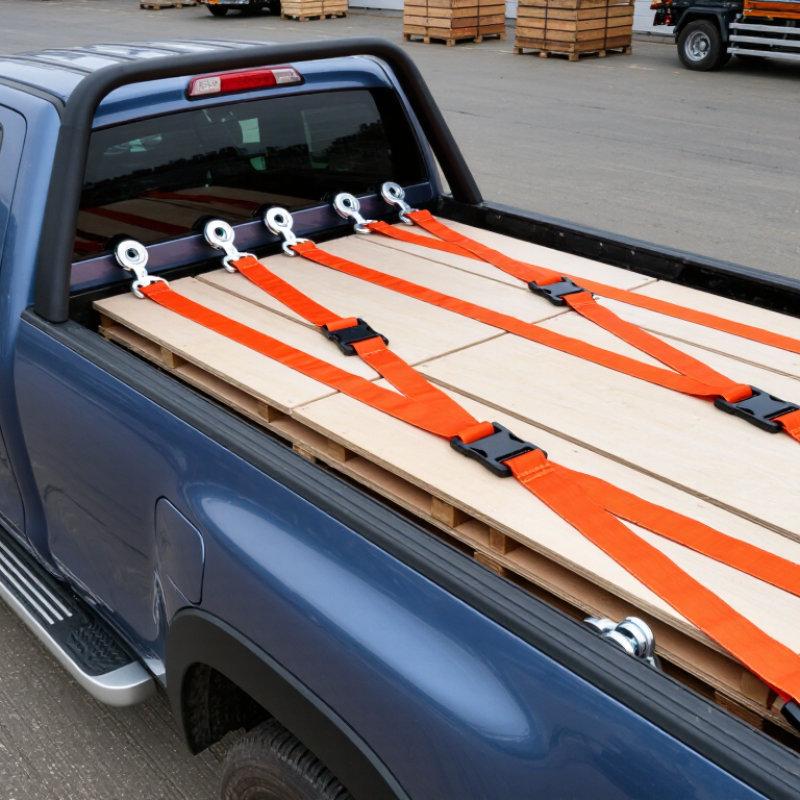
Table of Contents [Hide]
Types of Cargo Tie-Down Straps Used on Trucks
2026 Best Cargo Tie Down Straps for Trucks?
Truck cargo calls for different tie-down straps depending on its weight, shape, and surface. Ratchet straps use a winding mechanism to create firm tension, making them useful for heavy equipment, lumber, and bulky loads. They offer strong control, but tightening too hard can crush packaging or damage delicate edges. Use edge protectors where webbing touches sharp corners.
Cam buckle straps tighten by pulling the webbing through a buckle. They are often easier to adjust for lighter cargo, such as storage bins or folded furniture, where excessive force could cause damage. They are not a substitute for checking the strap’s rated capacity. Read the label, and match the strap to the load and anchor points. A quick tug is not a capacity test.
Loop straps and axle straps help connect cargo or vehicles to suitable anchor points without placing a hook directly against a painted or vulnerable surface. Choose a strap length that avoids awkward knots and keeps excess webbing secured. Before each trip, check for cuts, fraying, damaged stitching, or a buckle that sticks. Small flaws matter. Recheck tension after the load settles, especially when the cargo shifts or compresses. It is easy to assume tight means secure; it does not. The restraint setup matters just as much.
2026 Best Cargo Tie-Down Straps for Trucks? — Types of Cargo Tie-Down Straps Used on Trucks
| Strap Type | How It Secures Cargo | Common Truck Applications | Key Advantages | Things to Check | Best Suited For |
|---|---|---|---|---|---|
| Ratchet strap | A ratcheting handle tightens webbing around or over the load; hooks or fittings connect the strap to anchor points. | Flatbed loads, equipment, building materials, and other cargo that needs firm tension. | Allows controlled tightening and can apply more tension than a hand-pulled cam buckle strap. | Check the working load limit (WLL) on the label, webbing condition, ratchet operation, hooks, and anchor points. Avoid excessive tension that could damage cargo. | Loads that need strong, adjustable tension and have suitable securement points. |
| Cam buckle strap | Webbing is pulled through a spring-loaded cam buckle, which grips the strap when tension is applied. | Pickup-bed cargo, lighter equipment, furniture, and items that may be crushed by high tension. | Quick to release and generally easier to tension by hand; it is less likely than a ratchet to over-compress delicate cargo. | Verify the labeled WLL and inspect the buckle and webbing. Do not assume all cam buckle straps have the same capacity. | Light-to-moderate loads and cargo requiring controlled, moderate tension. |
| Winch strap | A wide webbing strap is tensioned with a fixed winch mounted on a truck or trailer. | Flatbed and open-deck freight, including palletized or bundled cargo. | Works with a fixed winch system and can be tensioned along the side of a deck. | Match the strap and end fitting to the winch and anchor system. Inspect the full length of webbing and follow the rated WLL shown on the label. | Commercial open-deck setups equipped with compatible winches. |
| E-track strap | End fittings engage slots in an E-track rail; a ratchet or cam buckle tensions the webbing. | Enclosed trailers, cargo vans, and truck bodies fitted with compatible E-track rails. | Anchor locations can be adjusted along a properly installed track. | Confirm that the end fittings match the rail and that the rail and its installation are rated for the intended load. The strap rating alone does not establish system capacity. | Loads carried inside vehicles equipped with E-track. |
| Over-the-wheel tie-down | A wheel bonnet or basket wraps around a tire and connects to separate straps or anchor points. | Cars and light vehicles transported on trailers or flatbeds. | Secures a vehicle at its wheels without relying solely on straps across the body. | Use a system designed for the wheel and tire size. Check each component’s WLL, attachment points, and the vehicle maker’s guidance. | Vehicle transport where wheel-based securement is appropriate. |
| Axle strap | A short protective loop or strap connects around a suitable axle or other approved vehicle attachment point to a tie-down strap. | Vehicle and equipment transport when an appropriate attachment point is available. | Can provide a connection point while helping keep a hook away from a component it could damage. | Use only on a suitable, structurally sound attachment point. Avoid brake lines, wiring, and components not intended to bear load; inspect the complete assembly. | Connecting a vehicle or machine to a rated tie-down system. |
Safe-use note: Choose straps by their labeled working load limit (WLL), not by appearance or webbing width alone. Under U.S. FMCSA cargo-securement rules, the aggregate WLL of the tiedowns used to secure an article against movement must be at least one-half the weight of that article. The required number and arrangement of tiedowns also depend on cargo length, weight, and configuration. Follow applicable regulations and inspect straps before each use; remove damaged or unreadable-label straps from service.