
Choosing a Vaping Electronic Cigarette can feel confusing when product names overlap and specifications vary. This guide explains the main types in 2026: cigalikes, pod systems, vape pens, and box-style devices. It focuses on their design, everyday handling, and practical differences—not on promising health benefits. Details matter.
Tobacco researcher Dr. Neal Benowitz has studied nicotine delivery and the health effects of tobacco products. A concise paraphrase of his research is: “Vaping avoids tobacco combustion, but it is not risk-free.” This is a paraphrase, not a verbatim quotation. E-cigarettes can contain nicotine, which is addictive, and their aerosol may expose users to harmful substances. They are not for young people or people who do not already use nicotine.
The sections ahead compare familiar features, such as a small, pocket-sized pod and a larger device with adjustable settings. They also explain why battery life, refill methods, and maintenance can affect daily use. A printed label or sleek casing cannot tell the whole story. Product quality and information can differ, so check manufacturer details and consult qualified health guidance when needed. This overview is educational, not medical advice. It also has limits: device categories change, and a type alone cannot establish safety.
E-cigarettes, or electronic cigarettes, are battery-powered devices that heat a liquid into an inhalable aerosol. They are not simply water-vapor devices. The CDC’s 2023 National Health Interview Survey estimated that 4.5% of U.S. adults currently used e-cigarettes—about one in 22. “Current use” includes using every day or some days, so occasional use is counted too. That detail matters. Someone who vapes only at a weekend gathering may still be included in the estimate.
Common formats include disposable devices, rechargeable pod systems, and refillable tank devices. They differ in upkeep and user control, but all heat liquid to create aerosol. The CDC’s e-cigarette guidance notes that aerosol can contain nicotine and other potentially harmful substances. The National Academies’ report on e-cigarettes also reviews evidence about aerosol exposure and health effects. Device type alone cannot show how much a person inhales. Checking ingredient and nicotine information can offer useful context, but it cannot make inhalation risk-free. The 4.5% figure describes a population, not safety or a recommendation to vape. I would be cautious about treating one percentage as the whole picture: survey wording, age, and frequency shape what it can tell us.
An electronic cigarette works through four connected parts: a battery, coil, e-liquid, and aerosol. The battery powers the device. Its condition matters.
Stop using a device with a damaged casing, unusual heat, or a swollen battery, and follow its safety instructions.
The coil is a small heating element, often wrapped around or placed near absorbent material. When powered, it warms the e-liquid. That liquid may contain nicotine, flavorings, and other ingredients; its exact makeup varies.
The resulting aerosol is not simply water vapor. It can contain substances that may irritate the lungs, and nicotine can be addictive. The details matter.
Tips: Keep devices away from children and pets. Use only the charger and liquid specified for the device. Avoid overheating or using a dry, burnt-tasting coil. If the taste changes, stop and check the device rather than continuing. Some details are easy to overlook. Regular inspection helps, but it cannot make aerosol risk-free.
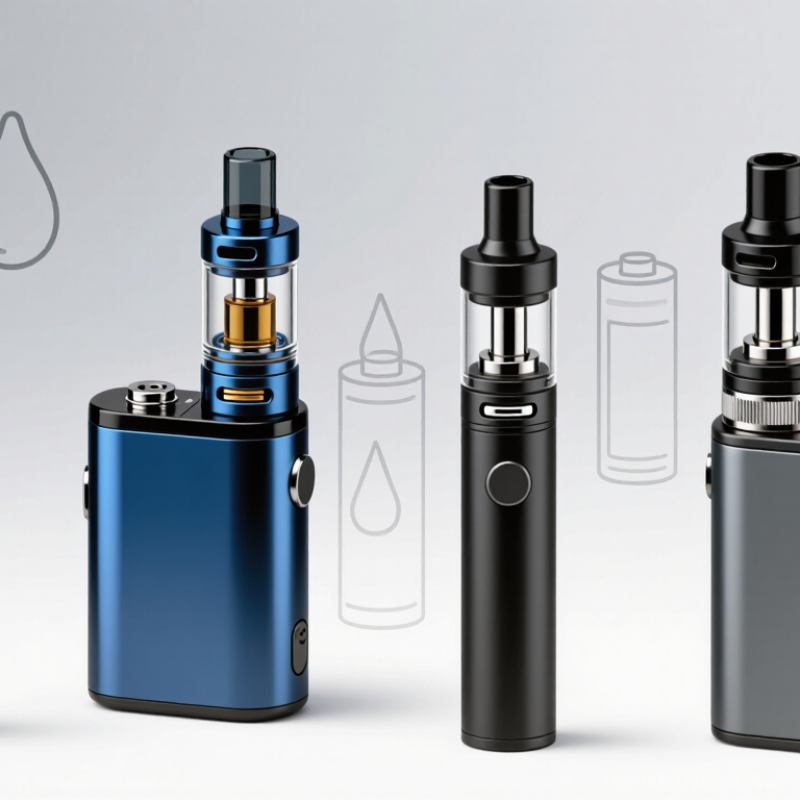
Disposables are sealed, ready-to-use units; pods pair a small rechargeable battery with a replaceable or refillable cartridge. Vape pens are usually slim, rechargeable devices with a built-in or attached tank. Box mods are larger and offer more adjustable settings, but their extra controls can make operation less straightforward. Not interchangeable. Shape alone does not tell you how a device works.
The CDC’s 2024 National Youth Tobacco Survey reported that 55.6% of current youth e-cigarette users used disposable devices. This is a youth-use snapshot, not an adult sales ranking or a recommendation. It shows why device categories matter, but it cannot tell us which type suits an individual. Battery design, liquid capacity, and maintenance needs differ. Box mods may require more attention; compact pods can be easier to carry, yet still need careful handling.
Tips: Read the device instructions, check for damage, and use only the specified charger. Keep devices and liquids away from children and pets. If you are comparing types, look beyond size: consider upkeep, battery safety, and whether the device is legally available where you live. The distinctions are useful, but they do not make any device risk-free.
| Device type | Typical design | Liquid and coil setup | Power and controls | Maintenance | Practical considerations |
|---|---|---|---|---|---|
| Disposable e-cigarette | Usually a compact, prefilled device with an integrated battery and airflow-activated or button-activated operation. | Liquid and heating element are generally built in and not intended for user replacement or refilling. | Typically has few or no adjustable settings. Some models have rechargeable batteries; others are not rechargeable. | Little routine upkeep, but the whole unit must be handled as electronic waste when spent. | Convenient format, but battery and device disposal matter. Product capacity, ingredients, and local rules vary. |
| Pod system | Small battery device used with a removable pod; pods may be prefilled or designed to be refilled, depending on the system. | The pod commonly contains the liquid reservoir and coil, or a replaceable coil. Compatibility is system-specific. | Often uses automatic power adjustment or limited settings; some models provide adjustable airflow or output. | Requires charging and periodic pod or coil replacement. Refillable pods also need careful filling and leak checks. | Compact and relatively simple, though pod availability and replacement costs can depend on the device format. |
| Vape pen | A slim, tube-shaped rechargeable device, commonly paired with a refillable tank or cartridge. | Many versions use replaceable coils and refillable tanks; cartridge-based versions may use a different replacement format. | Usually offers simpler controls than a box mod, such as a power button and, on some models, a small number of output settings. | Needs charging, liquid refills where applicable, and coil or cartridge replacement. Tanks should be kept clean and checked for leaks. | A middle ground in size and complexity; battery capacity, tank design, and compatible parts differ by model. |
| Box mod | A larger, box-shaped device, commonly used with a separate tank or atomizer. | Typically supports refillable tanks and replaceable coils; some atomizers allow user-built coils, which require specialized knowledge. | Often provides adjustable wattage and other settings. Battery configuration varies, and some devices use removable cells while others have built-in batteries. | More involved care may include charging or correctly handling batteries, filling the tank, changing coils, and checking device settings. | Offers more customization but is generally larger and more complex. Use only compatible components and follow the manufacturer’s instructions. |
Note: Device features and legal requirements vary by product and location. E-cigarettes can contain nicotine, which is addictive; they are not risk-free. Keep devices and e-liquids away from children and pets, and dispose of batteries and electronic devices through appropriate collection programs.
Open systems use a refillable tank, so users add liquid themselves and can select from compatible options. A small bottle, a paper towel, and a steady hand help prevent drips around the fill port. Some tanks need occasional coil replacement, and worn seals can cause leaks. Less tinkering? Not always.
Closed systems use prefilled pods or cartridges. Replacing one is usually simpler than filling a tank, though availability and ongoing cost can vary. Power is often fixed, so the device controls output with little adjustment. Open devices may offer adjustable power, but higher settings can use liquid faster and may not suit every coil. More control means more to learn.
Maintenance differs in small, practical ways. With an open tank, check the coil, seals, and mouthpiece, and wipe the contacts if liquid collects. With a closed pod, inspect the connection and replace the pod when performance declines. Neither design is maintenance-free. Details vary by device, so follow its instructions rather than guessing. For adults who already vape, nicotine content and device compatibility matter; nicotine can cause dependence, and vaping is not risk-free. The trade-offs are easy to underestimate.
2026 Best Vaping Electronic Cigarette Types Explained
Device labels can sound reassuring, but an FDA marketing authorization applies to specific products, not every device in a category. It does not mean a product is safe, FDA-approved as a medicine, or suitable for everyone. Check the exact product name and authorization details in FDA’s public records. A similar-looking device may not have the same status. That distinction is easy to miss.
Public health evidence also matters. E-cigarette aerosol can contain harmful substances, and nicotine can cause dependence. Health effects may vary by product and pattern of use, while some long-term risks remain uncertain. Adults who smoke and are considering switching should discuss evidence-based options with a qualified health professional. People who do not use tobacco, young people, and pregnant people should not start vaping. I wouldn’t treat a sleek screen or a “reduced exposure” claim as proof of reduced harm.
Tips: Read the exact authorization wording, not just the device’s advertised claims. Check whether evidence comes from independent public health sources, and note who funded any study. Keep packaging and instructions available, especially when checking ingredients or nicotine information. If a claim feels vague, pause and verify it.
Current e-cigarette use among U.S. students declined from 2023 to 2024 in all three groups. “Current use” means using an e-cigarette on at least one day in the past 30 days. These figures describe use, not specific device types or product safety. FDA marketing authorization applies to specific products; it does not mean that every device in a category is authorized or risk-free.
Source: U.S. Centers for Disease Control and Prevention and FDA, National Youth Tobacco Survey, 2023 and 2024. Percentages are rounded.
By continuing to use the site, you agree to the use of cookies. more information
The cookie settings on this website are set to "allow cookies" to give you the best browsing experience possible. If you continue to use this website without changing your cookie settings or you click "Accept" below then you are consenting to this.