
Blog

What Are the Best Cold Brew Coffee Makers in 2026?

The best cold brew setup is not always the biggest, sleekest, or most expensive. It is the one that fits your counter, your routine, and the coffee you actually enjoy. Coffee educator James Hoffmann is often credited with the advice, “The best coffee is the coffee you enjoy.” That idea matters here: cold brew can taste mellow and chocolatey, but grind size, steep time, and dilution still shape every glass.

A good Cold Brew Coffee Maker should make those steps easy to repeat. Look for a secure lid, a filter that keeps fine grounds out of your drink, and a container that fits neatly in the refrigerator door. Picture a jar steeping overnight beside the milk, ready for a quick pour before work. Small details count. A narrow filter may be tricky to clean; a large pitcher may hog shelf space. And no maker can rescue stale beans. There is no magic button.

This guide compares cold brew makers for different kitchens, budgets, and brewing habits. We consider capacity, materials, cleanup, filtering, and ease of use—not just glossy product claims. Some models are simple jars; others offer built-in filters or concentrate-friendly designs. A compact brewer may suit one person, while a larger household may want several servings ready at once. Trade-offs are real, and preferences vary. The picks ahead aim to make those differences clear, so you can choose a brewer that suits your counter and your morning—not an imaginary perfect kitchen.
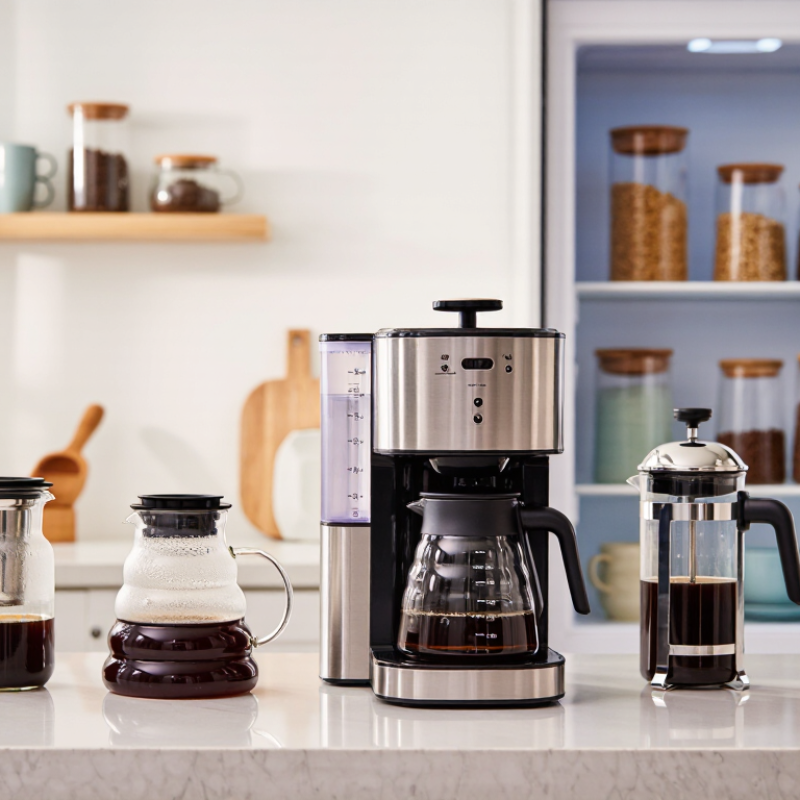
What Are the Best Cold Brew Coffee Makers in 2026?

Define Cold Brew Makers by Capacity, Materials, and Filtration Design

What Are the Best Cold Brew Coffee Makers in 2026?

A cold brew maker should fit your usual batch, not just look roomy on a shelf. A 1-liter vessel can suit one or two daily drinkers, while households sharing coffee may prefer 1.5 liters or more. Check usable capacity: the filter basket and grounds take up space.

I find capacity labels a little misleading sometimes. A tall pitcher may hold less finished coffee than expected.

Material affects handling and upkeep. Glass does not retain coffee odors easily, but it can chip if knocked against a sink. Stainless steel is sturdy and blocks light, though you cannot see the brew level. Food-safe plastic is lighter and less fragile; inspect care instructions and avoid scratched interiors.

Small details matter. A wide opening makes it easier to add grounds and scrub residue from corners.

Filtration design shapes both texture and cleanup. Fine stainless-steel mesh is reusable and allows some oils and tiny particles through, giving coffee a fuller feel. Paper filters can produce a cleaner cup, but require replacements and careful fitting. Look for a basket that lifts out without spilling wet grounds. A tight lid helps contain refrigerator odors, yet it should not make pouring awkward.

I would not assume finer mesh always means better coffee; grind size and steep time still affect clarity.

Compare Models Against the Common 12–24-Hour Steeping Window

For 2026 shoppers, the 12–24-hour steep is a useful comparison range, not a universal standard. The National Coffee Association’s 2024 National Coffee Data Trends report found that 67% of U.S. adults drank coffee daily. That figure describes coffee overall, not cold-brew demand specifically. Keep the distinction clear. Compare makers by how evenly water covers the grounds, how easily the filter lifts out, and whether the carafe fits a refrigerator shelf. Small details matter.

A 12-hour brew may taste lighter; a 24-hour steep can bring a fuller, sometimes harsher cup. Grind size, coffee-to-water ratio, and fridge temperature also affect the result. Look for a filter that keeps fine sediment out, clear capacity markings, and a lid that seals securely. A built-in timer helps track steeping, but it cannot fix an uneven grind. That part is easy to overlook. No single steep time guarantees a better cup, so choose a maker that makes timing and cleanup simple.

What Are the Best Cold Brew Coffee Makers in 2026? - Compare Models Against the Common 12–24-Hour Steeping Window

The comparison below covers common non-branded immersion-brewer formats. Capacity and features are typical of each format, not specifications for a particular product; check the individual maker’s instructions before buying.

Maker format Typical batch size Steeping-window fit Filter and cleanup Best suited to Practical trade-off
Large pitcher with removable filter Often about 1–2 L (4–8 cups), depending on the pitcher Well matched: commonly steeped for 12–24 hours; follow the maker’s directions Reusable mesh or perforated filter; grounds lift out as a basket or insert Households wanting several servings ready in the refrigerator Takes up refrigerator space; fine sediment can pass through some mesh filters
Wide-mouth jar with filter basket Commonly around 0.75–1.5 L (3–6 cups) Well matched to a 12–24-hour immersion; steeping time and strength depend on the recipe Removable basket is straightforward to empty; jar and lid need washing Simple storage and a compact, familiar container shape A full jar can be heavy to handle; basket capacity may limit the amount of grounds
Compact single-serve immersion brewer Usually about 0.3–0.75 L (1–3 cups) Uses the same general 12–24-hour steeping window as larger immersion formats Small reusable filter; less spent coffee to dispose of per batch One or two people, limited refrigerator space, or occasional cold brew Small yield means more frequent brewing when demand increases
Large-volume dispenser with steeping insert Often about 2–4 L (8–16 cups); actual usable capacity varies Generally suitable for 12–24-hour immersion if the insert is designed for steeping Large insert can hold a substantial batch of grounds; spigot and lid add parts to clean Groups or frequent drinkers who want to serve from a container Requires substantial counter or refrigerator space; a filled dispenser can be awkward to move
Stainless-steel insulated immersion brewer Varies widely; commonly about 0.75–1.5 L (3–6 cups) Can be used for a 12–24-hour steep; insulation does not replace the need to follow the recipe Usually a removable metal filter; inspect seams and filter components during cleaning People who prefer a durable container or want to limit light exposure Often heavier and less transparent than glass; insulation alone does not guarantee better flavor

Buying note: For a typical immersion recipe, steeping time, coffee-to-water ratio, grind size, and filtration all affect the result. A longer steep does not automatically make a better cup; use the brewer’s instructions and adjust the recipe to taste.

Assess Brew Ratios, Including 1:8 Concentrate-Style Recipes

When comparing cold brew makers in 2026, judge how consistently they handle your preferred coffee-to-water ratio. Weigh both ingredients; scoops vary too much. For a 1:8 concentrate-style batch, combine 100 grams of coarsely ground coffee with 800 grams of water. Steep for about 12 to 18 hours, then filter. Keep the grounds submerged, and note the time and grind size so you can repeat a batch that tastes right. Small details matter.

Concentrate strength varies with the beans, grind, and steep time. Try diluting a measured serving with an equal amount of water, then adjust. Too thin? Use less water next time. Too intense? Add more. A useful maker has room for the grounds to expand, a filter that catches sediment, and parts that are easy to rinse. Check whether its stated capacity means finished coffee or water added; those amounts are not interchangeable. There is no magic ratio. I would retest a recipe after changing beans, even if the numbers stay the same. A slightly uneven first batch is common, and worth recording rather than disguising.

Rank Filters by Grounds Retention, Cleanup Time, and Reusability

What Are the Best Cold Brew Coffee Makers in 2026?

Filter performance depends on what matters most: a clean cup, quick cleanup, or repeated use. For grounds retention, paper liners usually rank highest, catching fine particles that can cloud the last sip. Fine metal mesh is reusable but may let sediment through, especially with finely ground coffee. Cloth filters can produce a clean cup, though their results depend on weave and condition.

Cleanup changes the ranking. Metal mesh rinses quickly, but trapped grounds can cling to seams. Paper is easy to lift and discard, while cloth needs prompt rinsing and careful drying. For reusability, metal and cloth lead; paper is a single-use option. These are practical trade-offs, not a universal score. I’d compare filters using the same coffee dose, grind, and steep time. Small differences in handling can skew the result.

Tips: Set a timer for cleanup, and inspect the finished brew in a clear glass. Note visible sediment after a few minutes. Rinse cloth filters right away; dried coffee is stubborn. One caveat: a filter that performs well today may clog as residue builds up, so rinse thoroughly and reassess over several batches.

Match Top Maker Types to Batch Size, Budget, and Daily Use

For one or two coffee drinkers, a compact immersion pitcher is often the simplest fit. Add coarse grounds and cold water, then leave it in the refrigerator overnight. Many pitchers make several servings, but check the finished capacity rather than the container size. A large jar can still yield less concentrate than expected. Small models cost less and take little counter space. They can be fiddly to clean, though, especially when wet grounds cling to a narrow filter.

Households that pour coffee daily may prefer a larger batch brewer with a sturdy filter and a clear spout. It saves repeated steeping, but needs shelf or refrigerator room. Measure the space before buying; a full vessel can be awkward to lift. Slow-drip makers suit people who value a gentler process and enjoy adjusting the setup. They often take longer and may cost more. That isn’t automatically better coffee.

For a tight budget, a basic immersion model is usually practical. For frequent use, prioritize easy washing, replacement-filter availability, and a lid that seals well. If you drink only one glass at a time, a smaller batch helps reduce leftovers. Cold brew can taste stale after sitting too long, even when refrigerated. I still find batch size easy to misjudge. Consider how many cups you actually pour on a weekday, not just what sounds convenient.

By continuing to use the site, you agree to the use of cookies. more information

The cookie settings on this website are set to "allow cookies" to give you the best browsing experience possible. If you continue to use this website without changing your cookie settings or you click "Accept" below then you are consenting to this.

Close