
Blog

7 Best Fertilizer Granulation Machines to Buy in 2026

Choosing a granulator is not just a capacity decision. It affects product consistency, drying costs, dust levels, and daily maintenance. Fertilizer Granulation equipment must also suit the actual feed: its moisture, particle size, formulation, and binder. A machine that performs well with one recipe may struggle with another.

The market context matters. The Food and Agriculture Organization’s World Fertilizer Trends and Outlook to 2022 projected global fertilizer demand at 201.9 million tonnes of nutrients by 2022, based on nitrogen, phosphate, and potash consumption. That is a forecast, not a current measurement, but it shows the scale of demand behind investment in production equipment. The International Fertilizer Association’s Medium-Term Fertilizer Outlook 2024–2028 offers a more recent view of market conditions. For a wider perspective, energy and agriculture scholar Vaclav Smil wrote, “Ammonia is the most important chemical in the world,” in Enriching the Earth. His observation points to the wider food system that granulation machinery serves.

This guide compares seven machines available to buyers in 2026, including their process fit, operating considerations, and practical limitations. Look beyond the brochure’s maximum output. Check power demand, wear parts, screening needs, and access for cleaning. Small details matter. A plant floor can be dusty, noisy, and far less tidy than a specification sheet suggests. No shortlist replaces a feed test. And that is worth remembering.
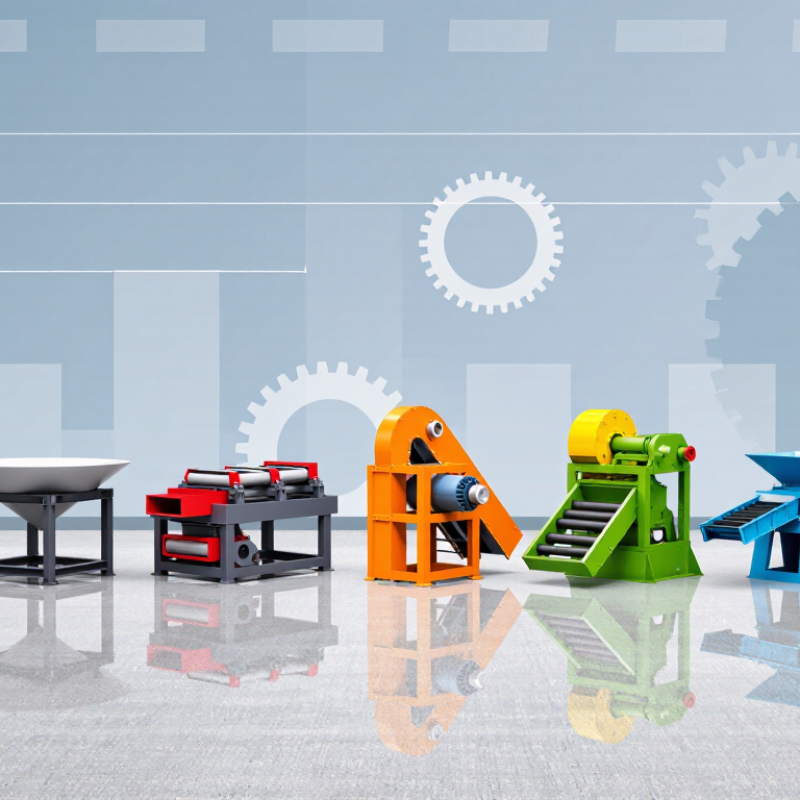
7 Best Fertilizer Granulation Machines to Buy in 2026

How Fertilizer Granulation Machines Turn Raw Materials into Granules

Fertilizer granulation begins before material reaches the granulator. Raw ingredients are crushed and screened so oversized pieces do not create uneven feed. A mixer then blends nutrients with controlled moisture or a suitable binder. The mix should feel evenly damp, not sticky. Moisture matters. Too little can leave dusty fines; too much may produce soft, misshapen pellets.

Different machines form granules in different ways. A pan granulator rolls moist material into rounded particles, while a drum tumbles a larger volume continuously. Roller compactors press dry material into sheets or flakes, which are then crushed and screened. The right choice depends on the recipe, desired output, and available space—not just rated capacity. A neat-looking sample can still hide weak granules that break during handling.

After forming, granules are dried and cooled before screening. Oversized pieces and fines can often return to the process, but the recycle rate should be monitored. Not every batch behaves alike. Changes in ingredient size or room humidity can affect the result, so operators may need to adjust feed rate, moisture, or rotation speed. This part is easy to underestimate. Dust control and regular checks on screens, bearings, and drives also help keep production steady. A machine cannot correct a poorly prepared mix.

Key Factors for Choosing a Granulator in 2026

Choosing a fertilizer granulator starts with the material, not the machine’s advertised capacity. Check feed moisture, particle size, binder compatibility, and how abrasive the blend is. A drum may suit continuous, high-volume production; a pan can offer visible control over granule growth. But neither choice is automatic. Ask for test results using your actual feed mix, and compare finished-granule size, fines, and recycle load. Small differences matter.

Market forecasts help frame capacity decisions. FAO’s 2022 report, World Fertilizer Trends and Outlook to 2026, projected global nitrogen, phosphorus, and potassium fertilizer demand at about 202.5 million tonnes of nutrients in 2026. That is a forecast, not a purchase target. Consider seasonal peaks, planned shifts, and whether upstream drying or screening can keep pace. Also compare energy use per tonne, wear-part access, cleaning time, and controls that operators can understand. I would not trust a quoted throughput without knowing the feed conditions behind it.

Tips: Request a short production trial. Inspect the granules, measure moisture, and ask how much material returns for reprocessing. Record the results. A tidy brochure is not enough.

Seven Fertilizer Granulation Machines Worth Considering in 2026

Seven fertilizer granulation machines deserve consideration in 2026, but the right choice depends on feedstock, output, and granule size. The International Fertilizer Association’s 2024 Medium-Term Fertilizer Outlook projects global fertilizer demand could reach 202.5 million tonnes of nutrients by 2028. That scale makes reliable throughput important, though a larger machine is not automatically a better investment.

A rotary drum granulator suits continuous, high-volume production. A disc granulator offers adjustable granule size and a clear view of the process. Double roller presses compact dry material with little added moisture. Extrusion granulators form uniform pellets, while flat-die pellet mills are often considered for smaller production lines. Pin mixer granulators handle fine powders and sticky blends. Fluid-bed granulators can combine granulation and drying for specialty products. Each option has trade-offs.

Check feed moisture, power use, wear parts, and cleaning access before choosing. Ask suppliers to test your actual material, not just a standard sample. Watch granules emerge from the pilot run. Are they too dusty? Do they hold shape after handling? A machine can meet its rated capacity and still produce the wrong product. That part is easy to overlook. IFA figures describe nutrient demand, not demand for any specific machine, so use them for context rather than sizing a plant.

Comparing Capacity, Output Quality, and Operating Costs

Choosing among the 7 best fertilizer granulation machines in 2026 means matching real production needs, not chasing the largest capacity figure. Rotary drums suit steady, high-volume lines, while disc granulators offer visible control over pellet size. Double roller presses can reduce drying needs, but feed preparation and pressure settings affect consistency. Smaller wet granulators may fit variable batches. Compare rated capacity with expected daily output, including cleaning and changeover time. Small details matter.

Tips: Request a trial using your own fertilizer mix. Check pellet size, strength, moisture, and fines after screening. Ask how often rollers, liners, or blades need replacement. Get energy use and maintenance estimates for a full operating shift, not just a short test.

Output quality depends on more than the machine. Moisture, binder choice, particle size, and operator adjustments all play a part. A glossy sample may still create dust during transport. Not always. Include screening, drying, and dust collection when comparing operating costs; otherwise, a low purchase price can look misleading. Leave room for imperfect batches in your calculations, because real feed materials rarely behave exactly like a supplier’s demonstration sample.

7 Fertilizer Granulation Machine Types to Consider in 2026

Typical throughput ranges, output characteristics, and operating-cost tendencies for common granulation technologies.

Capacity chart: Indicative equipment-class ranges in metric tonnes per hour (t/h), not guaranteed machine specifications. Actual throughput depends on formulation, moisture, granule size, and line configuration.

Machine type Typical output characteristics Relative operating-cost tendency
Rotary drum granulatorHigh-throughput rounded granules; screening and recycle help control size distribution.Medium to high; may require binder, drying, and material recycling.
Disc (pan) granulatorRounded granules with size influenced by pan angle, speed, and operator adjustment.Medium; operating conditions and feed consistency affect labor and energy use.
Double roller press granulatorCompacted flakes or granules; particle shape can be less rounded than wet-granulated product.Low to medium; dry processing can reduce drying demand, while rollers are wear items.
Stirring-tooth granulatorRounded granules; results depend strongly on formulation and moisture control.Medium; power use and wear depend on feed characteristics and duty cycle.
Wet-process organic fertilizer granulatorRounded granules suited to moist organic feed; drying is commonly part of the process.Medium to high; downstream drying and variable feed moisture can add costs.
Flat-die pellet millCylindrical pellets with consistent diameter; pellet length depends on cutting and feed behavior.Medium; die and roller wear, plus feed preparation, affect ongoing costs.
Screw extrusion granulatorCompact, shaped granules when feed composition and moisture are suitable.Medium; screw wear and feed conditioning influence operating costs.

Cost tendencies are qualitative comparisons, not measured prices; they exclude raw materials and vary by energy rates, maintenance practices, labor, and plant design. Request a formulation-specific production test before selecting equipment.

Installation, Maintenance, and Safe Operation of Granulators

A fertilizer granulator performs best when its installation matches the material and the site. Set it on a level, rigid floor, then secure the frame according to the installation instructions. Leave clear space around inspection panels and discharge points. A qualified electrician should check the power supply, grounding, and emergency stop before startup. Keep dust collection and ventilation in mind; fine fertilizer dust can settle on nearby surfaces. Small details matter.

During operation, feed material steadily and stay within the machine’s rated capacity. Listen for unusual rattling, watch for excess vibration, and stop the unit if its sound changes suddenly. Never bypass guards. Before clearing a blockage or servicing the machine, isolate its energy sources and follow the manual’s shutdown procedure. Inspect screens, blades, bearings, and fasteners on a regular schedule. Replace worn parts with suitable components. Maintenance intervals vary with material, moisture, and operating hours, so a generic calendar may not fit every site.

Tips: Keep a simple log of operating hours, cleaning, and repairs. Check that guards are secure before each shift. Use the required protective equipment, and train operators before handover. A rushed setup can seem fine, until vibration appears; recheck alignment rather than assuming the machine will settle on its own.

7 Best Fertilizer Granulation Machines to Buy in 2026 - Installation, Maintenance, and Safe Operation of Granulators

Compare these common granulator types by material fit and operating needs. Throughput figures are indicative planning ranges, not guaranteed machine ratings; actual output depends on formulation, moisture, particle size, and the complete production line.

Machine Type Best Suited For Indicative Throughput Installation Essentials Routine Maintenance Safe Operation
Pan (Disc) Granulator Wet agglomeration of mineral or organic fertilizer blends; flexible production of rounded granules. About 0.5–10 t/h, depending on pan diameter and feed properties. Install on a level, reinforced base. Set the pan angle and rotation direction as specified by the manufacturer; align the feed and liquid-spray systems. Inspect the pan liner, scrapers, bearings, drive belt, and fasteners. Remove adhered material before it hardens. Keep guards fitted around the drive and rotating pan. Stop and isolate power before clearing blockages or adjusting scrapers.
Rotary Drum Granulator Continuous, higher-volume production of compound or blended fertilizers using wet granulation. About 2–30 t/h; larger systems may be designed for higher output. Provide a stable foundation and accurately aligned support rollers and girth drive. Connect feed, binder or water sprays, dust collection, and downstream drying equipment. Check roller and tire contact, gear lubrication, seals, drum lining, and spray nozzles. Monitor vibration and unusual noise. Guard the drive and nip points. Never enter the drum or remove buildup while it is running; use lockout and confined-space procedures where applicable.
Double-Roller Compaction Granulator Dry granulation of powders where avoiding added process water or a drying step is important. About 0.5–10 t/h, depending on roll width, pressure, and material compressibility. Use a rigid, level base. Align the feeder and rolls, verify the hydraulic or mechanical pressure system, and provide suitable dust extraction. Inspect roll surfaces, bearings, seals, hydraulic hoses, feeder components, and fasteners. Check roll gap and pressure against the operating specification. Keep roll and feeder guards in place. Relieve stored hydraulic pressure and isolate electrical power before servicing; do not reach into the feed throat.
Extrusion Granulator Moist powder mixtures that can be forced through a die to form cylindrical or strand-shaped granules. About 0.2–5 t/h, varying with die size, formulation, and feed consistency. Install on a level base and align the drive, shaft, and die assembly. Confirm that the upstream mixer provides a consistent feed and that discharge space is adequate. Clean die holes and inspect the die, cutters, bearings, and transmission. Replace worn components and remove residual product after shutdown. Fit guards over the drive, shaft, and cutting area. Isolate the machine before changing dies or clearing compacted material; use appropriate dust and eye protection.
Flat-Die Pellet Mill Pelletizing many conditioned organic fertilizer materials, including compost-based blends; suitability depends on formulation. About 0.1–2 t/h for common production-scale units; output varies substantially with feedstock. Provide a level foundation, correct motor connection, and adequate ventilation. Condition and screen the feed to the moisture and particle-size range required by the die. Inspect die holes, rollers, bearings, belts, and lubrication points. Clean the die after use and replace worn dies or rollers as needed. Keep all covers closed while operating. Disconnect and lock out power before removing jams or servicing the die; avoid loose clothing near moving parts.
Stirring-Tooth (Rotary) Granulator Small- to medium-scale wet granulation of suitable fertilizer powders, particularly where a compact process line is desired. About 0.5–5 t/h, with actual output strongly affected by moisture and formulation. Secure the machine to a level base and align the feed and discharge chutes. Ensure the drive is protected and connect dust control where dry powder is handled. Check the rotor, teeth, liners, bearings, and fasteners for wear. Clean the chamber and inspect for material buildup after shutdown. Keep the chamber cover and drive guards secured. Isolate the machine before opening it, removing buildup, or inspecting the rotor.
Fluidized-Bed Granulator Specialty or fine fertilizer products requiring controlled spray coating, agglomeration, or drying in a fluidized process. Often about 0.1–5 t/h for fertilizer applications; capacity is highly process- and product-specific. Plan utilities, heated process air, exhaust treatment, and dust collection before installation. Verify airflow, spray-nozzle placement, and controls during commissioning. Clean filters, air-distribution components, and nozzles regularly. Inspect seals, fans, sensors, and temperature and airflow controls. Follow the process limits for temperature and dust control. Use suitable explosion and fire-prevention measures based on the material’s hazard assessment; isolate equipment before cleaning.

By continuing to use the site, you agree to the use of cookies. more information

The cookie settings on this website are set to "allow cookies" to give you the best browsing experience possible. If you continue to use this website without changing your cookie settings or you click "Accept" below then you are consenting to this.

Close