
Blog

What Are the Best Formwork Magnets in 2026?

Choosing the best Formwork Magnets in 2026 means looking beyond advertised holding force. On a busy precast-concrete site, a magnet must sit firmly on the steel bed, resist movement during pouring, and release cleanly when the panel is ready to move. Small details matter. A handle that is awkward with gloves, a housing that collects concrete residue, or a magnet that shifts under vibration can slow a crew and affect setup consistency.

This guide compares key options by holding performance, compatibility, durability, adjustment, and ease of release. It also considers practical conditions: bed thickness, reinforcement layout, concrete pressure, and how often crews reposition the units. No single model suits every production line. A magnet that works well for repetitive wall panels may be inconvenient for a shop producing varied shapes. Specifications still need checking against the actual mold and operating method.

A useful rule for buyers is simple: “Choose for the whole setup, not the headline force.” This is an original editorial line, not a verified quotation from a named industry expert; no expert source was provided. The comparison therefore focuses on measurable criteria and clear limitations, rather than unsupported endorsements. Some trade-offs remain. A more compact design may improve access but offer fewer adjustment options. The best choice is the one your crew can position, secure, inspect, and release reliably, cycle after cycle.
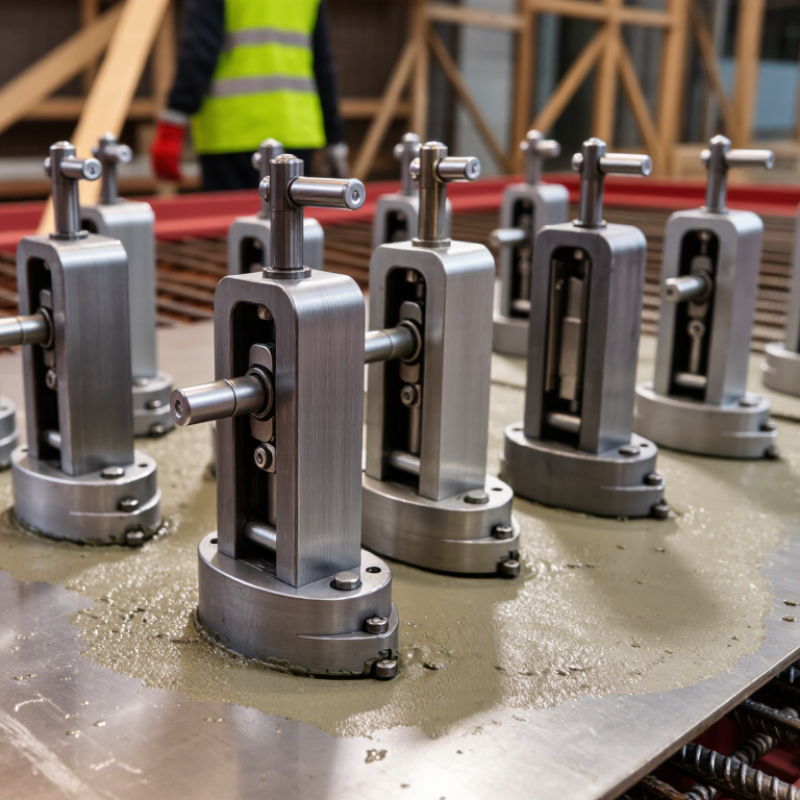
What Are the Best Formwork Magnets in 2026?

What Formwork Magnets Are and How They Work

Formwork magnets are compact holding units used to position side rails, stop-ends, and other steel forms on a casting bed. Inside each unit, permanent magnets create a strong pull toward the steel surface. A switch or release mechanism redirects the magnetic field, allowing workers to secure or remove the form without drilling into the bed. Simple in principle. But small details matter.

A clean, flat contact area helps the magnet grip as intended. Concrete dust, rust, or a slight gap can reduce holding performance, while vibration and fresh-concrete pressure place extra demands on the setup. In practice, crews should check the magnet’s rated force against the form height, pour conditions, and bed material—not rely on a single number. Test the assembly before pouring. That step is easy to overlook.

When comparing formwork magnets in 2026, look at the housing strength, switch design, release access, and resistance to jobsite wear. A release lever should be reachable without forcing fingers beneath a rail. Some units feel secure during placement but become awkward to remove after concrete splashes around them. That is worth noticing. Regular inspection for damaged housings, sticking switches, and trapped debris supports dependable use, though inspection alone cannot compensate for an unsuitable magnet.

Key Types of Formwork Magnets Used in 2026

Key Types of Formwork Magnets Used in 2026

Formwork magnets mainly fall into three practical groups: push-pull button magnets, magnetic side-rail systems, and magnetic boxes. Button magnets lock onto a steel casting bed with a lever or release tool. They suit adjustable layouts, such as changing wall-panel dimensions between pours. Side-rail systems hold long formwork profiles in place, while magnetic boxes combine clamping and positioning for heavier assemblies. Small parts matter.

Selection depends on more than holding force. Check the bed’s steel thickness, surface flatness, concrete pressure, and the magnet’s rated capacity. Dust, laitance, or a slightly warped bed can reduce contact and create movement. In production, operators should test the setup before pouring and inspect magnets for damaged housings or sticky release mechanisms. A strong magnet is not automatically the right magnet.

The 2019 McKinsey report “Modular construction: From projects to products” estimates that modular methods can shorten project schedules by 20–50 percent. That figure is not a magnet-performance claim, but it helps explain why repeatable precast workflows matter. Different magnet types support those workflows in different ways: boxes can simplify repeat setups, while button magnets allow quick layout changes. The trade-off is real; flexible systems may need more careful positioning and routine checks.

What Are the Best Formwork Magnets in 2026? - Key Types of Formwork Magnets Used in 2026

Magnet Type How It Works Best Suited For Key Advantages Selection Considerations
Push-button formwork magnet A steel housing contains magnets that are engaged against a steel casting bed by pressing a button or rod. Releasing the mechanism allows the unit to be repositioned or removed. Repeated positioning of side forms on steel beds in precast concrete production. Quick to set and release; reusable; does not require drilling or welding to the casting bed. Check the form profile, available clearance, bed condition, and the manufacturer’s stated holding capacity for the actual setup.
Magnetic box or housing system Magnets are enclosed in a robust steel housing, commonly with a mechanical activation feature, and the housing is connected to or shaped to support a formwork profile. Precast production lines that need a durable, repeatable fixing point for side forms. The housing protects the magnetic components and can provide a stable interface for compatible profiles. Confirm that the housing geometry and activation method match the formwork system and the casting-bed surface.
Adapter or interchangeable-profile magnet A magnetic unit connects to a separate adapter, bracket, or profile interface so it can be used with compatible formwork shapes. Production facilities using different side-form profiles or changing product layouts. Offers layout flexibility and may reduce the need for dedicated magnetic units for every profile type. Verify adapter compatibility, fastening security, alignment, and resistance to movement under concrete pressure.
Magnetic side-form fixing system One or more magnetic units hold a side-form assembly against a ferromagnetic steel casting surface; the form profile may be integrated or attached separately. Straight form edges and perimeter forms for precast slabs, panels, and other flat elements. Allows forms to be positioned without permanently modifying the steel bed and supports repeatable setup. Select the number and placement of units for the form length and loading conditions; keep contact surfaces clean and flat.
Magnetic chamfer or special-profile fixing system A magnetic fixing unit secures a chamfer strip or specially shaped formwork profile to a steel casting bed. Precast elements requiring beveled edges, recesses, or other defined edge details. Can hold detail-forming profiles in position while keeping the casting-bed surface free from permanent attachments. Check profile fit, sealing, dimensional accuracy, and whether the magnetic unit remains accessible for release.
Magnetic fixing unit for embedded items A magnetic fixture holds a compatible insert, anchor, or embedded component in a specified position on a steel form or casting bed. Accurate placement of compatible cast-in components during precast production. Can simplify positioning and help avoid drilling or welding the component directly to the bed. Use a fixture designed for the specific insert and verify position, stability, and release procedure before casting.

Selection note: Actual holding performance depends on the magnet design, steel-bed thickness and condition, contact area, load direction, form geometry, and concrete-placement forces. Follow the supplier’s technical data and safety instructions, and validate the arrangement for the intended production setup.

How to Compare Formwork Magnets by Performance and Design

The best formwork magnet is not always the one with the highest advertised holding force. Compare its rated capacity with your panel thickness, steel condition, and expected vibration. A clean, flat contact surface matters. Even a thin layer of grout can reduce grip. Test magnets on the actual formwork, using the same placement and removal method each time. Small differences show up quickly.

Design affects daily handling. Check whether the magnet fits beneath reinforcing bars and leaves room for nearby tools. A release button or lever should be accessible with gloves on, without forcing workers to pry against the panel. Look closely at the housing, welds, and coating, especially if magnets will be moved repeatedly or stored outdoors. Awkward details matter.

I would not judge a design from a quick bench test alone. A compact magnet may hold well but be difficult to release in a crowded setup; a larger one may be easier to handle but limit layout options. Compare weight, contact area, release effort, and cleanup time alongside holding force. Record results after several cycles. The first test can be misleading.

Leading Formwork Magnet Options for Different Applications

For high-volume precast beds, compact push-button magnets suit repeatable layouts and quick repositioning. Their small footprint helps keep the casting surface clear. For deep beams or heavy wall panels, select units by verified holding-force data and the actual formwork design, not magnet size alone. McKinsey’s 2019 report, Modular construction: From projects to products, estimates modular methods can shorten project delivery by 20–50%. That figure describes modular construction, not magnet performance, but it underlines why repeatable setup matters. Small details count.

For mixed production, adjustable or multi-position magnets can reduce changeover time across varied form profiles. Check compatibility with the steel table, attachment geometry, release access, and specified concrete pressure. ACI 347R guidance helps engineers assess formwork pressure; magnets should not substitute for that calculation. Dust, laitance, uneven steel, and poor seating can weaken real-world contact. Test the setup on the intended surface, and follow the supplier’s rated-load and inspection procedures. A rated force is not a field guarantee. It is easy to overlook this.

What Are the Best Formwork Magnets in 2026?

Typical applications for different formwork magnet options

How to read this chart: A value of 1 marks a magnet’s core function; 0 means it is not a core function. These are functional categories, not performance ratings. Select magnets to suit the formwork profile and steel casting surface; timber generally requires a steel plate or other ferromagnetic backing.

How to Choose the Right Formwork Magnet for Your Project

What Are the Best Formwork Magnets in 2026?

How to Choose the Right Formwork Magnet for Your Project

Choosing a formwork magnet starts with the work surface, not a headline holding-force figure. Check the steel table’s thickness, flatness, and condition. Dust, dried concrete, or a slight gap can reduce grip. Small details matter. Match the magnet’s dimensions to your form profile, so it sits securely without obstructing reinforcement or concrete placement.

Estimate the load from the formwork and fresh concrete, then allow a sensible safety margin. Magnet ratings vary by test conditions, so compare figures carefully. A powerful unit is not automatically the right one. Consider the release mechanism, too: crews should be able to reposition the magnet without damaging the form or slowing setup. Try one on your actual table before ordering a large batch.

Think about daily handling. If workers move magnets repeatedly, clear grip points and a reliable release button can reduce awkward lifting. Check that the housing resists impact and concrete residue, and confirm replacement parts are available. I would be cautious about choosing on price alone; a cheaper magnet can cost time if it slips or proves difficult to clean. Even a careful estimate can miss a rough patch of steel. Test under realistic site conditions, record what holds, and adjust the specification before full production.

By continuing to use the site, you agree to the use of cookies. more information

The cookie settings on this website are set to "allow cookies" to give you the best browsing experience possible. If you continue to use this website without changing your cookie settings or you click "Accept" below then you are consenting to this.

Close