Best Miniload Crane Solutions for Efficient Warehouse Operations?
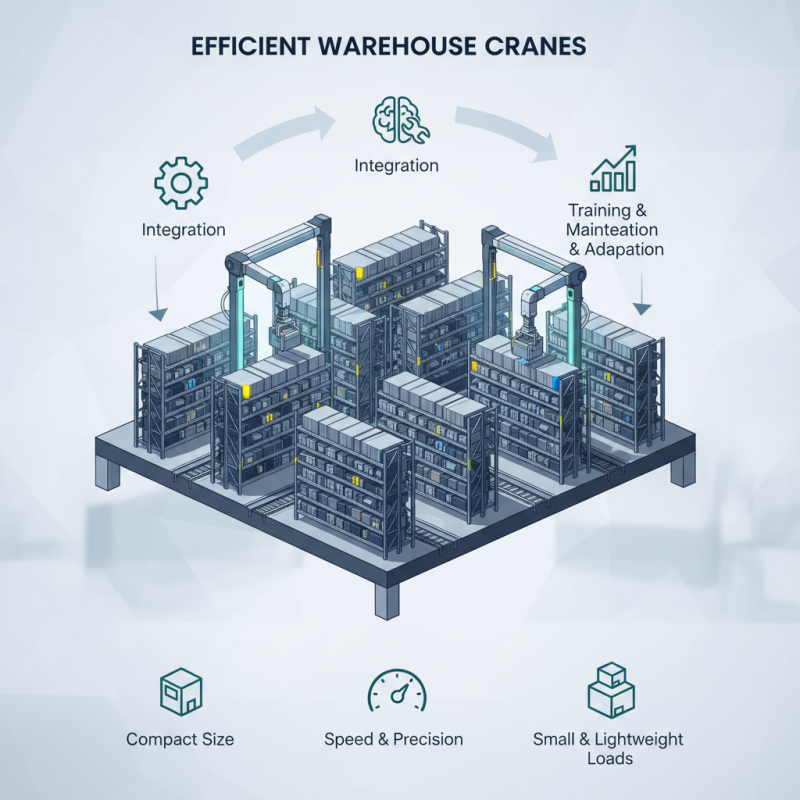
In the rapidly evolving landscape of warehouse operations, the Miniload Crane has emerged as a key solution for maximizing efficiency. These innovative cranes are specifically designed to handle small and lightweight loads. Their compact size allows them to navigate tight spaces easily, making them ideal for modern warehouses where floor space is a premium.
However, relying on Miniload Cranes requires a critical understanding of their integration into overall operations. While they offer speed and precision, their effectiveness can diminish without proper training and maintenance. It’s essential to consider the specific needs of your warehouse when selecting the right Miniload Crane solution.
Achieving optimal efficiency with Miniload Cranes involves more than just choosing the right equipment. Continuous evaluation and adaptation are necessary as warehouse demands shift. As we explore the best solutions for Miniload Crane implementation, we will consider these factors to ensure long-term reliability and performance.
Best Miniload Crane Solutions for Efficient Warehouse Operations
In modern warehouse operations, miniload cranes play a pivotal role in enhancing efficiency. According to a recent industry report, warehouses that incorporate automated systems, including miniload cranes, can improve their picking speed by up to 30%. This increase not only boosts productivity but also reduces labor costs significantly. Miniload cranes are designed for handling smaller goods, making them ideal for high-density storage environments.
When implementing miniload crane solutions, it's crucial to assess your warehouse layout. The physical space can impact crane effectiveness. A well-planned design allows for optimal paths and minimizes wasted movement. Integrating these systems requires upfront investment but often leads to a rapid return through increased operational efficiency. Data suggests that automation could lead to a 20% reduction in order fulfillment times.
Tip: Regular maintenance of your crane systems is essential. Neglecting upkeep can lead to increased downtime and costly repairs.
Operators should also be trained adequately on these systems. The complexity of automated solutions can result in errors without proper guidance. Assessing training needs is vital for achieving the desired efficiency. Studies show that trained personnel can enhance productivity by over 25%. Adopting miniload cranes is not just about the technology; it’s about how well your team utilizes it.
Overview of Miniload Crane Technologies in Modern Warehousing
Miniload cranes have revolutionized modern warehousing. These compact systems optimize storage space and streamline operations. According to a recent industry report, firms using miniload solutions can boost efficiency by up to 30%. This significant improvement is essential as warehouses handle increasing order volumes.
The technology behind miniload cranes is evolving. Automated systems feature advanced sensors and IoT connectivity. This connectivity allows real-time data exchange, enhancing inventory management. A study by a logistics consultancy emphasizes that integrating automation can decrease labor costs by 20%. However, the initial investment can be daunting for smaller enterprises.
Despite their advantages, miniload cranes come with challenges. The complexity of installation requires skilled technicians. Training staff can also be time-consuming. Moreover, trends show that many facilities face integration issues with existing layouts. Reflecting on these challenges is crucial for future planning. Businesses must weigh the benefits against the potential hurdles to maximize returns.
Key Benefits of Implementing Miniload Cranes for Inventory Management
Miniload cranes are rapidly becoming essential tools in modern warehouse operations, particularly for inventory management. By automating the storage and retrieval processes, these cranes significantly enhance efficiency. According to a recent industry report, facilities using miniload systems see a reduction in retrieval times by up to 30%. This efficiency allows warehouses to optimize space and improve order accuracy.
The benefits extend beyond just speed. Miniload cranes improve safety by reducing manual handling. A study by the Occupational Safety and Health Administration indicates that automated systems can cut down workplace injuries by over 25%, fostering a safer working environment. With less reliance on human labor for repetitive tasks, companies can also allocate resources to more complex problem-solving roles.
However, transitioning to a miniload system is not without challenges. Some companies report a steep learning curve for staff during the initial phase. Furthermore, the cost of installation can be significant. Yet, many find that the long-term gains in efficiency and safety justify the investment. Regular training and gradual implementation can ease this transition, ensuring that teams are well-prepared to maximize the benefits of these advanced systems.
Key Benefits of Implementing Miniload Cranes for Inventory Management
Industry Statistics on Warehouse Efficiency Improvements with Cranes
Warehouse efficiency is increasingly crucial in today’s fast-paced supply chain environment. Recent industry statistics reveal that implementing miniload crane solutions can enhance operational efficiency significantly. In a study published by the Warehouse Productivity Association, companies using crane systems reported a 30% increase in handling capacity. This improvement allows for more efficient storage and retrieval of goods.
Many facilities still rely on traditional methods for material handling. However, data indicates that facilities incorporating automated cranes reduce labor costs by up to 20%. This shift not only decreases operational expenses but also minimizes the risk of workplace injuries. Furthermore, nearly 65% of managers observed reduced order fulfillment times with automated systems.
There are challenges as well. Some warehouses face integration issues when introducing new crane systems. This can lead to temporary disruptions during implementation. Ongoing training and adaptation are essential. Despite these hurdles, the long-term benefits are clear. Companies that embrace miniload cranes experience not just improved productivity, but also enhanced inventory accuracy, which is vital in today’s competitive marketplaces. Overall, the investment in modern crane solutions appears to yield significant returns.
Comparative Analysis of Leading Miniload Crane Models and Features
Miniload cranes have become essential in modern warehouses. Their efficiency can dramatically enhance operations. A recent industry report indicated that automated miniload systems can improve picking rates by over 30%. Comparisons between leading models reveal critical differentiators.
Many cranes feature varying load capacities. Some models handle loads up to 500 kg, while others can manage more. Speed is another vital factor. A leading analysis pointed out that some cranes can achieve a lift speed of 100 meters per minute. However, the choice between speed or capacity often needs careful consideration.
Tips: Look for user-friendly interfaces. Cranes with intuitive controls reduce training time. Also, consider maintenance schedules. Regular upkeep can extend the lifespan of equipment. Assessing these factors can guide an effective warehouse strategy. Investing in data analytics tools can also help optimize operations. Use performance metrics to make informed decisions.
Conclusion
Miniload cranes have emerged as essential tools for optimizing warehouse operations, significantly enhancing efficiency in inventory management. With advancements in technology, these cranes facilitate streamlined processes, reducing labor costs and minimizing retrieval times. The implementation of miniload cranes in warehouses not only boosts operational efficiency but also supports better space utilization, allowing for more effective storage solutions.
Industry statistics indicate substantial improvements in warehouse productivity when utilizing miniload cranes, highlighting their pivotal role in modern logistics. A comparative analysis of leading miniload crane models reveals various features tailored to meet diverse operational needs, while emerging trends point toward increased automation and innovative designs. As businesses continue to prioritize efficiency, the future of miniload cranes promises further enhancements that will reshape warehouse dynamics.