Best Plating Current Rectifier Solutions at the 139th Canton Fair?
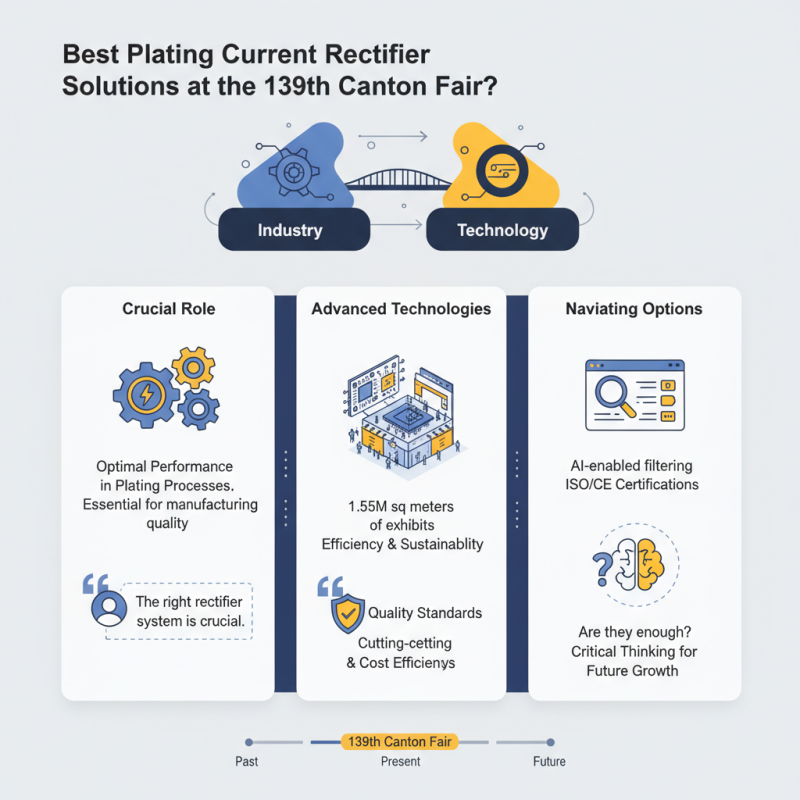
As the 139th Canton Fair approaches, the spotlight on Plating Current Rectifier solutions becomes even more pronounced. Industry experts, like Dr. Emily Zhao, emphasize, “The right rectifier system is crucial for achieving optimal performance in plating processes.” Her words underline the essential role these devices play in manufacturing.
The vast exhibition, spanning 1.55 million square meters, offers a unique platform for showcasing advanced technologies. Attendees can explore cutting-edge Plating Current Rectifier solutions designed to enhance efficiency and sustainability. Innovations in this field are crucial, yet the challenge lies in selecting systems that truly meet quality standards while maintaining cost efficiency.
Amid this vibrant landscape, buyers must navigate numerous options. The introduction of AI-enabled features can simplify this process, allowing quick filtering of suppliers based on certifications like ISO or CE. However, the effectiveness of these advancements remains in question. Are they enough to address the evolving needs of the plating industry? This fair is not just an opportunity to discover solutions; it highlights the importance of critical thinking in selecting the best technologies for future growth.
Overview of Plating Current Rectifiers and Their Importance
Plating current rectifiers play a crucial role in the electroplating industry. These devices convert alternating current (AC) to direct current (DC), enabling efficient plating processes. According to industry reports, the global plating market is projected to reach $29 billion by 2026. This number underscores the importance of utilizing advanced rectification technologies to enhance process reliability and surface quality.
A recent study shows that improperly configured rectifiers can lead to inconsistent plating thickness and poor adhesion. Quality assurance can be compromised when current density isn't regulated. The ideal current density typically ranges from 1 to 5 A/dm², depending on the metal being plated. Deviations from this range can cause defects, indicating a clear need for precision in rectifier selection.
Moreover, energy efficiency remains a concern. Inefficient rectifiers may waste up to 15% of energy during operations. This impacts both production costs and environmental sustainability. Exploring innovative rectifier technologies can help manufacturers reduce energy consumption while improving output quality. However, the challenge lies in staying adaptable and informed about emerging trends in rectification solutions.
Latest Innovations in Rectifier Technology for Plating Applications
At the 139th Canton Fair, advancements in rectifier technology for plating applications stood out. The latest innovations focus on enhancing efficiency and reliability. These solutions promise to optimize power usage, which is crucial for reducing operational costs. Exhibitors showcased devices that provide more stable current output, which is vital for successful plating processes.
Tips: Look for systems that offer real-time monitoring. This feature can help identify and rectify issues swiftly. A rectifier that enables seamless adjustments to output can enhance productivity, especially in dynamic production environments.
Efficiency is not just a buzzword; it’s essential. Some techniques, though innovative, require careful implementation. There were discussions about the balance between automation and manual control. Over-reliance on automation can lead to unexpected challenges. Keep an eye out for user feedback to navigate these potential pitfalls effectively.
Best Plating Current Rectifier Solutions at the 139th Canton Fair
Key Features to Consider When Choosing a Rectifier for Plating
Choosing the right rectifier for plating applications involves several critical factors. Efficiency is key. A rectifier should convert AC to DC with minimal energy loss. Reports indicate that efficient rectifiers can improve productivity by 20%. This translates to increased operational output. An efficient system also reduces overall costs.
In addition, voltage regulation is essential. A stable output voltage ensures consistent plating results. Fluctuations can lead to defects. Ideally, a rectifier should maintain a voltage tolerance of less than 1%. Manufacturers often overlook this aspect, which can lead to quality issues.
Another factor is the duty cycle. For heavy-duty applications, a higher duty cycle is crucial. It ensures the rectifier can handle continuous operations without overheating. Many rectifiers struggle under heavy loads. This operational strain may not be evident at first. However, it can significantly impact longevity and reliability. Addressing these details can help refine choices for optimal performance.
Top Manufacturers Showcasing Rectifier Solutions at the Canton Fair
During the 139th Canton Fair, a variety of top manufacturers showcased innovative rectifier solutions. Visitors witnessed cutting-edge technology aimed at enhancing plating processes. The booths were vibrant with demonstrations and engaging discussions. Attendees were eager to learn about performance improvements and energy efficiency.
The manufacturers presented various rectifier models. Some designs featured compact structures, making them suitable for tighter spaces. Others boasted advanced control systems. Yet, not all solutions were perfect. Some lacked essential features that buyers sought. This sparked conversations about what customers truly need.
Networking was a key part of the fair. Many manufacturers sought feedback on their prototypes. They appreciated insights from potential clients. However, some still ignored specific requests. This could lead to lost opportunities in such a competitive space. Overall, attendees left with valuable information on current trends and challenges in rectifier technology.
Trends and Future Directions in Plating Rectifier Solutions
The plating rectifier industry is undergoing significant changes. With advancements in technology, solutions are becoming more efficient and environmentally friendly. A recent report shows that green technologies are on the rise, with a projected growth rate of 7% annually. This shift is crucial for sustainability efforts in the industry.
Innovation in rectifier solutions focuses on improved energy efficiency. New designs reduce energy consumption by 20% compared to traditional models. However, challenges still exist in achieving consistent performance across various applications. The integration of smart technology is also noteworthy. Many systems now offer real-time monitoring and diagnostics, enhancing operational reliability.
Manufacturers are exploring further developments. Emerging trends include the miniaturization of components. Smaller rectifiers can save space while maintaining high performance. Despite this, quality control remains a concern. As the market grows, ensuring each unit meets rigorous standards will be essential. The future of plating rectifiers holds promise, yet it demands continuous reflection and adaptation from all stakeholders.