China Best Bath Waste Push Button Manufacturer for Buyers
A Bath Waste Push Button may look like a small bathroom detail, but it controls a task users perform every day. Buyers should assess how smoothly the button operates, how securely the waste seals, and whether the mechanism can be serviced after installation. A polished finish matters, too. Under bright bathroom lighting, fingerprints and water spots can quickly reveal uneven surface quality. These practical checks help distinguish an attractive sample from a component built for dependable daily use.
For buyers comparing manufacturers in China, product specifications deserve close attention. Confirm compatibility with the intended bath, overflow arrangement, waste outlet, and installation space. Ask about materials, finish options, operating-cycle testing, quality inspections, packaging, and replacement-part availability. Clear drawings and responsive technical support can prevent costly misunderstandings. Small details count. A button that binds, a seal that seeps, or a finish that wears unevenly can undermine an otherwise well-designed bathroom.
A named expert quotation should not be invented or presented as verified without a reliable source. As a practical editorial principle: “Choose the mechanism by its fit, sealing performance, and serviceability—not appearance alone.” Use this guide to compare suppliers carefully, request product documentation, and evaluate samples under realistic conditions. The best choice is not automatically the lowest-priced option. It is the Bath Waste Push Button that matches the project requirements and performs consistently after installation.
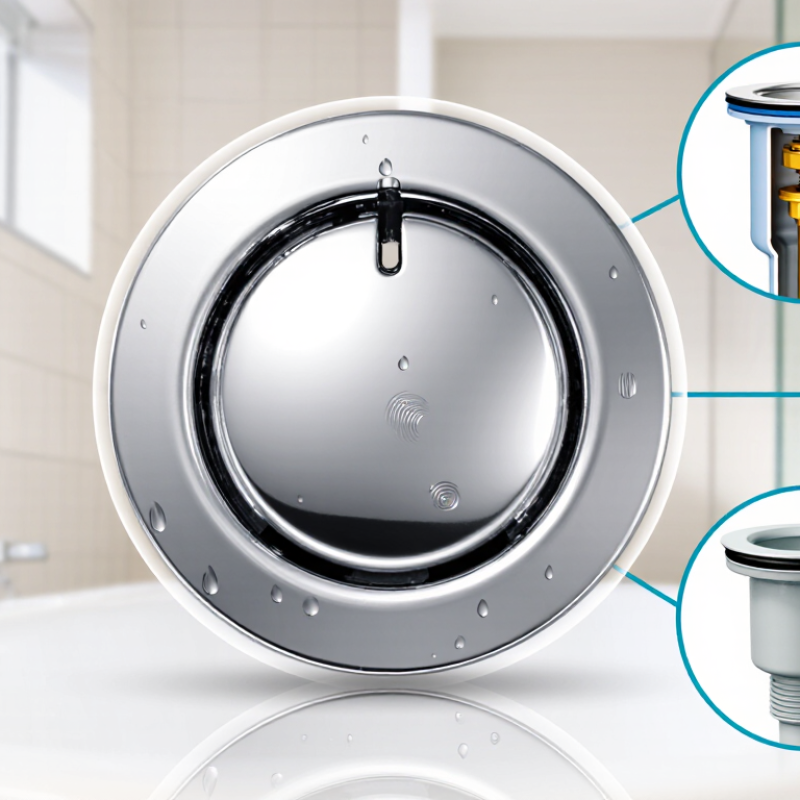
Understanding Bath Waste Push Button Systems and Their Main Components
A bath waste push button system lets users open or close the drain from the tub’s edge. Pressing the button moves a cable or linkage connected to the waste mechanism. The main components are the button assembly, operating cable, drain body, stopper, overflow plate, and sealing washers. Small parts matter. A stiff cable can make the button feel heavy, while a poorly seated washer may allow a slow leak beneath the tub.
Buyers should check the tub’s drain and overflow dimensions before selecting a system. They should also confirm the cable’s reach and whether the stopper can be adjusted or removed for cleaning. Materials and surface finishes affect appearance, but access for maintenance matters too. A polished button looks good in a showroom. Under daily use, fingerprints and soap residue may show quickly.
Installation details can vary between tubs, so product drawings should be checked against the actual fittings. A neat specification sheet does not guarantee an easy fit. That deserves a second look. After installation, test the button several times and inspect the joints for leaks. If the mechanism feels rough, check alignment before forcing it; extra pressure can strain the linkage.
Understanding Bath Waste Push Button Systems and Their Main Components
A typical cable-operated bath waste uses one of each major component shown. Specific designs and component layouts vary.
Key Quality and Compatibility Factors for Buyer Evaluation
A bath waste push button should feel firm, return smoothly, and operate the drain without excessive force. Check the button’s finish for scratches, uneven plating, or sharp edges. Ask how the mechanism is tested, and whether replacement seals or moving parts are available. Small defects matter. A button that sticks after repeated use can frustrate both installers and homeowners.
Compatibility starts with measurements, not appearance. Confirm the waste outlet diameter, thread type, bath thickness range, and overflow connection before ordering. Compare the product drawing with the actual installation space; a few millimetres can affect fit beneath a tight bath panel. Also check whether the cable or linkage suits the drain assembly. It is easy to assume similar-looking parts will match. They may not. If specifications are unclear, request a dimensioned drawing or sample for a trial fit.
Tips: Press the button several times during inspection, then check that the plug seals and releases cleanly. Keep a record of measurements and test results. A neat finish is useful, but it cannot compensate for an incompatible mechanism.
How Chinese Manufacturers Design, Produce, and Test Bath Waste Buttons
Designing a bath waste push button begins with its movement, sealing needs, and installation space. Engineers consider button travel, spring resistance, and how the linkage connects to the drain. They may use corrosion-resistant metal or engineered polymers, depending on the design and price target. Drawings and samples help confirm dimensions before production begins.
Production can involve forming or machining components, deburring edges, fitting springs, and assembling the button with its operating rod. Workers check that parts move smoothly and sit flush. Small changes matter. A slight burr can affect movement or damage a seal. Testing plans vary by product and buyer requirements. Common checks include repeated pressing, water-flow observation, leakage checks, and inspection after assembly. Tests catch many faults, but they cannot perfectly reproduce years of household use. That limitation deserves attention.
Tips: Ask for material details, dimensional tolerances, and written test records. Request a production sample and operate it with wet hands. Check that the button returns reliably and does not wobble.
Assessing Supplier Capabilities, Certifications, and Customization Options
A reliable bath waste push button supplier should explain how its products are made, tested, and checked before shipment. Ask for material specifications, production capacity, and inspection records, not just a polished catalog. Ask for evidence. Useful documents may include applicable quality-system certificates and test reports for corrosion resistance, drainage, and repeated button operation. Verify the certificate’s scope and validity; a certificate alone does not confirm that every model meets your requirements.
Check whether the supplier can provide clear drawings, sample units, and consistent measurements. Confirm the outlet size, overflow arrangement, thread dimensions, and finish against your basin design. A small mismatch can delay installation. Small details matter. Request a sample and test the button several times, including after water exposure. Also ask how the factory handles defects, replacement parts, and lead-time changes. Practical answers are more valuable than broad promises.
Customization may cover button shape, color, material, packaging, or private labeling. Set boundaries early: some finishes require higher minimum orders, and custom tooling can extend delivery times. Compare the approved sample with the final production batch, and keep the agreed specifications in writing. I would not assume every supplier can offer every option; even capable factories have limits. That is worth discussing before placing an order.
Comparing Quotes, Samples, Lead Times, and After-Sales Support
A bath waste push button may look simple, but a poor fit can delay an entire bathroom installation. Compare quotes line by line: metal grade, finish, cable length, overflow compatibility, packaging, and test requirements. Ask whether the price includes a working sample and courier fees. A sample should match the production finish, not just the shape. Check button travel, drain closure, and the feel of the cable after repeated presses. Small details matter.
Lead times need dates, not vague promises. Request separate estimates for sample approval, production, inspection, and dispatch. UNCTAD’s Review of Maritime Transport 2024 notes that ships carry over 80% of world trade by volume, so port congestion or schedule changes can affect delivery. Ask suppliers how they handle delays and whether they can share recent shipment records. The World Bank’s 2023 Logistics Performance Index evaluates customs, tracking, and timeliness; it can help assess an export route, though it cannot guarantee one order’s arrival. I still treat quoted transit times as estimates.
After-sales support deserves the same scrutiny as price. Confirm who handles leakage or finish complaints, what evidence is needed, and how quickly replacement parts can ship. Get the response process in writing. A short reply is reassuring, but not enough. Test it with a real question before placing a large order. Notice whether the answer is specific—or merely polite.