China Best BMS Wire Harness Manufacturer for Global Buyers
Choosing a China Bms Wire Harness manufacturer requires more than comparing prices or counting factory machines. Global buyers need stable electrical performance, accurate pin mapping, clean crimping, and dependable delivery records. A small terminal defect can interrupt battery communication, trigger a fault code, or stop an entire vehicle pack from operating.
Dr. Jeff Dahn, a leading battery researcher, has said, “The battery is the most important component in an electric vehicle.” His point also highlights the supporting system around the battery. A Bms Wire Harness carries low-voltage signals between battery cells, sensors, protection boards, and control units. Its copper strands, insulation, connectors, and shielding must work together under vibration, heat, moisture, and repeated assembly stress.
Details matter.
Experienced Chinese manufacturers usually begin with drawings, connector samples, and application conditions. They may use automated cutting, stripping, crimp-force monitoring, continuity testing, and high-voltage insulation checks. Yet equipment alone does not prove reliability. Buyers should review material traceability, crimp-section samples, PPAP-style documents, change-control procedures, and real production photographs. Some suppliers show impressive samples but provide weak follow-up support. That risk deserves attention.
This guide examines how global buyers can evaluate China’s Bms Wire Harness manufacturers for electric vehicles, energy-storage systems, and industrial battery packs. It considers engineering communication, customization ability, testing discipline, production consistency, packaging, and after-sales response. No supplier is perfect. Even a qualified factory needs clear specifications and regular quality review. A practical partnership is built through evidence, not attractive promises.
BMS Wire Harnesses: Definition, Structure, and Core Functions
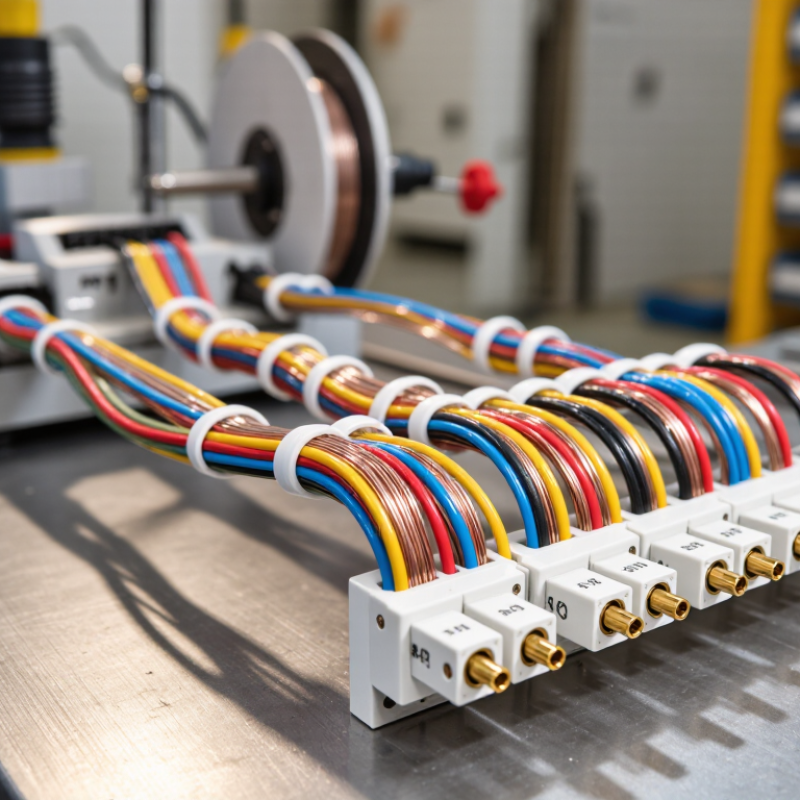
BMS wire harnesses are cable assemblies that link battery cells with the battery management system. They carry voltage signals, temperature readings, balancing currents, and communication data. A typical harness includes copper conductors, insulation, terminals, connectors, protective sleeves, clips, and identification labels. Each part has a practical role. Conductors transmit stable signals. Insulation prevents shorts and controls heat exposure. Terminals create secure electrical contact inside a compact battery pack.
Good structure begins with correct pin assignments and suitable wire sizes. Many sensing leads use small conductors, while power paths require larger cross-sections. The harness should also follow the pack’s bending route without stressing connectors. Tight bends are risky. During production, experienced technicians check crimp height, pull strength, continuity, insulation resistance, and terminal insertion. They may inspect every connector under magnification. A single reversed pin can damage sensitive electronics or create unsafe readings. That detail is easy to underestimate.
Reliable manufacturers also control labeling, batch records, and material consistency for global buyers. Heat, vibration, moisture, and repeated assembly can weaken a poorly designed harness. Protective braiding and strain relief help, but they are not universal solutions. In practice, no drawing captures every installation problem. Trial fitting inside the actual battery enclosure often reveals spacing conflicts or excessive wire tension. Design revisions are sometimes necessary. A dependable BMS harness combines electrical accuracy, mechanical protection, and traceable quality checks.
BMS Wire Harnesses: Definition, Structure, and Core Functions
Typical connection requirements for a 12-series battery module
A BMS wire harness links battery cells and monitoring electronics for voltage measurement, temperature sensing, balancing, communication, and power distribution. This reference layout uses 13 cell-voltage sense connections for a 12-series module, while the other connection counts represent common circuit requirements. Actual harness designs vary by battery architecture and BMS specification.
Essential Materials, Components, and Design Requirements
A reliable BMS wire harness begins with the right materials, not a polished quotation. The IEA reported nearly 14 million electric cars sold worldwide in 2023, increasing pressure on suppliers to deliver consistent harness quality. Copper remains the practical conductor because it offers strong conductivity and crimp stability. Tinned copper helps resist corrosion in humid battery enclosures. Insulation should match temperature, voltage, oil exposure, and flexing conditions. Silicone suits high-temperature areas, while cross-linked polymers can provide stronger abrasion resistance.
The key components include terminals, seals, connectors, strain reliefs, clips, shielding, and high-voltage interlock circuits. Every terminal needs controlled crimp height and verified pull-out strength. A loose crimp can create heat before failure becomes visible. It happens more often than drawings suggest. BMS connectors also require correct polarization and secondary locking. Design reviews should check current capacity, voltage drop, bend radius, creepage distance, vibration, and water ingress protection. For high-voltage systems, insulation monitoring and clear circuit separation are essential.
BNEF’s 2023 Battery Price Survey placed the average battery pack price at 139 dollars per kilowatt-hour. This cost pressure makes material efficiency important, but cheaper terminals can undermine reliability. Production validation should include thermal cycling, vibration, salt mist, continuity, and insulation resistance tests. IEC-based testing and documented traceability improve confidence for global buyers. One detail deserves reflection: a harness may pass electrical testing yet fail after repeated bending. Static inspection is never enough.
Global Buyer Considerations: Compliance, Logistics, and After-Sales Support
China Best BMS Wire Harness Manufacturer for Global Buyers
Global buyers should test compliance before comparing unit prices. The IEA Global EV Outlook 2024 reported nearly 14 million electric cars sold in 2023. That volume increases pressure on stable BMS harness quality. Ask for IPC/WHMA-A-620 workmanship controls, insulation test records, crimp-force data, and material traceability. IATF 16949 experience is valuable for automotive projects, but certificates alone prove little. Review recent audit findings and corrective-action records.
Logistics also deserves practical attention. The World Bank’s Logistics Performance Index 2023 evaluates customs, infrastructure, shipment quality, and delivery timeliness. A reliable supplier should provide carton dimensions, HS classification support, export documents, and a backup shipping route. Request production photos before dispatch. Confirm whether terminals, labels, and connector positions match your drawings. Small packaging errors can stop an assembly line. I have seen this overlooked too often.
Tips: Keep one approved golden sample at both facilities. Define inspection points in writing. Require batch codes on every harness. After-sales support should include a named engineer, response-time targets, and failure-analysis reports. A 12-month warranty sounds useful, yet its exclusions may be vague. Ask about replacement lead time and remote troubleshooting. Also test communication during a minor pre-shipment issue. It reveals more than a polished sales presentation. Be willing to revise your supplier scorecard after the first shipment. Perfect forecasts are unrealistic. Clear records matter more.