China Top 10 Barbed Wire Making Machine Manufacturers?
China’s barbed wire manufacturing sector has grown from small workshop lines to highly automated production systems. Today, a reliable Barbed Wire Making Machine must deliver consistent twists, accurate barb spacing, and stable wire tension. It should also support practical maintenance, operator safety, and reasonable energy use.
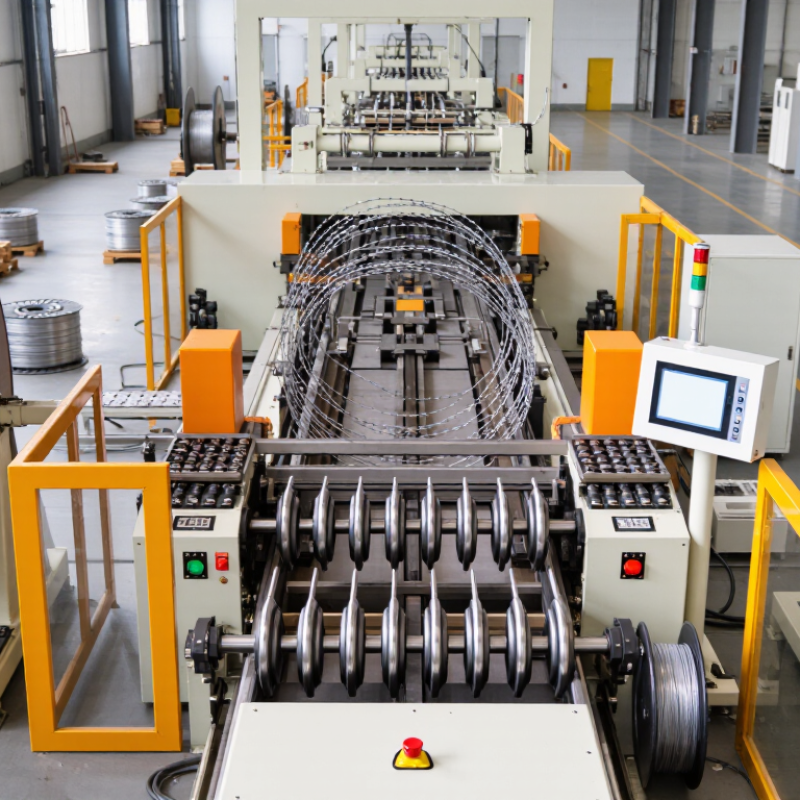
As wire-processing consultant Daniel Weber explains, “A productive line is not merely fast; it must remain stable, serviceable, and predictable.” This principle matters on a real factory floor. Galvanized wire enters the machine from large coils. Rotating dies form sharp, evenly spaced barbs. A calibrated take-up unit then winds the finished product without damaging its surface.
Speed attracts buyers. Consistency protects their investment.
This guide examines China’s top 10 Barbed Wire Making Machine manufacturers through production experience, engineering capability, quality control, customization, and after-sales service. It considers whether each supplier can provide dependable machines for different wire diameters, barb distances, and output requirements. Factory testing, electrical protection, spare-part availability, and operator training also deserve attention.
No ranking can remain perfect forever. Manufacturer performance changes with technology, management, and customer support. Some companies advertise impressive capacity but provide limited technical evidence. Others appear less visible yet offer stronger commissioning assistance. That difference is easy to miss.
The following overview aims to make comparison more practical. It focuses on measurable details rather than promotional language. Buyers should still verify certifications, inspect test samples, and request a clear warranty before placing an order. A machine may look excellent in photographs. Its long-term performance is what truly matters.
Industry Ranking Criteria: Speed, Wire Gauge, Automation, and Compliance
China Top 10 Barbed Wire Making Machine Manufacturers
A useful industry ranking should measure production performance, not advertising language. Speed is important, but stated output often depends on wire diameter, spacing, and operator skill. A reliable review tests continuous running speed with actual galvanized wire. It also records stoppages, blade changes, and finished coil consistency. Fast is not always better.
Wire gauge is another practical dividing line. A strong machine should handle common wire sizes without excessive adjustment. Test samples should show even twists, firm barbs, and stable tension. Small variations can create weak coils and extra waste. This detail is easy to miss.
Automation deserves close attention. Automatic feeding, tension control, fault alarms, and coil counting can reduce repetitive labor. However, sensors need simple calibration and accessible replacement parts. Complex controls may look impressive but frustrate operators during a night shift. I would inspect the control cabinet, safety guards, emergency stops, and maintenance records before ranking any manufacturer.
Compliance should cover electrical safety, machine guarding, noise limits, and documented quality checks. Clear manuals and traceable inspection reports strengthen buyer confidence. Factory demonstrations help, yet one short demonstration cannot prove long-term reliability. Requesting production data from several shifts is wiser. No ranking is perfect. Real factory conditions can expose weaknesses that brochures hide.
China’s Top 10 Barbed Wire Machine Manufacturers and Core Product Lines
China’s top ten barbed wire machine manufacturers are often distinguished by their core product lines, not by advertising claims. Several specialize in single-strand and double-twist machines for standard galvanized wire. Others focus on high-speed automatic lines with servo feeding, programmable controls, and adjustable barb spacing. Some suppliers build compact models for small workshops, while others provide heavy-duty equipment for continuous production.
The strongest product portfolios usually include wire straightening units, twisting systems, automatic cutting devices, and coil take-up machines. A few manufacturers also offer PVC-coated wire solutions, customized dies, spare parts, and installation support. In factory visits, practical details matter: stable wire tension, clean barb formation, low vibration, and easy access to bearings. A polished control cabinet means little if the machine stops after two hours. That is an uncomfortable point, but buyers should test performance under real production conditions.
Tips: Request sample coils made with your wire. Check barb spacing, coil weight, noise, power use, and emergency-stop response. Ask for a complete parts list and maintenance schedule. Video demonstrations help, but an on-site acceptance test is more reliable. Compare training quality, response times, and warranty terms, not only the machine price. Some specifications may look impressive yet remain difficult to verify. Keep that in mind.
Production Benchmarks: 40–120 m/min, 2-Strand, and 4-Strand Machines
China Top 10 Barbed Wire Making Machine Manufacturers?
Production benchmarks help buyers compare machines beyond catalogue claims. Current technical datasheets and 2024 market reviews from Grand View Research indicate that automated wire-processing equipment is moving toward higher throughput, tighter control, and lower material waste. For barbed wire machines, practical line speeds commonly range from 40 to 120 m/min, depending on wire diameter, barb spacing, and coil size.
Two-strand machines remain suitable for standard farm fencing and moderate production volumes. Four-strand models can raise output, but they require stronger motors, balanced tension systems, and more careful alignment. A machine running at 100 m/min may still underperform if frequent stops reduce effective output. Real production often falls 10–20% below the nameplate speed. That gap matters.
According to industrial automation reports from Interact Analysis, predictive maintenance and sensor-based monitoring are becoming important in wire machinery. Buyers should check actual uptime, scrap rates, and changeover time. Ask for a factory trial using the intended galvanized wire. Measure coil consistency, barb spacing, and operator adjustments. The fastest machine is not always the best machine. Sometimes, it is simply louder.
Quality Standards: ASTM A121, EN 10223-1, GB/T 343, and CE Certification
When comparing China’s top 10 barbed wire making machine manufacturers, quality standards deserve more attention than output claims. ASTM A121, EN 10223-1, and GB/T 343 mainly define barbed wire requirements, including wire diameter, barb spacing, tensile strength, coating, and dimensional consistency. A reliable machine should help operators produce wire that can be tested against these specifications. Ask for sample coils, inspection records, and traceable material certificates.
In factory audits, I check the feeding system, twisting accuracy, cutting stability, and automatic shutdown response. Small deviations matter. A barb shifted by several millimeters can affect installation and inspection results. CE certification also needs careful review. It generally applies to relevant machinery safety and conformity requirements, not automatically to the finished barbed wire. Check the Declaration of Conformity, risk assessment, electrical drawings, and safety guard design. Useful evidence.
Some suppliers provide polished certificates but limited production data. That is a warning sign. Request a live trial using the intended galvanized wire, then measure ten consecutive sections. Record speed, noise, wire breaks, and power consumption. No machine performs perfectly in every workshop. Humidity, operator skill, and wire quality can change results. A practical evaluation should therefore include after-sales training, spare-part availability, calibration guidance, and clear acceptance criteria. Standards create the framework, but disciplined verification reveals whether the equipment can meet it repeatedly.
Reference note: The chart presents commonly specified technical ranges for industrial barbed wire used in quality evaluation. Actual limits depend on the applicable product standard, wire grade, coating class, order specification, and customer requirements. ASTM A121, EN 10223-1, and GB/T 343 address product and material requirements, while CE marking indicates conformity with applicable European Union legislation rather than a standalone barbed-wire product standard.
Buyer Evaluation: Capacity, Energy Use, Warranty, Export Records, and ROI
China’s top ten barbed wire making machine manufacturers should be compared through verified operating evidence, not catalog claims. Ask for monthly output, wire diameter range, line speed, and rejected-piece rates. A machine producing 1,200 kilograms daily may outperform a faster model with frequent stoppages. Factory videos help, but signed production records matter more. Request references from comparable export projects.
Energy use deserves careful testing. The U.S. Department of Energy reports that motor-driven systems consume about 70% of industrial electricity in American manufacturing. Measure kilowatt-hours per finished tonne, including twisting, feeding, and coiling units. A 10% efficiency gain can improve margins when electricity prices rise. However, advertised figures often exclude startup losses. Treat them cautiously.
Warranty terms should state coverage, response time, spare-part availability, and technician costs. Twelve months sounds adequate, yet remote support may delay repairs for weeks. Review export records through UN Comtrade data, while remembering that customs categories can be broad and incomplete. For ROI, calculate purchase price, installation, labor, energy, maintenance, scrap, and downtime over five years. The cheapest offer may not be the best investment. A practical buyer should demand a paid sample run before signing. Mistakes remain possible, especially when production data is self-reported.