
Choosing a Heavy duty truck radiator is a practical decision with real consequences. A loaded truck climbing a long grade generates intense heat. Dust, vibration, and uneven service conditions test every seam and cooling passage. In China, suppliers vary in manufacturing scale, materials, testing, and support. A useful comparison must look beyond catalog claims.
Thermal-systems engineer Chen Wei puts the selection principle this way: “A radiator earns trust when it controls heat under load, not just when it looks sound on a bench.” Buyers should compare core construction, pressure resistance, fitment accuracy, production consistency, and access to replacement parts. Ask for test records and clear warranty terms. Check whether the supplier can match the truck’s engine, duty cycle, and installation dimensions. Small details matter.
This guide introduces ten Chinese suppliers and the questions worth asking before requesting a quotation. It considers product range, export experience, customization, and communication—not just price. No shortlist is perfect. Supplier information can change, and published specifications do not replace independent checks. That is worth remembering. Use the list as a starting point, then confirm technical data directly with each manufacturer. A radiator that fits on paper may still struggle in a hot, dusty operating environment.
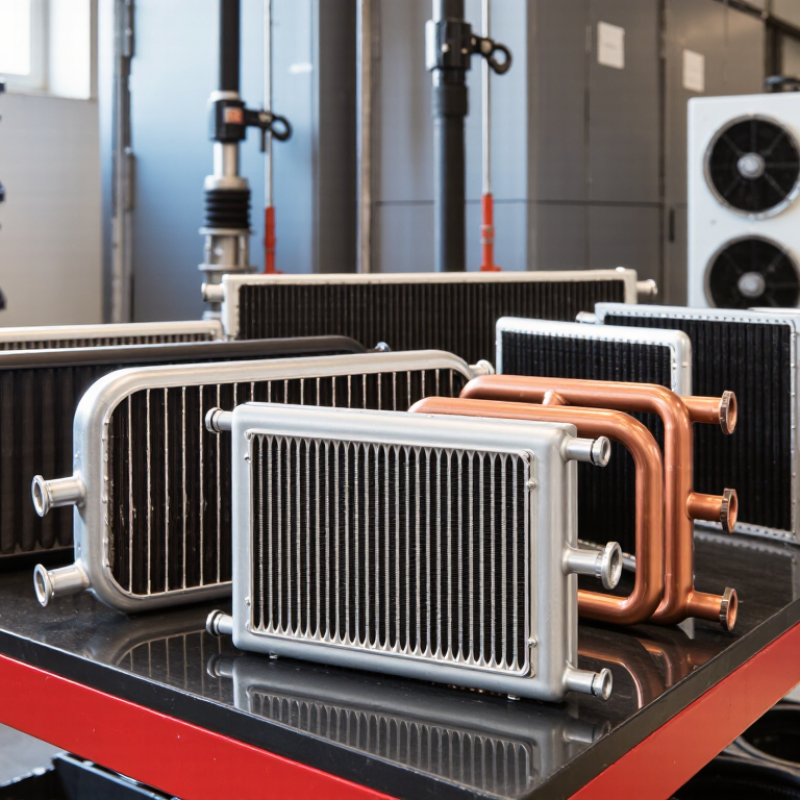
A heavy-duty truck radiator removes heat carried by engine coolant. A pump sends hot coolant through narrow radiator tubes, while fins spread heat across a larger surface. Airflow from vehicle speed or a fan cools the fins. The cooled fluid then returns to the engine. Simple in principle. Not effortless in practice. Dust-packed fins, damaged tubes, or a weak fan can reduce heat transfer, especially during slow climbs with a loaded trailer.
The U.S. Department of Energy’s “Where the Energy Goes” analysis estimates that about 68–72% of fuel energy in conventional gasoline vehicles is lost through engine inefficiencies. That figure is not specific to diesel trucks or radiator performance, but it shows why engine heat management matters. A radiator handles only the portion of heat transferred into coolant; exhaust and other systems carry heat away too.
For supplier comparisons, check core dimensions, tube and fin construction, pressure ratings, and airflow requirements. A capacity figure alone can mislead. Real cooling needs change with load, ambient temperature, altitude, and fan condition. Even experienced buyers can overlook the installation space. A small mismatch matters.
Identifying China’s leading heavy-duty truck radiator suppliers requires more than comparing catalogue prices. CAAM reported 4.031 million commercial vehicles sold in China in 2023, up 22.1% year over year. That scale makes consistent production capacity and quality control important screening points. Numbers need context. A supplier should provide traceable output records, on-time delivery data, and defect or warranty rates covering at least 12 months—not just a factory tour and a polished sample.
Technical checks should reflect real truck conditions. Compare heat rejection, pressure drop, leak rates, and cooling performance under the same test conditions. Review pressure-test records, thermal-cycle results, and corrosion-test methods, then verify selected results independently where possible. The criteria also need to fit the application: a radiator used in dusty, low-speed work may face different demands from one used mainly on highways. CAAM’s annual vehicle-industry statistics help explain market scale, but they do not certify individual suppliers. No score is perfect. Weight each measure transparently, document missing evidence, and revisit supplier performance after production starts. A ranking can look precise while overlooking a weak test method or an unusually favorable sample.
These ten profiles look at heavy-duty truck radiator suppliers through their products, manufacturing focus, and support practices. Some specialize in replacement radiators for older fleets. Others emphasize high-volume production, custom dimensions, or cooling systems for demanding routes. A few serve regional markets and may offer shorter delivery times. Their capabilities differ, so a familiar-looking core does not guarantee a direct fit.
The profiles consider practical details: aluminum or copper-brass construction, fin spacing, tube layout, tank design, and mounting points. Buyers can also compare pressure-testing procedures, corrosion protection, spare-part availability, and warranty terms. Ask for drawings and operating-temperature data before ordering. Fit matters. A radiator that clears the chassis but restricts airflow can still cause trouble. Supplier descriptions rarely show the whole picture, either.
Production scale is only one measure. A smaller manufacturer may handle unusual dimensions carefully, while a larger one may provide steadier output for fleet orders. Check how each supplier records inspection results and responds to field failures. Request evidence, not broad assurances. One limitation of any supplier profile is that published specifications cannot reveal every service experience. Real-world performance deserves a closer look.
China Top 10 Heavy Duty Truck Radiator Suppliers: Products, Manufacturing Capabilities, and Quality Standards
Heavy-duty radiators must manage heat under sustained loads, vibration, dust, and changing ambient temperatures. Compare suppliers by core material, tube-and-fin design, cooling capacity, pressure resistance, and fitment options. Ask for test conditions, not just a stated capacity. A copper-brass core may suit repairable applications, while aluminum designs can reduce weight. The right choice depends on the truck, duty cycle, and maintenance plan.
Manufacturing capability matters just as much. Review fin forming, tube joining, brazing, leak testing, and production traceability. Request sample inspection records and confirmation that tests match the intended operating range. The ICCT’s 2023 analysis reports that heavy-duty vehicles produce over 25% of road-transport CO₂ emissions in the European Union. That figure does not measure radiator performance, but it highlights why reliable thermal management and efficient vehicle operation matter. Check whether a supplier’s quality system is certified to ISO 9001 or IATF 16949, and verify the certification scope. Small details matter. One weakness in supplier comparisons is relying on certificates alone; they cannot replace current batch data, clear warranty terms, or consistent field feedback.
Anonymous market overview of common heavy-duty truck radiator product and capability segments in China. The rows are not named companies or a verified supplier ranking; individual specifications, certifications, and production capabilities should be confirmed directly with each supplier.
| Profile | Typical Product Focus | Common Materials and Construction | Relevant Manufacturing Capabilities | Quality Checks and Standards References |
|---|---|---|---|---|
| 1. Heavy-truck engine radiators | Radiators for medium- and heavy-duty diesel truck engine cooling systems | Aluminum cores with brazed joints; copper-brass construction is also used in some replacement and specialized applications | Core assembly, furnace brazing or soldering according to construction, tank joining, and radiator assembly | Leak and pressure checks; thermal-performance verification against agreed test conditions; documented production inspection |
| 2. High-capacity cooling packages | Radiators intended for vehicles with higher engine heat-rejection demands or demanding operating cycles | Aluminum tube-and-fin cores, with core design selected for the vehicle’s airflow and coolant requirements | Core design and assembly, controlled brazing processes, and integration of tanks and mounting features | Heat-rejection testing under specified conditions; pressure or leak testing; dimensional inspection against approved drawings |
| 3. Aluminum radiator specialists | All-aluminum radiator assemblies for original equipment or replacement markets | Aluminum tubes, fins, headers, and tanks, depending on the design | Fin forming, tube and header preparation, controlled-atmosphere brazing where applicable, and assembly | Braze-joint inspection, leak testing, and material and dimensional checks; process controls should be verified for the specific facility |
| 4. Copper-brass radiator producers | Repairable or replacement radiators for applications designed around copper-brass construction | Copper or brass cores and tanks, with soldered or brazed joints appropriate to the design | Tube and fin assembly, soldering or brazing, tank joining, and repair-oriented production | Leak and pressure checks; joint and workmanship inspection; corrosion protection and finish checks as specified |
| 5. Radiators with integrated oil coolers | Radiator assemblies incorporating an engine-oil cooler or provision for a separate cooling circuit | Typically aluminum radiator construction; cooler materials and interfaces depend on the vehicle design | Radiator-core production, cooler fitment or circuit integration, and assembly of ports and connections | Separate circuit leak checks where applicable; pressure verification; confirmation of connection layout and operating requirements |
| 6. Radiator and charge-air cooling suppliers | Cooling modules or coordinated radiator and charge-air cooler assemblies for truck applications | Usually aluminum heat exchangers, with separate cores and airflow paths for coolant and compressed air | Multiple-core assembly, bracket and frame integration, and inspection of airflow paths and interfaces | Core-specific pressure or leak testing; airflow or thermal checks against agreed specifications; dimensional and assembly inspection |
| 7. Custom-fit replacement suppliers | Replacement radiators developed for specific vehicle layouts, mounting points, or service requirements | Material and core construction selected to match the application and approved design | Drawing-based customization, sample development, fixture preparation, and batch production | Fit, mounting, port-position, and dimensional checks; pre-shipment leak testing and traceable inspection records are recommended |
| 8. Low-volume and special-application producers | Radiators for special-duty trucks, older vehicle platforms, or lower-volume applications | Aluminum or copper-brass designs, depending on the original application and service requirements | Flexible production planning, prototype or sample builds, and application-specific assembly | First-article inspection, drawing review, and leak or pressure testing; acceptance criteria should be agreed before production |
| 9. Export-oriented radiator manufacturers | Truck radiators prepared for customer-defined export markets and vehicle applications | Construction varies by application; packaging and surface protection are selected for transport and storage needs | Production documentation, export packaging, order-specific labeling, and inspection coordination | Customer-specific inspection plans; ISO 9001 or IATF 16949 may apply where the manufacturing site holds valid certification |
| 10. Integrated cooling-system suppliers | Radiators supplied with related cooling components or as part of a broader cooling-module assembly | Materials and components vary by module; aluminum heat exchangers are common in truck cooling assemblies | Component sourcing or production, module assembly, mounting integration, and final functional checks | Incoming, in-process, and final inspection; relevant pressure, leak, and performance tests defined by the customer specification |
Quality-standard note: ISO 9001 and IATF 16949 are quality-management-system standards, not proof that a particular radiator model meets every performance requirement. Corrosion, vibration, pressure, leak, and thermal tests should be specified and evaluated against the applicable customer or vehicle requirements; ISO 9227 salt-spray testing may be used when required by the specification.
When comparing China’s heavy-duty truck radiator suppliers, begin with the exact vehicle application, not a general product catalogue. Confirm core dimensions, mounting points, inlet and outlet positions, operating pressure, and cooling requirements. A radiator that looks close may still require costly changes. Details matter. Ask each supplier to explain how it checks these specifications before production.
Review the materials and manufacturing controls behind the quotation. Request details on core construction, tank material, brazing or joining processes, and inspection steps. Ask for sample test records, such as pressure and leak checks, and clarify how defects are handled. Ask for evidence. Compare production capacity, typical lead times, packaging, and replacement-part availability as well. A low price can look attractive, but freight damage or inconsistent batches may erase the savings. No checklist catches everything.
Communication is also part of supplier quality. Send the same drawing and requirements to each candidate, then compare how clearly they identify uncertainties. A capable supplier should ask specific questions rather than promise a perfect fit immediately. If possible, inspect a sample for dimensions, finish, and connection alignment before approving volume production. I have seen buyers focus heavily on unit cost and overlook carton protection; it is an easy detail to miss. Keep written records of agreed specifications, inspection criteria, and delivery terms, so later discussions rely on evidence rather than memory.
By continuing to use the site, you agree to the use of cookies. more information
The cookie settings on this website are set to "allow cookies" to give you the best browsing experience possible. If you continue to use this website without changing your cookie settings or you click "Accept" below then you are consenting to this.