
Blog
China Top 10 Key Card Entry System Manufacturers
China’s Key Card Entry System market has become increasingly diverse, serving hotels, offices, hospitals, apartments, and education facilities. This guide examines ten leading Chinese manufacturers through practical purchasing criteria. Product quality matters, but it is only one part of the decision.
Real installations reveal important differences. Some suppliers focus on hotel door locks, while others develop complete access platforms. These platforms may include RFID cards, mobile credentials, elevator controls, audit records, and emergency management. Buyers should examine reader durability, lock battery life, encryption, software stability, and integration support. A polished demonstration is not enough. Test the system with gloved hands, weak network signals, and repeated daily use.
Bruce Schneier, a respected security technologist, said, “Security is a process, not a product.” That principle applies directly to every Key Card Entry System. Manufacturers must support firmware updates, access-log protection, staff training, and responsive maintenance. A strong supplier should also provide clear documentation, realistic delivery schedules, and verified certifications. Claims need evidence.
This list is intended as a practical market reference, not an absolute judgment. Rankings can change as technology, service coverage, and customer feedback develop. A manufacturer may offer excellent hardware but weaker software support. Another may provide flexible customization but limited overseas maintenance. Those weaknesses deserve attention. The best choice depends on building type, user volume, budget, and long-term security expectations. In the end, reliable access is measured at the door, during a power interruption, and months after installation.
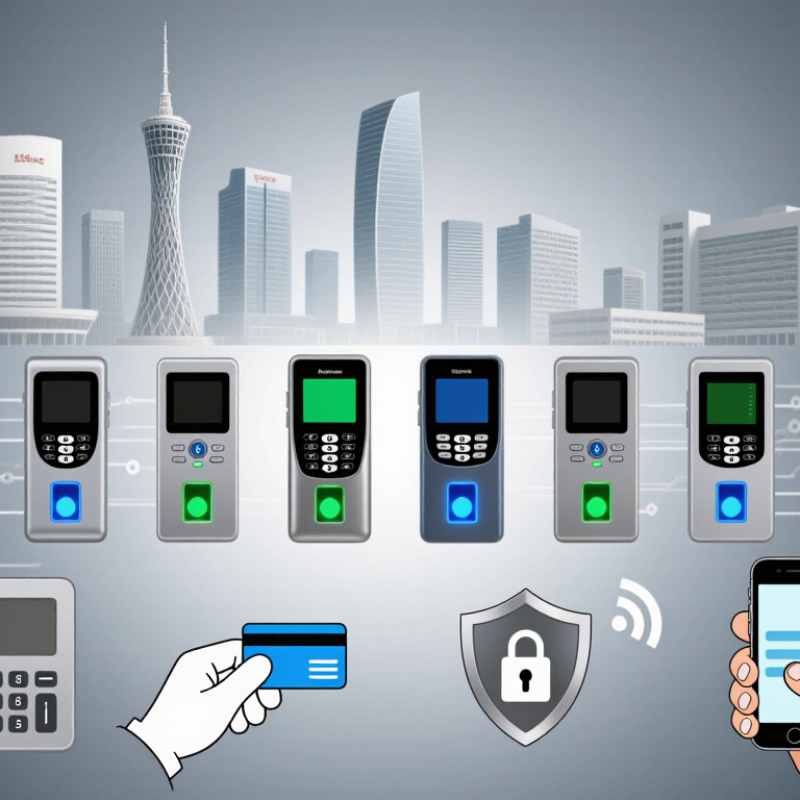
Table of Contents
[Hide]
Key Card Entry Systems: Definition, Components, and Operating Principles
Key card entry systems are electronic access-control solutions that verify a card before releasing a door lock. They are widely used in offices, hotels, hospitals, and industrial facilities. Grand View Research valued the global access-control market at approximately USD 9.9 billion in 2023, showing strong demand for managed entry infrastructure.
A typical system includes an RFID or NFC card, reader, access controller, electric lock, power supply, door sensor, and management software. The user presents a card near the reader. The reader captures its credential and sends encrypted data to the controller. The controller checks permissions, schedules, and door status. If approved, it powers the lock for several seconds. The event is then recorded for review. Simple in theory.
Reliable installation requires more than a good reader. Emergency power, fire-safety integration, network failure procedures, and accurate time settings can determine real-world performance. MarketsandMarkets projects the access-control market will grow steadily through 2028, driven by cloud management and connected security devices. Yet connectivity can create extra maintenance points. A system may work perfectly during testing, then fail because of weak batteries, damaged cabling, or poorly updated permissions. Buyers comparing China’s top key card entry system manufacturers should inspect reader standards, controller capacity, audit-log protection, warranty support, and documented testing. Hardware specifications alone are not enough.
China Top 10 Key Card Entry System Manufacturers - Key Card Entry Systems: Definition, Components, and Operating Principles
Manufacturer-neutral comparison of ten commonly deployed key card entry system configurations. Technical descriptions reflect standard industry architectures and typical operating characteristics rather than individual company or brand specifications.
| No. | System Configuration | Key Card or Credential | Reader Technology and Frequency | Main Components | Operating Principle | Lock or Controller Interface | Typical Security Profile | Common Use |
|---|---|---|---|---|---|---|---|---|
| 1 | Standalone Proximity System | Passive low-frequency proximity card or key fob | 125 kHz RFID; short-range inductive coupling | Proximity reader, access controller, credential database, relay, electric lock, request-to-exit device, door-contact sensor | The reader energizes the passive credential, receives its identifier, and compares it with locally stored permissions before releasing the lock. | Dry-contact relay, commonly connected to an electric strike, magnetic lock, or motorized lock | Convenient and economical; basic identifier-only credentials provide limited protection against cloning compared with encrypted smart cards. | Small offices, storage rooms, residential buildings |
| 2 | Networked Online RFID System | RFID card, key fob, or smart credential | Low-frequency or high-frequency RFID reader connected to an IP or RS-485 network | Readers, distributed controllers, management server, database, power supply, lock hardware, door position switch | The reader captures the credential identifier and sends an authorization request to a controller or server; approved events are logged centrally. | Relay output, supervised lock input, request-to-exit input, and door-monitoring input | Centralized permissions, audit trails, immediate credential revocation, and configurable anti-passback functions | Commercial buildings, campuses, industrial sites |
| 3 | 13.56 MHz Contactless Smart-Card System | Passive ISO/IEC 14443 contactless smart card | 13.56 MHz high-frequency reader using near-field communication | Contactless reader, secure credential, controller, access-management software, lock actuator, exit button, door sensor | The reader and card exchange data over a short-range radio link; encrypted authentication can verify the card and, where supported, protected application data. | Wiegand, OSDP, or direct controller connection; relay-controlled locking device | Higher protection is available when mutual authentication, diversified keys, encrypted communication, and secure key management are used. | Corporate offices, universities, healthcare facilities |
| 4 | Offline Smart-Card Locking System | Contactless smart card containing time-limited access data | 13.56 MHz contactless reader integrated into a battery-operated lock | Battery lock, card reader, embedded controller, real-time clock, audit-memory storage, emergency override, programming device | The lock reads the card, checks the access level and validity period locally, and actuates the clutch or motor without continuous network connectivity. | Integrated motorized latch or clutch; optional wireless gateway for event collection | Supports expiration dates and audit trails; security depends on credential encryption, protected firmware, and physical lock construction. | Hotel rooms, student housing, remote offices |
| 5 | Contact Smart-Card Reader System | Credit-card-sized integrated-circuit card with exposed contacts | Electrical contact interface compliant with the ISO/IEC 7816 card family | Contact card reader, controller, card interface, access software, lock relay, power supply, door-monitoring devices | The card is inserted into the reader; electrical contacts provide power and data exchange for credential verification before the controller grants access. | Serial or controller interface with relay output for the locking device | Can support cryptographic authentication, but card wear, contamination, and insertion requirements reduce convenience. | Legacy security installations, controlled laboratories, specialized facilities |
| 6 | Magnetic-Stripe Card System | Magnetic-stripe access card | Magnetic-head reader that detects encoded stripe data during swiping | Magnetic reader, access controller, card encoder or issuance system, relay, electric lock, door sensor | The reader detects changes in magnetic flux from the stripe, decodes the stored data, and compares it with authorized records. | Relay output or direct connection to an electronic lock controller | Low to moderate protection because stripe data can be copied; physical wear and incorrect swipe direction are common limitations. | Legacy doors, low-risk internal areas, temporary access programs |
| 7 | PoE IP Door Access System | Contactless smart card, RFID credential, or mobile credential | IP-connected reader using Ethernet; power may be delivered through Power over Ethernet | IP reader, network door controller, PoE switch, management platform, lock power supply, door sensor, exit device | Credential data is processed by the reader or controller and security events are transmitted over the Ethernet network for centralized administration. | OSDP, Ethernet, relay, supervised inputs, or integrated IP lock interface | Enables encrypted network communication, centralized monitoring, firmware management, and detailed event logging when properly configured. | Multi-floor offices, data centers, enterprise campuses |
| 8 | Wireless Battery-Powered Card Lock | Contactless smart card or encrypted RFID card | 13.56 MHz contactless reader integrated into a wireless lock unit | Battery pack, wireless lock, embedded reader, local memory, access credential, gateway, optional online management server | The lock validates the card locally; selected events or updated permissions are synchronized through a wireless gateway when available. | Integrated electronic clutch, motor, or latch; wireless backhaul to a gateway | Reduces cabling requirements and can support encrypted credentials; battery condition and emergency power procedures require regular maintenance. | Existing buildings, hotels, apartments, interior doors |
| 9 | Dual-Technology Card Entry System | Card combining two compatible credential technologies | Combined low-frequency and high-frequency reader, or contactless reader with an additional credential channel | Multi-technology reader, controller, credential-management software, lock interface, event database, door-monitoring hardware | The reader identifies the available credential technology and applies the corresponding authorization rules, allowing phased migration between systems. | Wiegand or OSDP reader connection with relay or controller output | Improves migration flexibility; the overall security level is determined by the weaker active credential technology and configuration. | System upgrades, mixed-building portfolios, large campuses |
| 10 | Card-and-PIN Multifactor System | Contactless smart card combined with a personal identification number | 13.56 MHz card reader with an integrated keypad | Smart-card reader, PIN keypad, controller, credential database, lock relay, request-to-exit device, door sensor, alarm interface | The controller requires both an authorized card and a valid PIN, then releases the lock only when the configured authentication policy is satisfied. | OSDP or controller connection, relay output, alarm input, and door-status monitoring | Provides two-factor authentication and can reduce risk from lost cards; PIN privacy, lockout rules, and encrypted credentials remain important. | Server rooms, restricted laboratories, financial and government areas |
Related Posts
-
Mastering Industry Compliance for the Best CCTV Camera Installation Guide
-
“Ultimate Guide to Choosing the Best Key Card Entry System: Insights and Data for Global Buyers”
-
Top 10 Access Control Systems for Enhanced Security Solutions?
-
Enhancing Home Security: The Ultimate Guide to CCTV and Alarm System Integration
-
How to Choose the Best Key Card Entry System for Your Business?
-
Navigating Challenges in Choosing the Right Card Access Control Systems for Your Business