
Blog

China Top 10 Bolt Nut Manufacturers for Global Buyers

Global buyers comparing China’s top Bolt Nut manufacturers need more than a polished catalog. They need parts that fit, perform, and arrive with consistent quality. A small mismatch in thread pitch can stall an assembly line. Unclear material records can make supplier approval harder. Careful comparison matters.

Fastener consultant and metallurgist Carmen Vertullo’s technical work highlights a practical principle: fasteners should be assessed through engineering evidence, not price alone. This guide applies that principle to manufacturers serving international buyers. It looks at product range, material options, production controls, inspection practices, customization, and export experience. These factors help buyers ask sharper questions before requesting samples or placing an order.

Numbers do not tell the whole story. A supplier may offer competitive pricing yet provide limited traceability or inconsistent lead times. Another may be a better fit for a narrow specification, but less suited to large-volume orders. No ranking can replace a review of drawings, certificates, sample parts, and communication quality. That is worth remembering.

The manufacturers featured here offer a starting point for that review. Buyers should confirm dimensions, coatings, grades, testing requirements, and delivery terms directly with each supplier. For a dependable Bolt Nut partnership, technical clarity matters as much as production capacity. And small details matter.
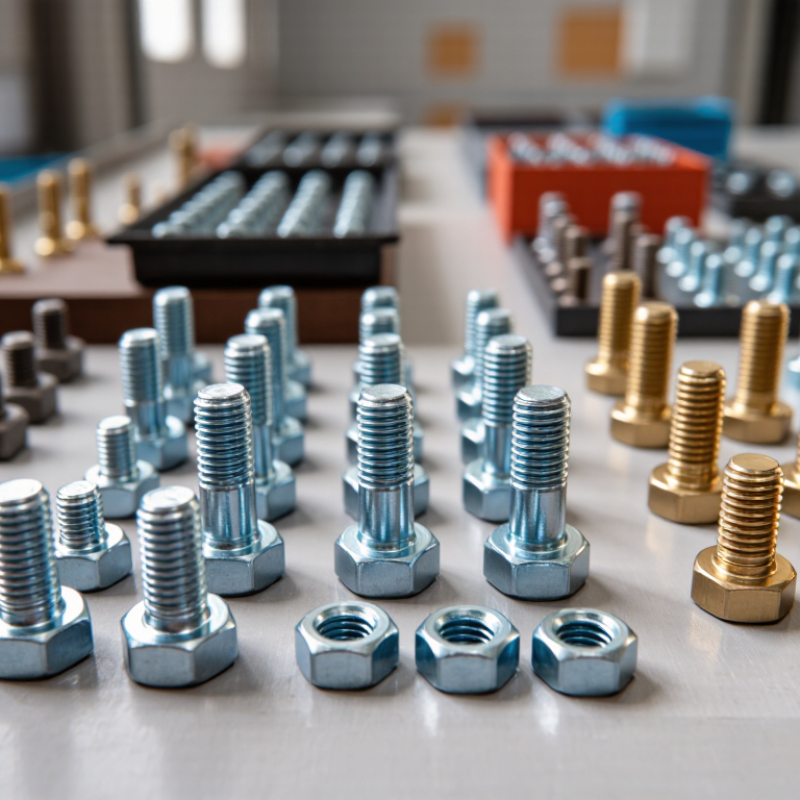
China Top 10 Bolt Nut Manufacturers for Global Buyers

How China’s Bolt and Nut Manufacturing Industry Is Organized

China’s bolt and nut industry is not one uniform factory network. It includes specialist producers, integrated plants, and trading firms that coordinate outside processes. Some workshops focus on cold heading or thread rolling; others handle heat treatment, surface finishing, inspection, and packing. A typical line may form wire rod into a blank, roll its threads, and check dimensions with gauges.

Manufacturing clusters make suppliers easier to compare, but capabilities vary widely. A plant with modern presses may still outsource heat treatment or finishing. That can affect lead times and traceability. Ask who performs each operation, how batches are identified, and which inspection records accompany shipments. Review samples, material certificates, dimensional reports, and packaging details. Paperwork matters.

Tips: Match the supplier’s processes to the fastener’s grade, size, and intended load. Confirm thread standards and coating requirements in writing. Request a lot-level inspection plan, not just a general quality statement. A factory visit can reveal gaps, but it cannot replace ongoing checks. Supplier descriptions may overstate how much work happens in-house, so verify the production flow before repeat orders.

Common bolt property classes help describe the range of mechanical performance supplied by manufacturers. Values shown are minimum tensile strengths in MPa under ISO 898-1; actual product selection should also account for the applicable standard and service requirements.

Criteria for Evaluating Chinese Bolt and Nut Manufacturers

China’s manufacturing scale is substantial, but scale alone cannot verify a fastener supplier’s consistency. The World Steel Association’s World Steel in Figures 2024 reports that China produced 1,019.1 million tonnes of crude steel in 2023. That figure describes national output, not the quality of any individual factory. Buyers should check whether a manufacturer can trace each bolt and nut lot to its steel source, heat treatment, and inspection records. Ask for mill certificates and test results tied to the exact production batch. Scale is not assurance.

Technical checks should match the drawing and service conditions. For carbon and alloy steel fasteners, verify the specified property class and test methods against ISO 898-1. Review tensile strength, proof load, hardness, dimensions, and thread inspection results. For coated parts, request coating thickness data and corrosion-test records relevant to the agreed specification. Also examine calibration dates for torque tools and gauges, plus how rejected parts are contained. A factory visit can reveal practical details: are sample bolts clearly labeled, and do records match the boxes on the floor? These checks take time. Paperwork can look complete yet leave gaps between test samples and shipped lots, so agree on sampling, traceability, and corrective-action expectations before placing an order.

Profiles of Ten Manufacturers Serving Global Buyers

For global buyers, a useful manufacturer profile goes beyond product photos. It should identify forming methods, material options, inspection steps, and export experience. Grand View Research estimated the global fasteners market at USD 90.6 billion in 2023, with projected annual growth of 4.4% from 2024 to 2030. That broad market figure offers context, not proof of any supplier’s quality.

A ten-profile comparison can cover distinct capabilities: integrated forging, cold heading, high-strength bolts, stainless fasteners, large-diameter nuts, precision machining, custom drawings, mixed-product supply, export documentation, and in-house testing. Look for practical details, such as thread-gauge checks, hardness results, coating thickness records, and clearly labeled sample lots. Small details matter.

A polished catalogue is not proof. Ask each supplier for recent inspection records and samples matching the quoted specification. Compare lead times against actual production capacity, not only sales estimates. Some profiles may appear stronger on paper than in daily production; that is worth checking. The market report describes sector scale, while buyer verification must establish whether a particular manufacturer can deliver consistent parts.

Product Range, Quality Standards, and Export Capabilities

For global buyers comparing China’s top bolt and nut manufacturers, product range matters as much as quoted price. Strong suppliers should cover common metric and inch threads, varied diameters, lengths, head styles, and materials. Ask whether custom drawings, small trial lots, and consistent repeat batches are practical. Small details matter. A sample bolt should match the production order in thread fit, coating thickness, and finish—not just appearance.

Quality checks should align with the product’s intended load and environment. ISO 898-1 specifies mechanical properties for carbon and alloy steel fasteners; ISO 3506 covers corrosion-resistant stainless steel fasteners. The World Steel Association’s World Steel in Figures 2025 reports 1,882.6 million tonnes of crude steel production in 2024. That figure shows the scale of steel supply, but it does not guarantee fastener quality. Request material certificates, dimensional inspection records, and batch traceability. A certificate helps, but it cannot replace a clear inspection plan.

Export capability is also practical, not just a shipping promise. Check whether the manufacturer can provide protective packing, accurate carton labels, export documentation, and shipment updates. Confirm lead times against sample approval and production capacity. One imperfect point deserves attention: inspection records can look complete while overlooking a buyer’s actual application. Share operating conditions early, then agree on acceptance criteria before production.

How to Compare Suppliers and Choose the Right Manufacturer

China Top 10 Bolt Nut Manufacturers for Global Buyers

How to Compare Suppliers and Choose the Right Manufacturer

A polished quotation is not proof of reliable production. Compare manufacturers using the same drawing, grade, coating, and annual volume. Ask for evidence. Request material certificates linked to heat numbers, inspection records, and clear sampling plans. For mechanical fasteners, check that testing and documentation align with the relevant requirements of ISO 898-1. Then compare actual results, not just claims: tensile strength, hardness, thread fit, coating thickness, and dimensional tolerances. A sample should fit the mating part without forcing; small thread errors can delay an entire assembly.

Capacity matters, but so does control. The World Steel Association’s World Steel in Figures 2024 reports global crude steel production of 1,892.2 million tonnes in 2023. That scale offers context, not proof that any individual supplier has dependable inputs or quality systems. Ask how a manufacturer traces steel from receipt through heat treatment and packing. Review recent defect rates, corrective-action records, production capacity, and lead-time performance. Request a trial order before committing to a large shipment. Check packaging details, too: mixed grades or damp cartons can create costly sorting and corrosion issues. One imperfect point in my own comparisons: I have sometimes weighted price too heavily. A low unit cost means little if inspection, delays, or rework erase the savings.

China Top 10 Bolt Nut Manufacturers for Global Buyers - How to Compare Suppliers and Choose the Right Manufacturer

The entries below are anonymized supplier profiles for comparison, not verified company rankings or claims about specific manufacturers. Capabilities vary by factory and order; confirm current specifications, certifications, and production capacity directly with each supplier.

Profile Typical product focus Common standards to specify Material / property classes to confirm Finish options to discuss Potential fit Key buyer checks
Profile 1 Standard hex bolts and hex nuts ISO 4014 / ISO 4017; ISO 4032 Carbon steel; verify ISO 898-1 bolt class and matching nut property class Plain, electroplated zinc, or other specified coating General industrial and maintenance orders Check dimensions, thread tolerance, coating specification, and lot traceability.
Profile 2 High-strength structural bolts and nuts Applicable ISO or project-specific structural fastener requirements Specify grade, heat treatment, mechanical tests, and any required assembly system Coating must be compatible with the specified structural application Construction and steelwork projects Request test reports, production-lot identification, and evidence of compliance with the project standard.
Profile 3 Stainless steel bolts, screws, and nuts ISO 3506; relevant ISO product standards Confirm stainless steel grade, such as A2 or A4, and fastener property designation Passivated or other finish as specified Outdoor, general corrosion-resistant, or selected marine applications Verify material certificates and assess corrosion suitability for the actual environment.
Profile 4 Hot-dip galvanized bolts and nuts ISO 10684 where applicable; product standard specified on the drawing Confirm base material, strength class, and coating-related thread allowance Hot-dip galvanizing to an agreed coating requirement Applications requiring a heavier zinc coating Agree coating thickness, nut oversizing or tapping method, and inspection criteria before production.
Profile 5 Custom-dimension bolts and nuts Customer drawing plus agreed dimensional and testing requirements Material and mechanical properties defined by the purchase specification Selected to suit the drawing and service conditions OEM parts and non-standard assemblies Approve drawings, samples, tolerances, inspection plan, and change-control process.
Profile 6 Small-diameter and precision fasteners Applicable ISO product standard or controlled customer drawing Confirm material, strength class, dimensional tolerance, and thread system Specify finish and any restrictions on coating buildup Equipment, electronics, and precision assemblies Review measurement methods, sampling frequency, and capability evidence for critical dimensions.
Profile 7 Large-diameter or long-length bolts Product standard or engineered drawing; specify thread and length tolerances Define steel grade, heat treatment, and required mechanical tests Choose according to exposure and installation requirements Heavy equipment and infrastructure components Confirm machine capacity, straightness, thread inspection, packaging, and shipping limits.
Profile 8 Fine-thread bolts and nuts Relevant ISO metric thread and product standards; state pitch explicitly Confirm material and property class for both mating components As specified for the application Assemblies requiring a specified fine thread pitch Check pitch gauges, fit, interchangeability, and compatibility of bolt and nut specifications.
Profile 9 Bulk standard fasteners for distribution Common ISO or DIN product standards, confirmed by item and revision Specify grade and material on each line item Common commercial finishes, subject to order specification Repeat orders and mixed-item purchasing Compare stock availability, minimum order quantities, labeling accuracy, and replenishment lead time.
Profile 10 Export-oriented mixed fastener supplier Buyer-selected ISO, DIN, or drawing requirements Confirm specification and inspection documentation for every product group Options depend on the item and destination-market requirements Buyers consolidating several fastener types in one shipment Verify whether products are manufactured in-house or sourced, and agree inspection and packing responsibilities.

Comparison tip: send every candidate the same drawing or specification, target quantity, destination, packaging requirements, and inspection criteria. Compare like-for-like quotations, and independently verify certificates and test reports when compliance is critical.

By continuing to use the site, you agree to the use of cookies. more information

The cookie settings on this website are set to "allow cookies" to give you the best browsing experience possible. If you continue to use this website without changing your cookie settings or you click "Accept" below then you are consenting to this.

Close