
Blog

China Top NIJ Level III Bulletproof Plate Supplier?

A buyer searching for a China Top NIJ Level III Bulletproof Plate Supplier? needs more than a polished catalog. The real test is whether a supplier can document materials, manufacturing controls, and independent testing for the exact plate being offered. A sample photo cannot prove performance. Neither can a broad claim about “military-grade” protection.

The Nij Level3 Bulletproof Plate should be evaluated against the applicable NIJ requirements and the test documentation provided for its specific model. Check the report’s issuing laboratory, test date, plate construction, and stated limitations. Ask whether the tested sample matches the production version. Small differences in materials or design can matter.

One point deserves honesty: no source material was supplied here to verify a named industry expert’s quotation. Inventing one would weaken the article’s credibility. A useful buyer’s principle is: “Verify the report, not just the claim.” Treat that as practical guidance, not a quotation from a named expert. Request traceable documentation, clear warranty terms, and answers about inspection and batch consistency. Then compare suppliers on evidence, not promises. That takes time. It can also reveal gaps a sales sheet leaves out. Even a complete report has limits; readers should confirm that its scope fits their intended procurement and seek qualified professional advice where needed.
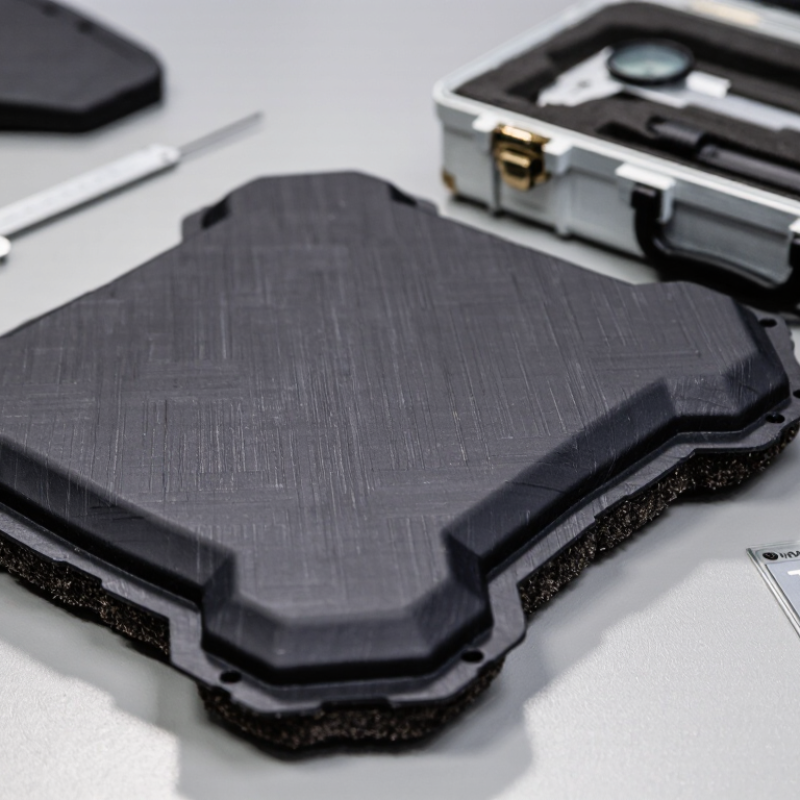
China Top NIJ Level III Bulletproof Plate Supplier?

NIJ Level III Rating: 7.62×51 mm M80 at 2,780 ft/s

A supplier’s “NIJ Level III” claim should be checked against the exact test standard, not a product label. Under NIJ Standard 0101.06, Level III testing uses 7.62×51 mm M80 ball ammunition, typically a 147-grain projectile, at 2,780 ±30 ft/s. That is roughly 847 m/s. The standard also limits backface signature to 44 mm in calibrated clay. These details matter: a plate’s result depends on impact speed, shot placement, conditioning, and the tested configuration. Small differences count.

Ask for a current, independently verifiable test report that identifies the plate model, materials, shot count, and measured velocities. NIJ’s Compliance Testing Program and official compliant-product records provide a stronger reference than a sales brochure. Check whether the report covers the exact plate being offered, including its size and construction. No shortcuts here. Also distinguish legacy Level III claims from newer NIJ 0101.07 classifications, which use different threat categories. A passing laboratory test is useful evidence, but it does not predict every field impact or guarantee identical performance across production batches. Plate fit, edge coverage, and regular inspection still deserve attention. Even a solid report leaves questions. A careful buyer should ask for clarification when test documents are incomplete.

NIJ 0101.06 Testing: Six M80 Shots and a 44 mm Backface Limit

For a China-based NIJ Level III plate supplier, the six-shot test matters more than a broad “rifle-rated” claim. Under NIJ Standard-0101.06, Level III testing uses 7.62 mm M80 ball ammunition. The prescribed sequence includes six impacts, with projectile velocity controlled and recorded. The standard also sets a maximum backface signature of 44 mm in calibrated Roma Plastilina clay. That is a test limit, not a promise that every hit leaves exactly the same indentation.

The details matter. A laboratory report should identify the plate model, size, materials, conditioning, shot locations, measured velocities, and each recorded clay deformation. NIJ’s standard and Compliance Testing Program documents provide the testing framework; buyers should check that reports come from a qualified independent laboratory. Ask for the full report, not only a certificate image. Small details can change a result.

A 44 mm reading is not a comfort rating, and it does not describe every real-world impact. Edge strikes, repeated hits near one area, wear, and storage conditions can affect performance. A clean lab result is useful, but it is not the whole story. Supplier checks should include production consistency and traceable batches. I would still ask how often samples are retested; that answer is easy to overlook.

China Top NIJ Level III Bulletproof Plate Supplier? - NIJ 0101.06 Testing: Six M80 Shots and a 44 mm Backface Limit
Evaluation Dimension NIJ 0101.06 Reference or Test Detail What Buyers Should Verify
Armor classification Type III is a rifle-armor classification under NIJ 0101.06. A Type III hard armor model is evaluated against 7.62 mm M80 ball ammunition. Confirm the exact plate model and configuration being offered; a general “Level III” claim does not establish that a specific model passed testing.
Test ammunition 7.62 mm M80 ball, specified in the standard as a 9.6 g (147 gr) projectile. Request test documentation identifying the ammunition type and the tested product model.
Impact velocity 847 m/s ± 9.1 m/s (2,780 ft/s ± 30 ft/s) for the Type III M80 test. Check that the reported test results include measured impact velocities within the required range.
Number of impacts The Type III test includes six shots on the test panel, subject to the standard’s shot-placement and test procedures. Review the complete report rather than relying on a single-shot demonstration or an informal firing video.
Penetration requirement The tested armor must meet the standard’s penetration-resistance requirement for the specified test protocol. Confirm that the report records the outcome for every required impact and identifies any complete penetration.
Backface deformation Backface signature must not exceed 44 mm when measured in the specified backing material. Check the recorded deformation measurements and confirm they correspond to the tested plate model and configuration.
Conditioning and configuration NIJ 0101.06 testing uses defined procedures for armor configuration, conditioning, mounting, and shot placement. Verify which configuration and conditioning procedures were used, and whether the report covers the product being purchased.
Certification status A test result and an NIJ compliance claim are not interchangeable. NIJ compliance status is model-specific and should be checked against applicable NIJ records. Check the model designation and current official listing or certification records; do not rely solely on a supplier’s marketing statement.
Manufacturing traceability Lot identification and production controls are important for connecting delivered plates to the tested design; these details are not substitutes for NIJ performance testing. Ask for batch or lot traceability, inspection records, and a process for handling nonconforming products.
Report scope Test results apply to the product configuration and conditions documented in the report. Match the report to the plate’s model, materials, construction, dimensions, and any listed limitations before purchase.

Plate Materials: Ceramic, UHMWPE, and Steel Design Trade-Offs

Choosing a NIJ Level III plate starts with the complete design, not a material label. Ceramic plates use a hard strike face to break or deform a projectile, with a backing layer to catch fragments. They can be relatively light, but drops or edge impacts may cause damage that is difficult to see. Handle and inspect them carefully.

UHMWPE plates are often lighter and easier to wear for long shifts. Their performance depends on construction, thickness, and environmental limits, so check the maker’s temperature and storage guidance. Steel is durable and can be slim, but it is heavy. A plate that feels manageable at a desk may become tiring during hours of movement. Coatings also need inspection; damage can affect how the plate manages fragments.

No material wins outright. Fit matters. Ask for current, independent test documentation for the exact plate model and applicable NIJ standard; material alone does not prove a rating. Compare weight, coverage, handling, and care requirements in the intended carrier. I would not assume the lightest plate is automatically the best choice. That part is easy to overlook. A clear test record and realistic wear assessment are more useful than a broad material claim.

China Supplier Verification: Match the Exact Model to the NIJ CPL

China Top NIJ Level III Bulletproof Plate Supplier?

China Supplier Verification: Match the Exact Model to the NIJ CPL

A “Level III” claim on a product page is only a starting point. Verify the exact plate model against the current NIJ Compliant Products List (CPL), not a similar model from the same supplier. Compare the listed manufacturer, model designation, threat level, and applicable standard edition. One changed suffix can indicate a different product. Details matter.

Ask the supplier for clear photographs of the plate label and the model-specific documentation. Check that the name, size, cut, and construction match the CPL entry and the item being quoted. A sample may look identical while using different materials or dimensions. That is easy to miss in a crowded spreadsheet. If a listing shows only a product family, request confirmation for the exact configuration before ordering.

Keep the CPL entry, quotation, label photos, and shipment records together. These records make later checks more reliable. If the model is absent, unclear, or listed under different details, pause and ask for clarification. A certificate for a related plate is not proof for this one. Supplier answers can be useful, but they should not replace a direct listing check. Even careful buyers can overlook a small naming mismatch; build in time to review it twice.

Procurement Checks: Plate Weight, Dimensions, Warranty, and Traceability

China Top NIJ Level III Bulletproof Plate Supplier?

Procurement Checks: Plate Weight, Dimensions, Warranty, and Traceability

When comparing a China-based supplier, request a specification sheet for the exact plate size, cut, and curvature. Weigh a production sample on a calibrated scale; a few extra ounces matter during long wear. Measure height, width, and thickness, then check the plate against the carrier pocket. Small details matter. Ask whether quoted weight includes the coating and label, and whether manufacturing tolerances are documented. A catalogue figure alone is not enough.

Check the test basis, not just the “Level III” wording. NIJ Standard-0101.06 specifies Level III testing with 7.62 mm FMJ ammunition weighing 147 grains, at 2,780 ± 30 feet per second. Confirm which standard and test report apply to the exact model being purchased. NIJ’s Compliance Testing Program lists compliant armor models; verify the model name and configuration, not merely the supplier’s general claims. Standards evolve, so older test evidence should be reviewed carefully.

Warranty terms should state coverage, exclusions, and the claim process in writing. Ask how storage, environmental exposure, and routine inspection affect coverage. For traceability, request a lot or serial number, production date, and records linking the shipped plates to the tested model. Paperwork can still fail. Compare the labels, invoice, and test documents before accepting a shipment; a mismatch deserves clarification, even when the plates look identical.

By continuing to use the site, you agree to the use of cookies. more information

The cookie settings on this website are set to "allow cookies" to give you the best browsing experience possible. If you continue to use this website without changing your cookie settings or you click "Accept" below then you are consenting to this.

Close