
Blog

China Top SPDT Micro Switch Manufacturers and Suppliers?

China’s spdt micro switch sector sits at the intersection of precision engineering, automation, and dependable human-machine control. Market reports from MarketsandMarkets and Grand View Research indicate continued expansion in global switches, industrial automation, and electronic components demand. However, these reports usually group micro switches with broader switch categories. Their figures should not be treated as exact SPDT micro switch statistics.

That limitation matters.

An SPDT micro switch may look tiny, yet its silver contacts, spring mechanism, actuator travel, and sealing structure can determine whether a control panel performs reliably after thousands of operations. In China, established manufacturers and specialized suppliers serve appliance, automotive, security, robotics, and industrial equipment markets. Buyers should examine rated current, switching frequency, contact resistance, mechanical life, operating force, IP protection, and certification records.

Peter McGall, widely credited with inventing the modern microswitch, demonstrated the value of fast, repeatable snap action in compact switching devices. His work reflects a lasting engineering principle: a small component must deliver a decisive electrical response. That principle still guides serious supplier evaluation.

The strongest manufacturers provide traceable testing, stable tooling, documented quality systems, and samples that match mass-production units. Product pages alone are not enough. Factory audits, endurance data, and application testing reveal more.

This guide compares China’s top SPDT micro switch manufacturers and suppliers through those practical criteria. Rankings can never replace engineering judgment, but they can make sourcing clearer, more disciplined, and less vulnerable to attractive yet incomplete specifications.
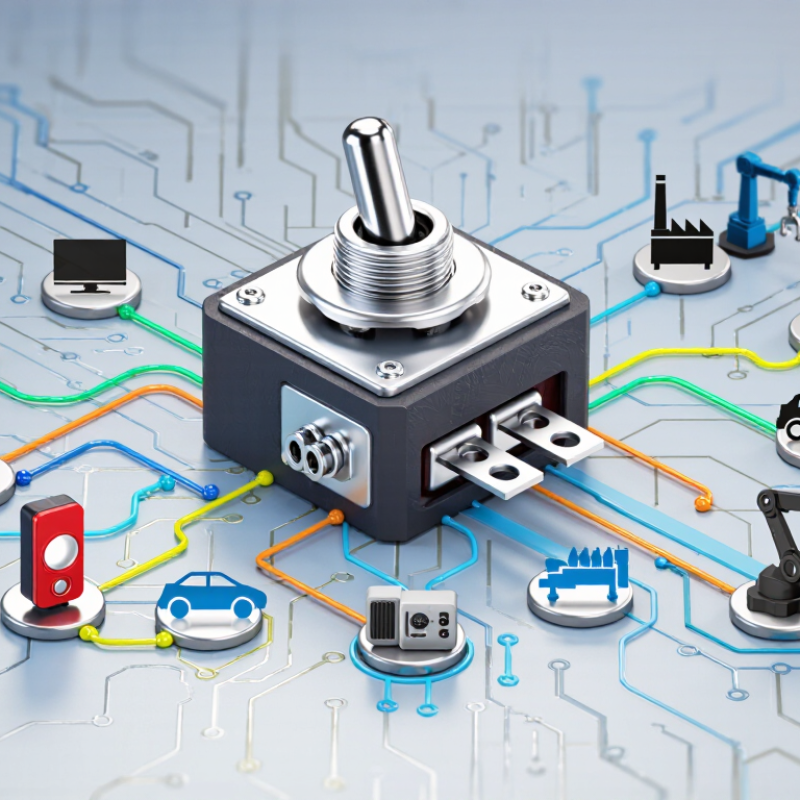
China Top SPDT Micro Switch Manufacturers and Suppliers?

What Is an SPDT Micro Switch and How Does It Work?

What Is an SPDT Micro Switch and How Does It Work?

An SPDT micro switch means Single Pole Double Throw. It uses one common terminal and two switching paths. One path is normally closed, or NC. The other is normally open, or NO. When an actuator moves, the internal spring changes the contact position. This action redirects one circuit to another with a small, defined movement.

You may find SPDT micro switches inside control panels, safety devices, appliances, and compact machines. Their crisp clicking sound often confirms mechanical movement, but sound alone proves little. Check the electrical rating, operating force, travel, contact resistance, and expected cycle life. A reliable manufacturer or supplier should provide drawings, test data, and material information. These details help engineers match the switch with real operating conditions.

Tips: Select the actuator shape according to the machine’s movement. A roller lever suits sliding parts, while a plunger fits direct pressing. Keep dust and moisture away from exposed contacts. Real installations are rarely perfect. A switch can pass a bench test yet fail under vibration, heat, or repeated impact. Allow a small mechanical margin, and test the switch under its actual load before approving production.

Key Features and Applications of SPDT Micro Switches in China

SPDT micro switches provide one common terminal and two selectable outputs. Their snap-action mechanism changes circuits with minimal travel. This design supports precise position sensing in appliances, control panels, vehicles, and factory equipment. A 2024 Fortune Business Insights report estimated the global microswitch market at about USD 1.1 billion in 2023. It also projected steady growth through 2032, driven by automation, automotive electronics, and smart appliances.

China’s manufacturers and suppliers commonly offer compact bodies, silver-alloy contacts, long mechanical life, and multiple actuator styles. Typical options include levers, rollers, plungers, and sealed versions. Electrical ratings may range from signal-level loads to several amperes, depending on construction. Always verify the actual load. A switch rated for resistive current may perform poorly with motors or solenoids. Applications often require fast switching, stable contact resistance, and resistance to dust, oil, or vibration. IP protection, operating temperature, and endurance data should be checked against IEC 61058-1 or the relevant equipment standard. Datasheets can look complete, but they are not always comparable.

Tips: Ask suppliers for endurance-test conditions, contact materials, tolerance data, and sample results. Check whether ratings apply to AC, DC, or both. For production projects, test at the real voltage, current, cable length, and actuator force. A perfect switch is rare. Small installation errors still cause failures. Use incoming inspection and traceable batch records to improve reliability. Supplier audits also help confirm tooling control, testing equipment, and process consistency.

How to Evaluate Chinese SPDT Micro Switch Manufacturers

How to Evaluate Chinese SPDT Micro Switch Manufacturers

Evaluating a Chinese SPDT micro switch manufacturer requires more than comparing unit prices. Request a complete datasheet with switching configuration, operating force, travel, contact resistance, and electrical ratings. These details show whether the switch suits control panels, appliances, or industrial equipment.

Ask for recent sample units, not only catalog photos. Test the samples under your real voltage, current, temperature, and mounting conditions. Check terminal alignment, actuator movement, switching sound, and contact stability. A reliable supplier should provide life-cycle data, inspection records, and traceable batch numbers. Certificates such as ISO 9001, RoHS, or REACH documentation can support credibility, but certificates alone prove little.

Review the factory’s quality process in practical detail. Confirm incoming material checks, assembly controls, final testing, and defect-handling procedures. Ask how tooling changes are approved and how production lots are identified. An experienced engineering team should explain tolerance limits without vague promises. Pricing matters, but an unusually low quote may hide thinner materials, weaker springs, or inconsistent plating.

Visit the facility when possible, or arrange a live video audit. Look for organized workstations and calibrated testing equipment. I once treated a polished sample as sufficient evidence; that decision overlooked production variation. A pilot order can reveal packaging damage, lead-time accuracy, and communication quality. No supplier is flawless. The useful question is whether problems are measured, reported, and corrected quickly.

How to Evaluate Chinese SPDT Micro Switch Manufacturers

Typical technical benchmarks used when comparing SPDT micro switch suppliers. Values are representative catalog ranges and should be verified against the supplier’s datasheet, samples, and test reports.

Key evaluation points include rated electrical load, mechanical durability, operating temperature, contact resistance, and insulation resistance. Buyers should also confirm IEC 61058-1 or applicable national standards, quality-system certification, traceability, sample consistency, and production test procedures.

Leading Types of SPDT Micro Switch Suppliers in China

China’s leading SPDT micro switch suppliers usually fall into three practical groups. Dedicated switch manufacturers focus on contact systems, terminals, housings, and actuator design. They often provide stable drawings, sample testing, and controlled production records. Some operate as OEM and ODM factories. These suppliers can adjust lever length, operating force, travel, and mounting holes for specific equipment.

Electronics distributors form another important supplier type. They stock common SPDT configurations and support smaller orders with faster dispatch. Their strength is convenience, not always deep engineering support. Buyers should confirm whether products come from a verified factory or a trading channel. A catalog is not proof. Ask for rated current, insulation resistance, electrical life, and operating temperature data.

Contract manufacturers may combine switch sourcing with cable assembly, PCB installation, or final equipment assembly. This option can reduce coordination work for appliance, control panel, and automation projects. However, quality depends on incoming inspection and traceability. Check sample consistency under repeated switching, not only appearance. A reliable supplier should explain its test equipment, sampling plan, and corrective-action process. Details matter.

In practical sourcing, I would compare at least three supplier types before approving production. Request dimensional drawings, material information, test reports, and pre-production samples. Small differences in actuator force can affect field performance. Even experienced buyers sometimes overlook packaging moisture or terminal alignment. That deserves a second review. Supplier claims should be matched with measurable evidence, clear communication, and realistic delivery commitments.

China Top SPDT Micro Switch Manufacturers and Suppliers? - Leading Types of SPDT Micro Switch Suppliers in China

SPDT Micro Switch Type Typical Actuator Typical Electrical Rating Contact Arrangement Typical Operating Force Typical Mechanical Life Common Protection Options Common Applications
Standard Hinged-Lever SPDT Straight or bent metal lever Up to approximately 5 A at 250 VAC, depending on design COM, NO and NC terminals Approximately 0.5–2.5 N Typically 100,000–1,000,000 operations Open-frame or basic covered housing Control panels, appliances, vending equipment and position sensing
Roller-Lever SPDT Roller lever for smooth linear movement Commonly 1–5 A at 125/250 VAC Single-pole double-throw switching Approximately 0.7–3.0 N Typically 100,000–500,000 operations Dust-resistant cover or sealed actuator area Door detection, industrial machinery and limit-position control
Plunger-Type SPDT Top plunger or pin actuator Commonly 0.1–5 A at low-voltage or mains applications COM changes between NO and NC circuits Approximately 0.5–4.0 N Typically 100,000–1,000,000 operations Standard housing; optional dust or moisture protection Keyboards, interlocks, compact mechanisms and safety detection
Waterproof SPDT Micro Switch Sealed plunger, lever or roller lever Often rated up to approximately 5 A at 250 VAC COM, NO and NC switching terminals Approximately 0.8–4.0 N Typically 100,000–500,000 operations Commonly IP65–IP67 when properly assembled and tested Outdoor equipment, automotive components, appliances and wet environments
Subminiature SPDT Compact plunger or miniature lever Commonly 0.1–3 A, depending on voltage and load type Single-pole double-throw Approximately 0.2–2.0 N Typically 100,000–500,000 operations Compact enclosed body; optional sealing Printers, office equipment, consumer electronics and compact controls
High-Temperature SPDT Heat-resistant plunger or lever Typically 1–5 A at 125/250 VAC, subject to temperature derating COM, NO and NC contacts Approximately 0.8–3.5 N Typically 100,000–500,000 operations Heat-resistant housing and insulation materials Heating appliances, industrial ovens and temperature-exposed machinery
Note: The specifications shown are typical industry ranges for SPDT micro switches manufactured in China. Actual ratings, dimensions, operating force, service life and ingress-protection performance vary by model and should be confirmed through the supplier’s datasheet and product testing.

How to Select and Purchase the Right SPDT Micro Switch Supplier

Selecting a China-based SPDT micro switch supplier requires more than comparing catalogue prices. An SPDT switch changes one common circuit between two outputs. Its force, travel, contact resistance, switching capacity, and mechanical life must match the application.

Grand View Research estimated the global micro switch market at about USD 1.1 billion in 2023. Its report also projects growth from 2024 to 2030, driven by automotive, appliances, and industrial controls. This growth increases supplier choice, but not necessarily supplier quality. Request a complete datasheet, test limits, wiring diagrams, and sample approval records. Check whether ratings apply to resistive or inductive loads. They are not interchangeable.

Audit the factory’s incoming-material controls, production testing, and lot traceability. Ask for life-cycle test results under your actual voltage and current. Confirm compliance documents for IEC 61058-1, RoHS, and REACH when applicable. Review terminal plating, housing material, sealing level, and storage conditions. A pilot order should test contact bounce, actuation force, and dimensional consistency. Measure them independently. A low quotation may hide tooling fees, unstable batches, or weak after-sales support. I would not approve a supplier from samples alone. Supplier performance must be reviewed across several production lots. Mistakes happen, even with qualified factories. The purchasing plan should include replacement samples, inspection criteria, and a realistic lead-time buffer.

By continuing to use the site, you agree to the use of cookies. more information

The cookie settings on this website are set to "allow cookies" to give you the best browsing experience possible. If you continue to use this website without changing your cookie settings or you click "Accept" below then you are consenting to this.

Close