
Choosing a China-based supplier for a Tungsten Alloy Vibration Absorber requires more than comparing prices. “Top” depends on the application, operating conditions, and quality evidence a supplier can provide. A component used in a precision instrument may need different dimensions and performance from one installed in industrial machinery.
Start with the basics. Share the absorber’s drawings, operating frequency, expected vibration load, and installation limits. Ask which tungsten alloy grades are available and how the supplier controls density, machining accuracy, and surface finish. Small details matter. A few millimeters of added length or an inconsistent fit can affect installation and performance.
A reliable supplier should explain its production process clearly and provide relevant inspection records or test data. Ask how it checks dimensions and whether it can support prototypes before larger orders. Also confirm lead times, packaging, and how design changes are handled. A polished specification sheet is useful, but it may not answer every practical question. I would look for specific, verifiable answers rather than broad claims about being the best.
This guide explores how to compare Chinese manufacturers, assess technical capability, and identify questions worth asking before requesting a quotation. No supplier is automatically the right choice for every project. Careful checks can help buyers make a more informed decision—and avoid treating a low price as proof of good value.
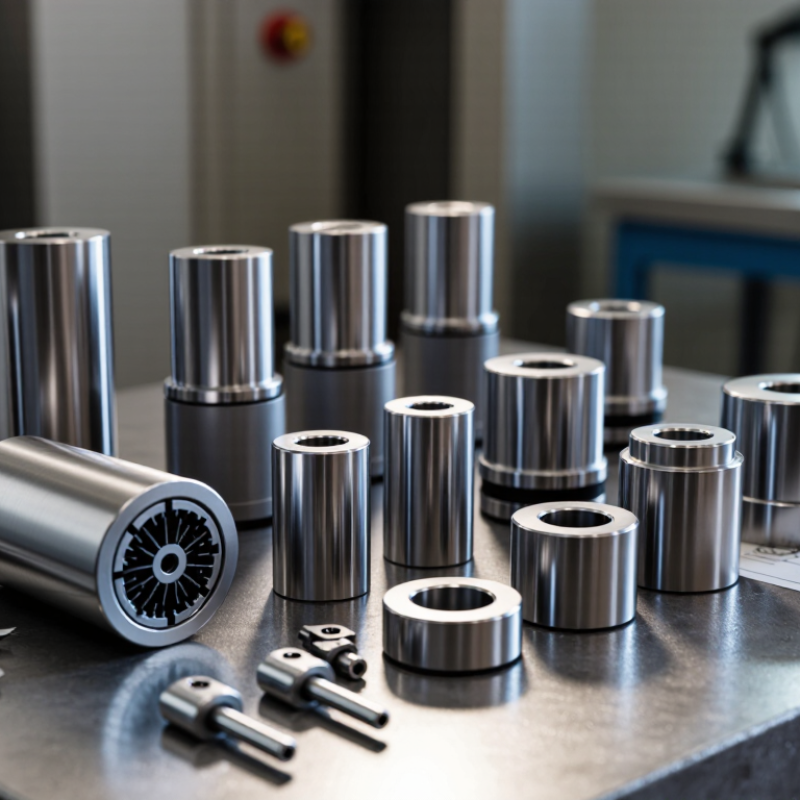
A tungsten alloy vibration absorber is a compact device that uses a dense metal mass to help control unwanted motion. Tungsten alloys can provide substantial mass in a limited space. That matters. In a tuned absorber, the mass moves in response to vibration and helps reduce motion near a selected frequency. Springs or flexible mounts connect it to the equipment, while damping elements limit the mass’s movement. The alloy provides inertia; it does not, by itself, dissipate much vibration energy.
Design depends on the machine and its operating conditions. Engineers consider vibration frequency, available space, mounting strength, temperature, and the absorber’s expected service life. A heavy insert may suit a small motor housing, a precision instrument, or another assembly with a clear vibration problem. But added mass in the wrong location can shift resonance or increase stress. There is no perfect shortcut. Calculations help, yet measurements on the actual assembly often reveal details that a simplified model misses. Material grade and machining tolerances also deserve checking, because a close-fitting component can still perform poorly if its support or damping element is unsuitable.
A tungsten alloy absorber reduces vibration mainly through added mass and controlled motion, not because tungsten magically cancels shaking. NIST lists pure tungsten’s density at about 19.3 g/cm³, allowing a compact absorber to add substantial inertia. In a simple mass-spring system, adding mass lowers the natural frequency; a tuned absorber can then move against the vibrating structure and limit its response near a selected frequency.
That mass matters.
But mass alone is not damping. Energy must be dissipated through a designed damping layer, joint friction, or another mechanism. Without it, vibration may shift rather than fade, and a poorly tuned absorber can amplify motion near a new resonance. Engineers should measure the structure’s frequency response before choosing absorber mass and stiffness. ISO 20816 provides guidance for assessing machine vibration, though acceptance limits depend on equipment type and installation.
A practical test uses accelerometers on the source and frame, then compares frequency sweeps before and after installation. Check fasteners, temperature, and operating speed, too. Real machines vary. That detail is easy to miss.
A tungsten-alloy vibration absorber depends on more than its heavy mass. Tungsten–nickel–iron and tungsten–nickel–copper alloys are common choices. The International Tungsten Industry Association’s technical overview reports typical heavy-alloy densities of about 17–18.5 g/cm³. That density helps engineers add inertial mass in a compact space. It does not, by itself, guarantee strong vibration damping. The alloy’s stiffness, mounting method, and contact surfaces also shape performance.
Powder blending and liquid-phase sintering help create a dense, uniform part. The tungsten particle size and binder proportion affect strength and machinability. Small pores matter. They can weaken the part or create inconsistent contact under repeated loads. Hot isostatic pressing may reduce residual porosity, while precision machining controls fit at the mounting interface. I would not treat density as a damping guarantee; that distinction is easy to miss. Test the finished assembly across its operating frequency range.
Supply quality also deserves attention. The USGS Mineral Commodity Summaries 2025 estimates 2024 global tungsten mine production at 81,000 metric tons, including 67,000 tons from China. These figures describe mined material, not finished alloy quality. Buyers should therefore request composition, density, and inspection records for each production lot. A beautifully dense alloy can still disappoint if its geometry or interface is wrong.
| Design or Production Factor | Typical Material or Process | Relevant Characteristics | Effect on Vibration Absorber Performance |
|---|---|---|---|
| Heavy-alloy composition | Tungsten-based heavy alloys commonly use approximately 90–97 wt% tungsten, with a nickel–iron or nickel–copper binder phase. | The binder helps consolidate the tungsten particles. Alloy properties vary with tungsten content, binder chemistry, and processing. | Composition influences density, strength, machinability, and magnetic or corrosion-related behavior. The appropriate grade depends on the operating environment and component design. |
| Density and compact mass | Many tungsten heavy alloys have densities of approximately 16.5–18.5 g/cm³. | The high density allows substantial mass in a relatively small volume. | A compact absorber mass can help meet space and weight-distribution requirements. Density alone does not determine vibration reduction; the tuned mass, mounting, and system dynamics matter. |
| Elastic stiffness | Tungsten heavy alloys are generally much stiffer than common structural steels; elastic modulus is grade- and process-dependent. | Stiffness affects deformation under load and the natural frequency of the absorber assembly. | The component geometry and attachment must be designed together with the host structure to achieve the intended frequency response. |
| Powder preparation and blending | Powder metallurgy typically uses tungsten powder blended with binder-metal powders. | Powder size, distribution, cleanliness, and blend uniformity influence the consistency of the sintered material. | Controlled preparation helps reduce composition variation and supports repeatable density and mechanical properties between parts. |
| Compaction and shaping | Blended powder is compacted into a near-net-shape or preform, using a method selected for the part geometry and production requirements. | Compaction establishes the green shape before sintering; complex geometries may need additional machining. | Uniform compaction helps limit density gradients and dimensional variation that could affect balance, fit, or assembly. |
| Liquid-phase sintering | A common consolidation route heats the compact so the binder phase becomes liquid and promotes densification of the tungsten particles. | Sintering temperature, time, atmosphere, and cooling conditions need to be controlled for the chosen alloy. | Process control affects final density, microstructure, dimensional stability, and mechanical consistency. |
| Post-sinter machining | CNC turning, milling, drilling, and grinding may be used to finish features and achieve required dimensions. | Tungsten heavy alloys are dense and can be demanding to machine; tooling and cutting parameters are selected for the grade and geometry. | Accurate finished dimensions support reliable mounting and mass placement. Critical parts may require inspection for size, surface condition, and balance. |
| Joining and mounting | Mechanical fastening, interference fits, or a qualified joining method may be used, depending on the assembly. | Joint stiffness, contact condition, and retention method affect how vibration forces pass between the absorber and host structure. | A secure, repeatable interface is essential. A poorly designed joint can loosen, change the system response, or undermine the absorber’s intended function. |
| Inherent damping versus system damping | Tungsten heavy alloy is primarily selected for its high density; it should not be assumed to provide high intrinsic damping by itself. | Vibration reduction may rely on tuned-mass behavior, frictional interfaces, or separate damping elements, depending on the design. | Performance should be assessed for the complete assembly and operating conditions, rather than inferred from material density alone. |
| Quality verification | Typical checks can include dimensional inspection, mass measurement, density assessment, and mechanical testing appropriate to the specification. | Inspection requirements should be defined for the part’s function and acceptance criteria. | Documented verification helps confirm consistency of fit, mass, and material quality in production batches. |
Tungsten alloy vibration absorbers are used where strong vibration control must fit into limited space. Their high density lets engineers add substantial mass without a bulky component. Common settings include machine-tool spindles, precision measuring equipment, robotic arms, and industrial machinery. In these systems, vibration can blur measurements, mark a finished surface, or loosen nearby fasteners. Small spaces count.
The alloy usually acts as an inertial mass, not a complete damping solution by itself. A tuned absorber combines that mass with a spring or compliant layer, then targets a troublesome vibration frequency. Aerospace equipment and vehicle assemblies may use compact versions when weight, clearance, and operating conditions demand careful trade-offs. Fit matters. Engineers need to check the vibration spectrum, mounting stiffness, temperature, and fatigue loads before selecting a design. A poorly placed absorber can shift vibration rather than reduce it. Results should be verified with measurements under realistic operating conditions; calculations alone can miss a loose joint or changing load. This detail is easy to overlook.
When evaluating a China-based supplier of tungsten alloy vibration absorbers, start with the application, not a catalogue photograph. Explain the operating frequency, mounting space, load, and temperature range. A dense part can add mass, but density alone does not prove effective vibration control. Ask how the proposed geometry and material grade suit your assembly. Small details matter.
Request a material certificate linked to the production batch, along with dimensional inspection records. Confirm alloy composition, density, dimensions, surface finish, and agreed tolerances. Ask whether measurements use calibrated instruments and whether you can inspect a sample before volume production. For critical assemblies, discuss testing the absorber in its installed condition; bench data may not predict field behavior. Review machining capability too. Tungsten alloys can be challenging to machine, and rough edges or inconsistent holes may complicate installation. A polished sample is not enough.
Ask who handles nonconforming parts, how design changes are approved, and whether batch traceability continues through packing and shipping. Compare lead times with realistic inspection steps, not only promised dispatch dates. Request a written drawing review and clarify packaging for heavy components. One awkward point: the lowest quotation can look convincing before testing costs appear. I would leave room for a second sample round; early assumptions are sometimes wrong. Keep evaluation records specific, with accepted dimensions and test conditions clearly stated.
By continuing to use the site, you agree to the use of cookies. more information
The cookie settings on this website are set to "allow cookies" to give you the best browsing experience possible. If you continue to use this website without changing your cookie settings or you click "Accept" below then you are consenting to this.