
Blog

How to Choose HP-CF-010 Aerogel Ceramic Fiber Paper?

Choosing Aerogel Ceramic Fiber Insulation Paper HP-CF-010 starts with the job it must perform, not its name. A furnace door, pipe wrap, and equipment enclosure place different demands on insulation. Check the operating temperature, available space, heat-loss target, and exposure to moisture or vibration. Small details matter. A narrow gap can make installation difficult, while a rough edge may complicate cutting and fitting.

Review the product datasheet for thickness, density, thermal conductivity, temperature limits, and handling guidance. Compare those figures with your actual conditions. Do not assume that “aerogel” alone guarantees a particular result; installation quality, compression, and surrounding materials also affect performance. Ask the supplier for test methods and application-specific recommendations. Then check whether the sheet can be cut and secured with the tools available at your site. Real projects are rarely as tidy as product photos.

A verified expert name and quotation were not included in the supplied information, so inventing one would mislead readers. Insert a sourced statement here: “[Verified quotation about matching insulation to operating conditions]” — [Expert name, role, and source]. Keep that attribution only after confirming the wording and credentials. Worth checking twice. This guide helps buyers ask sharper questions, but it cannot replace a technical review of the equipment, installation method, and service environment. If the supplier’s data leaves a gap, pause and request clarification before choosing.
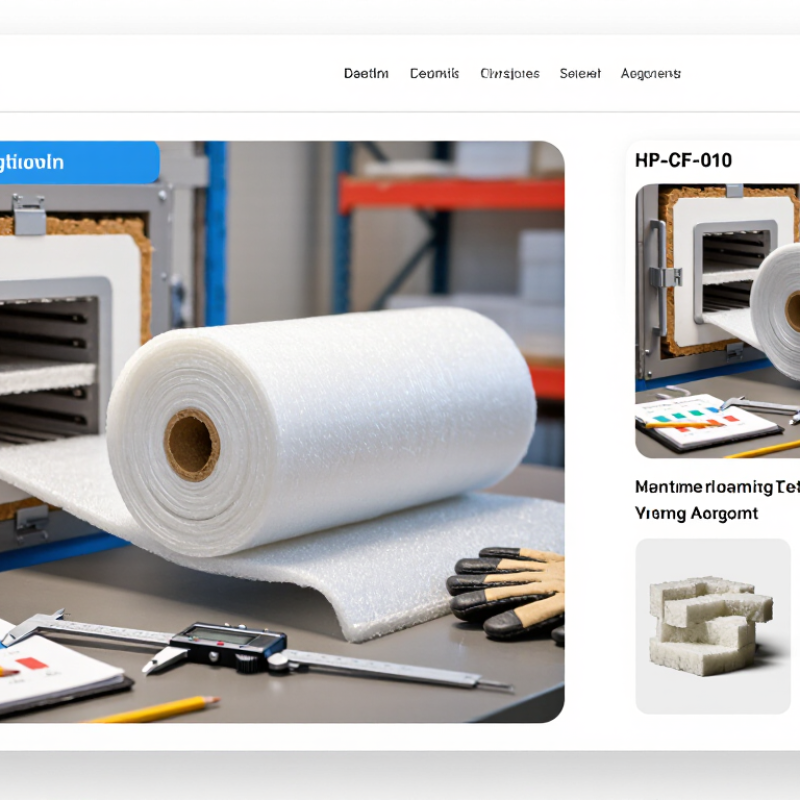
How to Choose HP-CF-010 Aerogel Ceramic Fiber Paper?

Define the Operating Conditions and Insulation Goals

Define the operating conditions and insulation goals before comparing HP-CF-010 Aerogel Ceramic Fiber Paper options. Record the normal temperature, peak temperature, and duration of each heat cycle. Note whether the paper faces hot gas, a heated surface, or a protected cavity. These details affect heat transfer and surface wear. A panel opened every hour may behave differently from one kept at steady temperature.

Tips: Photograph the installation area and measure clearances at several points. Small gaps matter. Check whether the design allows compression, then compare the required thickness with current technical data. Do not guess.

Set a clear goal, such as limiting heat loss, protecting nearby components, or keeping an outer surface cooler. Also consider moisture, vibration, thermal cycling, and contact with process chemicals. Ask for performance data at the expected mean temperature, not just a headline maximum. One easy mistake is choosing thickness before checking available space. That choice may need revisiting; the real installation is rarely as neat as a drawing. Verify temperature limits and handling guidance with the product documentation before specifying the material.

How to Choose HP-CF-010 Aerogel Ceramic Fiber Paper? - Define the Operating Conditions and Insulation Goals

Operating scenario Example hot-face condition Exposure pattern Primary insulation goal Selection checks
Heated pipe or duct Steady operation around 150–250°C; occasional start-up or shutdown temperature changes Continuous service with routine thermal cycling Reduce heat loss and keep the outer surface within the project’s touch-temperature or personnel-protection limit Confirm the paper’s rated service temperature, thickness, compression allowance, facing compatibility, and required outer-jacket design.
Furnace door or access panel Steady operation around 300–450°C; brief peaks may be higher Repeated opening, closing, and temperature cycling Limit heat leakage through joints and provide a conformable layer for irregular surfaces Check the actual peak temperature, joint gap, attachment method, edge protection, and whether vibration or repeated handling could damage the paper.
Industrial oven or process enclosure Steady operation around 500–650°C Long operating periods with controlled process cycles Meet the required cold-face temperature or heat-loss target within the available installation space Use the supplier’s thermal-conductivity data at relevant mean temperatures; determine thickness from a heat-transfer calculation rather than a room-temperature value.
High-temperature equipment lining Steady operation around 700–850°C, subject to the material’s verified rating Potentially continuous service with substantial thermal gradients Provide a compact insulation layer while maintaining acceptable hot-face and backing temperatures Obtain written confirmation of continuous and peak-temperature limits, atmosphere compatibility, shrinkage data, and suitability for the specific lining arrangement.
Outdoor or humid installation Process temperature varies by equipment; ambient exposure may include moisture and weather Thermal cycling combined with possible water exposure Maintain insulation performance and protect the layer from moisture ingress and mechanical damage Specify weatherproof cladding and sealed joints. Confirm moisture behavior, drying procedure, and compatibility with any coating or facing.
Vibration-prone equipment Process temperature set by the equipment; vibration occurs during operation Continuous or intermittent movement, impact, or abrasion Reduce heat transfer without premature loosening, tearing, or loss of thickness Check fastening and support details, compression under installation, abrasion protection, and whether a more mechanically robust insulation system is needed.
Important: The temperatures above are representative operating scenarios for planning, not certified limits or performance data for HP-CF-010. Before specifying the material, verify its current technical datasheet and confirm the actual steady-state temperature, maximum transient temperature and duration, operating atmosphere, available thickness, required cold-face temperature, and applicable safety requirements. Final thickness should be based on project-specific heat-transfer calculations.

Review HP-CF-010 Material Properties and Available Sizes

When assessing HP-CF-010 aerogel ceramic fiber paper, start with verified data, not the grade code alone. Check its stated thermal conductivity, density, thickness, maximum service temperature, and shrinkage at temperature. The 2012 review “Aerogel-Based Thermal Superinsulation: An Overview” reports silica-aerogel conductivity around 0.013–0.020 W/m·K under specified conditions. That is a useful benchmark, not a guaranteed value for this composite. Fiber content, binder, moisture, and test temperature can change performance. Small details matter.

Available sizes should be confirmed against the current product sheet. Ask for roll width and length, sheet dimensions, thickness options, dimensional tolerances, and whether custom cutting is offered. Compare thickness with the available installation gap; a nominally suitable sheet may compress or leave gaps around a pipe, flange, or furnace panel. Request test methods and temperature conditions alongside reported values. Without them, comparing two figures can be misleading.

Tips: Measure the installation area in several places, then allow for joints and trimming. Confirm handling guidance before cutting, and trial-fit one piece first. A neat fit helps, but it does not replace checking the operating temperature and insulation design.

How to Choose HP-CF-010 Aerogel Ceramic Fiber Paper?

Review material properties and available sizes before selecting a grade for your application.

Common ceramic fiber paper thickness options are shown as a general market guide; they are not confirmed HP-CF-010 sizes. Check the product datasheet for exact dimensions, temperature rating, density, thermal conductivity, and tolerances before ordering.

Match Thermal Performance to the Application

Choosing HP-CF-010 aerogel ceramic fiber paper starts with the heat your component will actually face. Start with the heat. Record normal operating temperature, brief peaks, and how long each peak lasts. A furnace door lining, for example, may see repeated hot cycles, while a pipe wrap experiences steadier exposure. Those conditions can call for different thicknesses and insulation strategies.

Check the product’s documented temperature limits and thermal conductivity at relevant temperatures, not just a single headline figure. Also consider available space, compression, and the surface beneath the paper. A thin layer may fit a narrow assembly, but gaps around edges can undermine its performance. Moisture, vibration, or frequent handling may affect the choice, too. Request current technical data, and confirm that test conditions match your application.

Then compare the expected heat loss with the practical cost of added thickness and installation effort. Small differences matter. Measure the installation area, note seams and fasteners, and ask how the material behaves after repeated heating. A tidy calculation can still miss a poorly fitted joint; I have seen that detail deserve more attention than the insulation figure. If performance is critical, test a representative assembly before specifying the full installation.

Check Compatibility, Handling, and Installation Requirements

How to Choose HP-CF-010 Aerogel Ceramic Fiber Paper?

Check the product data sheet against your actual operating conditions. Confirm continuous-use temperature, thermal conductivity at the relevant mean temperature, thickness, density, and compression limits. Also check whether the paper can tolerate contact with moisture, oils, or process chemicals. Do not assume a thin sheet will fit every joint; measure the gap and account for expansion, vibration, and service access. A small mismatch can leave a visible heat leak.

Installation matters just as much. Ask whether cutting requires dust controls, whether a facing or adhesive is compatible, and how edges should be sealed. ASTM C177-19 describes the guarded-hot-plate method for measuring steady-state thermal transmission properties; request test data measured using an appropriate method, rather than relying on a generic conductivity figure. Confirm the substrate is clean and dry, then install without excessive compression. That detail is easy to miss.

Tips: Review the current safety data sheet before cutting or handling. If the material contains refractory ceramic fibers, NIOSH’s 2006 criteria document recommends an exposure limit of 0.5 fibers/cm³ as a time-weighted average. Use the sheet’s stated handling guidance and suitable dust controls. If the datasheet leaves installation limits unclear, pause and ask the supplier for written clarification. I would not guess.

Verify Product Specifications and Supplier Quality

For HP-CF-010 aerogel ceramic fiber paper, request a current specification sheet and a lot-specific test report. Check thickness, density, dimensions, thermal conductivity, tensile strength, and shrinkage. Confirm whether the stated service temperature is continuous or short-term; those figures are not interchangeable. Ask how samples were conditioned and tested. A number without its test temperature or method is hard to use.

The IEA’s Energy Efficiency 2023 report estimates that industry accounts for about 37% of global energy use. That makes insulation performance a practical purchasing concern, not just a datasheet detail. Compare conductivity values at temperatures close to your operating conditions. Request the test method and confirm the laboratory’s relevant ISO/IEC 17025 accreditation. Small details matter.

Check the supplier’s quality records, not only its sales sheet. Look for traceable batch numbers, inspection criteria, and a process for handling out-of-spec material. Ask for samples from more than one production lot when performance variation would affect fit or heat loss. Inspect the paper for uneven thickness, torn edges, or moisture-damaged packaging. A polished certificate can still miss batch variation. I would treat any unverified claim as a question, not a guarantee.

By continuing to use the site, you agree to the use of cookies. more information

The cookie settings on this website are set to "allow cookies" to give you the best browsing experience possible. If you continue to use this website without changing your cookie settings or you click "Accept" below then you are consenting to this.

Close