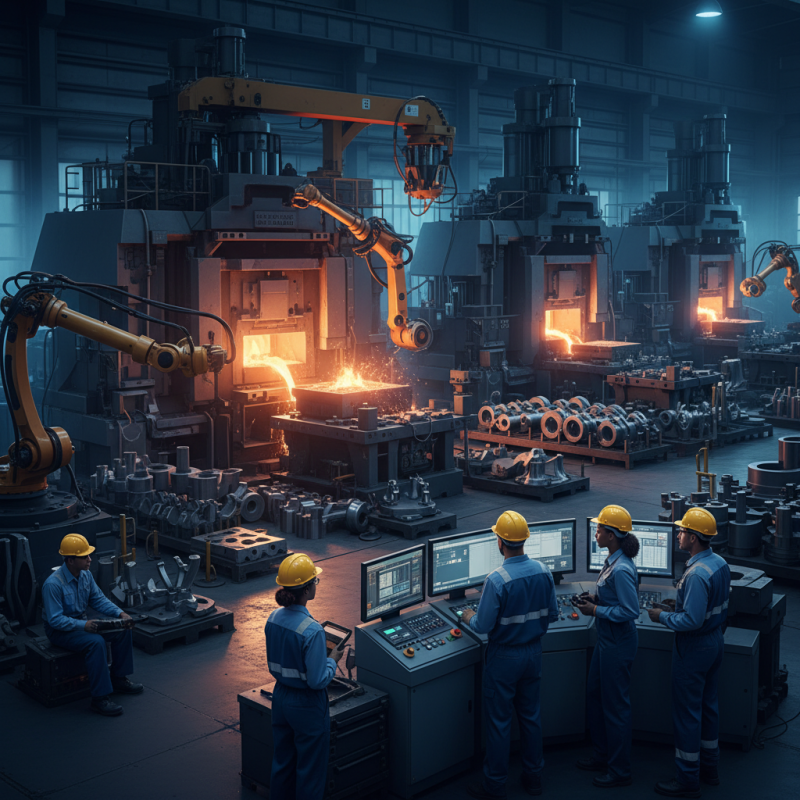
Why Choose Metal Forge for Your Manufacturing Needs?
In today's competitive manufacturing landscape, choosing the right partner is crucial. Metal Forge stands out as a leader in precision forging and custom metal solutions. Companies seek reliability and expertise, two attributes that Metal Forge consistently delivers.
Many manufacturers face challenges in production and timelines. Metal Forge understands these struggles. They emphasize quality control and innovative techniques. Their experienced team is dedicated to meeting diverse customer needs. Clients often appreciate the detailed attention to design and production processes.
While Metal Forge has an impressive track record, it is not without its areas for improvement. There are times when communication could be enhanced to ensure complete alignment with client expectations. Nevertheless, their commitment to excellence remains evident, making them a formidable choice for your manufacturing needs.
Advantages of Metal Forging in Manufacturing Processes
Metal forging has become an essential process in manufacturing. It offers several advantages that make it a preferred choice for many applications. Data from industry reports indicate that forged parts often have superior mechanical properties, such as increased strength and durability, compared to parts made using traditional methods. This is largely due to the refinement of the metal grain structure during the forging process.
The energy efficiency of metal forging is another critical factor. A report from the Forging Industry Association highlights that forging processes can achieve up to 95% material utilization. This efficiency reduces waste and lowers costs. However, it's worth reflecting on the initial setup cost. While the long-term benefits often outweigh these costs, the upfront investment can be a barrier for smaller manufacturers.
Moreover, versatility is a key strength of metal forging. It can accommodate various materials, including steel and aluminum. According to a recent analysis, approximately 60% of the automotive industry relies on forged components due to their unmatched performance under stress. Yet, it is essential to recognize that not all designs transition smoothly into forged parts. Each project presents unique challenges that require careful consideration and expertise.
Key Industries Benefiting from Metal Forging Solutions
Metal forging plays a critical role in several key industries. The automotive sector relies heavily on metal forgings for components that require high strength and durability. According to industry reports, the global automotive market consumed over 35% of all forged metal products in 2022. Forged parts, such as crankshafts and axle beams, withstand extreme conditions. This enhances vehicle performance and safety.
Aerospace is another industry benefiting from metal forging. Manufacturers use forgings to create lightweight yet strong components. Data shows that the aerospace sector accounts for about 20% of the forged metal market. Parts like landing gear and engine components must meet strict safety standards. Forged materials provide the reliability essential for flight operations.
Energy and utility sectors also depend on forged products. Power generation equipment often requires high-strength forgings to operate efficiently. According to recent studies, about 15% of forged metal is used in this sector. Forged fittings and valves ensure safety in high-pressure environments. However, the industry faces challenges such as fluctuating raw material costs, impacting profitability. Balancing quality and cost remains crucial for manufacturers.
Quality Assurance Practices in Metal Forge Operations
Quality assurance is crucial in metal forging operations. Effective quality control methods can reduce defects significantly. Industry reports indicate that companies implementing robust quality practices reduce scrap rates by up to 30%. This statistic highlights the importance of monitoring every stage of the forging process.
Attention to detail is essential in manufacturing. From material selection to final inspection, each step impacts the final product. Studies show that businesses with strict quality assurance protocols experience higher customer satisfaction rates, often exceeding 90%. This is a direct result of providing consistent, high-quality products. However, some firms may overlook minor inspections to save time, which can lead to costly errors later.
Furthermore, employee training plays a significant role in quality assurance. Workers equipped with knowledge of quality standards contribute to better outcomes. Corporate data reveals that companies investing in regular training see a 25% decrease in rework. This demonstrates that while quality assurance requires investment, the long-term benefits far outweigh the costs. Yet, not all employees receive the training they need, leaving room for improvement.
Cost Effectiveness: Understanding Metal Forge Pricing Models
When considering manufacturing needs, understanding pricing models is crucial. Metal forge operations often use variable pricing structures based on the complexity and material requirements of a project. According to a recent industry report by the American Metal Forming Association, custom parts can range significantly in cost—ranging from $5 to $500 per piece, depending on various factors like volume and material.
Additionally, a study from the Precision Metalforming Association reveals that bulk orders typically receive substantial discounts. The cost per unit decreases as production scales up, which encourages businesses to evaluate their purchasing strategies. However, this model can lead to challenges in inventory management. Companies may overestimate their needs, resulting in excess stock that ties up capital.
It is also essential to reflect on the trade-offs between price and quality. Cheaper options may seem appealing, but they can compromise on durability and performance. A balance must be struck based on project requirements. Transparent communication with manufacturers is vital to ensure expectations align with the quoted prices, helping businesses make informed decisions while minimizing the risk of unexpected costs.
Why Choose Metal Forge for Your Manufacturing Needs? - Cost Effectiveness: Understanding Metal Forge Pricing Models
| Manufacturing Process | Average Cost Per Unit ($) | Lead Time (Days) | Material Options | Suitable Applications |
| Die Forging | 15.00 | 7 | Steel, Aluminum | Automotive, Aerospace |
| Open Die Forging | 10.00 | 14 | Steel, Titanium | Heavy Equipment, Oil & Gas |
| Precision Forging | 25.00 | 10 | Alloys, Steel | Medical Devices, Aerospace |
| Ring Rolling | 30.00 | 12 | Steel, Copper | Defense, Aerospace |
Sustainability and Environmental Impact of Metal Forging Choices
Metal forging plays a significant role in manufacturing. It transforms raw materials into robust shapes. However, this process also bears environmental implications. Understanding the sustainability of metal forging is vital for making informed choices.
Using recycled materials for metal forging can reduce waste significantly. This method lessens the demand for virgin resources. It minimizes energy consumption during production. However, not all metal forging processes have the same impact. Some methods may still generate substantial emissions. Industry experts often highlight the need for improved technologies.
The water usage in metal forging also raises concerns. While companies strive to enhance efficiency, challenges remain. Not every operation prioritizes sustainable practices. Manufacturers must continually assess their methods. Choices matter in reducing overall environmental footprints. Transparency in operations fosters accountability. Ultimately, it is essential to keep seeking better solutions.