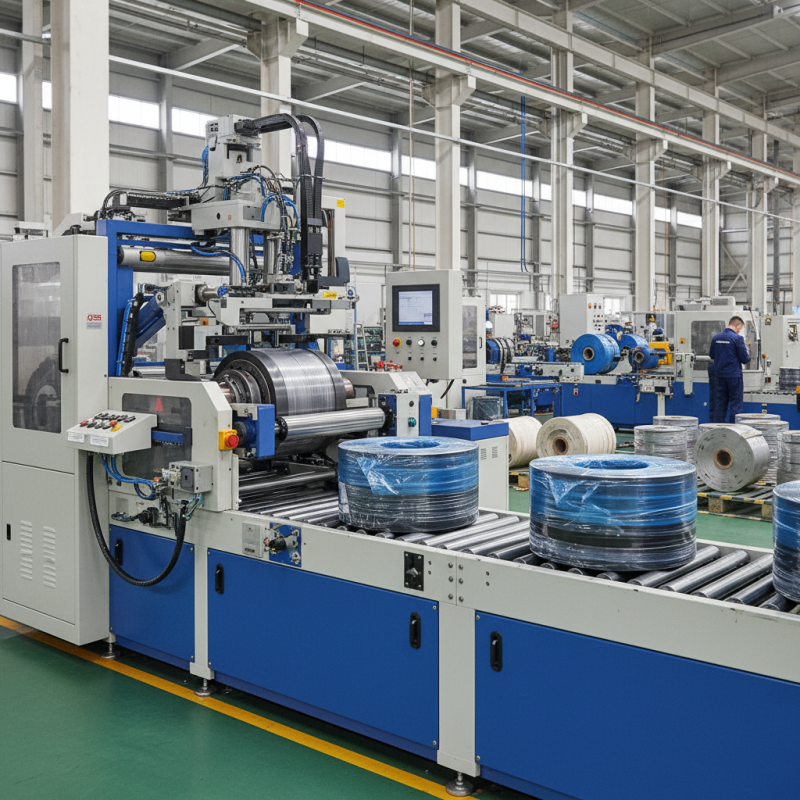
How to Choose the Right Coiling and Packing Machine for Your Needs?
Choosing the right Coiling and Packing Machine is crucial for any manufacturing operation. This decision impacts productivity and efficiency. A well-selected machine can streamline processes, reduce waste, and enhance product quality.
When evaluating your options, consider your specific needs. What types of materials are you using? Different machines handle various materials differently. The machine's speed and capacity are also vital. A machine that is too slow can become a bottleneck, while one that is too fast might compromise quality.
It's essential to acknowledge the learning curve involved. New machines require training. Implementation can lead to initial setbacks. Reflecting on these challenges can help you make a more informed decision. Look for machines that offer flexibility as your production needs evolve. Balancing these factors ensures you select a coiling and packing machine that truly meets your needs.
Understanding Your Packaging Requirements
Understanding your packaging requirements is crucial when selecting coiling and packing machines. The type of products, their dimensions, and packaging materials all play a significant role. Research from industry reports indicates that improper packaging can lead to a 25% increase in shipping costs. Therefore, assessing the size and weight of the items is essential. A lightweight machine may seem appealing, but it might not support your heavier goods effectively.
Moreover, consider the specific materials your products require. Each material behaves differently under stress and temperature, which can affect the wrapping process. For instance, plastic films may require different tension settings than paper. A recent study showed that 40% of manufacturers report issues with material compatibility. This highlights the need for careful analysis before investing in machinery.
Your production volume influences machine choice as well. A machine that can't keep up with demand can slow down operations. 30% of businesses have faced delays due to inadequate machinery. Evaluation of your output needs will prevent potential wastage and inefficiencies. Ultimately, reflecting on these elements will guide you to the ideal coiling and packing solution.
Identifying Different Types of Coiling and Packing Machines
Choosing the right coiling and packing machine can be daunting. Various types exist, each tailored for different tasks. The most common are vertical and horizontal coiling machines. Vertical machines are ideal for space-saving solutions. They efficiently coiling materials like wire or tape. Horizontal machines excel in packing, offering higher speed and efficiency.
According to industry data, the global coiling and packing machine market is expected to grow by over 5% annually through 2027. This highlights the increasing demand for automation in packaging processes. Many manufacturers seek machines that enhance productivity while minimizing material waste. However, selecting the wrong type can lead to operational inefficiencies.
Consider the specifics of your product. Coiling machines designed for delicate materials, like films, need careful adjustments. Packing machines can vary from basic models to fully automated systems. It's essential to assess your production volume and product size. Each choice comes with its advantages but also potential drawbacks. Careful evaluation can prevent future operational headaches.
Evaluating Machine Features and Specifications
Choosing the right coiling and packing machine requires careful evaluation. Start by examining the machine's specifications. Look at its speed, capacity, and dimensions. These factors play a key role in efficiency. A machine with high capacity might seem tempting, but consider whether it fits your space. Too large a machine can be impractical.
Another critical feature to assess is the type of materials the machine can handle. If you're packaging delicate items, ensure it offers gentle handling. Machines that can adapt to different materials can save you money. However, versatility can come at a cost, both in price and complexity. User-friendliness is essential. A complicated interface can lead to operational errors.
Moreover, maintenance requirements are often overlooked. Machines need care over time. Consider the ease of access for repairs. If parts are hard to reach, downtime may increase. Balancing these features can be challenging. You might find that a machine excels in one area but lacks in another. Reflecting on these trade-offs is vital for making an informed decision.
How to Choose the Right Coiling and Packing Machine for Your Needs?
Assessing Budget and Return on Investment
When selecting a coiling and packing machine, budget plays a critical role. Industry reports suggest that businesses often underestimate operational costs. For instance, equipment maintenance can account for up to 15% of total costs annually. Understanding these hidden expenses is essential for accurate budgeting. Many companies may end up spending more on repairs than on initial purchase prices.
Return on investment (ROI) is another key consideration. A well-chosen machine can significantly enhance efficiency. Data shows that companies optimizing their packing processes can boost productivity by 20% or more. However, it is important to note that ROI does not always appear immediately. It may take months to realize those efficiency gains. Some firms see returns only after implementing adjustments based on initial performance feedback.
Analyzing specific use cases can shed light on potential pitfalls. Without proper assessment, users might choose machines that lack the necessary features or adapt poorly to production needs. Furthermore, some businesses overlook the importance of scalability. A machine that meets current demands may be inadequate for future requirements, leading to further investment. Mindful planning is essential for achieving long-term success in machinery selection.
Finding Suppliers and After-Sales Support Options
When selecting a coiling and packing machine, finding the right supplier is crucial. Research shows that about 30% of machine failures stem from inadequate support post-purchase. Suppliers should offer not just machines but robust after-sales support. Reliable suppliers can provide necessary training and maintenance guidance to ensure your equipment runs smoothly.
Tips: Consider suppliers who have a strong presence in your industry. Reviews matter—look for user testimonials and performance reports. A supplier's experience can indicate their reliability. Ask specific questions about parts and service availability.
After-sales support can greatly influence overall satisfaction. Regular maintenance can extend the life of your equipment by up to 40%. Seek suppliers who offer comprehensive service plans. Having a support team that understands your machine ensures quick handling of issues. Transparency in communication will help set the right expectations.
Tips: Evaluate the warranty options thoroughly. A long warranty can reflect quality and build trust. Don’t hesitate to discuss your future needs. A good supplier should accommodate your growth.
How to Choose the Right Coiling and Packing Machine for Your Needs? - Finding Suppliers and After-Sales Support Options
| Machine Type | Features | Suitable Materials | Production Capacity (Units/Hour) | Supplier Location | After-Sales Support |
| Automatic Coiling Machine | High-speed operation, programmable settings, compact design | Wires, cables, and films | 1000 | USA | 24/7 technical support, training services |
| Semi-Automatic Packing Machine | Easy to operate, adjustable speed, energy-efficient | Plastics, textiles, and consumer goods | 500 | Germany | Limited warranty, on-site maintenance |
| Manual Coiling Machine | Cost-effective, portable, low maintenance | Textiles, wires, and small parts | 200 | China | Online customer service, spare parts available |