Why Choose Titanium Hex Socket Set Screws for Your Projects?
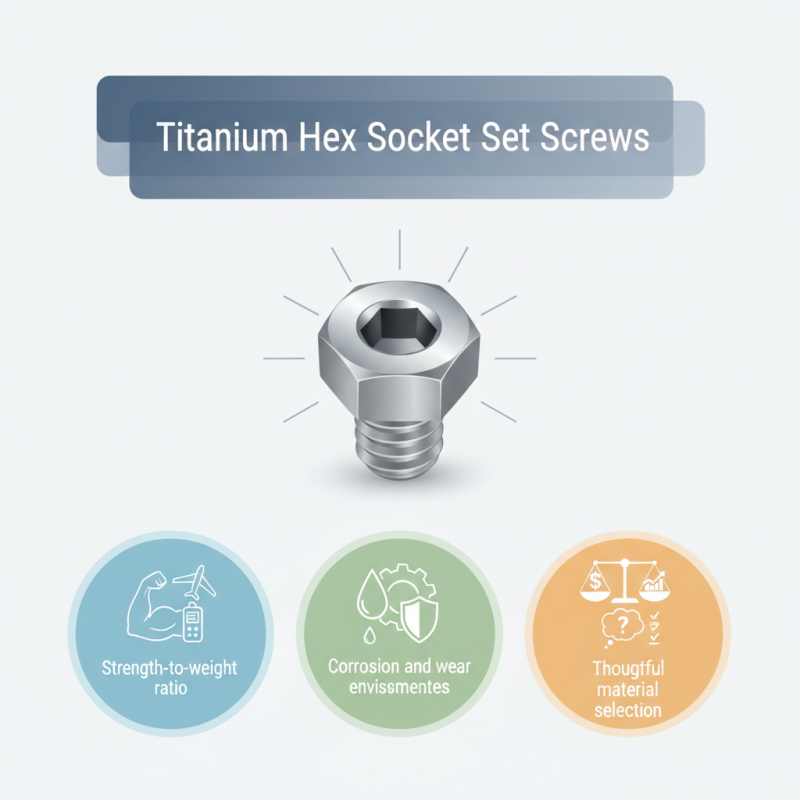
In the realm of fasteners, Titanium Hex Socket Set Screws have emerged as a preferred choice for many engineers and project managers alike. According to Dr. Emily Chen, a leading expert in materials science, “The strength-to-weight ratio of titanium makes it ideal for demanding applications.” This statement underscores the growing trend in industries that prioritize durability without sacrificing weight.
Titanium Hex Socket Set Screws offer remarkable resistance to corrosion and wear. This ensures longevity in applications ranging from aerospace to medical devices. Their unique properties make them suitable for high-stress environments. Yet, as with any material choice, it’s essential to consider the specific requirements of each project.
Though often regarded as superior, Titanium Hex Socket Set Screws come with their own challenges. They can be more expensive than traditional materials. Understanding the cost-benefit analysis is crucial. Each project deserves a thoughtful approach to material selection. Embracing titanium's advantages may require balancing cost and performance, but the right choice can lead to transformative results.
Benefits of Using Titanium Hex Socket Set Screws in Various Applications
Titanium hex socket set screws provide exceptional benefits across various industries. Their strength-to-weight ratio is superior to that of steel, making them ideal for applications where weight savings are critical. A recent report indicated that titanium weighs nearly 45% less than steel while maintaining similar tensile strength. This property is particularly valuable in aerospace and automotive sectors, where every gram counts.
Additionally, titanium resists corrosion better than many metals under harsh conditions. This resistance can extend the life of components, leading to reduced maintenance costs. The aerospace industry alone experiences significant savings; corrosion-related damage can lead to a 30% increase in maintenance costs over a component's lifespan. Titanium’s ability to withstand extreme temperatures also enhances reliability in high-performance environments.
Despite their advantages, some designers may hesitate to choose titanium due to higher initial costs. While titanium prices can be 2.5 times higher than steel, the long-term benefits often outweigh this concern. Engineers must consider life cycle costs instead of upfront expenses. This shift in perspective can lead to more informed decisions about materials in demanding applications. Understanding the balance of cost and performance is crucial in these discussions.
Why Choose Titanium Hex Socket Set Screws for Your Projects?
| Application | Benefits | Typical Use Case |
| Aerospace | High strength-to-weight ratio | Fastening components in aircraft structures |
| Medical | Corrosion resistance and biocompatibility | Implants and surgical tools |
| Automotive | Durability and lightweight | Performance parts and chassis components |
| Marine | Excellent resistance to saltwater corrosion | Fastening applications on boats and ships |
| Sporting Goods | Lightweight and strong | Bicycles and high-performance gear |
Comparison of Titanium Set Screws with Other Material Options
When choosing a socket set screw for your projects, material selection plays a vital role. Titanium hex socket set screws stand out against stainless steel, carbon steel, and aluminum options. Titanium offers superior strength and a lower weight ratio. This can provide significant advantages in high-performance applications, such as aerospace.
Stainless steel screws offer good corrosion resistance but may not match titanium in strength. Conversely, carbon steel is strong and cost-effective but lacks the same corrosion resistance. In certain environments, this could lead to premature failure. Aluminum, while lightweight and corrosion-resistant, may not hold up under high-stress conditions. This becomes crucial when considering load-bearing applications where failure is not an option.
Using titanium screws can lower the overall weight of structures while maintaining integrity. The long-term cost-benefit of titanium is also noteworthy, as it often outlasts other materials. However, it can be more expensive upfront. Weighing these pros and cons is essential for making informed choices in design and engineering projects.
Factors to Consider When Selecting Titanium Set Screws for Projects
When selecting titanium hex socket set screws for projects, several factors must be considered. The first is the environment in which these screws will be used. Titanium is known for its corrosion resistance, making it ideal for marine or chemical settings. However, not all grades of titanium suit every application. Understanding the specific alloy you need is crucial.
Next, think about the dimensions and strength required. Screws come in various sizes and tensile strengths. Too weak a screw may lead to failure, while an overly strong one can compromise the material it’s securing. Carefully measuring the space and load will help in determining the best screw.
Also, consider the machining and thread design. Poorly designed threads can affect the screw's performance. It’s essential to focus on precision to avoid issues during installation. This detail can be easily overlooked but can impact the entire project. Balancing all these factors may take extra time, but it ensures reliability and performance in the long run.
Installation and Maintenance Tips for Titanium Hex Socket Set Screws
When considering the use of titanium hex socket set screws, it's vital to understand their installation and maintenance requirements. Titanium is known for its high strength-to-weight ratio and corrosion resistance. According to a study by the Titanium Association, titanium components can last up to three times longer than their steel counterparts in harsh environments. This longevity is crucial for reducing maintenance costs and downtime.
Proper installation starts with ensuring the correct torque specifications, which helps avoid stripping the threads. Utilize a calibrated torque wrench to achieve precision. It's recommended to apply a thread lubricant to mitigate friction. This will aid in achieving the desired clamping force without risking damage. Remember, over-torquing can lead to premature failure.
For long-term maintenance, regular inspections are key. Check for signs of wear, especially in high-stress applications. Foreign debris can compromise the screw's integrity. Cleaning should be performed with care. An ultrasonic cleaner can effectively remove contaminants without harming the titanium. Following these tips can significantly enhance the performance of titanium hex socket set screws in your projects.
Cost-Effectiveness of Titanium Set Screws Over Time
Titanium set screws are gaining traction due to their unique properties. Over time, they prove to be more cost-effective compared to traditional materials like steel or brass. According to a report from the International Titanium Association, titanium's remarkable strength-to-weight ratio and corrosion resistance often translate to longer service life in demanding environments. This advantage can lead to decreased maintenance costs.
When evaluating the total cost of ownership, including downtimes and repairs, titanium set screws often come out ahead. A study by the Mechanical Engineering Journal noted that while the initial purchase price can be higher, the longevity of titanium components offsets this investment in just a couple of years. Users may initially hesitate, but they eventually realize that choosing titanium is a smart financial move.
Corrosion can lead to equipment failures and costly replacements. Steel screws, when exposed to harsh conditions, can rust and fail. In contrast, titanium withstands moisture and chemicals much better. An ASTM study confirmed that titanium maintains its integrity under extreme environmental conditions, minimizing the frequent need for replacements. After all, investing in quality components leads to reliable project outcomes.
Cost-Effectiveness of Titanium Hex Socket Set Screws Over Time