How to Choose French Style Wall Lights for Your Project?
Choosing a French Style Wall Light is not only about finding an elegant shape. The fixture must suit the room, the wall, and the way people use the space. French-inspired designs range from delicate sconces with curved arms to more ornate pieces with glass shades and aged-metal finishes. A graceful silhouette can add warmth to a hallway, bedroom, or dining area. But the same fixture may feel oversized beside a narrow doorway or too small above a broad console.
Scale matters. Measure the available wall space and note nearby doors, mirrors, and furniture before comparing styles. Think about the light itself, too: a fabric shade softens a bedside glow, while clear glass can spread brighter light across an entry. Check the bulb type, brightness, and whether the fixture is suitable for the room’s conditions, especially in humid spaces. Details matter. Finish samples can also help, since “antique brass” may look quite different across manufacturers and lighting conditions.
A thoughtful choice balances appearance with comfort, installation needs, and long-term care. This guide explains how to assess proportions, materials, light output, placement, and practical specifications for your project. Some choices remain subjective; a polished finish may look refined in a showroom but feel too formal at home. That is worth considering. With a few measurements and a clear sense of the room’s mood, you can choose a wall light that feels intentional rather than merely decorative.
Understanding the Defining Features of French-Style Wall Lights
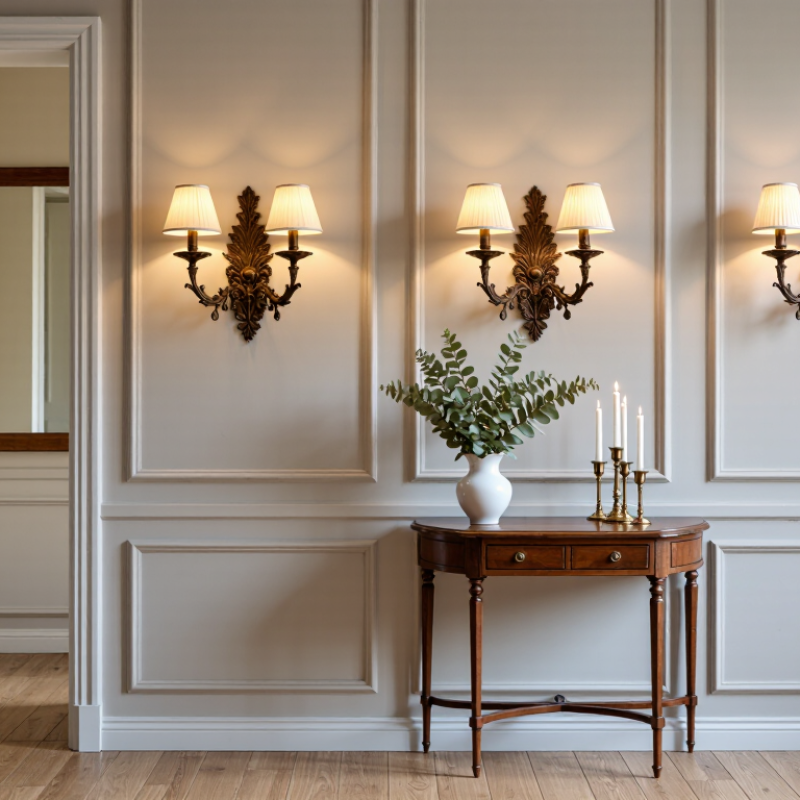
French-style wall lights are recognized by their graceful curves, balanced shapes, and decorative details. You may see scrolling metal arms, leaf motifs, or small rosette backplates. These elements often recall antique French interiors, but they need not look formally historic. A softly aged brass finish or gently distressed paint can suggest age without making a room feel like a period set. Subtlety matters.
The shade and light source help define the style, too. Pleated fabric, opal glass, and candle-shaped bulbs create a warmer, softer effect than clear, exposed bulbs. Notice how the fixture looks when switched off; its silhouette should still feel considered against the wall. In a narrow hallway, a compact single-arm design may feel more at ease than a wide, ornate fitting. Measure the projection, and check that doors or artwork will not crowd it. Small details count.
French style is not one fixed formula. Some fixtures lean toward rustic country homes, with rubbed finishes and simple curves; others feel more formal, with polished metal and symmetrical arms. I sometimes find that an elaborate fitting looks charming in a photograph but overly busy in a small room. That is a useful hesitation, not a flaw. Compare the fixture with nearby hardware, wall colors, and the room’s scale before choosing.
Assessing Your Project’s Space, Purpose, and Design Requirements
Before choosing French-style wall lights, map the room rather than starting with a finish or silhouette. Measure wall height, available width, and the distance to nearby doors, mirrors, and shelves. In a narrow hallway, a projecting arm can catch bags or make the passage feel crowded. A compact sconce may work better. Check the light at eye level. For a bedside, position the beam so it reaches a book without shining directly into someone’s face. A mock-up helps. Tape a paper outline to the wall and view it from the doorway and a seated position. It may feel fussy, but proportions are easy to misjudge from a product photo.
Then decide what the light needs to do. A shaded fixture can soften ambient light, while an adjustable arm can help with reading or focused tasks. For a mirror or artwork, consider whether the light should fall evenly or create a more dramatic pool. Note the existing finishes, too: aged brass, pale plaster, and dark wood can change how a fixture’s color and shape appear. Subtle differences matter. Check the mounting point, switch location, and whether the fixture can use a dimmer. If electrical work is needed, ask a qualified electrician to assess it. One detail I sometimes overlook is the bulb’s warmth; a beautiful shade can still feel cold under the wrong light.
Selecting a Suitable Size, Material, and Finish
For French-style wall lights, size the fixture against the wall and nearby furniture, not from a catalogue image alone. A narrow sconce can disappear beside a tall mirror; an oversized one may crowd a small bedside table. As a practical starting point, mark the proposed backplate and shade outline with painter’s tape, then view it from the doorway and seated eye level. For reading, check that the shade directs light onto the page without exposing a bright bulb. Small details matter.
Material affects both appearance and upkeep. Brass and iron suit traditional detailing, while ceramic or glass can soften a compact hallway. In humid rooms, confirm that the fixture’s rating suits the location, and ask how its finish handles cleaning and fingerprints. Finish samples can shift under warm bulbs: compare them at night, not only in daylight. I would not assume “antique” means low maintenance; some patinas are deliberately uneven.
Choose finishes to relate to nearby hardware, but avoid forcing an exact match across different metals. Aged brass beside dark iron can feel considered; several competing tones may look accidental. Also check lamp compatibility and replacement access. The U.S. Department of Energy’s Energy Saver guidance reports that residential LEDs use at least 75% less energy and last up to 25 times longer than incandescent lighting. That’s useful context, but dimmer compatibility and color temperature still need checking. A small sample test helps.
Choosing Light Output, Bulb Type, and Placement
French-style wall lights can create a soft pool of light beside a mirror, bed, or hallway. Choose output according to the task, not the fixture’s appearance alone. The U.S. Department of Energy’s lighting guidance uses lumens to describe light output. It gives about 800 lumens as a typical replacement for a 60-watt incandescent lamp. Treat that as a starting point, not a room-specific guarantee. Shades, pale plaster, and dark wallpaper can all change perceived brightness. Small details matter.
For bulbs, check the fitting, then choose a color temperature that suits the room’s materials and use. A warm white often complements aged brass and cream-colored walls, while a cooler tone may reveal more detail near a mirror. The DOE reports that LEDs use at least 75% less energy than incandescent bulbs and can last up to 25 times longer. Choose dimmable bulbs only when the fixture and control support dimming. For placement, mock up the sconce center near eye level, often around 60–66 inches above the floor, then adjust for seated views and mirror height. Test it at night. A paper template helps reveal glare before installation.
Checking Installation Needs and Long-Term Maintenance
Before selecting French-style wall lights, check the existing wiring, wall material, and available mounting space. A narrow hallway may need a shallow backplate, while a heavy plaster wall could require suitable anchors. Measure twice. For masonry or older walls, ask a qualified electrician to assess the fixing point and wiring before ordering. Installation details can change the look you planned.
Confirm the fixture’s dimensions, bulb type, and suitability for the room. A bathroom or covered porch may need a fitting rated for damp conditions; decorative metal alone does not make a light weather-resistant. Check that the shade can be removed easily for bulb changes. If the junction box sits off-center, the canopy may not cover it neatly. That can be frustrating. A small mock-up with paper and tape helps reveal awkward proportions before drilling.
Long-term care depends on the finish and shade material. Dust collects. Use a soft, dry cloth for routine cleaning, and avoid abrasive pads that can scratch painted or aged finishes. Follow the maker’s care instructions, especially for brass, glass, or fabric shades. Periodically check for loose fittings, flickering, or unusual heat, and have an electrician investigate persistent problems. Maintenance is easy to overlook; I would plan access for cleaning before the lights are installed.