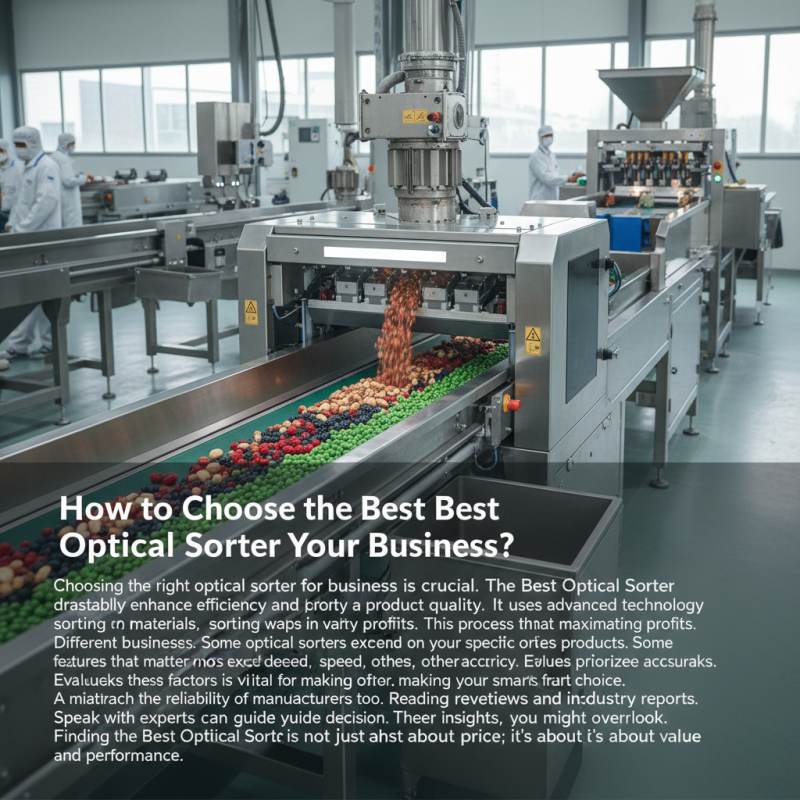
How to Choose the Best Optical Sorter for Your Business?
Choosing the right optical sorter for your business is crucial. The Best Optical Sorter can drastically enhance efficiency and product quality. It uses advanced technology for sorting a variety of materials. This process helps in reducing waste and maximizing profits.
Different businesses have unique needs. The features that matter most depend on your specific products. Some optical sorters excel in speed, while others prioritize accuracy. Evaluating these factors is vital for making a smart choice. A mismatch can lead to setbacks and frustrations.
Consider the reliability of manufacturers too. Reading reviews and industry reports can guide your decision. Speak with experts in the field. They offer insights that you might overlook. Finding the Best Optical Sorter is not just about price; it's about value and performance.
Understanding the Basics of Optical Sorting Technology
Optical sorting technology is a powerful tool in various industries. It relies on advanced sensors to sort items by color, size, and shape. This method significantly increases efficiency compared to manual sorting. With the technology, businesses can reduce waste and improve quality control.
Understanding how optical sorting works is crucial. The system captures images of objects on a conveyor belt. If an item doesn’t meet specific criteria, it gets ejected. However, this process requires careful tuning. Some machines may misidentify items, leading to potential losses.
When selecting an optical sorter, consider your needs. Evaluate the types of materials you'll sort. Also, think about the volume of items processed daily. It’s not just about purchasing the most advanced machine. Regular maintenance and staff training are necessary for optimal results. Investing time in these areas may reveal inefficiencies you didn’t notice at first.
Identifying Your Business Needs for an Optical Sorter
Choosing the right optical sorter starts with understanding your business’s unique needs. Every industry has different requirements for sorting materials. For instance, food processing may require high precision to remove contaminants. In contrast, recycling facilities need robustness to handle a variety of materials.
Consider the volume you handle daily. High throughput demands bigger machines and better technology. But, high-tech solutions can be costly. So, it’s essential to weigh the benefits against your budget. Do you need a sorter that handles a variety of sizes and shapes? This versatility could be invaluable for some sectors, but it may overcomplicate things for others.
Think about your team’s expertise too. Are they well-trained in technology? If not, an overly complex system could lead to mistakes and downtime. Sometimes, simpler solutions yield better results. Reflect on feedback from your operators to find what’s truly necessary. Each choice should align with your goals and operational capacities. Finding the best optical sorter should be an ongoing evaluation rather than a one-time decision.
Evaluating Different Types of Optical Sorters Available
When considering optical sorters, it's essential to explore the available types. Different industries may require specific features. For instance, some machines focus on color sorting, while others emphasize size or shape. Understanding these distinctions is crucial.
Another consideration is sensor technology. Advanced systems utilize multiple sensors, like cameras and lasers, to enhance accuracy. However, more sensors can complicate maintenance. Balancing complexity and efficiency is vital.
Additionally, think about the sorting speed. High-throughput options are attractive but may require more rigorous system checks. Slower systems might be easier to manage but can affect productivity. Each choice has trade-offs that impact performance. Reflecting on these factors allows for a more informed decision tailored to your needs.
Assessing Key Features and Specifications for Selection
When selecting an optical sorter for your business, key features and specifications must guide your decision. Start with understanding the sorting technology. Different systems use varied methods, like color, shape, or size recognition. Each method offers unique benefits, affecting efficiency and output quality. Evaluate how these technologies align with your processing needs.
Another critical consideration is the machine’s capacity and speed. Determine your production volumes. A machine that operates efficiently under high demand can secure your productivity. Look deeper into the specifications, checking throughput rates. In many cases, higher speeds can compromise accuracy. An ideal balance is essential for maintaining quality.
Keep an eye on maintenance and support options as well. A reliable optical sorter will require maintenance. Know how often it would need servicing and what parts may wear down. Engage with users who have experience with these machines. Their insights can reveal potential issues, creating a more informed decision. Remember, no system is perfect. Every choice demands careful reflection on long-term operational impacts.
How to Choose the Best Optical Sorter for Your Business? - Assessing Key Features and Specifications for Selection
| Feature | Description | Importance Level | Recommended Specification |
| Camera Resolution | High-resolution cameras enhance detection accuracy. | High | Over 1 megapixel |
| Sorting Speed | The speed at which the sorter operates to process materials. | High | At least 2 tons/hour |
| Size and Footprint | Dimensions of the machine and required space for operation. | Medium | Compact design for limited spaces |
| Software Features | User-friendly interface and data analysis tools. | High | Cloud-based analytics with real-time monitoring |
| Maintenance Requirements | Frequency and ease of servicing and repairs. | Medium | Low maintenance with remote support |
| Material Compatibility | Types of materials that can be processed. | High | Versatile for various types of waste |
Budgeting and Cost Considerations for Optical Sorters
When it comes to budgeting for an optical sorter, businesses face crucial decisions. The initial purchase cost is significant. However, ongoing maintenance costs should also be considered. Many overlook how daily use can impact long-term expenses. Understanding these factors helps in creating a more accurate budget.
Quality matters. Investing in robust optical sorters may seem costly upfront. However, they often offer better efficiency and fewer malfunctions. Short-term savings can lead to future expenses if the equipment breaks down. Think about the total cost of ownership, not just the sticker price.
Tips for budgeting effectively:
1. Research various models and their operational costs.
2. Estimate downtime and maintenance frequency.
3. Factor in potential energy savings over time.
Make sure to review supplier warranties and service plans. They can play a vital role in financial planning. Choosing the right optical sorter is not only about price but also about ensuring reliable performance. An informed decision today can lead to sustained profitability tomorrow.
Optical Sorter Cost Analysis