How to Choose the Best Rental Door Lock
Choosing the best Rental Door Lock means balancing everyday security with the practical needs of tenants and property owners. A lock should feel solid in the hand, operate smoothly, and suit the door’s material and condition. Small details matter. A stiff latch, loose strike plate, or poorly aligned bolt can undermine even a well-made lock. Before comparing models, check the door thickness, existing bore holes, and whether the lock must work with a key, keypad, or smart-home system.
Security expert Bruce Schneier offers a useful principle: “Security is a process, not a product.” His point applies here: a lock works best as part of a thoughtful routine, not as a magic fix. For a Rental Door Lock, consider who needs access, how often codes or keys may need updating, and what happens if batteries fail or a tenant is locked out. A keypad can make access easier, but only when its instructions are clear and backup entry is reliable. Test the handle and deadbolt yourself. A smooth turn tells you something; it does not prove the whole setup is secure.
There is no perfect choice for every rental. A basic deadbolt may suit one apartment, while a weather-resistant smart lock may fit another. Still, convenience can distract from fit and installation quality. Read the product specifications, confirm compatibility, and ask a qualified locksmith or property professional when details are unclear. It is worth pausing over one question: will this lock remain easy to use after months of daily wear?
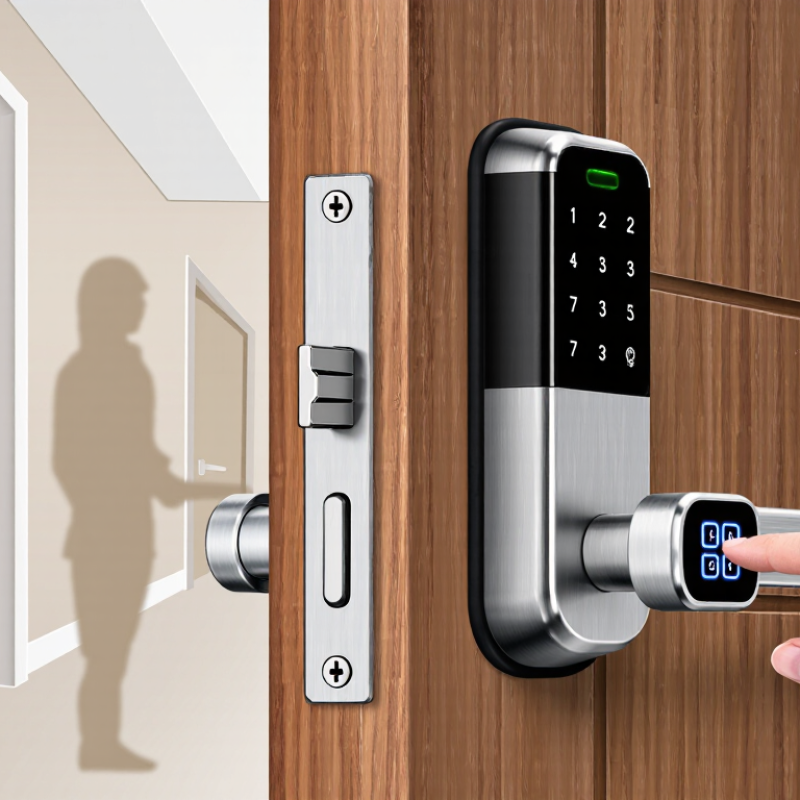
Assess Lease Rules, Door Type, and Local Egress Requirements
Before choosing a rental door lock, check your lease and get written approval before drilling or replacing hardware. Ask whether the owner requires a particular key system or needs access for maintenance. Then identify the door: wood or metal, its thickness, and whether it has a standard deadbolt or a multipoint mechanism. Measure the backset and existing holes; small mismatches can leave gaps or prevent the latch from engaging. Take clear photos. Measurements can still be misread, so confirm them against the lock’s installation guide.
Local egress requirements matter as much as fit. Many jurisdictions require occupants to unlock an exit from inside without a key, tool, or special knowledge, but adopted rules vary. Check with local building or fire officials before adding a keyed interior lock, chain, or other barrier.
NFPA’s Home Structure Fires report, covering 2015–2019, estimates that U.S. fire departments responded to an average of 346,800 home structure fires each year, with 2,620 civilian deaths annually.
Those figures do not link deaths to door locks, but they underline why a quick, unobstructed exit matters. Test the lock from both sides, with the door open and closed, and make sure the interior turn works smoothly. Don’t assume. A stiff latch deserves another look.
Compare BHMA Cycle Ratings: Grade 1 1M, Grade 2 800K, Grade 3 200K
For rental properties, compare cycle ratings before comparing finish or keyway options. ANSI/BHMA A156.2, the industry performance standard for bored locks, uses cycle testing to evaluate durability. BHMA’s published grade benchmarks are Grade 1 at 1 million cycles, Grade 2 at 800,000, and Grade 3 at 200,000. A cycle rating counts repeated lock operation under test conditions. It does not predict exactly how many years a lock will last in a rental. Not a lifespan guarantee.
Match the grade to actual traffic. A shared entrance with frequent daily use may justify Grade 1; a typical apartment entry may suit Grade 2. Grade 3 is intended for lighter-use settings, where traffic is limited. Picture a tenant turning a key with grocery bags, then a maintenance worker testing the latch later that day. Repeated use adds up. Still, the lock is only one part of the system: a sagging door or misaligned strike can cause binding and extra wear. I would use the cycle number as a practical screening tool, not the whole decision. The right grade depends on traffic, installation, and upkeep, and that judgment can be imperfect.
Choose Deadbolts or Smart Locks by Risk, Access, and Rekeying Needs
A rental door lock should match the risks at your building and the way people need to enter. A solid deadbolt is often a practical choice when access is limited to a few trusted keyholders. Look for a fully extending bolt and a reinforced strike plate secured with long screws, if the door and frame allow it. Ask the property manager before changing hardware. Small installation details matter.
Rekeying is useful when keys may still be with former tenants, cleaners, or contractors. A locksmith can often change which keys operate a compatible deadbolt without replacing the whole lock. Smart locks offer a different kind of control: temporary codes can be removed when a guest or service worker no longer needs access. But deleting a code does not disable an old physical key if the lock still uses one. Check how the model handles backup keys, batteries, and a power failure. Keep it simple.
Choose based on real access patterns, not novelty. If you routinely coordinate several approved visitors, a smart lock may reduce key handoffs. If you rarely share access and want fewer electronic parts, a rekeyable deadbolt may suit you better. I may be giving convenience too much weight; a keypad is only helpful if its battery is maintained and everyone knows the backup plan. Think about the front steps at night, wet hands, and who can respond if the lock stops working.
How to Choose the Best Rental Door Lock
Compare deadbolts and smart locks by access flexibility, rekeying needs, power dependence, and rental practicality.
Scores are qualitative guidance on a 1–5 scale, not product test results. Higher scores indicate a stronger fit for that consideration. A mechanical deadbolt works without batteries; changing who can use its key generally requires rekeying or replacing the cylinder. Many smart locks let residents update access codes, but depend on batteries and may require landlord approval. Check your lease and local egress requirements before changing a lock.
Check ANSI/BHMA A156.2 Fit: Backset, Bore, and Door Thickness
How to Choose the Best Rental Door Lock
Check ANSI/BHMA A156.2 Fit: Backset, Bore, and Door Thickness
A lock can meet a performance standard and still fail to fit your door. ANSI/BHMA A156.2 covers bored and preassembled locks, but check the lock’s installation instructions against your door measurements. Measure the backset from the door edge to the center of the existing bore. Common options are 2⅜ and 2¾ inches, but never assume. Measure the bore diameter, too; a small mismatch can leave the lock loose or prevent installation.
Door thickness matters just as much. Many residential doors are 1⅜ or 1¾ inches thick, though older or specialty doors may differ. Measure the door itself, not a trim plate. Also check the latch faceplate and edge bore, since replacement parts may not match the existing cutout. A tape measure can slip, so repeat each measurement. It is an easy detail to overlook.
Tips: Take photos and measurements before shopping. Compare them with the product’s stated fit range, and ask the property manager before drilling new holes. If measurements disagree, pause and check again. A second look is cheaper than a misfitting lock.
How to Choose the Best Rental Door Lock — Check ANSI/BHMA A156.2 Fit: Backset, Bore, and Door Thickness
| Fit dimension | Common measurement or option | How to check your door | Why it matters when choosing a rental lock |
| Backset | Common residential options are 2⅜ in (60 mm) and 2¾ in (70 mm). | Measure from the door edge to the center of the cross-bore hole. | The latch must align with the existing bore. Choose a lock with the matching backset or an adjustable latch that supports it. |
| Cross-bore diameter | A 2⅛ in (54 mm) hole is common for cylindrical locksets. | Measure the diameter of the large hole through the door face. | Confirm the lock’s installation requirements match the hole already in the door; do not assume every existing bore is the same size. |
| Edge-bore diameter | A 1 in (25 mm) latch hole is common. | Measure the smaller hole drilled into the door edge for the latch body. | A mismatch can prevent the latch from fitting correctly or require additional door preparation. |
| Door thickness | 1⅜ in (35 mm) and 1¾ in (44 mm) are common door thicknesses. | Measure the door from one face to the other, excluding weatherstripping and trim. | Check the lock’s stated thickness range. Some locks need a compatible kit or adjustment for thicker or thinner doors. |
| Latch faceplate | Common faceplate styles include rounded-corner and square-corner plates; drive-in latches are also available. | Compare the existing plate’s shape and dimensions with the replacement latch and door-edge mortise. | Matching the existing preparation can reduce installation time and avoid unnecessary changes to a rental door. |
| ANSI/BHMA A156.2 verification | A156.2 covers performance requirements and tests for bored locks and latches; fit dimensions still depend on the specific product. | Check the product documentation for the applicable standard and grade, then compare its installation template with your measured door. | A standards reference does not by itself confirm that a lock fits your backset, bore, or door thickness. |
Measurements shown are common examples, not universal requirements. Always verify the lock’s installation instructions and template before purchase.
Plan Key Control, Battery Backup, Tenant Privacy, and Move-Out Rekeying
How to Choose the Best Rental Door Lock
Plan key control before choosing a lock. Use a restricted key system, or assign unique codes that you can remove at turnover. Keep a simple access log. At move-out, rekey the cylinder or reset every code; collecting keys cannot reveal how many copies exist.
The FBI’s 2023 crime statistics put the U.S. burglary rate at about 250.7 incidents per 100,000 people. That figure is not a measure of lock performance, but it is useful context when assessing entry security.
For electronic locks, check the stated battery life, low-battery warning, and backup method. Keep the correct replacement batteries on site, and confirm that staff can use the backup without relying on a tenant’s phone. Test it monthly. Small routines matter.
Tenant privacy deserves equal weight. Give management access only to people who need it, and explain whether the lock records entry times. NIST’s NISTIR 8259A identifies restricted access and data protection as core capabilities for connected devices.
Avoid retaining access logs longer than necessary. It is easy to focus on app features and overlook who can review a tenant’s daily comings and goings. Before a new tenancy, remove old codes, verify the mechanical key, and document the change.