
Blog

How to Choose the Right Air Seat Control Valve?

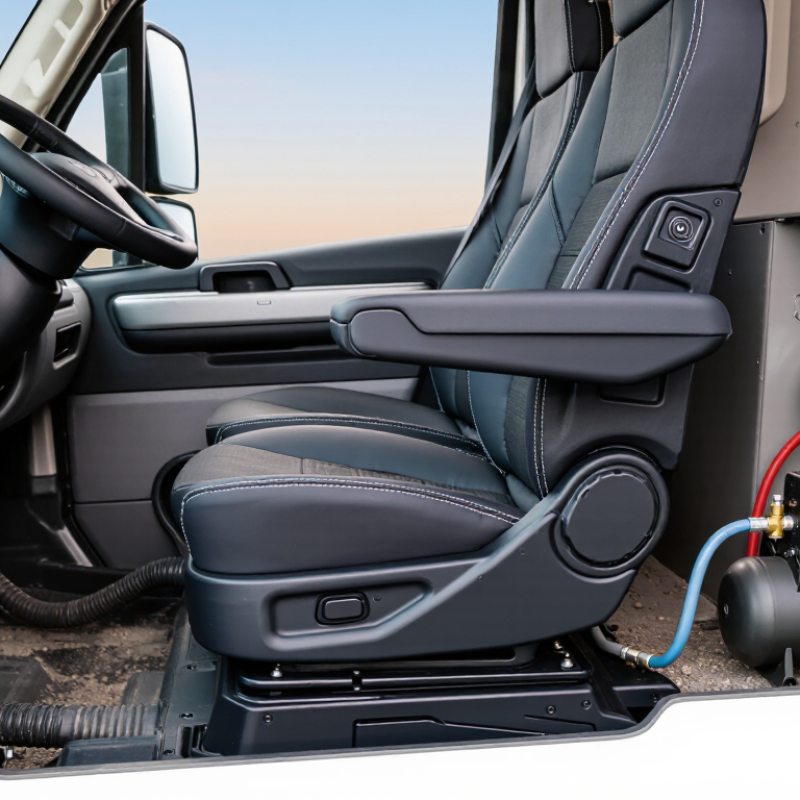
Choosing the right Air Seat Control Valve affects comfort, posture, durability, and driving safety. The decision deserves more than a price comparison.

Research and Markets’ 2024 Global Automotive Seat Market report identifies comfort, safety, and vehicle electrification as major industry drivers. These trends increase demand for accurate pneumatic adjustment systems. A suitable valve should match the seat’s air spring, pressure range, port size, and operating temperature. Check the manufacturer’s technical sheet carefully. Small mismatches can create slow height changes, uneven support, or annoying air loss.

Real working conditions matter. Dust, moisture, oil mist, vibration, and repeated button presses can challenge a valve inside a commercial vehicle. NIOSH’s Criteria for a Recommended Standard on Occupational Exposure to Whole-Body Vibration highlights the importance of reducing vibration exposure for vehicle operators. Valve response, sealing quality, and stable pressure control therefore deserve practical testing, not assumptions. ISO 2631-1 also provides a recognized framework for evaluating whole-body vibration effects. It does not select the valve for you.

Look for proven materials, clear flow specifications, replaceable fittings, and documented endurance testing. A low-cost component may appear efficient. It may also create higher maintenance costs later. I have seen specifications look complete while omitting leak-rate limits. That gap matters. Ask suppliers for test conditions, not only marketing claims. Compare the valve with the complete seat system, including tubing and air compressor performance. No selection guide replaces a real bench test, but a disciplined comparison can prevent an uncomfortable and expensive mistake.
How to Choose the Right Air Seat Control Valve?

Define the Role and Operating Conditions of an Air Seat Control Valve

How to Choose the Right Air Seat Control Valve?

An air seat control valve regulates fluid flow through a pipeline using compressed air. Its role is simple, but its working conditions are not. The valve must match the medium, pressure, temperature, flow rate, and required control accuracy. Water, steam, syrup, and cleaning chemicals can demand different seat materials and body designs. A valve suitable for cold water may fail quickly under heat or frequent cleaning.

During field commissioning, I check the air supply before judging valve performance. Stable pressure supports reliable opening and closing. Dirty or wet air can damage the actuator and cause slow movement. Check the operating pressure range carefully. Then confirm whether the valve should close or open when air pressure is lost. This fail-safe action affects equipment protection and process safety. Small details matter.

Cycle frequency also deserves attention. A valve used every few seconds needs durable seals and controlled actuator movement. A slower process may prioritize accurate positioning instead. I have seen valves selected by pipe size alone. That approach often creates poor regulation, noise, or unnecessary wear. Valve sizing should consider actual flow demand, not just the connection diameter. Installation space, maintenance access, and cleaning procedures also influence the final choice. A technically correct valve can still be inconvenient to service. That part is easy to overlook.

Identify Valve Types and Match Them to Seat Adjustment Functions

How to Choose the Right Air Seat Control Valve?

Choosing an air seat control valve starts with the adjustment function, not the valve’s appearance. For height adjustment, use a three-way momentary valve. It supplies air, holds pressure, or vents the air spring. A dump valve provides faster lowering during emergency access or maintenance. Add a non-return valve when pressure loss could create unwanted seat movement.

Lumbar support needs finer control. A low-flow needle valve or proportional valve helps users make small pressure changes. Side bolsters usually require separate circuits, allowing the backrest sides to inflate independently.

Seat cushions may need a larger flow path, especially when frequent adjustments are expected. Check the operating pressure, port size, response speed, and rated cycle life before choosing.

Industry evidence supports careful adjustment design. The European Agency for Safety and Health at Work reports that about three in five European workers experience work-related musculoskeletal symptoms. Poor seat support can worsen fatigue during long driving or machine operation. MarketsandMarkets’ 2024 automotive seat report forecasts market growth from roughly 70.7 billion dollars in 2024 to 89.0 billion dollars by 2029. That growth encourages more pneumatic features, but complexity can create service problems. Keep it simple.

In practical testing, I would measure pressure stability with a user seated, not with an empty cushion. That detail is easy to miss. A valve may perform perfectly on a bench, yet respond slowly under body load. I would also retest after repeated inflation cycles, because real users rarely adjust gently.

Compare Pressure, Flow, Size, and Connection Specifications

How to Choose the Right Air Seat Control Valve?

Pressure is the first specification to verify. Most pneumatic seat systems operate between 4 and 8 bar, but the valve must match the manufacturer’s tested range. ISO 4414 requires pneumatic systems to control stored energy and prevent unsafe movement. Check both working pressure and pressure drop. A valve rated for high pressure may still respond poorly at low supply pressure. I have seen this mistake during maintenance checks. The label looked suitable, but the seat moved slowly.

Flow determines adjustment speed. Compare the valve’s rated flow in NL/min, not only its port size. ISO 6358 provides methods for measuring pneumatic conductance and sonic conductance. A practical test should measure movement time under the real load. The 2024 Industrial Pneumatics Market report from Fortune Business Insights identifies efficiency and precise control as major purchasing factors, supporting careful flow evaluation. Bigger is not always better. Excessive flow can cause harsh movement.

Size and connections must fit the available space. Measure the body, port direction, tubing diameter, and thread type before ordering. NPT, BSP, and metric threads are not automatically interchangeable. The 2023 Global Automotive Supplier Study by PwC reports continuing pressure to reduce assembly complexity and service time. That makes compact, clearly marked connections valuable. I still allow extra clearance for wrench access. It is easy to overlook. A short bench test can reveal leaks, delayed response, or awkward routing before installation.

How to Choose the Right Air Seat Control Valve? - Compare Pressure, Flow, Size, and Connection Specifications
Valve Configuration Typical Port Size Nominal Flow Range
(Cv)
Typical Working Pressure Recommended Actuation Air Pressure Common Connection Standards Typical Media Best Application Key Selection Consideration
Single-Seat, Normally Closed DN15–DN50
1/2–2 in
0.8–45 0–16 bar
0–232 psi
4–8 bar
58–116 psi
Threaded, clamp, butt-weld, or flanged connections; common standards include ISO, DIN, or ASME dimensions Water, air, gases, low-viscosity liquids, and compatible process fluids Safe shut-off applications where the valve should close when control air is lost Verify that the actuator spring can close the valve against the maximum differential pressure
Single-Seat, Normally Open DN15–DN50
1/2–2 in
0.8–45 0–16 bar
0–232 psi
4–8 bar
58–116 psi
Threaded, clamp, butt-weld, or flanged connections Cooling water, utility water, air, and process fluids requiring fail-open operation Cooling or circulation lines that must remain open during loss of instrument air Confirm that the fail-open position is safe for the process and downstream equipment
Two-Way Pneumatic Seat Valve DN15–DN100
1/2–4 in
1.0–180 0–25 bar
0–363 psi
4–8 bar
58–116 psi
Tri-clamp, DIN 11851, ISO 2852, butt-weld, or flanged connections Water, steam, air, gases, dilute chemicals, and hygienic process liquids General on/off isolation and automated process control Use the manufacturer’s flow coefficient and pressure-drop data rather than port size alone
Three-Way Pneumatic Seat Valve DN15–DN80
1/2–3 in
1.0–120 0–16 bar
0–232 psi
4–8 bar
58–116 psi
Threaded, clamp, butt-weld, or flanged connections Water, air, gases, and compatible liquid process media Diverting, mixing, bypass, and tank-routing duties Check the flow-path diagram carefully because the actuator position determines the open ports
Hygienic Single-Seat Valve DN15–DN100
1/2–4 in
0.8–180 0–10 bar
0–145 psi
4–8 bar
58–116 psi
Sanitary clamp or hygienic butt-weld connections; surface finish commonly specified in Ra Food, beverage, dairy, pharmaceutical, and biotechnology fluids Clean-process isolation where drainability and cleanability are essential Specify wetted-material compatibility, surface finish, seat material, and cleaning temperature
Steam-Rated Pneumatic Seat Valve DN15–DN80
1/2–3 in
1.0–120 Process-dependent; commonly up to 16 bar
232 psi
4–8 bar
58–116 psi
Threaded, butt-weld, or flanged connections suitable for the pressure class Saturated steam, hot water, and thermal process fluids Steam distribution, heating circuits, sterilization, and thermal control Confirm the maximum temperature, steam pressure, seat material, and actuator temperature limit
High-Flow Full-Port Seat Valve DN65–DN150
2 1/2–6 in
100–500 0–16 bar
0–232 psi
4–8 bar
58–116 psi
Wafer, lug, or flanged connections; select the flange drilling to match the piping system Water, air, gases, and low-viscosity liquids Large-volume transfer lines where low pressure drop is important Compare required flow, allowable pressure drop, face-to-face length, and actuator torque or thrust
Compact Instrument-Air Seat Valve DN8–DN25
1/4–1 in
0.1–12 0–10 bar
0–145 psi
3–6 bar
44–87 psi
Female thread, tube compression fitting, or small hygienic clamp connection Instrument air, nitrogen, water, and low-flow gases Sampling systems, laboratory equipment, pilot lines, and compact skids Check minimum operating pressure, response time, tubing size, and available installation space
Selection note: Flow coefficients are indicative ranges for comparison only. Final valve sizing should be based on the actual medium, temperature, viscosity, required flow rate, allowable pressure drop, differential pressure, actuation mode, and applicable piping or sanitary standard.

Evaluate Durability, Safety Features, and Maintenance Requirements

How to Choose the Right Air Seat Control Valve?

Choose an air seat control valve by matching pressure, cycle frequency, and cabin conditions. A valve used in dusty vehicles needs sealed construction and corrosion-resistant materials. Check the rated temperature range, port size, and expected service life. Durability is not only about metal thickness. Contamination, vibration, and repeated adjustment often cause early leakage. A valve can pass a bench test and still fail in a working cab.

Safety features deserve equal attention. Look for controlled exhaust, pressure relief, and stable adjustment under load. ISO 4414 recommends designing pneumatic systems to prevent unexpected movement and release stored energy safely.

The U.S. Department of Energy reports that compressed-air leaks may waste 20–30% of compressor output.

Poor sealing therefore affects both safety and operating cost. I would not trust “maintenance-free” as a complete specification.

Tips:

Inspect hoses, fittings, and valve response during scheduled service. Listen for hissing after the seat reaches its position. Test the valve with clean, dry air, since moisture and particles can damage internal seals. The Compressed Air and Gas Institute links air quality with pneumatic component reliability. Keep a simple log of adjustment time, leakage, and replacement intervals. Small records reveal patterns. Still, maintenance intervals should reflect real duty cycles, not only the supplier’s estimate.

Select the Valve That Fits Your Seat System and Installation Constraints

Choosing an air seat control valve starts with the seat system, not the valve catalog. Check the air spring volume, compressor pressure, cushion layout, and control method. A manual valve suits simple height adjustment. An electrically controlled valve fits automatic leveling and memory functions. However, adding electronics can create new failure points.

Installation constraints often decide the final choice. Measure the available mounting space behind the seat. Confirm port direction, thread size, hose diameter, and access for servicing. The valve must tolerate vibration, dust, moisture, and temperature changes. ISO 2631-1 evaluates whole-body vibration through weighted acceleration measurements. This matters because seat control affects operator comfort, not only height. EU-OSHA has reported that about three in five European workers experience musculoskeletal symptoms. A poorly matched valve may worsen fatigue during long shifts. I have seen compact valves selected too quickly, then restricted by narrow tubing. The smaller package was not the better solution.

Tips: Compare the valve’s pressure range with real operating pressure, including cold starts. Check response time under the actual seat load. A high flow rate is not always better. It can cause harsh height changes. Confirm whether the valve includes pressure relief or controlled exhaust. Review ISO 7096 test requirements when the seat is used in earth-moving machinery. Leave room for hand access. Serviceability is often underestimated. Document every fitting and hose route before installation. A small mismatch can become a costly redesign.

How to Choose the Right Air Seat Control Valve?

Compare common valve configurations by installation space, pressure control, manual override, and electrical integration. Higher scores indicate a better typical fit for the stated requirement.

Use a compact 3-way manual valve when space and simple operation are priorities. Choose a pilot-operated valve for fast pneumatic switching, an electrically actuated valve for automated seat systems, or a pressure-regulating valve when stable cushion pressure is the main requirement. Final selection should confirm port size, operating pressure, air quality, mounting orientation, and available electrical power.

By continuing to use the site, you agree to the use of cookies. more information

The cookie settings on this website are set to "allow cookies" to give you the best browsing experience possible. If you continue to use this website without changing your cookie settings or you click "Accept" below then you are consenting to this.

Close