
Blog

How to Choose an Assembly Machine in 2026?

Choosing an Assembly Machine in 2026 is no longer a simple comparison of speed and price. Manufacturers now examine flexibility, data visibility, energy use, safety design, and long-term service support. A machine that produces 120 units per minute may still fail if changeovers consume two hours.

The right decision begins with the product itself. Check component tolerances, fastening methods, inspection points, cycle time, and expected production volume. Then test how the equipment handles real parts, including warped housings, delicate connectors, and minor dimensional variation. A polished factory demonstration can hide practical weaknesses.

Shigeo Shingo, a respected industrial engineering expert, warned, “The most dangerous kind of waste is the waste we do not recognize.” His observation remains valuable when evaluating an Assembly Machine. Unplanned downtime, difficult cleaning, manual adjustments, and poor operator access can quietly increase operating costs. Measure them.

Experience also matters. Ask suppliers for documented uptime, maintenance intervals, spare-part availability, and references from comparable factories. Review the control platform, sensor integration, traceability functions, and cybersecurity responsibilities. Do not accept vague promises.

The cheapest option may become expensive.

A strong selection process should include production engineers, operators, maintenance staff, and quality specialists. Their priorities will differ, and that disagreement is useful. One overlooked issue can affect every shift.

Still, no machine choice is perfect. Forecasts change. Products evolve. The best Assembly Machine is not always the fastest or most automated model. It is the system that fits today’s process, adapts to tomorrow’s demand, and remains understandable when something goes wrong. That final requirement is often underestimated.
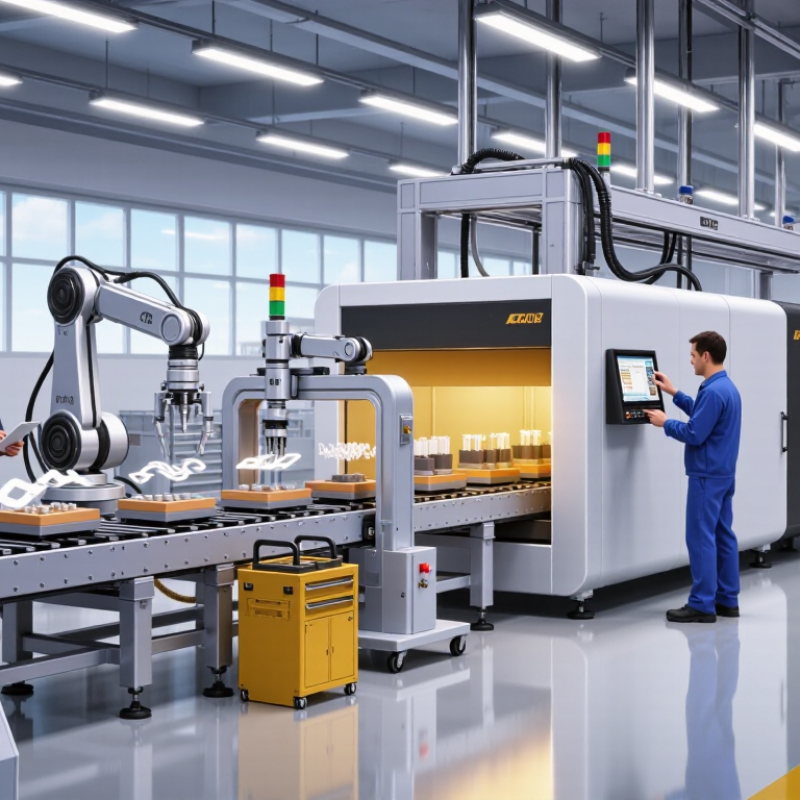
How to Choose an Assembly Machine in 2026?

Define Your Assembly Requirements and Production Goals

Before choosing an assembly machine in 2026, define the work clearly. Record product dimensions, component materials, assembly steps, and required tolerances. A small variation can affect feeding, fastening, or inspection. Measure your real takt time, not an optimistic estimate. Include breaks, changeovers, maintenance, and planned downtime. A machine producing 40 units per minute may be unsuitable if your line needs frequent product changes.

Production goals should cover quality, flexibility, safety, and long-term capacity. Decide whether the machine will run one shift or continuously across several shifts. Specify torque accuracy, pressing force, cycle time, reject handling, and data traceability.

Check available floor space, power, air pressure, and operator access. In my experience, teams often focus on speed first. Later, they discover that cleaning takes too long or that tooling changes interrupt production. That mistake is expensive, but preventable.

Tips: Create a simple requirement sheet before requesting quotations. List current output, target output, acceptable defect rates, and future product variants. Ask for a practical demonstration using your actual components. Watch the full cycle. Inspect changeover time, noise, guarding, and error recovery. Leave room for honest uncertainty. Your first capacity forecast may be wrong. Review it with operators, maintenance staff, and quality engineers before approving the machine.

Compare Assembly Machine Types and Operating Principles

How to Choose an Assembly Machine in 2026?

Choosing an assembly machine starts with its operating principle, not its advertised speed. Manual systems suit low-volume products, frequent design changes, and delicate parts. Semi-automatic machines add controlled feeding, pressing, or testing while operators manage sensitive steps. Automatic systems combine feeding, positioning, joining, inspection, and data recording. They deliver consistent output, but require stable components and careful maintenance.

Rotary machines use an indexing table to move parts through fixed stations. They work well for compact products with repeated operations. Linear machines provide easier access and flexible station layouts. Pick-and-place systems use pneumatic or servo motion for accurate component transfer. Servo systems offer programmable control and gentle movement. Pneumatic devices are simpler, but their accuracy can change with air pressure. Vision inspection improves alignment checks, although poor lighting can create false rejects.

Tips: Measure cycle time with real parts, not empty fixtures. Check changeover steps, cleaning access, spare-part availability, and operator safety. Ask for sample testing before approval. A faster machine is not always better. In practical line reviews, small feeding problems often cause larger delays than the assembly operation itself. I have seen teams overlook noise, vibration, and awkward loading height. Those details matter every shift. Leave room for process variation, because perfect components rarely remain perfect. Consider future product changes before choosing a fixed layout.

How to Choose an Assembly Machine in 2026? - Compare Assembly Machine Types and Operating Principles

Assembly Machine Type Operating Principle Typical Throughput* Automation Level Flexibility Typical Changeover Best-Suited Applications Main Advantages Key Limitations
Manual Workbench An operator positions parts and performs assembly using hand tools, fixtures, gauges, or powered screwdrivers. Approximately 1–10 units/minute, depending on product complexity. Manual Very high Seconds to minutes Low-volume production, prototypes, customized products, and frequent engineering changes. Lowest initial investment; fast deployment; easy to adapt to new products. Labor-dependent output; greater variation between operators; limited productivity at high volumes.
Semi-Automatic Workstation The operator loads parts while powered equipment performs one or more controlled operations, such as pressing, fastening, testing, or dispensing. Approximately 5–30 units/minute. Partially automated High Minutes to several hours Medium-volume products requiring consistent force, torque, position, or inspection. Improves repeatability without the cost and complexity of a fully automated line. Still requires operators; output can be constrained by manual loading and unloading.
Rotary Indexing Machine Parts move through multiple stations mounted around a rotating table. The table indexes, stops, and allows each station to perform a dedicated operation. Approximately 20–120 units/minute. High to fully automated Medium Several hours to one or more shifts High-volume products with a stable design and a repeatable sequence of operations. Compact layout; synchronized stations; predictable cycle times; strong repeatability. Less suitable for frequent product changes; a fault at one station may affect the complete cycle.
Inline Transfer Machine Parts are transported through sequential stations by conveyors, pallets, or transfer mechanisms. Operations occur as the product moves through the line. Approximately 30–300 units/minute. High to fully automated Low to medium Several hours to multiple shifts Large-volume production with a defined process route and consistent component geometry. High production capacity; easy station balancing; suitable for integrated testing and traceability. Large footprint; higher engineering cost; line stoppages can affect downstream stations.
Robotic Assembly Cell One or more programmable robots handle, orient, insert, fasten, dispense, weld, or inspect components using fixtures and sensors. Approximately 10–80 units/minute, depending on the number of operations and robot cycle time. High to fully automated Medium to high Minutes to several hours when tooling and programs are designed for quick changeover Mixed-model production, products with varied orientations, and processes requiring programmable motion. Programmable movement; supports multiple product variants; can combine assembly, inspection, and material handling. Requires reliable part presentation, safety systems, programming, and skilled maintenance support.
Flexible Modular Assembly Line Standardized modules for feeding, assembly, inspection, testing, and handling are connected through pallets, conveyors, or programmable transfer units. Approximately 20–150 units/minute. High to fully automated High Minutes to one shift, depending on tooling and software configuration Products with several variants, staged automation programs, and manufacturers expecting future expansion. Scalable architecture; easier capacity expansion; supports data collection, recipe control, and in-line quality checks. Higher controls and integration complexity; performance depends on consistent module and interface design.
* Throughput note: The figures are indicative production ranges rather than guaranteed outputs. Actual performance depends on product geometry, part presentation, assembly sequence, machine utilization, quality requirements, operator interaction, changeover frequency, and the required cycle time.
2026 selection priorities: Evaluate total cost of ownership, expected annual volume, product-change frequency, labor availability, part-feeding stability, safety requirements, quality traceability, energy consumption, maintenance capability, and the ability to expand or reconfigure the system.

Evaluate Capacity, Precision, Flexibility, and Automation Features

Choosing an assembly machine in 2026 starts with capacity, not catalog features. Calculate takt time from real demand, shift length, downtime, and product mix. A machine producing 60 units per minute may fail when changeovers consume 25 minutes each hour. The International Federation of Robotics reported 541,302 industrial robot installations worldwide in 2023. This growth shows stronger automation demand, but capacity still depends on feeding, inspection, and operator response.

Precision needs measurable evidence. Request repeatability data, gauge studies, and capability results from production-like samples. A target such as Cpk ≥ 1.33 is useful, but it should match the customer’s tolerances and process risk. Check screw torque, press force, vision accuracy, and reject handling at full speed. Small vibrations can become expensive defects. I would avoid trusting laboratory results alone. They often look better than factory results.

Flexibility protects the investment when products change. Look for recipe control, tool-free adjustments, quick-change nests, and accessible sensors. Automation should support people, not hide problems. Deloitte’s 2024 Smart Manufacturing and Operations Survey found that 92% of manufacturers view smart manufacturing as a major competitiveness driver within three years. Still, advanced software cannot repair poor fixtures or unclear work instructions. Evaluate data access, alarm history, remote diagnostics, and cybersecurity controls. Then run a demanding acceptance test with mixed parts, planned stoppages, and realistic operators. Perfect uptime is unlikely. Test the uncomfortable conditions.

Assess Installation, Maintenance, Safety, and Software Integration

Choosing an assembly machine in 2026 starts with the installation site, not the brochure. Measure door widths, floor loading, operator reach, lighting, and compressed-air quality. Leave service clearance around panels and tooling. A machine that barely fits may still fail during maintenance. I have seen installation plans ignore cable routes. That mistake becomes expensive.

Maintenance needs evidence. Ask for mean time between failures, spare-part lead times, diagnostic access, and training records. Preventive schedules should match real production dust, heat, and cycle rates.

The International Federation of Robotics reported 541,302 industrial robots were installed worldwide in 2023. That scale increases the need for technicians who understand both mechanics and controls. Remote diagnostics can help, but unclear permissions create new risks.

Safety must be designed into daily work.

Check guarding, emergency stops, lockout procedures, noise levels, and safe recovery after a jam. Request documented risk assessments against applicable machinery standards.

Software integration deserves equal attention. Confirm communication protocols, data ownership, user permissions, backup methods, and cybersecurity updates. NIST Cybersecurity Framework 2.0 emphasizes governance, identification, protection, detection, response, and recovery. Those functions should appear in the machine acceptance test.

Integration is rarely perfect. My early cost estimates often missed network validation and operator retraining. Build those hours into the purchase decision.

Calculate Total Ownership Cost and Select the Best Machine in 2026

How to Choose an Assembly Machine in 2026?

The purchase price rarely shows the real cost of an assembly machine. Calculate total ownership cost over five years before comparing quotations. Include the machine, tooling, installation, programming, operator training, energy, maintenance, spare parts, software updates, and planned downtime. A cheaper machine may consume more power or require specialist technicians. That difference can become expensive every month.

Use production data from your own floor. Measure cycle time, changeover minutes, reject rates, and daily operating hours. Then estimate the cost per acceptable unit, not only the hourly output. My first estimate once ignored fixture replacement, and the result looked better than reality. That mistake was useful. Review every assumption with maintenance and production teams. Ask suppliers for documented test results using your actual components. A short factory trial can reveal feeding problems, awkward access, or unstable tolerances.

Tips:
Build a simple five-year spreadsheet. Add a 10–15% contingency for integration and unexpected repairs. Compare energy use at real workloads, not brochure conditions. Check whether common spare parts are locally available. Calculate the cost of one hour of downtime, then test the machine’s recovery process. Also examine training time. A technically advanced system may underperform when only one person can operate it confidently. Leave room for human error; perfect forecasts are uncommon.

By continuing to use the site, you agree to the use of cookies. more information

The cookie settings on this website are set to "allow cookies" to give you the best browsing experience possible. If you continue to use this website without changing your cookie settings or you click "Accept" below then you are consenting to this.

Close