How to Choose the Right Crawler Final Drive?
Choosing the right Crawler Final Drive starts with the machine’s actual work, not just its model number. A compact excavator digging narrow trenches faces different demands from a crawler loader pushing wet soil all day. Track width, machine weight, travel speed, torque, and operating hours all matter. So does the space around the drive. A replacement that fits the housing may still perform poorly if its ratio or mounting details are wrong.
Look closely at the original unit’s nameplate, dimensions, bolt pattern, and hydraulic connections. Compare the manufacturer’s specifications, then check whether the machine has been modified. Mud packed around the sprocket, uneven track wear, or repeated seal leaks can point to wider maintenance issues. A new drive will not fix every one of them. That part is easy to overlook.
A verified expert quotation and expert’s name were not provided, so I won’t invent an attribution. The practical rule is simple: “Match the drive to the machine’s real workload, not just its model plate.” This guide explains how to compare compatibility, torque, speed, durability, and service support before choosing. It also notes where a specification sheet may leave unanswered questions. Measure twice. Check the details. A careful choice can reduce avoidable downtime, though no component can compensate for poor installation or neglected maintenance.
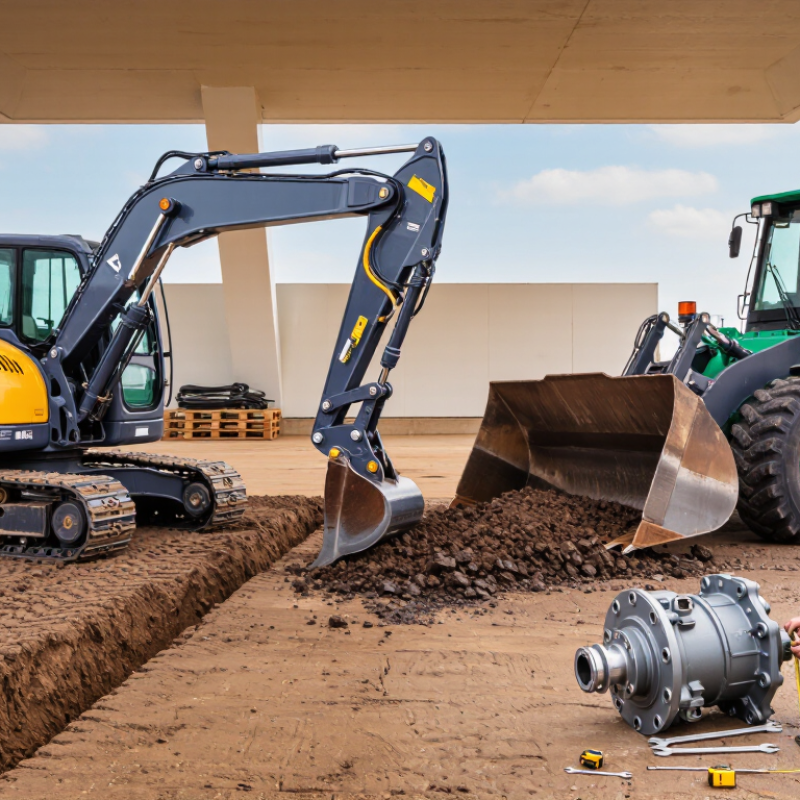
Define Machine Class, Operating Mass, Track Width, and Duty Cycle
Choose the final drive by machine class, not by a part number alone. ISO 6165:2022 distinguishes earth-moving machine types, while ISO 6016:2008 defines how machine operating mass is determined. Use the machine’s configured mass, including attachments and typical payload, rather than its base weight. A 20-tonne crawler with two 0.6-metre tracks and 3-metre ground contact has an estimated average pressure of about 54.5 kPa. This simple calculation assumes full track contact. Real soil and track sag change the result. ISO 16754 provides a method for determining crawler ground-contact pressure.
Track width affects more than flotation. Wider tracks can reduce ground pressure on soft ground, but add resistance and may alter travel loads. Match the final drive to the actual width and undercarriage configuration. Then describe the duty cycle: daily operating hours, travel distance, slope, turning frequency, and repeated pushing loads. A machine that crawls slowly on level ground needs a different operating profile from one that climbs grades and reverses often. Small details matter. A tidy specification sheet can still miss short, severe load peaks; check service records or observe a representative shift where possible. Use the ISO references as technical benchmarks, then confirm the drive’s torque and thermal ratings against the machine’s real working conditions.
Calculate Sprocket Torque from Tractive Effort and Maximum Grade
A crawler final drive must deliver enough sprocket torque to overcome grade resistance and track-ground losses. Calculate the grade angle from the slope, then estimate total tractive effort: machine weight × (sin θ + rolling-resistance coefficient × cos θ). SAE J1309 standardizes earthmoving-machine performance terminology; ISO 6014 addresses ground-speed determination. These references help define performance data, but actual resistance still depends on soil and track condition.
For an illustrative 18,000 kg crawler on a 30% grade, assume a rolling-resistance coefficient of 0.05. The estimated total tractive effort is about 59.2 kN. With two equally loaded tracks, each sprocket supplies roughly 29.6 kN. At a 0.32 m pitch radius, that equals 9.5 kN·m per sprocket; adding a 20% design margin gives about 11.4 kN·m.
Short check. Confirm the effective sprocket radius and load split from machine data. This is only a first-pass estimate: soft ground, turning, acceleration, and uneven track loading can raise demand. I would not treat the margin as a substitute for measured site conditions.
Match Reduction Ratio to Required Travel Speed and Output Torque
How to Choose the Right Crawler Final Drive?
Match Reduction Ratio to Required Travel Speed and Output Torque
Select the reduction ratio by working backward from travel speed, then checking sprocket torque under load. Output speed is motor speed divided by the ratio; output torque is motor torque multiplied by the ratio and drive efficiency. For example, a 3,000-rpm motor with a 100:1 reduction turns the sprocket at 30 rpm. With a 1.5-meter sprocket circumference, that equals about 2.7 km/h. Published crawler-machine specification sheets commonly list travel speeds in the 2–5 km/h range, making this a useful comparison—not a design rule. Actual figures vary with machine size and operating conditions.
Torque needs rise on slopes, soft soil, and during turns. A higher ratio can provide more sprocket torque, but it also reduces travel speed. Check the required drawbar pull against machine weight, track contact, and grade resistance. SAE J1097 provides a standardized method for measuring drawbar pull; field testing remains important because soil conditions rarely behave neatly. A calculation can be sound and still miss the mark.
Tips: Start with loaded travel speed, not unloaded speed. Confirm motor displacement, pressure, sprocket circumference, and duty cycle with the machine’s technical data. Leave room for losses and shock loads. Then verify both speed and drawbar pull; the first estimate is only a starting point.
Verify Fitment, Oil Grade, and OEM ISO 4406 Cleanliness Targets
Before ordering a crawler final drive, match the machine’s exact model and serial range. Check reduction ratio, mounting bolt circle, sprocket pitch, shaft dimensions, and hydraulic port position. A unit can bolt on yet still mismatch the chain or travel speed. Measure the old assembly where possible; worn parts can mislead. I would not rely on appearance alone.
Choose oil by the machine manufacturer’s specification, not by habit. The correct viscosity depends on the drive design and operating temperature. A heavier grade may flow poorly during cold starts; a lighter one may not protect adequately under load. Keep the reservoir and transfer tools clean. Contamination often enters during service, not only through a failed seal.
Ask for the OEM’s ISO 4406 cleanliness target and verify a representative oil sample. The ISO 4406:2021 coding table places code 18 in the range of 1,300–2,500 particles per millilitre at 4 μm and larger; code 16 covers 320–640 at 6 μm and larger; code 13 covers 40–80 at 14 μm and larger. These are particle-count bands, not universal acceptance limits. The OEM target takes precedence. One practical weakness: a sample taken from a stagnant drain can misrepresent circulating oil, so sampling technique matters.