
Fabric Testing turns a material’s promises into measurable evidence. A soft hand, bright color, or neat seam may impress on a showroom table. None proves how the fabric will behave after repeated washing, daily friction, or hours under sunlight. Testing examines those risks before they become costly complaints.
Quality-management pioneer W. Edwards Deming offered a useful principle: “In God we trust; all others must bring data.” For fabric makers, that means checking claims with repeatable methods, not relying on touch or appearance alone. A lab may measure tensile strength, colorfastness, shrinkage, pilling, and air permeability. A rubbing test can reveal dye transfer onto a pale sleeve. A wash cycle can expose a twisted seam or unexpected shrinkage. Small details matter.
This introduction explores what Fabric Testing involves and why it matters to manufacturers, retailers, and buyers. Results can guide material selection, production adjustments, and clearer product information. They can also help teams compare fabric batches and spot defects before goods reach store shelves. No test is perfect. A laboratory sample cannot capture every home, climate, or wearing habit. That limitation deserves attention, not dismissal. Testing is most useful when methods suit the product, results are recorded carefully, and findings are interpreted by qualified professionals. Done well, it replaces guesswork with practical evidence and helps people make better decisions about the fabrics they use.
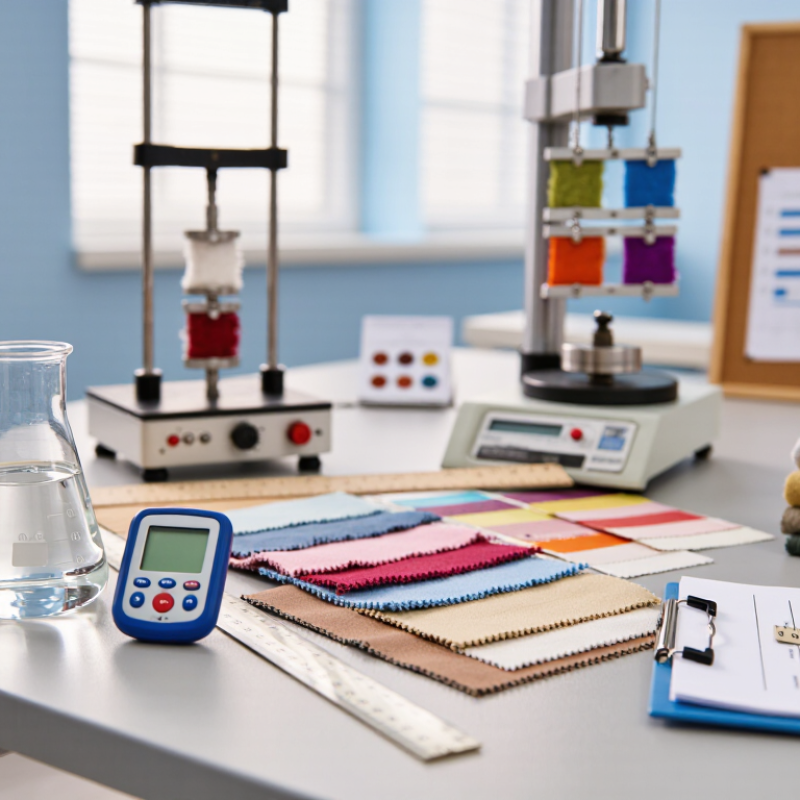
Fabric testing is the measurement of a textile’s physical properties under defined conditions. It can assess strength, stretch, abrasion resistance, colorfastness, shrinkage, and air permeability. Each result describes a specific behavior, not overall quality. A fabric may resist tearing yet fade quickly in sunlight. Small details matter.
Tests use prepared samples and controlled procedures. For example, a tensile test pulls a strip until it breaks, recording the force and sometimes the amount of stretch. Abrasion testing rubs a surface repeatedly to observe wear or visible damage. Results depend on sample direction, moisture, temperature, and test settings. Comparing results is useful only when these conditions are consistent. Testing should reflect the fabric’s intended use, since upholstery and lightweight clothing face different demands. Even careful measurements have limits; laboratory results may not capture every variation in everyday wear.
Tips: Ask which property was tested and how the sample was prepared. Keep reports with fabric lot details. If a result seems surprising, retest a fresh sample before making a production decision. I would not treat one number as the whole story.
Fabric testing uses controlled methods to measure how cloth behaves under stress, wear, and care. A tensile test grips a fabric strip and pulls until it stretches or breaks. Tear testing measures how easily a small cut spreads. These results help compare materials for shirts, upholstery, or workwear, but the sample direction matters: woven cloth can behave differently along its length and width.
Abrasion tests rub fabric repeatedly against a surface to estimate wear. Pilling tests check whether loose fibers form small balls after friction. For washable textiles, technicians measure shrinkage and inspect color after laundering. Rubbing tests can reveal whether dye transfers onto a damp or dry cloth. Light exposure tests assess fading, though they cannot perfectly reproduce every home or outdoor condition. Small details matter.
Air-permeability tests measure how readily air passes through a sample. Water-resistance tests may measure how much spray a fabric repels or how much pressure it withstands before leaking. Test conditions should be recorded, including temperature, humidity, and the number of wash cycles. Otherwise, comparisons can mislead. A lab result is not a guarantee of real-world comfort; fit, construction, and repeated use also affect performance. I would treat any single score as a useful clue, not the whole story.
What Is Fabric Testing and Why Is It Important?
How Fabric Testing Is Carried Out Step by Step
Fabric testing measures whether cloth meets its intended use and agreed specifications. Start by identifying likely risks: a work shirt may need seam strength, while a curtain may need lightfastness. Select representative samples from the roll, label their positions, and condition them in a controlled textile-testing atmosphere. Then cut specimens in both lengthwise and crosswise directions where the method requires it.
Choose tests that match the product. ISO 13934-1 measures tensile properties; ISO 105-C06 evaluates colourfastness to domestic laundering; ISO 12945-2 assesses pilling. Record equipment, method, and results, then compare them with the buyer’s limits. If a result fails, check sampling and test conditions before approving a retest. A neat report cannot fix a poor sample.
Textile Exchange’s 2024 Materials Market Report estimates that global fibre production reached 124 million tonnes in 2023. That scale makes consistent testing useful, but volume alone says nothing about a fabric’s performance. Tips: Keep swatches labelled, note the fabric’s finish, and test after washing when care instructions make that relevant. Lab results are controlled snapshots; real laundry habits vary, and that gap deserves attention.
Fabric testing checks how a material performs under defined conditions. It can measure strength, colorfastness, shrinkage, abrasion, and other properties. A cotton sample, for example, may look smooth but lose color when rubbed with a damp cloth. Small differences matter. Testing helps manufacturers compare batches and spot problems before fabric becomes a finished product. Results are useful, but they do not describe every condition a garment may face in daily use.
Safety depends on how and where a fabric will be used. Testing can assess risks such as flammability, harmful chemical residues, or weak seams in products that need to withstand repeated use. The right checks depend on the intended purpose and applicable standards. A fabric suited to a loose shirt may not be suitable for protective clothing. Context matters. A lab report is not a perfect picture of real-world wear, either; test methods and sample preparation can affect results. That limitation deserves attention, not dismissal.
Tips: Ask for results tied to the fabric’s intended use, and check the test method and sample details. Compare like with like. If a result seems surprising, repeat the test or review how the sample was prepared. Keep records for each batch, since a reliable fabric can still vary over time.
Fabric testing turns material claims into measurable evidence. A product team can compare weight, tensile strength, seam slippage, abrasion, shrinkage, and colorfastness under defined conditions. The results help match fabric to its intended use: a lightweight shirt needs different performance from a seat cover exposed to daily rubbing. Small details matter. A few percentage points of shrinkage can change a garment’s fit after washing, while poor colorfastness may stain a pale lining. Teams should review test methods, sample conditioning, and acceptance limits, not just a pass-or-fail label.
Test results guide fabric selection before bulk production begins. If a fabric is strong but loses color after repeated washing, the team can compare another blend or dye process. High shrinkage may call for adjusted pattern dimensions or a different finishing step, followed by retesting. Production checks can turn results into practical controls, such as acceptable weight ranges or wash-test frequency. Yet samples must represent the actual lot; a neat lab swatch may not reflect variation across a full roll. That is easy to overlook. Reports guide decisions, but careful inspection and wear trials still matter. Sometimes the highest test score does not identify the best fabric for the intended use.
| What Is Fabric Testing and Why Is It Important? - How Test Results Guide Fabric Selection and Production | ||||
|---|---|---|---|---|
| Test Area | Method | Example Result | What the Result Indicates | How It Guides Selection and Production |
| Fabric mass | ISO 3801 | 120 g/m² | A lightweight woven fabric, suitable for shirts, linings, and warm-weather garments. | Compare weight with the product specification. Unexpected variation may indicate inconsistent yarn, construction, or finishing. |
| Tensile strength | ISO 13934-1 | Warp: 650 N Weft: 380 N | The fabric withstands greater pulling force along the warp than across the weft. | Check strength in both directions against garment-use requirements; adjust fabric construction or handling if either direction is too weak. |
| Tear strength | ISO 13937-2 | Warp: 12 N Weft: 9 N | Measures the force needed to continue a tear after it has started. | Useful for assessing durability in areas subject to snagging. Low results may call for a stronger construction or more careful cutting and sewing. |
| Dimensional change after washing | ISO 5077 with washing according to ISO 6330 | Length: −2.0% Width: −1.2% | The sample shrank slightly in both directions after the specified wash procedure. | Confirm shrinkage is within the product limit. Results can inform garment pattern allowances and any required relaxation or pre-treatment process. |
| Colorfastness to washing | ISO 105-C06 | Color change: Grade 4 Staining: Grade 4 | On the 1–5 grey scale, Grade 4 indicates good resistance to color change and transfer under the tested conditions. | Use the result to assess suitability for the intended care instructions and to identify whether dyeing or finishing needs adjustment. |
| Colorfastness to rubbing | ISO 105-X12 | Dry: Grade 4–5 Wet: Grade 4 | Indicates good resistance to color transfer during dry and wet rubbing. | Important for fabrics that rub against skin, other garments, or upholstery. Review wet-rubbing performance for dark or saturated shades. |
| Pilling resistance | ISO 12945-2, 2,000 cycles | Grade 4 | Shows limited visible pilling after the specified test cycles; Grade 5 represents the best rating. | Helps compare surface durability for garments exposed to repeated wear. Fiber choice, yarn structure, and finishing can affect the result. |
| Air permeability | ISO 9237 at 100 Pa | 65 mm/s | Indicates moderate airflow through the fabric under the stated test pressure. | Compare with the comfort or protective performance target. A tighter construction or coating may reduce airflow during production. |
| Seam slippage | ISO 13936-2 | 6 mm at 180 N | Measures yarn displacement at a sewn seam under load. | Use the result to assess seam appearance and strength. If slippage is excessive, review fabric construction, seam type, stitch density, and sewing settings. |
| pH value | ISO 3071 | pH 6.2 | A mildly acidic result within a commonly used range for textiles intended for skin contact. | Check against applicable product and market requirements; adjust rinsing or finishing if the result falls outside the specified range. |
| Reading the results: These figures are representative example results for a lightweight woven fabric, not a certified test report. Actual acceptance limits depend on the product, test conditions, intended use, and applicable requirements. Testing helps teams compare fabric options, approve production lots, and identify process adjustments before defects reach finished goods. | ||||
By continuing to use the site, you agree to the use of cookies. more information
The cookie settings on this website are set to "allow cookies" to give you the best browsing experience possible. If you continue to use this website without changing your cookie settings or you click "Accept" below then you are consenting to this.