
Blog

What Is a Fuse Terminal Block and How Does It Work?

As electrical systems grow more complex, small connection points carry important responsibilities. The International Energy Agency’s Electricity 2024 report says global electricity demand rose by 2.2% in 2023 and forecasts average annual growth of 3.4% from 2024 to 2026. More demand means more circuits to connect, protect, and maintain. Details matter.

A Fuse Terminal Block combines a conductor terminal with a fuse holder in one compact component. If excessive current flows, the correctly selected fuse element melts and interrupts the circuit. This can help protect a branch circuit and make fuse replacement more straightforward. It is not a substitute for correct system design, however; ratings, conductor size, fault levels, and installation conditions all matter.

The technical basis is important. IEC 60947-7-3 sets safety requirements for fuse terminal blocks used with copper conductors, giving engineers and buyers a recognized reference when evaluating products. In practice, a technician may see these blocks lined along a control-panel rail, each carrying a labeled wire and an accessible fuse. Clear labeling helps. Yet the right fuse and block must still match the application, and that step is easy to underestimate. This article explains what a Fuse Terminal Block is, how it works, and what to check before selecting or installing one.
What Is a Fuse Terminal Block and How Does It Work?

Fuse Terminal Block: Definition and Core Purpose

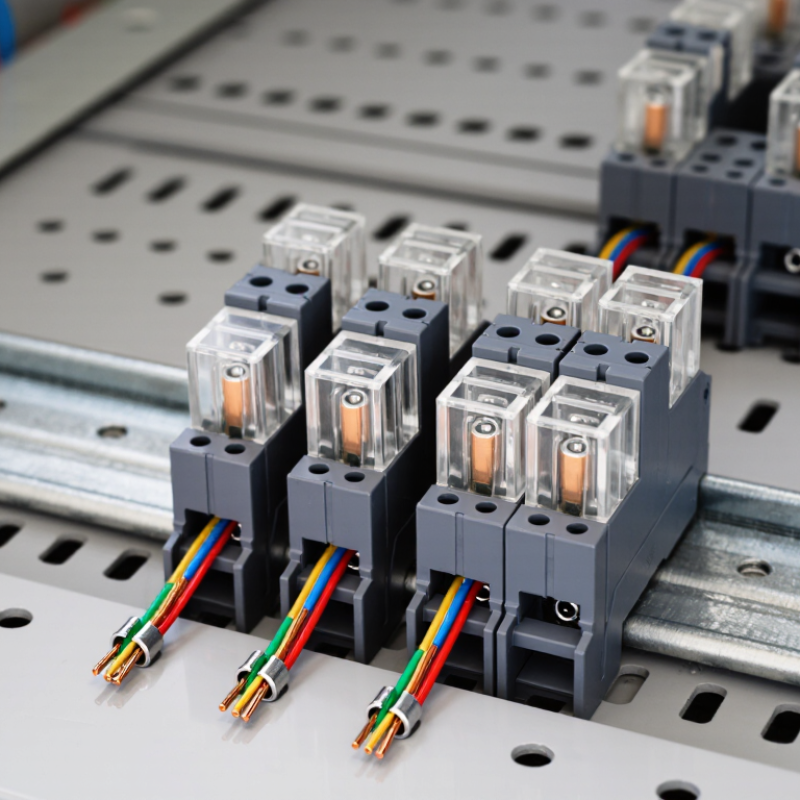
A fuse terminal block is an electrical connection point that holds a fuse in the same compact body as one or more wire terminals. It is commonly mounted on a control panel rail. Conductors enter at screw or spring-clamp terminals, while a removable fuse sits in the current path. That distinction matters. The block connects wires; the fuse is the part designed to open the circuit when current exceeds its specified limit.

Its core purpose is to combine wiring and overcurrent protection in an organized, accessible location. If a fault causes excessive current, the fuse element melts and interrupts that branch of the circuit. Nearby equipment may then be protected from continued fault current, provided the fuse is correctly selected for the circuit and wiring. Small, but important. A visible fuse can also make troubleshooting easier: a technician can identify the affected branch and inspect the fuse without tracing every conductor through a panel.

The details deserve care. Fuse type, voltage rating, current rating, and conductor size must suit the application; a block alone does not guarantee protection. Before replacing a fuse, power should be isolated and the cause of failure investigated. Repeatedly changing a blown fuse without checking the circuit is a poor habit. The component looks simple, but selection and installation still require attention.

Key Components and Their Functions

A fuse terminal block combines a conductor clamp, a fuse holder, and an insulated base. The clamp secures the incoming and outgoing wires. The holder grips the fuse and keeps its contacts aligned. The base separates live metal parts from the mounting rail. Small details matter: a loose clamp can heat up, while a poorly seated fuse may interrupt the circuit unexpectedly.

When current exceeds the fuse link’s rated limit, the link melts and opens the circuit. This protects downstream wiring and equipment, but only when the fuse rating matches the circuit. IEC 60947-7-3:2019 covers fuse terminal blocks for copper conductors in circuits up to 1,000 V AC or 1,500 V DC. That is a scope limit, not a recommendation for every installation. Markings, conductor size, and rated current should all be checked against the equipment design. Labels can be missed in a crowded cabinet; that is a real, avoidable weakness.

Tips: Isolate power before inspection. Check that the conductor is fully inserted and the clamp is secure. Replace a blown fuse with the specified type and rating, never a higher-rated substitute. A quick visual check helps, but it cannot confirm every electrical connection.

How a Fuse Terminal Block Protects a Circuit

A fuse terminal block combines a wiring connection point with a replaceable fuse. The fuse sits in series with the circuit, so normal current passes through its metal element. When excessive current flows, the element heats and melts, opening the circuit. That interruption helps limit overheating and damage to downstream wires and equipment. A visible break in the fuse can make a fault easier to spot. Small component. Serious consequence.

The National Fire Protection Association’s Electrical Fires report, using 2015–2019 data, estimates that electrical failure or malfunction was involved in 46,700 reported home structure fires each year. Those fires caused an average of 390 civilian deaths annually. This wider fire data does not measure fuse terminal blocks specifically, but it underlines why correctly selected overcurrent protection matters. The fuse’s current and voltage ratings, time-current behavior, and interrupting capacity must suit the circuit. A fuse that opens repeatedly is a warning, not an invitation to fit a larger one. Still, protection has limits: a fuse does not prevent every fault or replace safe wiring practices. Always isolate power before inspection, and investigate the cause before replacing a blown fuse.

What Is a Fuse Terminal Block and How Does It Work?

Illustrative current levels in a 24 V DC circuit with a 5 A fuse

How it protects: A fuse terminal block combines a wiring terminal with a fuse in series with the circuit. If excessive current persists, the fuse element melts and opens the circuit, interrupting current to help protect wiring and connected equipment. The example currents are illustrative; actual fuse operation depends on the fuse’s time-current characteristics and circuit conditions.

Common Designs and Applications

Fuse terminal blocks combine a wire connection point with a replaceable fuse in one compact component. Many mount on a DIN rail inside a control cabinet. A screw-clamp design holds conductors with tightened screws, while a spring-clamp version uses a pressure cage for quicker wiring. Both connect the circuit through a fuse element. If current rises beyond the fuse’s rating for long enough, the element melts and interrupts the circuit. The fuse can then be replaced after the cause of the fault is checked. Small details matter.

Common designs include blocks for glass or ceramic cartridge fuses, and models with a visible status indicator. An LED indicator can help identify an open fuse, though it depends on the circuit and must be checked against the product specifications. Some blocks include a hinged carrier or disconnect feature, making fuse changes easier during maintenance. These details are useful in control panels, machinery, HVAC equipment, lighting circuits, and instrumentation. A narrow block may save cabinet space, but cramped wiring can make inspection harder. That trade-off deserves attention. Select the fuse type, current and voltage ratings, interrupting capacity, and conductor size for the specific circuit. A fuse terminal block is not a substitute for checking the whole protection scheme, especially when several loads share a supply.

What Is a Fuse Terminal Block and How Does It Work? — Common Designs and Applications

Design How It Works Common Fuse Format Typical Applications Practical Characteristics
Screw-clamp fuse terminal block A fuse is held in a carrier or holder within the block. Screw-clamp terminals connect the field conductors to the protected circuit. Cartridge fuse sizes specified for the particular block; formats vary by model. Control cabinets, industrial machinery, and general-purpose control wiring. Familiar wiring method; conductor size, tightening torque, and fuse compatibility must follow the product specifications.
Spring-clamp fuse terminal block A spring mechanism grips the conductor, while a separate holder or carrier provides access to the fuse. Specified miniature or cartridge fuse formats, depending on the design. Vibration-prone equipment, compact control panels, and installations where quick wiring is useful. Can simplify conductor installation; the permitted conductor type and cross-section depend on the terminal design.
Hinged or pull-out fuse carrier The carrier opens or withdraws to expose the fuse, allowing replacement without removing the entire terminal block. Fuse format and dimensions matched to the carrier. Control circuits, instrumentation panels, and circuits where convenient fuse replacement is needed. Provides access for maintenance; opening the carrier does not necessarily make the circuit safe to touch.
Indicator-style fuse terminal block An indicator provides a visual or electrical signal when the fuse has operated, according to the block’s design. Specified cartridge or miniature fuse formats. Distributed control systems, alarm circuits, and panels with many individually protected branches. Indicator operation and polarity requirements vary; check the wiring diagram and device specifications.
Disconnect-style fuse terminal block A switchable or removable section separates the circuit and incorporates a fuse, enabling isolation for testing or maintenance. Fuse format matched to the disconnect mechanism. Measurement circuits, process-control panels, and circuits that require a defined isolation point. Confirm the device’s isolation function and operating procedure; a fuse alone is not a substitute for an approved isolator.
Multi-circuit fuse terminal assembly Several fused terminals are arranged together, with common supply distribution or individual feed connections as designed. One specified fuse per protected circuit; formats may be shared across the assembly. Machine control panels, HVAC controls, and grouped low-power branch circuits. Supports organized circuit protection; verify current distribution, terminal ratings, and required spacing.

Selection and operation: A fuse terminal block combines a conductor terminal with a fuse holder. The fuse opens the circuit when current exceeds its specified time-current limits, helping protect wiring and equipment. Voltage, current, interrupting capacity, fuse size, and applicable approvals are product-specific; select and install the block and fuse according to their datasheets and local electrical requirements.

Selection, Installation, and Maintenance Considerations

A fuse terminal block combines a wire connection point with a replaceable fuse. Choose one by checking the circuit’s operating voltage, expected current, and available short-circuit current. The block and fuse must both suit the application; a fuse’s interrupt rating matters if a fault occurs. Match the fuse characteristics to the load and conductor size, not just the normal running current. Small details matter.

During installation, isolate the supply and verify that the circuit is de-energized with a suitable tester. Strip each conductor to the specified length, then secure it without cutting or trapping strands. Tighten terminals to the stated torque; overtightening can damage the connection, while a loose wire may heat under load. Follow the block’s line and load markings where provided. If the wiring layout is unclear, pause and check the equipment documentation rather than guessing.

For maintenance, inspect the block for cracked insulation, corrosion, darkened surfaces, or softened plastic. These can indicate heat or a poor connection. Replace a blown fuse only with the specified type and rating; never bridge the holder or fit a larger fuse to stop repeat failures. Check connections during scheduled service, especially where vibration or temperature changes are common. A visual check helps, but it may not reveal every hidden fault. Repeated fuse operation calls for investigating the circuit, not simply replacing the fuse again.

By continuing to use the site, you agree to the use of cookies. more information

The cookie settings on this website are set to "allow cookies" to give you the best browsing experience possible. If you continue to use this website without changing your cookie settings or you click "Accept" below then you are consenting to this.

Close