
Blog

China Top 10 Idler Arm Manufacturers How to Choose?

Choosing among China’s top 10 Idler Arm manufacturers requires more than comparing prices. This steering component supports linkage movement and helps maintain accurate wheel control. A poorly matched part may create looseness, uneven tire wear, or unstable handling. For that reason, buyers should examine design capability, material quality, machining accuracy, and inspection procedures together.

A reliable manufacturer should explain its production process clearly. Look for forged or cast material specifications, heat-treatment records, dimensional reports, and load-testing methods. Ask whether the Idler Arm matches the vehicle’s original geometry, mounting points, and bushing requirements. Factory experience also matters. A supplier serving commercial trucks may not understand the needs of passenger vehicles or specialty platforms. Small details matter here, including grease fitting placement, thread protection, and corrosion-resistant finishing.

The phrase “top 10” should not be treated as a permanent ranking. Manufacturing capacity, certifications, export performance, and customer service can change. Buyers should verify company information through factory audits, sample testing, and recent customer references. One sample is not enough. Request several units and compare hardness, joint movement, surface finish, and installation fit. It is also wise to review warranty terms, packaging strength, lead times, and technical support before signing a contract.

No supplier is perfect. Even an experienced factory can show inconsistent batches or unclear documentation. Careful questioning exposes those weaknesses early. This guide compares ten Chinese Idler Arm manufacturers through practical criteria, helping importers balance quality, cost, reliability, and long-term support. The best choice is not always the cheapest. It is the supplier that can repeatedly deliver safe, traceable, and correctly engineered components.
China Top 10 Idler Arm Manufacturers How to Choose?

What Is an Idler Arm and Why Does It Matter?

An idler arm is a steering-linkage component used in many rear-wheel-drive vehicles. It supports the center link opposite the pitman arm. Together, these parts guide the front wheels as the driver turns the steering wheel. The idler arm does not create steering movement. It keeps the linkage aligned and helps control its vertical motion. That quiet support role is easy to overlook.

During workshop inspections, technicians often check for excessive play, damaged bushings, loose mounting points, and uneven movement. A worn idler arm may cause vague steering, wandering, clunking sounds, or irregular tire wear. However, one symptom does not prove failure. A quiet test drive can still hide serious looseness. A proper inspection should combine hands-on checks, linkage measurement, and a review of tire patterns.

Choosing an idler arm manufacturer requires more than comparing prices. Look for accurate original-equipment dimensions, forged or suitably strengthened materials, protected joints, and bushings that resist road moisture. Clear load testing, corrosion testing, batch traceability, and practical warranty terms show stronger quality control. Greaseable joints can support longer service in harsh conditions, but they still need maintenance. Some product descriptions sound impressive. The details matter more. Confirm vehicle fitment, steering geometry, and installation torque before purchase. A reputable supplier should provide technical data rather than vague durability claims.

How to Evaluate China’s Top 10 Idler Arm Manufacturers

China Top 10 Idler Arm Manufacturers How to Choose?

Evaluating China’s top ten idler arm manufacturers requires more than comparing website rankings. Start with engineering evidence. Request material certificates, dimensional drawings, heat-treatment records, and load-test results. Check whether the supplier understands steering geometry, not only machining tolerances. A reliable manufacturer should explain ball stud fit, bushing hardness, thread accuracy, and corrosion protection in clear terms.

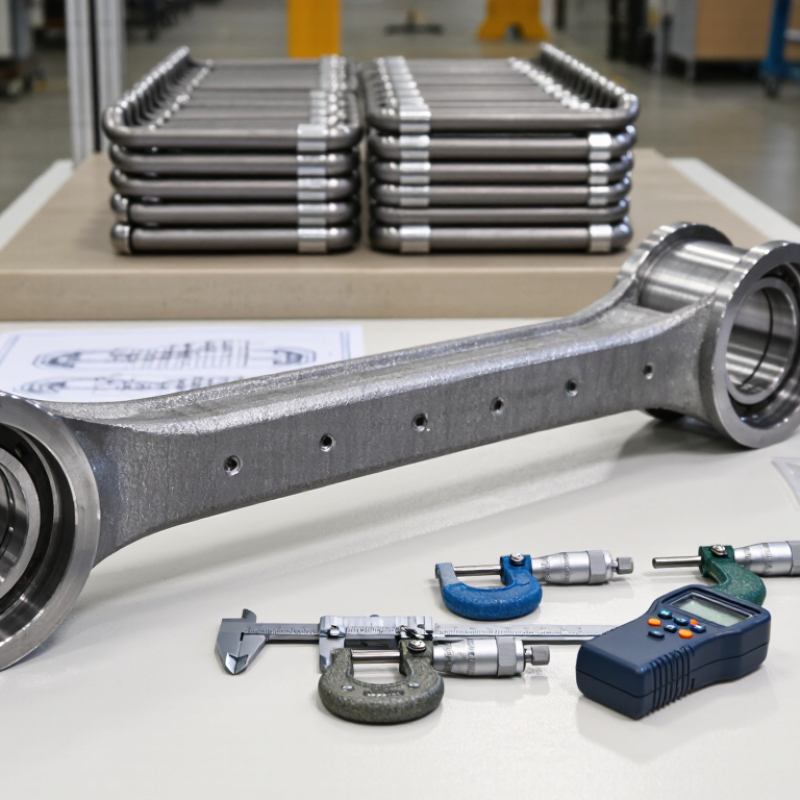
Ask for production samples before placing a large order. Measure the arm with calibrated gauges. Inspect the tapered hole, mounting faces, and bushing position. A small dimensional error can affect steering response and tire wear. Review fatigue-test methods, batch traceability, and inspection records. Factory visits can reveal practical details, such as clean assembly areas, marked containers, and controlled storage. Photos are useful. They are not proof.

Supplier reliability also depends on communication and corrective action. Send a detailed drawing and observe the response. Does the technical team ask useful questions? Can it provide a realistic production schedule? Check warranty terms, replacement procedures, and independent laboratory reports. A polished catalog may hide weak process control. A modest factory may have stronger discipline. No scoring sheet is perfect. It can miss operator training or rushed final inspections. Recheck critical evidence during sample approval, especially when production moves between workshops. Reliability grows from repeated verification, not impressive claims.

China’s Top 10 Idler Arm Manufacturers by Capability

China’s top 10 idler arm manufacturers should be assessed by capability, not visibility alone. A capable supplier may handle forged steel, ductile iron, or aluminum designs with consistent control. Its workshop should show CNC machining, controlled heat treatment, and dimensional inspection equipment. Clean production records matter.

During supplier audits, I look for process evidence rather than polished presentations. Check material certificates, sample inspection reports, and batch traceability. Ask whether critical dimensions are measured with calibrated gauges. Review fatigue, corrosion, and load testing procedures when the application demands them. A reliable manufacturer can explain failure limits in practical terms.

Production capacity also separates strong suppliers from average ones. The right factory should support prototypes, small batches, and stable mass production. Engineering teams should read drawings, suggest tolerance improvements, and identify weak mounting points. Communication speed is useful, but technical accuracy matters more. Not every large factory delivers better arms. That assumption can mislead buyers. A capability matrix helps, but it is not perfect. Visit the facility when possible. Compare rejected parts, not only finished samples. Ask how operators respond when measurements fall outside tolerance, because that response often reveals the manufacturer’s real quality culture.

Key Quality, Material, and Performance Factors to Compare

China Top 10 Idler Arm Manufacturers: How to Choose?

When comparing China’s top ten idler arm manufacturers, inspect quality before accepting catalog claims. A reliable supplier should provide dimensional drawings, material certificates, and batch traceability. Check critical measurements, including stud diameter, mounting-hole position, and taper accuracy. Small errors can create steering play or uneven tire wear.

Material choice strongly affects service life. Forged steel usually handles repeated impact and high steering loads well. Ductile iron can offer strength with efficient production costs. Ask about heat treatment, hardness testing, and corrosion protection. The arm should also use durable bushings, seals, and grease protection. Cheap rubber may crack after winter exposure or road contamination. It looks acceptable at first.

Performance testing deserves equal attention. Request fatigue, load, salt-spray, and low-temperature test results when available. Production consistency matters more than one impressive sample. Inspect several pieces from different batches, not only a showroom unit. A dependable manufacturer should explain its inspection process clearly and respond with measurable data. Certifications can support credibility, but they do not replace physical testing.

Fitment is another practical filter. Compare the original part’s geometry, thread specification, and articulation range. Ask whether the design has been validated on vehicles using similar axle loads and steering systems. No supplier gets every detail perfect. That is why independent sampling and field feedback remain valuable before placing a large order.

China Top 10 Idler Arm Manufacturers: How to Choose? — Key Quality, Material, and Performance Factors to Compare

Anonymous, evidence-based comparison matrix for evaluating up to ten idler arm manufacturers without relying on company or brand claims. Use documented evidence and score each criterion from 1 to 5.

No. Comparison Dimension Why It Matters Recommended Technical Benchmark Evidence to Request from Each Manufacturer Common Warning Signs
1 Manufacturing Material Material selection affects fatigue strength, stiffness, wear resistance, corrosion behavior, and total weight. Forged carbon or alloy steel for high-load applications; ductile iron may be suitable where the design specifically permits it. The exact grade must follow the approved engineering drawing. Material certificate, heat number traceability, chemical composition report, and confirmation that the supplied grade matches the drawing or customer specification. Material described only as “high-quality steel” without a grade, standard, or traceable certificate.
2 Forging or Casting Integrity Internal voids, laps, inclusions, and shrinkage defects can reduce steering-system durability and safety. For forged parts: controlled forging flow and heat treatment. For cast parts: controlled solidification and documented inspection appropriate to the design risk. Process flow chart, forging or casting parameters, first-article report, and non-destructive inspection records such as magnetic-particle or ultrasonic testing where specified. No process records, no defect limits, or reliance on visual inspection alone for safety-critical areas.
3 Heat Treatment and Hardness Correct heat treatment balances strength, toughness, wear resistance, and resistance to brittle failure. Hardness and tensile targets should be defined by the part drawing or material standard. Testing should be performed using a recognized method such as Rockwell hardness testing under ISO 6508 or an equivalent standard. Heat-treatment recipe, furnace records, hardness maps, tensile-test results where applicable, and calibration records for testing equipment. One hardness value quoted for the entire part without location, test method, tolerance, or batch traceability.
4 Dimensional Accuracy Critical dimensions influence steering geometry, bushing fit, ball-joint alignment, and installation interchangeability. Critical bores, mounting faces, and joint centers should be controlled according to the approved drawing, GD&T requirements, and functional tolerance stack-up. CMM inspection report, calibrated gauges, dimensional control plan, GD&T inspection records, and first-article measurement results. Only overall length and width are inspected while mounting holes, bores, and pivot alignment are not measured.
5 Bushing and Joint Compatibility Bushing stiffness, compression behavior, and joint articulation directly affect steering feel, noise, vibration, and service life. Use the specified rubber, thermoplastic elastomer, or other approved material with defined hardness, operating-temperature range, articulation angle, and press-fit requirements. Bushing material specification, hardness report, pull-out or retention test, articulation test, supplier traceability, and compatibility confirmation for the mating components. Unspecified bushing compound, inconsistent hardness, visible cracks, excessive flash, or uncertain press-fit dimensions.
6 Fatigue and Load Performance Idler arms experience repeated steering loads, impacts, vibration, and road-induced cyclic stress rather than only static loading. Validation should represent the intended vehicle load case, duty cycle, temperature, articulation, and failure criteria. Static proof testing alone is not sufficient for fatigue evaluation. Test plan, load-versus-cycle data, fixture description, failure analysis, durability report, and correlation between test loads and the customer application. Only a single maximum-load result is provided, with no cycle count, test conditions, or acceptance criteria.
7 Corrosion Protection Corrosion can reduce section thickness, damage press fits, increase friction, and accelerate fatigue cracking. Select coating or surface treatment according to the application environment. Salt-spray testing under ASTM B117 may support comparison, but the acceptance duration must be agreed in advance and should not replace real-use validation. Surface-treatment specification, coating thickness report, pretreatment details, adhesion results, salt-spray report where required, and protection of machined interfaces. “Rust-proof” claims without coating type, thickness, test method, exposure duration, or uncoated-area requirements.
8 Quality Management System A controlled quality system reduces variation and improves corrective action, traceability, and change management. ISO 9001 certification is a useful baseline. IATF 16949 may be relevant when the supply chain or customer program requires automotive-specific quality controls. Current certificate, certification scope, audit history, control plan, process FMEA, gauge calibration records, and documented corrective-action process. Expired certificate, certificate scope unrelated to the product, or refusal to provide inspection and corrective-action documentation.
9 Inspection and Sampling Plan Consistent inspection determines whether production parts continue to meet critical requirements after approval. Use 100% inspection for designated safety-critical characteristics when required, with statistical sampling for other features based on an agreed plan such as ISO 2859-1. Control plan, inspection frequency, acceptance quality limit, inspection equipment list, nonconforming-product procedure, and lot-release records. Unclear sampling levels, no defined lot size, no separation of critical characteristics, or undocumented rework.
10 Traceability, Delivery, and Technical Support Traceability and responsive engineering support reduce recall exposure, installation problems, and production interruptions. Each production lot should be traceable to material, process, inspection, and shipment records. Delivery capability should be measured using an agreed on-time-in-full target and documented escalation process. Lot or date-code system, production capacity statement, lead-time history, packaging specification, change-notification procedure, warranty terms, and response-time commitment. Mixed lots, missing date codes, uncontrolled engineering changes, vague warranty terms, or no defined response process for field failures.
Suggested scoring: 1 = insufficient evidence 3 = acceptable with conditions 5 = verified and consistently controlled. Do not rank a manufacturer using price alone; exclude any candidate that fails a mandatory safety, material, dimensional, or traceability requirement.

How to Choose the Right Chinese Idler Arm Supplier

China’s large vehicle market creates many idler arm sourcing options. The China Association of Automobile Manufacturers reported 31.44 million vehicle sales in 2024. Demand is substantial, but supplier quality can vary sharply.

Choose a factory with IATF 16949 certification, not only an attractive catalog. Request material certificates for forged steel, bushing compounds, and ball-stud hardness. Review dimensional inspection records, fatigue testing, salt-spray results, and production traceability. A reliable supplier should provide PPAP documents and control plans before mass production. S&P Global Mobility reported that the average U.S. light vehicle age reached about 12.6 years in 2024. This supports demand for durable replacement steering parts, especially under long-term road vibration. Still, a polished sample can hide weak batch control.

Tips: Ask for three recent batch reports. Check thread fit, taper accuracy, boot sealing, and grease retention with an independent laboratory. Visit the production line if possible. Observe forging, machining, heat treatment, and final inspection rather than trusting photographs. Confirm packaging protects the arm from moisture and impact. Clarify warranty terms, failure analysis procedures, lead times, and minimum order quantities in writing. A low quotation may reflect thinner material or limited testing. That deserves a second review. Select the Chinese idler arm supplier that proves repeatable performance, not merely fast communication.

China Top 10 Idler Arm Manufacturers: How to Choose the Right Chinese Idler Arm Supplier

Select suppliers by prioritizing quality assurance, technical capability, traceability, validation testing, production capacity, export service, and lead time. The chart presents a practical 100-point evaluation framework for comparing Chinese idler arm suppliers without using company or brand data.

Recommended evaluation model: Quality certification and process control carry the highest weight, followed by engineering capability, traceability, and product validation. Buyers should verify each item through certificates, inspection records, samples, test reports, and production audits.

By continuing to use the site, you agree to the use of cookies. more information

The cookie settings on this website are set to "allow cookies" to give you the best browsing experience possible. If you continue to use this website without changing your cookie settings or you click "Accept" below then you are consenting to this.

Close