
Blog

How to Choose the Best PET Clear Tape in 2026?

Choosing PET Clear Tape in 2026 means looking beyond a clear, glossy finish. Products can differ in film thickness, adhesive formulation, tensile strength, and unwind behavior. These differences affect how well tape seals a carton, resists splitting, and stays attached during storage or transport. Looks can mislead. A roll may appear identical to another yet perform differently on recycled board, dusty surfaces, or cold packaging lines.

This guide outlines the practical checks that help buyers compare PET Clear Tape for their actual use. It considers application method, package weight, surface condition, temperature range, and the need for clean removal or lasting adhesion. It also explains how to read product data sheets without treating one specification as a guarantee. A neat specification sheet is not the same as a good result on a real carton. Small trials on the intended boxes can reveal noisy unwinding, edge lift, or poor bonding before a larger order is placed. Those details are easy to overlook. Compare stated test conditions, confirm roll dimensions, and ask suppliers about consistent quality between batches. No single tape suits every job. The best choice is the one that meets documented needs and performs reliably in the conditions where it will be used.
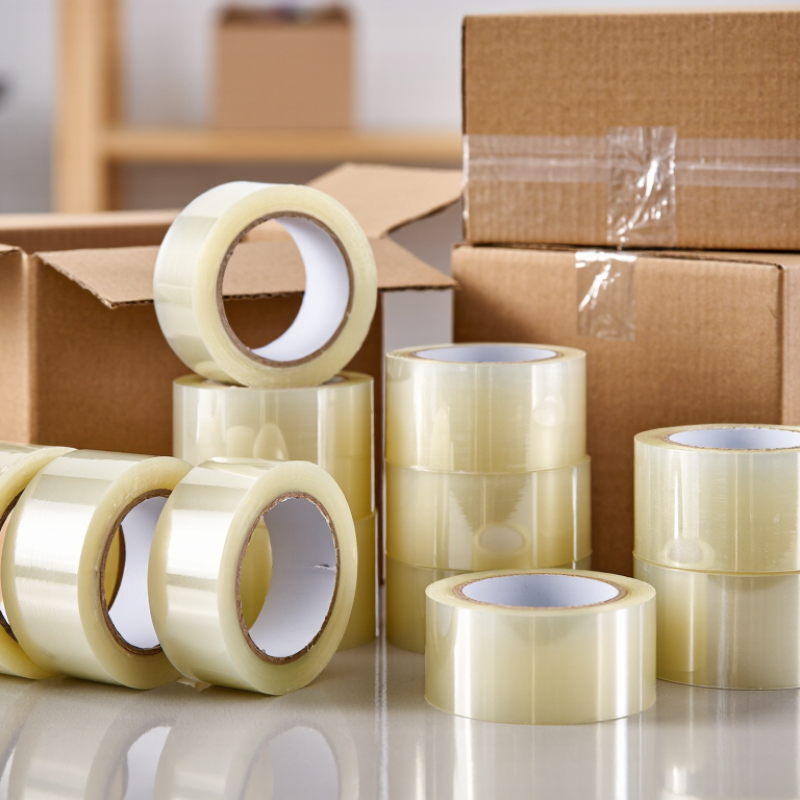
How to Choose the Best PET Clear Tape in 2026?

Define the Application and Conditions for PET Clear Tape

Before selecting PET clear tape, define exactly what it must do. Will it seal a carton, hold a label, protect a smooth panel, or support a production-line splice? These jobs place different demands on the tape. A narrow strip securing a lightweight label needs less holding power than tape closing a loaded box. Note the surface material, texture, and any coatings, since adhesion can vary even across similar-looking plastics.

Then record the conditions the tape will face. Check application temperature, storage temperature, humidity, sunlight exposure, and how long the bond must last. A tape applied in a cold warehouse may behave differently from one applied to a clean, room-temperature surface. Dust, oil, and condensation matter too. Small details count. Consider whether the tape must peel away cleanly or resist edge lifting during transport. PET film can provide a stable, clear backing, but the adhesive and application conditions determine much of the result. A specification sheet helps, though it cannot predict every production line. I have seen teams overlook the actual surface preparation; that is an easy assumption to make, and sometimes an expensive one. Test a sample on the real substrate, using the same pressure and timing expected in daily use.

Compare PET Film and Adhesive Types

PET clear tape starts with the film, not the adhesive. Standard PET film stays flat and resists stretching, which helps produce clean edges on smooth surfaces. Thicker film feels firmer and is easier to handle, but may bend poorly around tight corners. Thin film follows curves more readily, though it can wrinkle during application. Hold a sample against the intended surface and check visibility, stiffness, and edge lift.

The adhesive changes how the tape behaves. Acrylic adhesive often offers stable bonding and good resistance to aging, making it a practical choice for longer use. Rubber-based adhesive can grab quickly, which helps when immediate tack matters, but heat and time may affect its performance. Silicone adhesive is useful in some high-temperature applications and on difficult surfaces, yet it is not automatically compatible with every material. Test it.

Match both layers to the job. For a flat glass panel, clarity and residue-free removal may matter most; for a curved plastic part, flexibility and surface compatibility deserve more attention. Clean the surface, apply steady pressure, and inspect the bond after a day. A quick fingertip test is not enough. I have found that small differences in plastic coatings can change adhesion more than expected, so a neat specification sheet cannot replace a real sample test.

Evaluate Key Performance Specifications

How to Choose the Best PET Clear Tape in 2026?

Evaluate Key Performance Specifications

PET clear tape can look similar on a roll, yet behave differently on a carton, film, or smooth metal surface. Start with thickness and tensile strength: thicker tape may resist handling damage, while higher tensile strength helps prevent stretching or snapping during application. Neither number tells the whole story. Check elongation, too, especially if the tape will be pulled firmly around edges. For clear packaging, inspect haze and yellowing under the lighting where the finished product will be viewed.

Adhesion should match the surface and conditions. Compare initial tack with peel adhesion after the tape has settled; a quick stick is not always lasting performance. Check the stated temperature range, then test samples at realistic storage and application temperatures. A tape that works in a warm packing room may lift from a cold carton. I sometimes give clarity too much weight; reliable sealing matters more than a perfect-looking strip.

Tips: Apply sample strips to clean, dry surfaces. Press them down consistently, then check for lifting, residue, and edge release after a day. Record the surface, temperature, and application method. Small differences matter. Also test unwind force on your dispenser: a roll that is difficult to pull can slow packing, even when its adhesion and strength look excellent on paper.

Check Compatibility with Surfaces and Application Methods

PET clear tape can look similar across rolls, yet its adhesive may behave differently on glass, coated metal, cardboard, and low-energy plastics. Smooth glass often bonds more readily than textured polypropylene, but surface coatings can change the result. Check technical data for the intended surface, temperature range, and application conditions. Clarity is not adhesion.

Test a short strip on the actual item, not just a clean sample. Remove dust, oil, and moisture, then press the tape down firmly with a fingertip or roller. Check for lifted edges, bubbles, or adhesive transfer after the product has rested. A quick check helps. Still, a small trial may not reflect weeks of storage or outdoor temperature changes.

Application method matters, too. Hand application can leave uneven tension, while a dispenser or automated line may stretch the tape or apply pressure differently. Keep the roll aligned, use steady pressure, and avoid pulling the tape tight around corners. For curved surfaces or rough cartons, test the finished package with its real contents. One limitation: a workshop trial rarely captures every handling condition, so record what worked and where the bond began to fail.

How to Choose the Best PET Clear Tape in 2026? — Check Compatibility with Surfaces and Application Methods
Surface or use Typical compatibility PET tape to consider Recommended application method What to check before selection
Clean glass Usually good on smooth, dry glass; performance depends on adhesive and service conditions. Clear PET film with a pressure-sensitive acrylic adhesive for general-purpose bonding. Clean with a compatible glass cleaner, allow the surface to dry fully, then apply with firm, even pressure. Check for residue after removal, required holding time, and exposure to moisture or temperature changes.
Stainless steel and other clean metals Usually good on smooth, clean metal surfaces. PET tape with an acrylic adhesive; choose a grade rated for the required temperature and duration. Remove oil, dust, and handling residue; apply without stretching and press down across the full tape area. Confirm compatibility with metal finishes, coatings, oils, and any cleaning chemicals used.
ABS and other common rigid plastics Often suitable, but surface texture, additives, and molded release agents can affect adhesion. Clear PET tape with an adhesive specified for plastics. Test a small area first; clean and dry the surface, then apply consistent pressure. Check for stress cracking, surface treatments, and whether the plastic contains mold-release residue.
Polypropylene (PP) and polyethylene (PE) Can be challenging because these plastics have low surface energy; standard adhesives may bond poorly. A PET tape specifically rated for low-surface-energy plastics, if available for the application. Use the tape maker’s surface-preparation instructions and test adhesion on the exact part. Verify the plastic type and any surface treatment. Do not assume a general-purpose PET tape will hold reliably.
Painted or powder-coated surfaces Varies with coating chemistry, texture, cure, and paint condition. PET tape with an adhesive selected for the coating and the intended removal or holding task. Apply only to a fully cured, clean coating; press evenly and avoid repeatedly lifting and repositioning. Test for paint lift, adhesive transfer, and changes after the planned dwell time.
Paper, card, and printed surfaces Variable; adhesion may be limited by paper texture, dust, coatings, or weak fibers. Clear PET tape with a suitable adhesive level for the paper weight and whether removal is required. Apply gently and smoothly; avoid excessive pressure if the paper surface is delicate. Check for fiber tear, print transfer, discoloration, and residue after aging or removal.
Curved parts or narrow edges Depends on tape flexibility, width, adhesive tack, and the curve radius. A thinner or narrower PET tape that can conform to the part without excessive tension. Apply gradually from one end, keep the tape relaxed, and press it down along the curve. Look for edge lifting, wrinkles, and spring-back after application.
High-temperature masking or insulation tasks Only suitable when the tape’s film and adhesive are rated for the actual temperature and exposure time. A PET tape with published temperature limits for the specific task; a general-purpose clear tape may not be suitable. Apply to a clean, dry surface and follow the stated temperature and removal instructions. Check continuous and short-term temperature ratings, electrical requirements where relevant, and residue after heating.

Selection note: This is a general screening guide, not a universal compatibility guarantee. Adhesion varies with the exact tape construction, surface condition, temperature, humidity, and time in contact. Test the intended tape on the actual surface under expected use conditions, and consult its technical data sheet for application limits.

Verify Quality, Safety, and Supplier Reliability in 2026

In 2026, choose clear PET tape by testing the roll against its real job, not by appearance alone. Check film thickness, adhesive uniformity, unwind feel, and clarity under strong light. A few cloudy patches can disrupt optical inspection. For performance, request peel-adhesion and holding-power results, and compare them with recognized methods such as ASTM D3330 and ASTM D3654. Test samples on the actual surface, at the expected temperature, and after storage. Lab results matter, but your line conditions matter too.

Safety checks should include a current safety data sheet, clear composition information, and written limits for temperature and intended contact. A data sheet cannot prove suitability for every use. Ask the supplier to explain its test methods and provide lot-specific certificates of analysis. The OECD’s Global Plastics Outlook (2022) reports that global plastic waste reached 353 million tonnes in 2019, while only 9% was recycled. Those figures cover plastics broadly, not PET tape specifically; still, they make precise material and disposal claims worth checking.

Supplier reliability shows up in repeatable batches. Compare samples from different production lots, then record roll width, thickness, adhesion, and residue after removal. Ask how complaints, retained samples, and production changes are handled. Small details matter. A minor adhesive variation may only appear after several days on a coated panel. I would not treat one successful sample as proof of long-term consistency; request follow-up testing before placing a large order.

By continuing to use the site, you agree to the use of cookies. more information

The cookie settings on this website are set to "allow cookies" to give you the best browsing experience possible. If you continue to use this website without changing your cookie settings or you click "Accept" below then you are consenting to this.

Close