
Blog

How to Choose the Best Refrigeration Chiller?

Choosing the best Refrigeration Chiller is not a simple matter of comparing cooling capacity and purchase price. A suitable unit must match the real operating load, ambient conditions, water temperature, refrigerant requirements, and maintenance resources. A chiller serving a food warehouse behaves differently from one cooling process equipment in a factory.

Andy Pearson, Group Managing Director at Star Refrigeration, has emphasized, “Energy efficiency is not just about the equipment; it is about the whole system and how it is operated.” This practical view matters. A high-efficiency chiller can still waste energy when pumps are oversized, condensers are dirty, or controls are poorly commissioned.

The selection process should examine full-load and part-load efficiency. Check the expected cooling demand during the hottest afternoon, not only the laboratory rating. Review compressor type, condenser design, sound levels, control compatibility, refrigerant safety, and service access. A unit that looks impressive on paper may become difficult to maintain in a crowded plant room.

Real experience often reveals overlooked details. Technicians need safe access to filters, valves, sensors, and electrical panels. Operators need clear alarms. Owners need dependable local support and transparent lifecycle costs. These details are easy to underestimate.

No selection method is flawless. Load estimates can be wrong. Future production may change. That uncertainty deserves attention, not optimistic assumptions. This guide explains how to compare Refrigeration Chiller options with measurable criteria, professional judgment, and honest consideration of long-term risks.
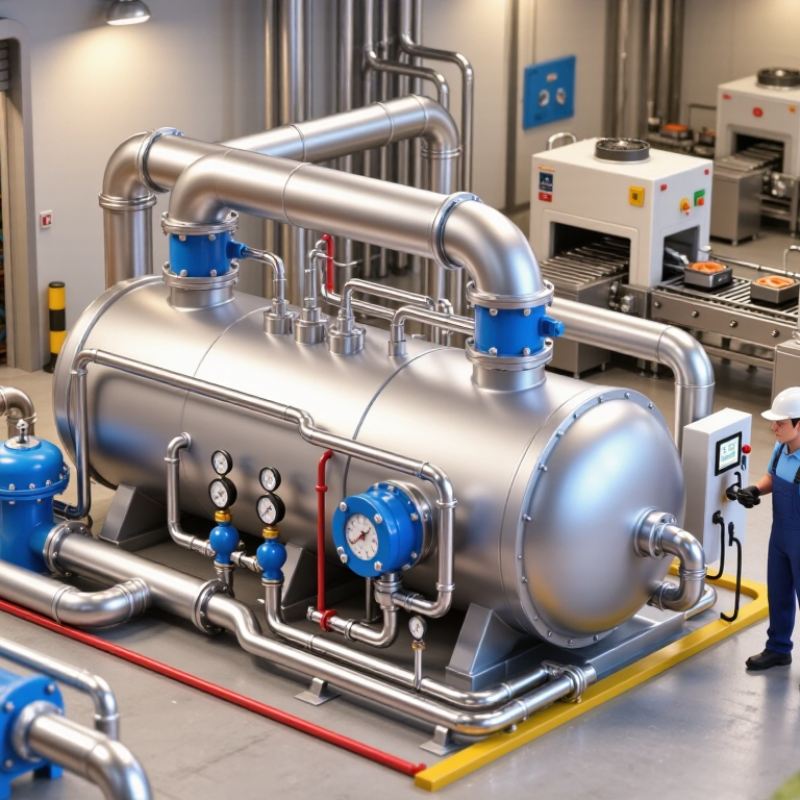
How to Choose the Best Refrigeration Chiller?

Refrigeration Chillers: Purpose, Types, and Core Operating Principles

A refrigeration chiller removes heat from process fluid, storage air, or occupied spaces. Its purpose is simple: keep temperatures stable when ambient conditions change. In a working facility, that stability protects product quality, equipment life, and energy budgets. The basic cycle uses a compressor, condenser, expansion device, and evaporator. The refrigerant absorbs heat in the evaporator, then rejects it through the condenser. Pressure changes make this transfer possible.

Air-cooled chillers reject heat through fans and finned coils, making installation relatively straightforward. Water-cooled models use a cooling tower or dry cooler and often perform better in large, steady plants. Scroll, screw, and centrifugal compressors suit different capacities and load patterns. For low temperatures, a glycol circuit may protect the fluid from freezing. Not every colder setting needs a larger chiller. Oversizing can cause short cycling, poor humidity control, and unnecessary capital cost.

Choosing well starts with measured load, not guesswork. Record entering and leaving fluid temperatures, flow rate, ambient temperature, and daily operating hours. The first load estimate is often wrong. Check part-load efficiency, service access, noise, water quality, and control compatibility. Verify ratings under actual design conditions and applicable safety standards. A unit that looks efficient on paper may struggle with dusty coils or unstable power. Field engineers often revise selections after one week of logged data. That correction is useful. The difficult part is predicting future demand without paying for idle capacity.

How to Choose the Best Refrigeration Chiller? - Refrigeration Chillers: Purpose, Types, and Core Operating Principles

Chiller Type Core Operating Principle Typical Cooling Capacity Typical Leaving Water Temperature Heat Rejection Method Main Advantages Key Limitations Common Applications
Air-Cooled Screw Chiller Twin-screw compressors circulate refrigerant through an evaporator and air-cooled condenser. The refrigerant absorbs heat from chilled water and rejects it to outdoor air. Approximately 100–1,500 kW Approximately 5–7°C Condenser fans and outdoor air No cooling tower or condenser-water pump; relatively simple installation; suitable for locations with limited water availability. Higher energy use during hot weather; outdoor noise; performance varies with ambient temperature. Commercial buildings, process cooling, warehouses, and medium-sized industrial facilities.
Water-Cooled Screw Chiller A screw compressor raises refrigerant pressure and temperature. Heat is transferred to condenser water, which then rejects heat through a cooling tower. Approximately 300–2,000 kW Approximately 5–7°C Condenser water and cooling tower Good part-load efficiency; stable performance in warm climates; compact refrigeration package for medium-to-large loads. Requires cooling tower, water treatment, pumps, and regular maintenance; consumes water. Industrial plants, hospitals, district cooling systems, and large commercial buildings.
Centrifugal Chiller A high-speed impeller adds velocity to the refrigerant vapor, and a diffuser converts that velocity into pressure before condensation and expansion. Approximately 1,000–10,000+ kW Approximately 5–7°C Usually condenser water and cooling tower High efficiency at large and relatively steady loads; low vibration; excellent capacity modulation with variable-speed drives. Higher initial cost; less suitable for very small loads; surge control and specialist service may be required. Large office complexes, airports, universities, data centers, and district cooling networks.
Scroll Chiller Two interleaved scrolls compress refrigerant vapor continuously. Multiple small compressors can be staged to match changing cooling demand. Approximately 10–350 kW Approximately 5–7°C Air-cooled or water-cooled, depending on configuration Quiet operation; compact footprint; low vibration; good redundancy when several compressors are installed. Limited capacity per compressor; not normally preferred for very large continuous loads. Small commercial buildings, laboratories, food-processing equipment, and light industrial systems.
Reciprocating Chiller Pistons compress refrigerant vapor inside cylinders. Suction and discharge valves control the refrigerant flow during each piston cycle. Approximately 10–500 kW Approximately 2–7°C Air-cooled or water-cooled Works across a broad operating range; suitable for smaller systems and some low-temperature applications. More vibration and mechanical wear than scroll compressors; may require more maintenance. Specialized process cooling, small cold-storage systems, and legacy refrigeration installations.
Absorption Chiller Heat, rather than a mechanical compressor, drives refrigerant separation and circulation. Common working pairs include water–lithium bromide and ammonia–water. Approximately 100–5,000 kW Approximately 5–7°C for comfort cooling Cooling tower is commonly required Can use waste heat, steam, or direct-fired heat; reduces electrical demand where suitable heat is available. Lower coefficient of performance than electric chillers; larger footprint; requires heat-source and water-treatment management. Combined heat and power plants, industrial facilities, district energy systems, and sites with abundant waste heat.
Selection Considerations: Evaluate the required cooling capacity, entering and leaving fluid temperatures, annual load profile, ambient conditions, available water, installation space, sound limits, refrigerant regulations, maintenance resources, and total lifecycle cost before selecting a refrigeration chiller.

Assessing Cooling Capacity, Temperature Range, and Heat Load

Choosing a refrigeration chiller starts with the real heat load, not the catalog capacity. Measure product heat, room infiltration, lighting, motors, people, and defrost losses. Add heat from pumps and fans. A 100 kW load does not justify a 150 kW chiller automatically. Oversizing may cause short cycling, unstable temperatures, and unnecessary energy use.

Temperature range matters just as much. A process needing 2°C requires different control than one operating at -10°C. Check entering and leaving fluid temperatures, flow rate, ambient conditions, and required pull-down time. AHRI Standard 550/590 provides recognized methods for rating water-cooled and air-cooled chillers. The ASHRAE Handbook—Refrigeration also stresses accurate load calculations and operating conditions. IEA’s The Future of Cooling reports that cooling energy demand could more than triple by 2050 without stronger efficiency measures. Small design errors can become large operating costs. I have found that a clean spreadsheet can still miss warm loading doors or afternoon solar gain.

Tips: Record temperatures for seven days before selecting equipment. Use peak readings, not only averages. Ask for capacity data at your actual glycol concentration and leaving temperature. Keep a modest design margin, but document it. A margin without evidence is only a guess. Recheck the load after installation, because real usage often changes.

How to Choose the Best Refrigeration Chiller?

Assessing cooling capacity, temperature range, and design heat load

How to read this chart: Select a chiller with a rated cooling capacity above the calculated design heat load, while ensuring that its operating temperature range matches the application. A practical design margin of approximately 10–20% is commonly considered to accommodate peak loads, heat gain, and operating variation.

Typical operating ranges: Comfort cooling generally uses chilled water above 5°C, process cooling may operate from approximately -5°C to 10°C, and low-temperature applications may require chilled fluid temperatures below -5°C.

Comparing Air-Cooled, Water-Cooled, and Evaporative Chiller Designs

How to Choose the Best Refrigeration Chiller?

Comparing Air-Cooled, Water-Cooled, and Evaporative Chiller Designs

Choosing a refrigeration chiller starts with the site, not the catalog. An air-cooled chiller needs no cooling tower, so installation is simpler and water use is minimal. However, its efficiency can drop sharply when outdoor temperatures reach 35°C. Dusty fins and fan noise also deserve attention.

Water-cooled chillers usually deliver stronger efficiency under steady loads. They use a cooling tower, pumps, and water treatment equipment. That adds maintenance, space requirements, and operating responsibility. Technicians should inspect tubes, monitor water chemistry, and verify condenser temperatures during commissioning. Ignoring these tasks can erase the expected energy savings.

Evaporative chillers sit between these approaches. They can reduce condensing temperatures by using water evaporation, especially in dry climates. Their performance becomes less attractive in humid weather. Water quality matters too. Scale can collect quickly on wetted surfaces.

A practical comparison should use real design conditions. Check the required chilled-water temperatures, such as 7°C supply and 12°C return, rather than relying on nominal capacity. Review part-load efficiency, noise limits, winter operation, and local water restrictions. Air-cooled equipment may suit a small facility with limited maintenance staff. Water-cooled equipment may fit a large plant with stable cooling loads and skilled operators. Evaporative designs need careful water planning.

The most efficient option on paper may not be the most reliable choice. Site measurements can reveal that. A qualified engineer should verify heat loads, airflow, water quality, and service access before approval. Mistakes happen when purchase price receives more attention than ten-year operating conditions.

Evaluating Energy Efficiency, Controls, Maintenance, and Operating Costs

Choosing the best refrigeration chiller requires more than comparing cooling capacity and purchase price. The International Energy Agency reports that global space-cooling electricity demand could more than triple by 2050. Efficiency is therefore a long-term operating decision.

Check the full-load and part-load performance data. Chillers often run below design capacity, especially during mild weather. Variable-speed drives, condenser-water reset, and automatic sequencing can reduce wasted energy. Controls should show temperatures, pressure, flow, and alarm history clearly. A complicated interface is not automatically better. In practice, operators need usable information.

Maintenance affects efficiency quietly. Dirty tubes, incorrect refrigerant charge, and blocked filters increase compressor work. Request service intervals, sensor calibration requirements, and access details before purchase. The U.S. Department of Energy recommends evaluating chiller plants through measured operating data, not nameplate ratings alone. That approach exposes seasonal performance and unexpected cycling.

Operating cost estimates should include electricity, water, treatment, refrigerant management, labor, and downtime. The ASHRAE Handbook emphasizes lifecycle evaluation because equipment efficiency changes with load, temperature, and maintenance condition. A lower-cost model may become expensive after several years. I would still question every projected saving. Weather assumptions may be optimistic. Use local utility rates and at least twelve months of load data when possible. Real measurements are less attractive, but usually more trustworthy.

Matching Chiller Features to Facility Requirements and Installation Conditions

How to Choose the Best Refrigeration Chiller?

A chiller should fit the facility, not merely its advertised capacity. The International Energy Agency’s The Future of Cooling reports that global cooling demand could more than triple by 2050, reaching approximately 6,200 TWh. That projection makes seasonal efficiency essential. Begin with measured heat loads, operating hours, chilled-water temperatures, and local weather records. A peak load of 1,000 kW does not automatically justify an oversized unit. Oversizing can increase cycling, control instability, and avoidable energy use.

Installation conditions often decide whether specifications work in practice. Air-cooled chillers need clear airflow and sufficient separation from walls. Water-cooled systems require cooling-tower capacity, water treatment, and reliable condenser-water temperatures. Check plant-room access before purchase. A unit may fit the design schedule but fail through a narrow doorway. Noise, vibration, electrical capacity, drainage, and maintenance clearance also deserve written verification. Small omissions become expensive.

UNEP’s 2020 Cooling Emissions and Policy Synthesis Report identifies cooling as responsible for roughly 20% of building electricity use globally. Therefore, compare full-load and part-load performance, not one laboratory number. Ask for performance data across realistic ambient temperatures and leaving-water conditions. ASHRAE guidance also supports evaluating controls, redundancy, and operating sequences as part of the whole system. Field experience shows that engineers sometimes trust calculated loads too much. Occupancy changes, process heat, and future expansion can overturn those assumptions. A modest load-monitoring period may produce a better decision than another spreadsheet.

By continuing to use the site, you agree to the use of cookies. more information

The cookie settings on this website are set to "allow cookies" to give you the best browsing experience possible. If you continue to use this website without changing your cookie settings or you click "Accept" below then you are consenting to this.

Close