What Is a Liposuction Aspirator Machine Used For?
Liposuction removes localized fat through a small cannula connected to a suction system. Liposuction Aspirator Machines provide that controlled suction and collect the removed material in a canister. In the operating room, the setup includes tubing, a hand-held cannula, and a machine whose settings are selected for the procedure. The aspirator is important. It is not the surgeon.
The American Society of Plastic Surgeons’ 2023 Procedural Statistics Report recorded 347,782 liposuction procedures in the United States. That figure shows how commonly the procedure is performed, but it does not guarantee suitability or results for any individual. Plastic surgeon Dr. Rod J. Rohrich captures an important distinction: “Liposuction is not a weight-loss procedure; it is a body-contouring procedure.” Patients should discuss candidacy, risks, and realistic outcomes with a qualified clinician.
So, what is the machine used for? It helps remove targeted fat during surgery, with suction adjusted to the technique and clinical judgment. It does not diagnose, plan, or perform surgery on its own. A machine’s features matter, but so do training, maintenance, and careful patient assessment. That part is easy to overlook. The sections ahead explain the machine’s role, its main components, and how it fits into a liposuction procedure.
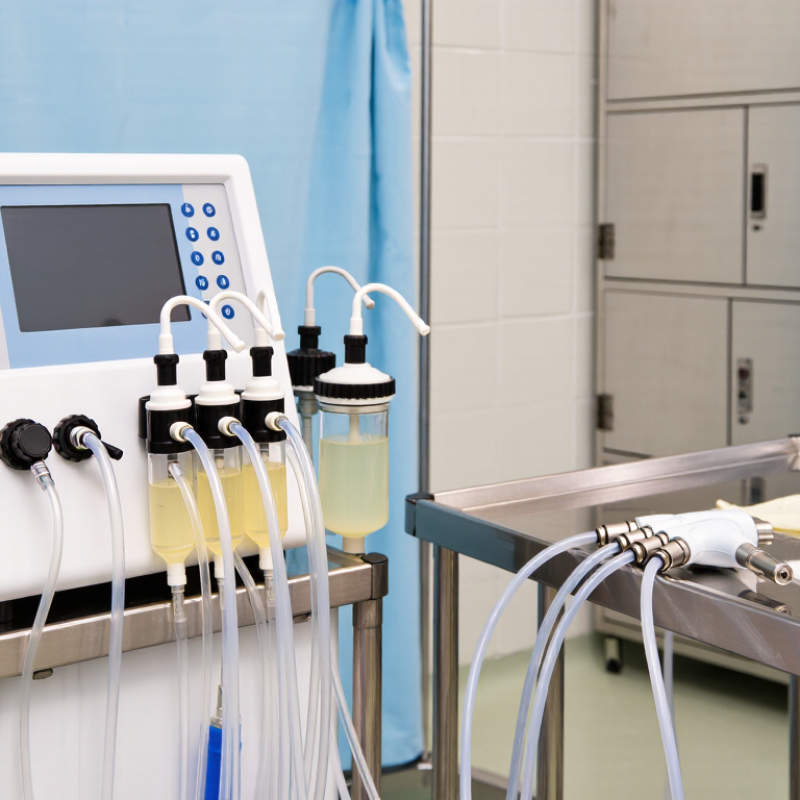
What a Liposuction Aspirator Is: Suction, Cannula, and Fat Removal
A liposuction aspirator creates controlled suction to draw loosened fat through a cannula, a narrow tube inserted through small incisions. The aspirator’s tubing carries the material into a collection container, where the surgical team can monitor the amount removed. Suction should be adjusted for the procedure and the patient; stronger is not automatically better.
The cannula moves beneath the skin in carefully planned paths. Its opening and diameter affect how fat is removed, while the surgeon’s technique helps shape the treated area. It is not a simple vacuuming process. Blood vessels, nerves, and surrounding tissue must be considered, and uneven movement can contribute to irregular contours. The details matter.
Liposuction is generally used to reduce localized fat deposits, not as a substitute for weight management or a treatment for obesity. An aspirator is one part of a larger clinical setup, which may include sterile tubing, pressure controls, and monitoring equipment. Device settings and cannula choice vary. Even with careful planning, healing and results differ between people, so consultation with a qualified medical professional is essential. It is worth remembering that the machine cannot judge when a contour looks balanced; clinical judgment remains central.
How Aspirators Remove Localized Subcutaneous Fat
A liposuction aspirator machine creates controlled suction to draw out fat beneath the skin. A surgeon guides a thin cannula through small incisions into a targeted area. The tube loosens and collects fat, while the machine carries it into a container. The goal is to reshape a localized area, not to remove fat from inside the abdomen or treat obesity. Those distinctions matter.
The process depends on careful planning. The surgeon assesses the tissue, marks the treatment area, and selects an appropriate cannula and suction setting. During treatment, the cannula moves through the fat layer in measured passes. It is not a simple vacuuming job. Too much removal or uneven movement can leave contour irregularities, and swelling can make early results difficult to judge. Recovery takes time.
An aspirator does not tighten every type of loose skin, either. Suitability depends on health, skin elasticity, and the amount and location of fat. A qualified clinician should explain likely benefits, limits, and risks before any procedure. The machine performs the suction; clinical judgment guides its use. That part is easy to overlook.
Where Aspirators Are Used in Common Liposuction Techniques
In conventional suction-assisted liposuction, a cannula passes through small incisions and connects by tubing to an aspirator. The machine creates negative pressure, drawing fat into a sealed collection canister. The clinician guides the cannula; the aspirator supplies suction but does not shape tissue on its own. Small details matter. Careful cannula movement and measured suction matter, though outcomes depend on anatomy and technique.
Power-assisted liposuction uses a moving cannula to help loosen fat, while suction carries it away. Ultrasound- or laser-assisted methods use energy to loosen fat; suction may remove it afterward through a cannula. Water-assisted systems use a fluid stream to separate tissue, with suction collecting fluid and fat together. These workflows differ. An aspirator is one part of a sterile setup, alongside tubing, filters, and a collection vessel. Qualified clinicians select the equipment and settings for each patient and procedure. The terminology can blur these distinctions, and setup varies.
ASPS 2023 Data: 347,782 Liposuction Procedures in the United States
What Is a Liposuction Aspirator Machine Used For?
ASPS 2023 Data: 347,782 Liposuction Procedures in the United States
The American Society of Plastic Surgeons’ 2023 Procedural Statistics Report recorded 347,782 liposuction procedures in the United States. Its 2022 report counted 325,669, a rise of about 7 percent. These figures show procedure volume, not how many aspirator machines were used or whether results were successful. Important distinction.
During liposuction, an aspirator creates suction that draws loosened fat through a cannula and tubing into a collection container. Picture a narrow tube moving beneath the skin while the surgeon controls its path and pace. The machine supplies suction; it does not choose the treatment area or replace clinical judgment. Settings and technique depend on the patient and procedure.
ASPS data helps explain why this equipment is common in plastic surgery, but annual totals cannot tell the whole story. They do not show patient satisfaction, complication rates, or the reasons people seek treatment. A machine’s role is practical, not magical. Anyone reviewing procedure statistics should also consider patient selection, clinical expertise, and safety practices. It is easy to focus on the headline number and miss those details.
What Is a Liposuction Aspirator Machine Used For? - ASPS 2023 Data: 347,782 Liposuction Procedures in the United States | Data Dimension | Information |
| Reported procedure volume | The American Society of Plastic Surgeons (ASPS) reported an estimated 347,782 liposuction procedures for 2023. The figure is based on ASPS statistical reporting and should not be interpreted as a complete count of every procedure performed in the United States. |
| Primary purpose of the aspirator | A liposuction aspirator produces suction to draw loosened fat through a cannula and into a collection container during liposuction. It is equipment used by a qualified medical professional as part of a surgical procedure. |
| Typical system components | A typical setup may include a suction source, tubing, a collection canister, and a cannula. Equipment configurations vary; the cannula is the instrument that enters the treatment area and carries fat to the collection system. |
| How fat is removed | Through small incisions, the surgeon moves the cannula through targeted subcutaneous fat. Suction removes fat through the cannula and tubing. The exact technique and equipment depend on the patient and procedure. |
| Common treatment areas | Liposuction may be used to address localized fat deposits in areas such as the abdomen, hips, thighs, arms, or neck. The areas treated are determined during an individual consultation. |
| What the procedure is intended to do | Liposuction is generally used for body contouring and removal of localized fat. It is not a treatment for obesity and is not a substitute for weight loss or a healthy lifestyle. |
| Important limitation | The aspirator removes fat; it does not by itself determine patient suitability, treatment areas, or the amount of fat to remove. Those decisions require evaluation and clinical judgment by a qualified surgeon. |
| Data source | ASPS Plastic Surgery Statistics and ASPS Liposuction overview. |
How Training and Clinical Oversight Support Safe Aspirator Use
A liposuction aspirator creates suction to remove fat through a cannula, but safe use depends on much more than operating the machine. ASPS’s 2023 Plastic Surgery Statistics Report counted 347,782 liposuction procedures in the United States. That figure describes procedure volume, not safety outcomes. Each case still requires patient assessment, a trained clinical team, and appropriate oversight.
Training should cover equipment checks, sterile setup, suction controls, tubing connections, and the collection canister. Staff should know who monitors the patient and who responds if vital signs change or the equipment behaves unexpectedly. Details matter. A loose connection or poorly understood alarm can distract a team at a critical moment. Supervised practice helps clinicians learn the device’s limits before relying on it in patient care.
Clinical oversight also means reviewing patient-specific risks, documenting settings and aspirate volumes, and discussing concerns during the procedure. Guidance from professional plastic-surgery organizations supports careful patient selection and qualified surgical care; device training cannot replace that judgment. Checklists may feel repetitive, but skipping them is not efficiency. Still, protocols do not remove uncertainty, and teams should be willing to pause when something seems wrong.
What Is a Liposuction Aspirator Machine Used For?
An aspirator creates suction to remove and collect tissue and fluid during liposuction. Safe use depends on trained clinicians, appropriate equipment settings, and clinical monitoring.
How to read this chart: More than 5 liters of total aspirate is commonly used to define large-volume liposuction. This is a reference threshold—not a safe target or a patient-specific limit. Training and clinical oversight help teams assess procedural needs and monitor patients.
Reference: American Society of Plastic Surgeons, Practice Advisory on Liposuction.