Blog

What Is a Pneumatic Conveyor and How Does It Work?

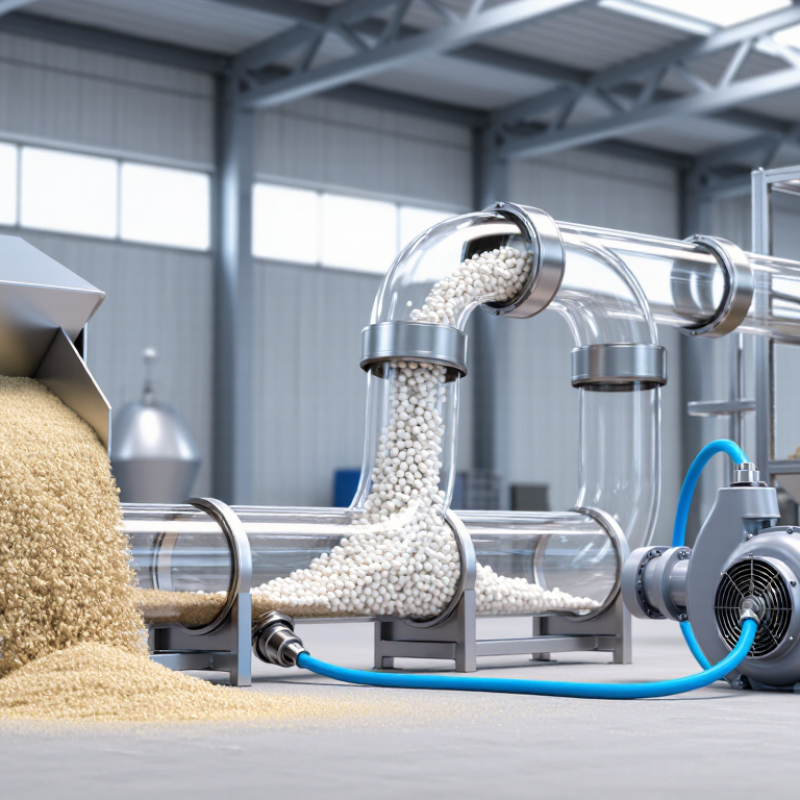
Pneumatic Conveyor systems move dry bulk materials through enclosed pipes using air or another gas. Instead of relying on belts or open chutes, they carry powders, grains, pellets, and similar materials between process points. A blower or compressor creates airflow, while a feeder introduces material into the line. The moving air then transports it to a receiver, where filters separate the product from the conveying gas.

There are two common approaches. In dilute-phase conveying, material travels quickly through the pipe, suspended in the airflow. Dense-phase systems move material more slowly, often in plugs or concentrated pockets. The right choice depends on product characteristics, distance, capacity, pipe layout, and the material’s sensitivity to damage. A fine powder may behave very differently from sturdy plastic pellets. Details matter.

A pneumatic system can reduce spillage and simplify routing around equipment, but it is not a perfect fit for every plant. Air pressure, bends, feed rate, and pipe diameter all affect performance. Poorly matched settings may cause blockages, excessive wear, dust-control problems, or product degradation. Even an experienced engineer needs reliable material data and careful testing; assumptions alone are not enough. This guide explains how pneumatic conveying works, which components shape its performance, and what to consider when selecting a system for a real operation.

What Is a Pneumatic Conveyor and How Does It Work?

Pneumatic Conveyors: Definition, Purpose, and Core Operating Principles

A pneumatic conveyor moves dry bulk material through an enclosed pipe using a moving stream of air or another suitable gas. Its purpose is to transfer powders and small granules between process steps while limiting open handling. Air does the carrying. A typical system has a feeder, air source, pipeline, and receiver with a filter or separator. The feeder introduces material into the airflow; at the destination, the receiver separates solids from air.

The operating principle depends on airflow and material behavior. In dilute-phase conveying, particles travel suspended at relatively high air speeds. Dense-phase systems move larger concentrations more slowly, often in plugs or compact sections. Pressure systems push material from the inlet, while vacuum systems draw it toward the receiver. The right arrangement depends on distance, capacity, particle size, moisture, and how easily the material breaks down.

In practice, a pipe layout that looks simple on paper can behave differently once bends, elevation changes, or uneven feeding are involved. A fine powder may cling to damp surfaces, while abrasive granules can wear pipe walls over time. Air speed that is too low may allow material to settle; excessive speed can increase wear and product damage. Small details matter. Engineers typically review material samples and operating conditions before setting airflow and feeder rates. There is no universal setting, and early estimates sometimes need adjustment after testing.

How Airflow Moves Bulk Solids Through Enclosed Pipelines

A pneumatic conveyor moves bulk solids by suspending or pushing them through a sealed pipeline with air. A blower or compressor creates the airflow; a feeder introduces material into the line. At bends, particles change direction, and pipe walls take the wear. The principle is simple. Yet powder does not travel like water.

In dilute-phase systems, particles ride at relatively high air speeds. David Mills’s Pneumatic Conveying Design Guide describes typical dilute-phase velocities in the range of roughly 15–30 m/s, while dense-phase conveying uses slower, material-dependent flow. These are guide values, not guarantees: particle size, moisture, pipe layout, and feed rate can shift the operating window. Too little air may let solids settle. Too much can increase abrasion and product damage.

Air has a cost. The U.S. Department of Energy’s Improving Compressed Air System Performance sourcebook reports that compressed-air systems use about 10% of industrial electricity, with higher shares at some plants. That figure covers compressed air broadly, not pneumatic conveying alone. Still, it makes leakage, pressure settings, and idle running worth checking. A clear pipe design can look efficient on paper; real powders are less predictable, and that deserves a test run.

Pressure and Vacuum Systems: How Conveying Configurations Differ

A pneumatic conveyor moves dry bulk material through a sealed pipe using air pressure differences. In a pressure system, a blower or compressor pushes material from a feeder toward one or more receivers. This suits layouts with several discharge points, though each branch needs careful balancing. In a vacuum system, suction draws material from pickup points to a receiver. It can help contain dust around loading areas, since the pipe operates below surrounding air pressure. A useful distinction. Vacuum systems often serve multiple pickup points; pressure systems commonly serve multiple destinations. Neither rule is absolute.

The choice affects energy use, maintenance, and the feel of the line. DOE’s Improving Compressed Air System Performance: A Sourcebook for Industry reports that compressed-air systems use about 10% of electricity in U.S. industry, and as much as 30% at some facilities. That figure covers compressed air broadly, not conveyors alone, but it shows why leaks and poor control matter. Pressure lines may need robust receivers and filters at discharge. Vacuum lines need protection against material entering the vacuum source. Operators should also check particle size, moisture, distance, and bends; a sharp elbow can become a wear point. The textbook split sounds tidy. Real layouts are messier.

What Is a Pneumatic Conveyor and How Does It Work? — Pressure and Vacuum Systems: How Conveying Configurations Differ

Comparison Dimension Pressure Conveying System Vacuum Conveying System
Basic operating principle A blower or compressor supplies air that pushes material through a pipeline from the feed point toward the destination. A vacuum pump or exhauster lowers pressure in the conveying line, drawing air and material from the pickup point toward the receiver.
Typical system pressure The conveying line operates above atmospheric pressure. The required pressure depends on the material, route, throughput, and system design. The conveying line operates below atmospheric pressure. The achievable vacuum is limited by the air mover and system design.
Material pickup and discharge Material is introduced into the pressurized air stream through a suitable feeder, such as a rotary valve or pressure vessel, and separated at the destination. Material is drawn from a pickup point or feeding device into the line, then separated from the conveying air in a receiver or filter unit.
Common conveying direction Often selected to move material from one feed point to one or more discharge points. Often selected to collect material from one or more pickup points and deliver it to a central receiver.
Typical applications Moving dry bulk solids over longer routes, feeding multiple destinations, or conveying from a central supply point. Collecting material from multiple sources, transferring powders from bags or bins, and handling material where containing dust at pickup points is important.
Leakage behavior A leak can allow conveying air and dust to escape from the line, so joints and seals require appropriate containment. A leak generally draws ambient air into the line, which can help limit outward dust escape; leaks still reduce conveying performance and can affect product handling.
Air and material separation A receiving vessel or separator removes the conveyed solids from the pressurized air before the air is vented or filtered. A receiver with a filter separates solids from the air before the air reaches the vacuum equipment. Filter selection and maintenance are important.
Material considerations Suitable for many dry, free-flowing powders and granules. Fragile, abrasive, or heat-sensitive materials may require careful system and velocity selection. Suitable for many dry bulk materials, especially where suction pickup is convenient. Material density, particle size, moisture, and flowability affect performance.
Key design factors Material properties, required throughput, pipeline length and layout, pressure drop, feeder choice, air velocity, and destination separation. Material properties, pickup method, required throughput, pipeline length and layout, vacuum level, air leakage, receiver capacity, and filter performance.
Main limitation to consider Positive pressure can drive dust outward at a leak, and the feeder must introduce solids into the pressurized line reliably. Vacuum level and air leakage constrain system performance; the receiver and filter must be sized to handle the material and airflow.
Choosing between configurations Consider this arrangement when material needs to be pushed from a feed location toward one or more delivery points. Consider this arrangement when material needs to be drawn from one or more pickup locations toward a receiver, particularly when containing dust at pickup points is a priority.

Note: Pneumatic conveying performance depends on the material and the complete system design. Conveying distance, capacity, air velocity, pressure or vacuum level, and equipment selection should be determined for the specific application.

Dilute- and Dense-Phase Conveying: Typical Velocities of 15–30 and 2–10 m/s

A pneumatic conveyor moves dry bulk solids through a pipe using flowing air or gas. The key difference between dilute- and dense-phase conveying is how particles travel. In dilute phase, particles remain suspended in a fast air stream, typically around 15–30 m/s. Dense-phase systems move material in slower, concentrated plugs or dunes, typically around 2–10 m/s. These ranges are useful starting points, not guaranteed operating settings.

The velocity choice affects wear, energy use, and product quality. High-speed dilute-phase flow can be practical for long routes, but abrasive particles may scour pipe bends. Dense-phase conveying can reduce particle damage, yet an unsuitable line may plug. David Mills’ Pneumatic Conveying Design Guide (3rd edition, Elsevier, 2016) explains that material properties and system layout must guide design. A powder’s particle size, moisture, and bulk density matter. So does the pipe’s diameter. A chart alone cannot settle it.

Tips: Test the actual material where possible. Check pressure and solids flow, then inspect elbows for wear or deposits. It is easy to over-trust a velocity number. Even a small change in moisture can shift conveying behavior.

Key Components, Material Properties, and Design Considerations

A pneumatic conveyor moves bulk materials through enclosed pipes using air pressure or vacuum. A blower or compressor supplies the airflow, while a feeder introduces material into the line. At the discharge point, a receiver separates solids from air, and a filter captures fine particles. Controls regulate airflow and pressure. Small details matter. A poorly sealed connection can waste energy and disrupt steady feeding.

Design depends on both the material and the route. Particle size, bulk density, moisture, and abrasiveness affect how easily material travels. Fine powders may cling to pipe walls or form dust clouds; damp solids can bridge at the feeder. Fragile pellets need gentler handling, while abrasive grains can wear bends quickly. Engineers select dilute- or dense-phase conveying, then size the pipe and airflow for the required rate. A route with fewer sharp elbows often reduces wear and pressure loss. The first estimate may look neat, but real material behavior can surprise you; pilot testing can expose problems that calculations miss. Some uncertainty remains.

By continuing to use the site, you agree to the use of cookies. more information

The cookie settings on this website are set to "allow cookies" to give you the best browsing experience possible. If you continue to use this website without changing your cookie settings or you click "Accept" below then you are consenting to this.

Close