What is a Position Sensor and How Does It Work?
A Position Sensor plays a crucial role in various industries. These sensors detect and measure the position of objects. They provide vital data that influence automation and control systems.
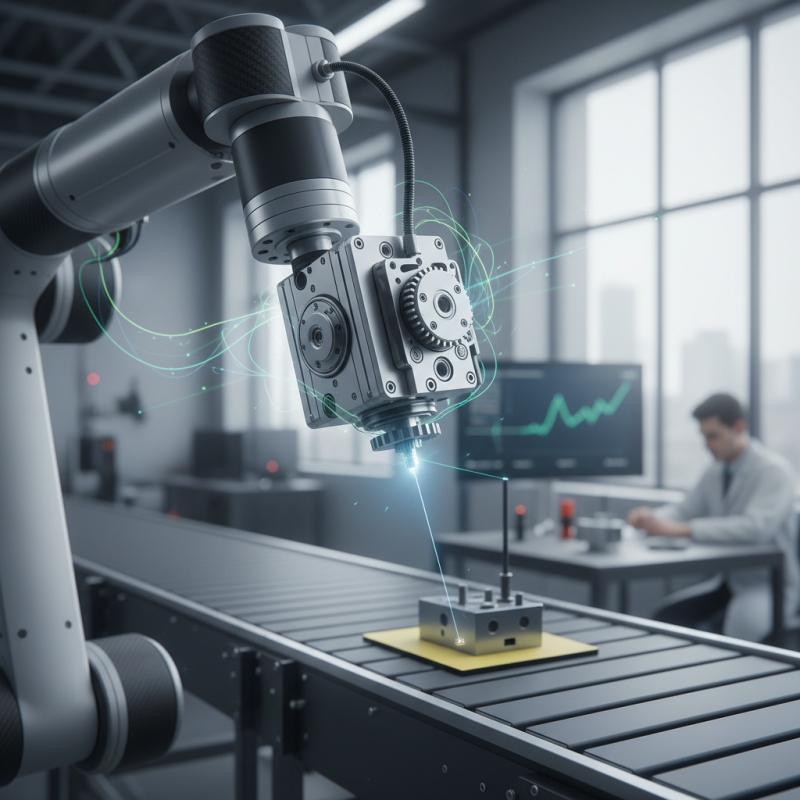
In simpler terms, a Position Sensor converts physical location into electrical signals. This conversion allows machines to execute accurate movements. For example, in robotics, these sensors guide arm movements with precision. They help ensure tasks are performed correctly.
However, the technology may not be perfect. Some Position Sensors can drift over time. This means the readings may become inaccurate. Regular calibration is essential for reliable performance. Understanding these limitations is important for effective application.
Definition of a Position Sensor and Its Importance in Technology
A position sensor is a device that measures the position of an object. It plays a critical role in various applications, from robotics to automotive systems. According to industry reports, the global position sensor market is projected to reach $6.50 billion by 2026, growing at a CAGR of 7.5%. This growth highlights the sensor's importance in modern technology.
Position sensors are essential in automation. They provide accurate feedback for control systems. In manufacturing, for instance, they enable precision in machinery. This precision reduces errors. A small mistake in position measurement can lead to significant losses. A report shows that sensor failures account for about 20% of unplanned maintenance costs in factories.
Moreover, these sensors contribute to safety. They are used in vehicles for various functions, such as parking assistance. However, reliance on technology can lead to overconfidence. Some systems may not function correctly in extreme environments. This risk prompts a reevaluation of how we use sensors. As technology evolves, so must our understanding and reliance on these devices.
Types of Position Sensors: Active vs. Passive Sensors
Position sensors play a critical role in various industries. They help in detecting the position of an object in a given environment. There are two primary types of position sensors: active and passive. Each serves different applications and has unique operational principles.
Active sensors generate their own signals to detect an object's position. They often require a power source to function. For example, many active sensors utilize ultrasonic waves, transmitting a signal and measuring the time it takes to return. According to industry reports, the active sensor market is expected to grow by 8% annually, showing high demand in automation and robotics.
Conversely, passive sensors do not generate signals. Instead, they rely on external energy sources. For instance, potentiometers measure changes in resistance as an object's position shifts. This type is often seen in industrial applications for machinery control. Interestingly, although passive sensors are typically more cost-effective, their accuracy can be less reliable than active sensors.
Industry data shows that around 40% of manufacturers report challenges with precision in passive sensor applications. This poses a key area for potential improvement.
Operating Principles of Common Position Sensors
Position sensors are critical in various applications. They convert physical position into an electronic signal. Common types include potentiometers, Hall effect sensors, and optical encoders. Each has unique operating principles that cater to specific needs.
Potentiometers work through resistance variation. When the position changes, the resistance shifts. This alters the output voltage, indicating the position. Meanwhile, Hall effect sensors register magnetic fields. They detect changes in magnetic flux, giving precise location feedback. Optical encoders utilize light beams. They measure positions based on light interruption or reflection, offering high accuracy.
Tips: Always consider the environment. Sensors can be sensitive to dust and temperature changes. Regular maintenance helps ensure accuracy.
Industry reports indicate that the global position sensor market is expected to grow significantly. This growth highlights a rising demand across industries, including automotive and automation. However, as the market expands, quality control remains essential. Poorly calibrated sensors can lead to errors, underscoring the need for regular checks and adjustments.
Position Sensor Output Data
Applications of Position Sensors in Various Industries
Position sensors play a crucial role across many industries. These devices detect and measure the position of an object. They can be found in automotive, aerospace, and manufacturing sectors among others. For example, in automotive applications, position sensors are essential for monitoring the angle of steering. This data helps improve driving stability and safety.
In manufacturing, position sensors help automate production lines. They track the movement of products on conveyor belts. This leads to increased efficiency and reduced human error. HVAC systems also benefit from position sensors. They ensure that dampers move to the correct positions, optimizing air flow.
Tip: When choosing a position sensor, consider the environment. Factors like temperature, humidity, and exposure to vibrations matter. Proper selection can prevent frequent sensor failures.
Position sensors are not perfect. They can sometimes give incorrect readings due to interference or misalignment. Regular calibration is crucial to maintain accuracy. Keeping sensors clean and free from obstructions can enhance performance and longevity.
Tip: Schedule routine maintenance checks. This practice helps identify issues before they escalate into costly repairs. Awareness and proactive measures can lead to better sensor reliability.
Future Trends and Innovations in Position Sensor Technology
Position sensors are rapidly evolving, driven by the rise of smart technology. These sensors are essential in automation, robotics, and vehicles. Their roles are becoming increasingly crucial as industries seek higher precision and efficiency.
Future trends in position sensor technology indicate a shift towards miniaturization and integration. Smaller sensors can be embedded in various devices, enhancing functionality without occupying much space. Innovations like wireless communication will reduce wiring complexity in systems. These advancements will enable real-time data processing, improving response times.
However, challenges remain. The accuracy of these sensors can still be affected by environmental conditions. Increased dependency on sensors raises concerns over data security. As technology progresses, addressing these issues will be vital for ensuring reliability and safety in position sensing applications.