
Buying a Smoke Alarm for an international project is more complex than choosing the lowest quoted price. A device may look identical on a supplier’s website, yet differ in sensing technology, battery life, certification, language support, and installation method. Global buyers must examine the product’s intended environment, from a humid coastal apartment to a cold warehouse or a family home with frequent cooking. Small details matter. A sealed ten-year battery can reduce maintenance, while a replaceable battery may simplify servicing in some markets.
This guide presents ten practical Smoke Alarm buying tips for importers, distributors, property developers, and facility managers. It considers detector type, alarm volume, test functions, wireless connectivity, packaging, documentation, and after-sales support. Buyers should request current test reports and verify certification with recognized authorities in the destination market. Requirements are not identical worldwide, and supplier claims should never replace independent checking. That step is easy to overlook.
Real purchasing experience also reveals uncomfortable gaps. A low-cost alarm can become expensive when translations are poor, spare parts are unavailable, or installation instructions confuse contractors. Even reliable products need routine testing and correct placement. No device can compensate for blocked vents or ignored alarms. Product samples should be tested before a large order, ideally under realistic conditions. Expectations may need revision. The best choice is not always the most advanced model, but the one that remains dependable, understandable, and supportable after installation.
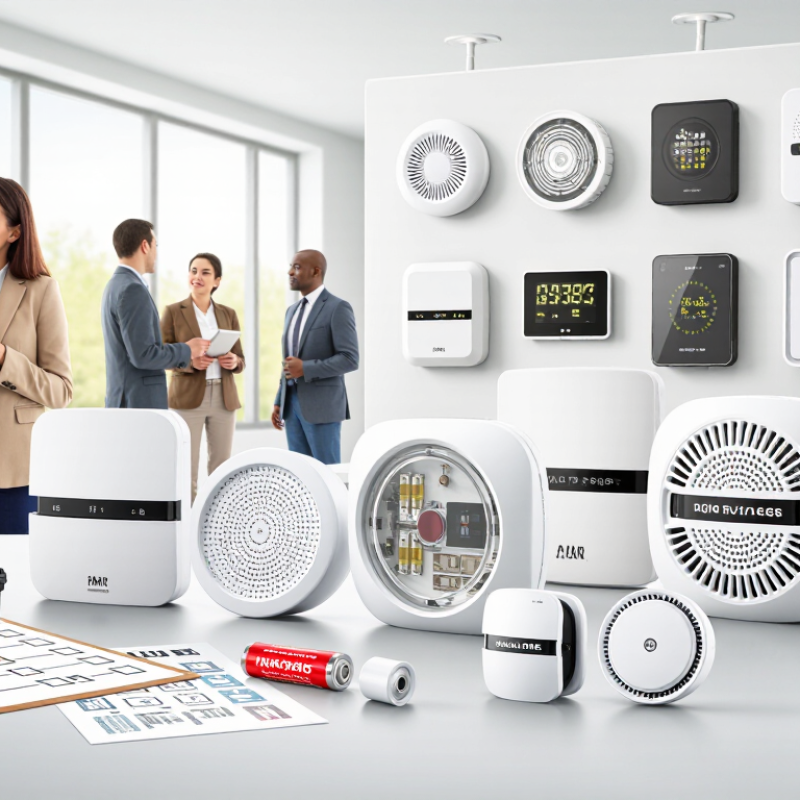
Check the alarm’s certification for the installation country. Standards and approval marks differ across markets. Confirm the sensing method, test button, sound level, and battery design. Choose units with clear low-battery warnings. Sealed batteries can reduce maintenance, but replacement schedules still matter. Interconnected alarms offer stronger coverage in larger homes. When one sounds, others can alert people farther away.
Placement requires careful thought. Install alarms near sleeping areas and on every level, following local guidance. Avoid kitchens, bathrooms, dusty workshops, and areas with heavy steam. Test each unit monthly. Keep a simple inspection record. A neglected alarm is only a plastic object on the ceiling.
A practical mistake is trusting installation alone. Dust, removed batteries, and expired sensors can defeat good equipment. Some buyers also overlook language-free controls for international properties. Clear labels help visitors and maintenance workers respond quickly. I would also question impressive packaging without accessible technical documents. Product confidence should come from testing evidence, support, and a realistic maintenance plan—not appearance.
Buying smoke alarms for global projects requires more than choosing “the most sensitive” sensor. In field inspections, I match the expected fire pattern, room layout, and certification evidence. Photoelectric sensors usually respond well to slow, smoldering fires, such as overheated wiring, bedding, or a forgotten cigarette. Ionization sensors can react quickly to some fast-flaming fires, but they may be more vulnerable to nuisance alarms near cooking areas. Dual-sensor units can broaden coverage, yet their performance still depends on design and testing.
For European distribution, check conformity with EN 14604 and confirm the tested configuration, not only a printed standard number. For North American projects, review the applicable UL 217 edition and its documented fire-test performance. These standards are not interchangeable labels. They address construction, alarm behavior, and testing in specific regulatory contexts.
Ask for certificates, test reports, battery data, temperature limits, and end-of-life warnings. Check whether the alarm supports the required interconnection method.
Start with the room. Place photoelectric alarms near bedrooms and living areas, away from steam, dust, and direct cooking fumes. In kitchens, a heat alarm may be more practical, if local rules permit it. Test every installed unit after placement. I once treated a certificate as proof of suitability; that was too simplistic. Room geometry, ceiling height, ventilation, and maintenance can change real-world protection. Recheck the standard edition before each purchase.
10 Smoke Alarm Buying Tips for Global Buyers
A smoke alarm may sound loud beside your desk but become weak across a bedroom. Before a cross-border purchase, confirm an 85 dB alarm output at 3 meters. Ask for a test report showing the measurement method, test distance, battery condition, and room environment. A calibrated sound meter gives stronger evidence than a product page. Test at ear level, with doors partly closed, because real homes rarely have open spaces.
Tip: Request a short audio test video, but do not treat it as final proof. Video microphones can distort volume. Check the alarm from several directions, including behind a door and near a wall. Listen during the low-battery warning too. That sound should remain clear, not merely annoying. Also confirm the supplied battery type, operating temperature, and instructions in a language your users understand.
Packaging can affect performance during long international transport. Inspect the alarm after arrival for loose covers, damaged vents, or a shifted battery connector. Then repeat the 3-meter test in a furnished room. I have learned that a quiet sample room can create false confidence. My first checklist also ignored hallway echoes, which changed the perceived loudness. That mistake is worth remembering. Keep records of test dates, meter details, and sample numbers before approving a larger order.
Confirm 85 dBA audibility at 3 m before making a cross-border purchase.
The chart uses the 85 dBA reference level at 3 m and estimates sound pressure at other distances using the free-field inverse-square relationship, where sound decreases by approximately 6 dB each time distance doubles. Actual indoor performance may vary because of walls, room acoustics, installation height, and background noise. Always verify the product’s certified test data for the destination market.
10 Smoke Alarm Buying Tips for Global Buyers
A “10-year battery” claim needs careful reading. It may describe the battery’s design life, not ten years of guaranteed operation. Check whether the alarm uses a sealed battery or replaceable cells. Sealed units reduce battery tampering and midnight maintenance. Replaceable designs can be cheaper to service, but users may forget replacements. Power is not simple.
Mains-powered alarms with backup batteries offer continuous household power during normal conditions. They still need compatible voltage, wiring, and qualified installation. Battery-only alarms suit rentals, renovations, and locations without wiring. However, cold rooms, cooking vapour, dust, and frequent testing can affect battery performance. Look for certification against applicable local standards, clear low-battery warnings, and a dated replacement label. A ten-year promise should include storage limits, operating temperature, alarm testing, and warranty conditions.
Tips: Compare the power source, not only the battery number. Ask whether “10 years” means standby life under laboratory conditions. NFPA’s analysis of reported U.S. home fires from 2014–2018 found that smoke alarms failed to operate in 26% of cases. Missing or dead batteries caused 43% of those failures. The U.S. Fire Administration recommends monthly testing and replacing alarms about every ten years. These figures are not a global forecast, but they expose a practical weakness: neglected maintenance. I would also test the sound from a hallway and a closed bedroom door. Some alarms are technically compliant yet too quiet for real homes. Claims need context.
| No. | Buying Tip | What to Compare | Practical Data Point | Buyer Verification Checklist |
|---|---|---|---|---|
| 1 | Separate battery life from alarm life | The claimed battery duration versus the recommended service life of the complete alarm. | A “10-year battery” claim normally refers to the expected battery service period under stated conditions. Many smoke alarms are recommended for replacement after approximately 10 years, even if the alarm still sounds during testing. | Check whether the 10-year period applies to the battery, the complete product, or both. Confirm the replacement date printed on the alarm and in the instructions. |
| 2 | Compare the main power design | Sealed long-life lithium battery, replaceable battery, mains-powered with backup battery, or rechargeable design. | Sealed lithium designs reduce routine battery replacement. Replaceable-battery models require scheduled battery changes. Mains-powered alarms depend on building wiring and normally require battery backup. | Review installation requirements, battery access, backup behavior, and whether the design is suitable for new construction, rental properties, or retrofit projects. |
| 3 | Test the 10-year claim properly | Rated battery capacity, standby current, alarm current, temperature range, humidity range, and test conditions. | Battery-life estimates depend on standby consumption, alarm frequency, wireless communication, ambient temperature, battery self-discharge, and manufacturing tolerances. Real-world life may differ from the headline figure. | Request a technical datasheet stating test conditions, end-of-life voltage, expected alarm events, storage limits, and the warranty period. |
| 4 | Check the low-battery warning | Warning sound pattern, warning interval, visibility of the indicator, and minimum warning duration. | A low-battery warning should be clearly distinguishable from an alarm signal. The exact warning period and sound pattern depend on the applicable regional standard and product design. | Read the user manual and test a sample unit. Confirm that the warning remains noticeable without creating excessive nuisance at night. |
| 5 | Match the sensor to the risk | Photoelectric, ionization, heat, or multi-sensor technology, plus the expected fire environment. | Photoelectric sensors are generally effective for many slow, smoldering fires. Ionization sensors can respond quickly to some flaming fires. Heat alarms are intended for locations where smoke alarms may cause nuisance alarms. | Select the sensor type according to local requirements, room use, cooking exposure, dust, steam, and the manufacturer’s installation guidance. |
| 6 | Confirm regional compliance | Required product standard, certification mark, labeling language, and regulatory approval for the destination market. | Requirements differ by jurisdiction. Examples include EN 14604 in many European markets, UL 217 in the United States, CAN/ULC S531 in Canada, and AS 3786 in Australia. | Ask for a current certificate or declaration of conformity covering the exact model and destination market. Do not rely only on a generic laboratory logo. |
| 7 | Review interconnection options | Standalone operation, wired interconnection, wireless interconnection, and compatibility across alarm types. | Interconnected alarms can allow one detected alarm to signal throughout a dwelling. Wireless systems require reliable radio performance and may consume more energy than standalone products. | Confirm maximum compatible units, communication range, network setup, interference limits, and whether alarms from different product families can be interconnected. |
| 8 | Check operating conditions | Permitted temperature, humidity, altitude, dust exposure, vibration, and storage conditions. | Steam, condensation, insects, dust, and extreme temperatures can cause nuisance alarms or reduce reliability. Garages, kitchens, bathrooms, and unheated spaces often need special consideration. | Compare the environmental ratings with the installation location. Confirm transport and storage limits for the destination climate and shipping route. |
| 9 | Evaluate maintenance and end-of-life handling | Test button, hush feature, alarm memory, cleaning instructions, battery replacement method, and disposal requirements. | The test function checks basic alarm operation but does not replace periodic cleaning or replacement. Sealed lithium units should not be opened or modified by the user. | Confirm service instructions, replacement-date marking, battery recycling rules, packaging labels, and whether the product contains a non-replaceable battery. |
| 10 | Compare total ownership cost | Purchase price, installation, replacement batteries, replacement alarms, warranty, returns, and logistics. | A lower purchase price may lead to recurring battery and labor costs. A sealed long-life design may reduce maintenance but can require complete alarm replacement when the battery reaches end of life. | Calculate cost per installed unit over the intended service period, including spare units, certification documents, shipping, regional adapters, and end-of-life disposal. |
10 Smoke Alarm Buying Tips for Global Buyers
For global buyers, compliance begins with the exact standard, not a logo on the box. Request the full test report and certificate scope for EN 14604, UL 217, or ISO 12239. These standards address different markets and testing approaches, so one approval cannot automatically replace another. Confirm the model number, sensing technology, power source, and production version match every document. Ask whether an accredited laboratory performed the tests under ISO/IEC 17025 conditions. A certificate alone is not enough.
NFPA’s Smoke Alarms in U.S. Home Fires report found that smoke alarms operated in 89% of reported home fires, but failures still occurred because of missing batteries, poor maintenance, or alarm age. That detail matters during procurement. Check low-battery warnings, alarm volume, hush behavior, and installation instructions. Then inspect end-of-life markings. The alarm should show manufacturing information, replacement guidance, or a clearly explained service-life indicator where applicable. Markings must remain readable after packaging, transport, and cleaning. Tiny grey print is a practical failure.
During supplier audits, photograph the label and compare it with the submitted report. Do this before approving a shipment. Some documents appear current but describe an earlier revision. That is easy to miss. Also verify whether the claimed ten-year life refers to battery duration, sensor life, or the complete alarm. They are not identical. NFPA’s Fire Loss in the United States reports repeatedly links non-working alarms with residential fire fatalities, which makes these small validation steps commercially important. Perfect paperwork does not guarantee perfect field performance. Real homes are less predictable.
By continuing to use the site, you agree to the use of cookies. more information
The cookie settings on this website are set to "allow cookies" to give you the best browsing experience possible. If you continue to use this website without changing your cookie settings or you click "Accept" below then you are consenting to this.