
Blog

What Is a Tank Container and How Does It Work?

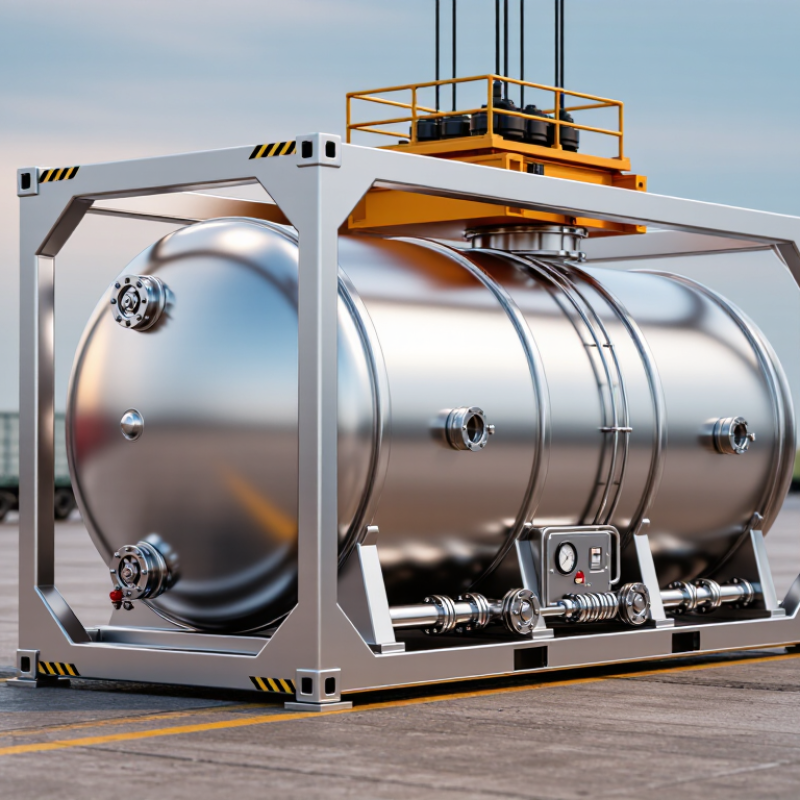
A Tank Container is more than a steel box with a vessel inside. It is a pressure-rated tank held within a frame designed for handling and transport across road, rail, and sea. The frame fits standard lifting equipment. The tank holds liquid cargo, while valves, seals, and fittings help control filling and discharge. Yet the details matter. A worn gasket or poorly secured connection can create problems long before a shipment reaches its destination.

Mike Yarwood, a tank-container industry specialist and former managing director of the International Tank Container Organisation, has emphasized the importance of safety and operational standards in the sector. A practical way to express that principle is: “Reliable tank transport depends on sound equipment, careful inspection, and trained handling.” This wording is a summary, not a verified verbatim quotation. That distinction matters when technical advice is presented as a direct quote.

How does a Tank Container work in practice? The cargo is loaded through designated fittings, then the tank is closed and checked before transport. Its frame allows the unit to move between transport modes without transferring the liquid into another vessel. At the destination, trained personnel connect suitable discharge equipment and manage the flow. The exact setup depends on the cargo and tank design.

This guide explains the main components, loading and unloading process, and common operational checks. It also notes a practical limitation: one tank design does not suit every product or route. A clean-looking exterior is not proof of readiness. Proper inspection still matters.
What Is a Tank Container and How Does It Work?

What Defines a Tank Container: 20-Foot ISO Frame, 14,000–26,000 L Capacity

What Is a Tank Container and How Does It Work?

A tank container is a cylindrical vessel secured inside a 20-foot ISO frame. The frame’s corner castings allow compatible lifting and transfer between ships, railcars, and trucks. Typical capacities range from 14,000 to 26,000 litres, but the largest figure does not mean every load can use the full volume. Tank design, insulation, heating equipment, liquid density, and operating limits all affect usable capacity. Details matter.

During filling, operators load liquid through designated openings and monitor the quantity against the tank’s specifications. At the destination, valves connect to hoses for controlled discharge, often by gravity or pumping. The International Tank Container Organisation’s 2024 survey estimated the global fleet at about 801,800 units at the start of that year. That scale reflects the format’s role in intermodal logistics, not a guarantee that every tank suits every product.

Tips: Check the tank’s stated capacity and permitted payload before booking. Compare them with the liquid’s density and temperature needs. A 26,000-litre tank may sound ideal, yet a heavier liquid can reach its weight limit before it is full. Small mismatch, real cost.

How the Tank, Frame, Valves, and Typical 36,000 kg Gross Rating Work

A tank container carries liquid in a cylindrical pressure vessel held inside a rectangular steel frame. The tank contains the cargo; the frame provides corner castings for lifting and stacking. ISO 1496-3:2019 covers tank-container specifications and testing.

The International Tank Container Organisation’s 2024 Global Tank Container Fleet Survey estimated a worldwide fleet of 801,800 units. That figure describes fleet size, not a guarantee that every unit suits every liquid.

A typical 36,000 kg gross rating means the loaded container’s total mass, including the tank, frame, and contents. It is not the cargo allowance. Subtract the unit’s tare mass, then check the data plate and transport limits.

Density matters: a dense liquid can reach the mass limit before the tank is full. Not quite intuitive. At the top, a manlid provides inspection access, while valves and fittings control filling and discharge.

The bottom outlet usually connects to a hose; operators check seals and valve positions before transfer. Small details matter. A rating can vary by design and specification, so treating 36,000 kg as universal would be a mistake.

How Cargo Is Loaded and Fill Limits Account for Liquid Expansion

Loading begins with checking the tank’s inspection status, cleanliness, and suitability for the specific liquid. Operators confirm the loading connection and valve arrangement before attaching a hose. The cargo is pumped through the designated inlet, while flow and tank conditions are monitored. Small details matter. A leaking seal or an incorrect product temperature can disrupt a careful transfer. When loading is complete, the equipment is closed as specified, and the loaded quantity and temperature are recorded.

Fill limits leave room for liquid expansion as temperatures rise during storage or transit. Liquids expand at different rates, so there is no single fill percentage that suits every cargo and tank. The loading plan should account for the product’s properties, expected temperature range, and the tank’s rated capacity. Too much liquid can leave inadequate expansion space; too little may allow greater movement inside the tank. Operators use verified measurements and equipment guidance rather than judging by sight. This is worth checking twice: a neat-looking level alone cannot show how much room thermal expansion requires.

How Tank Containers Move Across Road, Rail, and Sea

A tank container is a pressure vessel secured inside a steel frame, built for lifting and transfer between transport modes. Cranes handle the frame’s corner castings, while the tank remains sealed during a typical journey. ITCO’s 2024 Global Tank Container Fleet Survey estimated 801,800 tank containers worldwide at the start of that year, reflecting the equipment’s role in international logistics.

On the road, the frame locks onto a chassis for movement between terminals, factories, and ports. At rail yards, cranes transfer it onto a suitable wagon; the tank itself usually stays in place. That matters. Fewer cargo transfers can reduce handling, but not every terminal has the same equipment or schedule. A small delay can leave a driver waiting beside a loaded container.

At sea, tank containers travel in compatible container slots, secured for the voyage. UNCTAD’s Review of Maritime Transport 2024 reported that seaborne trade grew 2.4% in 2023, reaching about 12.3 billion tonnes. The figure shows the scale of shipping, not tank-container traffic alone. On paper, intermodal movement looks seamless; in practice, cleaning records, inspection status, temperature needs, and handover timing all require attention. Coordination is often the hard part.

How Unloading Works and ADR Tanks Meet 2.5- and 5-Year Inspections

A tank container carries liquid cargo in a pressure-rated vessel held inside a steel frame. At the destination, staff check the cargo documents, tank condition, and receiving equipment before connecting a compatible hose to the outlet. Discharge may use gravity, a pump, or controlled pressure, depending on the tank and site procedure. Valves are opened in sequence, while operators watch for leaks and changes in flow. The final litres can be surprisingly slow to drain. UNCTAD’s Review of Maritime Transport 2024 reports that more than 80% of global goods trade by volume moves by sea, underlining the importance of reliable handling across shipping and inland transport.

For ADR tanks, inspection intervals are central to safe service. Under ADR 2025, an intermediate inspection is due no later than 2.5 years after the previous inspection; it includes a leakproofness test and checks that equipment works properly. The periodic inspection, normally due within five years, includes internal and external examinations, a pressure test, and equipment checks (UNECE, ADR 2025, sections 6.8.2.4.2–6.8.2.4.3). Records and inspection dates should be checked before loading, not left until a tank reaches the unloading bay. A test certificate is useful, but it does not replace a careful visual check for damaged fittings or unreadable markings. Procedures vary by tank design and cargo. That detail is easy to overlook.

By continuing to use the site, you agree to the use of cookies. more information

The cookie settings on this website are set to "allow cookies" to give you the best browsing experience possible. If you continue to use this website without changing your cookie settings or you click "Accept" below then you are consenting to this.

Close