
Blog

Top 10 Flange Pipe Manufacturers for Global Buyers?

Flange Pipe components rarely attract attention until a project faces leakage, delayed delivery, or a mismatch at the joint. For global buyers, choosing a manufacturer means checking more than price. Material grades, pressure ratings, dimensions, production capacity, and inspection records all affect performance. The market also sits within a wider industrial supply chain. The World Steel Association’s October 2024 Short Range Outlook projected global steel demand of 1.751 billion tonnes in 2024 and 1.772 billion tonnes in 2025. That scale signals continued demand for steel products, but it does not measure flange demand directly. That distinction matters.

Energy projects are another important purchasing context. The International Energy Agency’s World Energy Investment 2024 report estimated that global energy investment would exceed USD 3 trillion, with about USD 2 trillion directed to clean energy. Such investment creates opportunities across infrastructure, yet it does not guarantee steady orders for every supplier. Buyers still need evidence. A polished catalog is not enough. Check whether a manufacturer can document material traceability, dimensional inspection, and compliance with applicable specifications such as ASME B16.5 or EN 1092-1. Requirements vary by application and destination, so confirm the exact standard with project engineers.

This guide compares ten flange manufacturers for international buyers, focusing on product range, manufacturing capabilities, quality systems, and export readiness. It is a starting point, not a substitute for a technical audit. Company information can change, and public claims may be difficult to compare. A careful shortlist takes time. Sometimes, too much time. Still, a verified inspection report and a clear delivery plan are more useful than a confident sales promise.
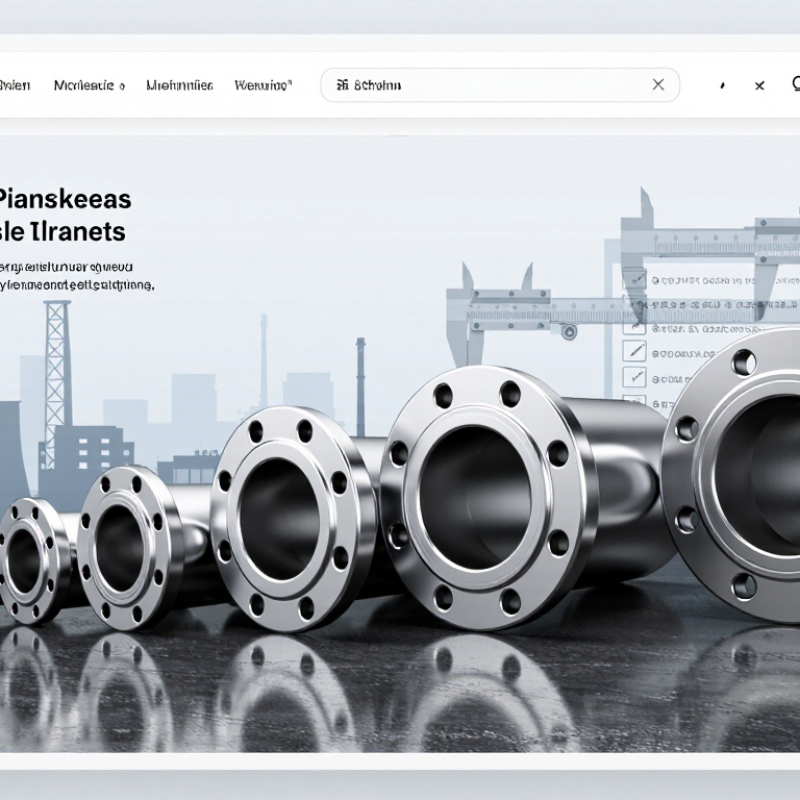
Top 10 Flange Pipe Manufacturers for Global Buyers?

What Are Flange Pipes and Where Are They Used?

A flange pipe is a pipe fitted with a flanged end, creating a bolted joint sealed by a gasket. Unlike a welded connection, it can be opened for inspection or equipment replacement. That matters around pumps, valves, tanks, and heat exchangers. They are detachable. The joint’s pressure rating, material, gasket, and bolt pattern must suit the service conditions; mismatches can cause leaks or difficult maintenance.

Flanged piping appears in water and wastewater plants, power stations, chemical facilities, and oil and gas systems. The U.S. Energy Information Administration describes a U.S. natural gas network spanning more than three million miles of pipelines, illustrating the scale of systems that require dependable connections. Not every section uses flanges, but they are practical where operators need access to equipment. Small details matter. Misalignment, corrosion, or uneven bolt tightening can undermine a connection that looks sound from a distance.

Material selection also reflects the wider steel supply chain. World Steel Association’s World Steel in Figures 2024 reports about 1.89 billion tonnes of crude steel production in 2023. That figure is not specific to flange pipes, but it gives useful context for the industrial materials behind them. In practice, drawings do not always capture installation constraints perfectly; checking face dimensions and gasket compatibility on site is still worthwhile.

How Were the Manufacturers Evaluated for Global Buyers?

Global buyers should evaluate flange pipe manufacturers against measurable evidence, not catalog claims. Check material certificates, heat-number traceability, dimensional inspection records, and documented pressure-test procedures. For critical service, ask how the supplier verifies flange-face finish and bolt-hole alignment. Request sample inspection reports, not just a statement that products meet specifications. Small details matter.

Capacity and export readiness also deserve scrutiny. UNCTAD’s Review of Maritime Transport 2024 reports that over 80% of world trade by volume moves by sea. That makes seaworthy packaging, clear shipping documents, and realistic lead times practical selection criteria. Compare quoted delivery dates with past shipment records where available. Review quality-system certification, but verify its scope and validity; a certificate alone does not prove consistent product quality. No scorecard removes every trade-off. A lower price may bring longer lead times, and even experienced buyers can miss that.

Tips: Send each candidate the same drawing, material grade, pressure rating, and inspection requirements. Compare their written responses line by line. Ask who handles nonconformities and replacement parts. If answers are vague, pause. Also, document your own evaluation criteria before requesting quotations; otherwise, price can quietly dominate the decision.

Who Are the Top 10 Flange Pipe Manufacturers?

There is no universal top 10: the right flange pipe manufacturer depends on material, pressure rating, dimensions, and delivery needs. A practical shortlist includes ten supplier profiles: integrated forging and machining mills; high-pressure forged-flange specialists; large-diameter plate-flange producers; carbon-steel volume manufacturers; stainless-steel specialists; duplex and nickel-alloy producers; precision CNC workshops; custom, low-volume manufacturers; export-focused makers with traceable quality records; and regional manufacturers serving shorter lead times. These are categories, not a ranked list of named companies. Capabilities vary, even within one category.

Tips: Send a clear drawing and specify the applicable standard, material grade, pressure class, and quantity. Ask for material certificates, dimensional inspection records, and lead-time details. Check how the supplier handles nonstandard dimensions.

Before comparing quotations, confirm that each maker can supply the exact flange type and pipe connection you need. Review machining tolerances, heat-treatment controls, and inspection methods, such as ultrasonic testing when required by the project. A low price can hide a mismatch in facing, bore, or drilling. I would verify these details in writing; it is easy to overlook one small dimension. Also compare sample documentation and communication quality, not just production capacity.

Flange Selection Benchmark: ASME B16.5 Class 150 Outside Diameters

This chart compares nominal pipe size (NPS) with the standard flange outside diameter in millimeters for ASME B16.5 Class 150 flanges. These are standardized product dimensions, not a manufacturer ranking; confirm the applicable standard, flange type, and project specifications before ordering.

How Do Their Products, Standards, and Capabilities Compare?

A useful comparison of ten flange pipe manufacturers starts with product range, not catalog size. Check whether each supplier offers weld neck, slip-on, blind, threaded, and lap-joint flanges in the required dimensions. Then compare pressure classes, material options, and available pipe components. A broad range can help consolidate orders, but only if the products match the project drawings. Details matter.

Standards are not interchangeable. Buyers may need ASME B16.5 or B16.47, EN 1092-1, or another specified system. Confirm the standard, material grade, facing, dimensions, and tolerances on the quotation and final documents. Ask for material test reports and traceability records; where the application calls for it, confirm inspection and testing methods. A certificate alone does not prove every item meets the purchase specification. I would not treat a polished catalog as proof; it is only a starting point.

Manufacturing capability also separates suppliers. Compare forging and machining capacity, size limits, surface finish, inspection equipment, and realistic lead times. Ask how they handle nonstandard drawings and changes after approval. A supplier with strong production capacity may still struggle with clear documentation or consistent communication. That part is easy to overlook. Request a sample inspection plan or a recent, suitably redacted quality record before making the comparison.

What Should Buyers Consider Before Placing an International Order?

An international flange order can appear straightforward, but small specification gaps can cause costly delays. Define the nominal pipe size, pressure class, facing type, material grade, and applicable dimensional standard before requesting quotations. State the service conditions too, including temperature and the fluid involved. Small details matter. A flange that matches the diameter may still differ in thickness, bolt-hole layout, or sealing face.

Ask suppliers for dimensioned drawings, material test certificates, and clear information on inspection and traceability. Check that the quoted material suits the expected corrosion conditions; a familiar grade is not automatically suitable for every installation. Confirm whether gaskets, bolts, and other accessories are included. Ask for evidence. If a certificate does not clearly link the material heat number to the shipment, request clarification before approving production.

International delivery needs equal attention. Confirm the named delivery point, freight responsibilities, packing method, production lead time, and documents supplied for customs clearance. Wooden crates should protect machined faces from impact and moisture, not merely hold the parts together. Agree on inspection timing and how discrepancies will be handled. One detail buyers sometimes overlook is time-zone delay: a small drawing change can add days if approval routes are unclear. No checklist removes every risk, but written tolerances and a pre-shipment inspection plan make expectations easier to verify.

Top 10 Flange Pipe Manufacturers for Global Buyers? - What Should Buyers Consider Before Placing an International Order?

A practical supplier-evaluation table for international flange and piping orders. It contains buyer checks rather than company rankings or manufacturer claims; confirm that each requirement applies to the specific product and contract.

No. Buyer Evaluation Dimension What to Verify Useful Evidence or Reference Why It Matters Before Ordering
1 Applicable flange standard Confirm the governing standard, edition, nominal size, pressure class or PN rating, facing, and dimensional requirements in the purchase specification. ASME B16.5 covers pipe flanges and flanged fittings in NPS 1/2 through NPS 24; ASME B16.47 covers large-diameter steel flanges in NPS 26 through NPS 60. EN 1092-1 specifies circular steel flanges in its stated scope. Standards and ratings are not automatically interchangeable. A mismatch can prevent fit-up or affect the design basis.
2 Material grade and service conditions Match the specified material grade to the design temperature, pressure, fluid, corrosion conditions, and applicable code requirements. Common material specifications include ASTM A105 for carbon-steel forgings for piping applications, ASTM A182 for specified alloy and stainless-steel forged or rolled components, and ASTM A350 for specified carbon and low-alloy steel forgings requiring notch toughness testing. A similar-looking grade is not necessarily an acceptable substitute. Obtain written approval for any proposed substitution.
3 Traceability and material documentation Check that product markings and records can be linked to the ordered grade, heat or lot, and inspection documents, as required by the contract. Request the applicable material test report, heat or lot identification, and a sample of the proposed marking and documentation package before production or shipment. Traceable records help buyers verify material compliance and support receiving inspection and later audits.
4 Quality management and inspection controls Review the quality system, inspection plan, dimensional checks, material controls, nonconformance process, and inspection records relevant to the order. Request a current quality-management certificate if required, plus the order-specific inspection and test plan. ISO 9001 is a quality-management-system standard; certification alone does not establish product conformity. Order-specific inspection evidence is needed to assess whether the delivered items meet the agreed specification.
5 Testing and test-laboratory scope Identify required tests, acceptance criteria, sampling frequency, and who will perform or witness them. Check laboratory competence where testing is outsourced. Specify required tests in the contract. ISO/IEC 17025 addresses the competence of testing and calibration laboratories; verify the laboratory's accreditation scope for the relevant test when accreditation is required. A test certificate is useful only when the test, sample, acceptance criteria, and traceability meet the purchase requirements.
6 Manufacturing route and product scope Confirm whether the supplier manufactures the ordered item or sources it, and verify the actual process, available sizes, pressure ratings, materials, and machining scope. Request a written scope-of-supply statement, process overview, and order-specific confirmation of size, grade, standard, facing, and quantity. Supply-chain roles and capabilities vary. Clear disclosure helps buyers plan qualification, inspection, and accountability.
7 Production schedule and capacity confirmation Obtain a committed production and inspection schedule, with defined milestones for approval drawings, material availability, testing, and dispatch. Use a dated order schedule and request prompt written notice of changes or delays. Do not rely on an unqualified lead-time estimate as a delivery guarantee. International projects often depend on coordinated installation dates, inspections, and freight bookings.
8 Packaging, marking, and export readiness Agree on corrosion protection, end or face protection, packing method, package identification, and any destination-specific shipping or documentation requirements. Include packaging and marking instructions in the purchase order; request packing-list details and package photographs before dispatch when appropriate. Suitable packaging and clear identification reduce transit damage, handling errors, and receiving delays.
9 Shipping terms, cost, and delivery responsibility State the named place or port, delivery point, freight responsibilities, insurance responsibilities where applicable, and the edition of the agreed trade term. Use a precisely named Incoterms® 2020 rule and location in the contract. Confirm customs clearance, duties, unloading, and import responsibilities separately where relevant. A named rule and location clarify the allocation of delivery tasks, costs, and risk; they do not replace the sales contract.
10 Commercial terms and after-sales resolution Review payment milestones, currency, order-change rules, inspection access, claims process, remedies for nonconforming goods, and warranty terms. Set these terms in the signed contract or purchase order, including required notice periods and the documents needed to support a quality claim. Clear written terms reduce ambiguity if shipment, inspection, or product conformity issues arise.

By continuing to use the site, you agree to the use of cookies. more information

The cookie settings on this website are set to "allow cookies" to give you the best browsing experience possible. If you continue to use this website without changing your cookie settings or you click "Accept" below then you are consenting to this.

Close