
A Modern High Gloss Black Coffee Table can give a living room a crisp focal point, especially against pale rugs, warm wood, or textured upholstery. Its reflective surface catches window light and makes small spaces feel more layered. It also shows fingerprints, dust, and cup rings quickly. Finish matters.
The wider furniture market offers useful context, though it does not measure demand for this specific table style. Grand View Research’s Furniture Market Size, Share & Trends Analysis Report estimated the global furniture market at USD 647.3 billion in 2023 and projected a 5.0% compound annual growth rate from 2024 to 2030. That broad estimate reflects a large, changing category—not proof that glossy black coffee tables are trending. Still, it underscores why buyers have many designs, materials, and price points to compare.
This guide considers ten modern options through practical details: dimensions, storage, construction, stability, and the care a glossy finish may need. A narrow table can preserve walking space; a lower shelf can hold books or a remote without crowding the top. Some pieces look striking in product photos but feel too reflective in a bright room. That trade-off is real. Check the measurements against your sofa, and look for clear care instructions before buying. These picks aim to balance visual impact with everyday use, while recognizing that one finish will not suit every home.
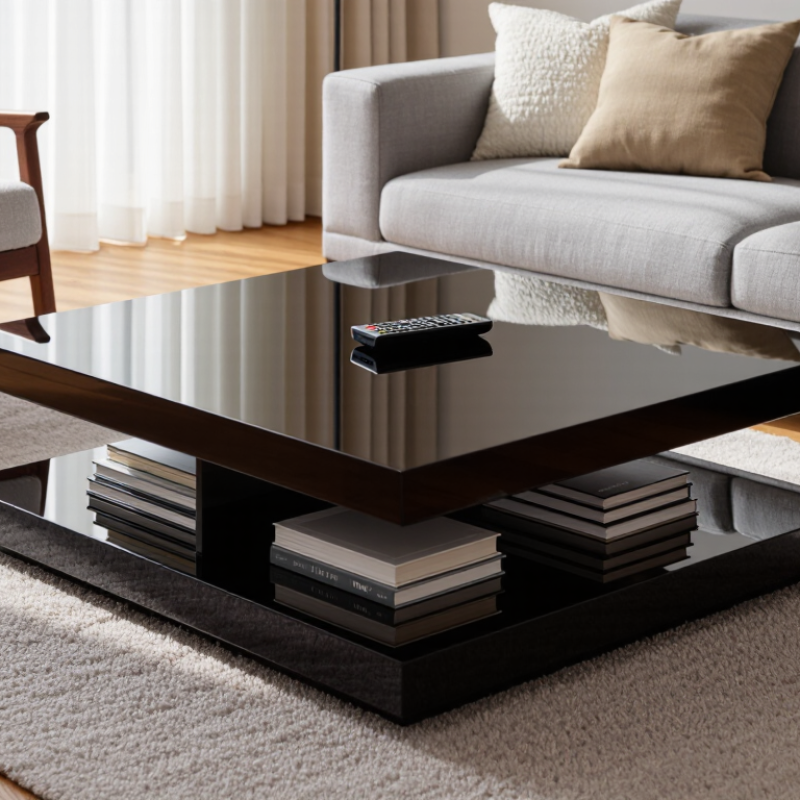
A modern high-gloss black coffee table is defined by its reflective finish and clean, contemporary form. The surface may be lacquer, acrylic, or coated wood; the material affects weight, durability, and repair options. Look for an even sheen, smooth edges, and a stable base. Shine alone is not enough. A table with simple geometry can feel modern without looking cold, while a sculptural base adds presence but may limit legroom.
In daily use, the dark reflective top catches window light and can make a small room feel brighter. It also shows fingerprints, dust, and fine scratches more readily than a matte finish. That is the trade-off. Check the table from different angles: harsh reflections may compete with a television or overhead lighting. A soft cloth usually handles routine cleaning, but follow the care guidance for the specific finish. Consider height and reach, too; a striking table that sits awkwardly beside the sofa becomes frustrating. I once underestimated that detail. The proportions matter. A few millimeters can change how comfortable the room feels.
A high-gloss black coffee table can look sleek in a showroom, but its core material affects daily use. MDF with a quality lacquer finish often creates a smooth, even surface at a more accessible price. Solid wood may feel sturdier, though the glossy coating can hide much of its natural grain. Tempered glass adds visual lightness, but fingerprints show quickly. Details matter.
Compare the finish under good lighting. A deep, even shine should not reveal cloudy patches, rough edges, or uneven reflections. Ask whether the coating is lacquer, paint, or a durable laminate; these finishes can differ in scratch resistance and repair options. None is truly scratch-proof. Dust and fine marks stand out on black surfaces, so a soft microfiber cloth helps avoid adding new scuffs.
Design features shape how useful the table feels. Rounded corners are practical in tight living rooms, while a lower shelf can hold books or a remote without crowding the top. Check the table’s height against your sofa, and measure the walking space around it. A pedestal base may offer more legroom, but can feel less stable on uneven flooring. I would still inspect assembly instructions and weight limits before buying; product photos rarely show those trade-offs clearly.
A high-gloss black coffee table can make a living room feel polished, but its size matters more than its shine. Measure the sofa and available floor space before comparing styles. As a practical guide, leave about 16 to 18 inches between the table and seating for comfortable movement. Measure twice. A broad rectangular top may suit a long sofa, while a round table can soften a tight layout and reduce sharp corners in busy walkways.
Think about what happens around the table each day. If it holds mugs, remotes, and a stack of books, check that the surface offers enough usable space. A lower shelf can help, though it may collect dust and clutter. Glossy finishes also show fingerprints, fine scratches, and dust more readily than matte ones. That is easy to overlook in a showroom. Ask about the top’s material, edge construction, weight, and care instructions, then consider how much upkeep you will actually tolerate.
Households with children or frequent guests may prefer rounded edges and a stable, heavier base. For smaller rooms, a raised or open base can make the floor feel less crowded. Check the table from your usual seats, not just from the doorway. If possible, mark its footprint on the floor with tape for a day. It can look a little awkward at first, but it reveals whether people can pass comfortably and reach their drinks without leaning.
Use these common table styles and typical size ranges as a starting point. Actual dimensions, finishes, materials, and storage features vary by product; check the product specifications and measure your room before buying.
| Style | Typical footprint | Typical height | Common construction | Storage | Works well for |
|---|---|---|---|---|---|
| Rectangular low-profile | 40–48 in L × 20–26 in W | 14–18 in | Gloss-finished engineered wood or MDF; wood or metal supports | Usually open underside; some models add a lower shelf | Long sofas and living rooms with a straightforward layout |
| Square statement table | 30–36 in L × 30–36 in W | 15–18 in | Gloss-finished wood composite or lacquered wood | Often none; check for a shelf or concealed compartment | Square seating arrangements and larger conversation areas |
| Round pedestal table | 30–36 in diameter | 15–18 in | Gloss-finished top with a central pedestal, commonly wood composite or metal | Typically no enclosed storage | Smaller rooms or layouts where rounded edges help ease movement |
| Oval coffee table | 42–48 in L × 22–28 in W | 15–18 in | Gloss-finished engineered wood, MDF, or lacquered wood | Open base or lower shelf on some designs | Narrow walkways and households that prefer softened corners |
| Lift-top table | 36–44 in L × 20–26 in W | 16–19 in closed; higher when raised | Gloss-finished wood composite with a hinged lifting mechanism | Compartment beneath the lifting top is common | Working, dining, or storing everyday items in the living room |
| Two-piece nesting tables | Largest piece: about 30–36 in across; smaller piece varies | 14–19 in | Gloss-finished wood composite, MDF, or metal | Tables slide together; no enclosed storage in most designs | Flexible layouts, occasional guests, or compact rooms |
| Open-frame metal-base table | 38–46 in L × 20–26 in W | 15–18 in | Gloss-finished top paired with a metal frame or legs | Open space beneath; occasional lower shelf | A visually lighter look and easy access beneath the table |
| High-gloss glass-top table | 36–46 in L × 20–28 in W | 15–18 in | Glass top with a black base or a gloss-finished frame; confirm the listed materials | Usually open; some designs include a lower shelf | Rooms where a less visually solid table is preferred; requires regular cleaning |
| Storage-drawer table | 38–46 in L × 20–26 in W | 16–19 in | Gloss-finished engineered wood or MDF with drawer hardware | One or more drawers, depending on the design | Keeping remotes, coasters, and small accessories out of sight |
| Compact C-shaped side table | 12–18 in W × 16–24 in D | 20–26 in | Gloss-finished top with a metal or wood-composite C-shaped base | Usually none; base may slide partly under a sofa | Small apartments, laptop use, or a secondary surface beside seating |
Quick fit check: Compare table height with the sofa seat, allow comfortable circulation around the table, and measure the full footprint—including any overhanging top or moving parts. High-gloss surfaces can show fingerprints and dust more readily than matte finishes, so consider your cleaning routine.
A high-gloss black coffee table can anchor a living room without adding visual clutter. Its reflective top catches window light, while a slim frame keeps the piece from feeling heavy. In a set of ten modern options, compare more than appearance: check tabletop thickness, edge finishing, leg stability, and clearance around sofas. A low table should sit near the height of the seat cushions, so drinks and books remain easy to reach.
Black gloss shows everything. Fingerprints, dust, and small scratches stand out, especially beside a sunny window. A soft microfiber cloth helps; abrasive cleaners may dull the finish. Look for rounded corners in tight spaces and a sturdy base if the table will hold heavier objects. I would not choose gloss for every household. With children or pets, upkeep can become tiresome.
The 2024 Houzz & Home Study reported median U.S. renovation spending of $24,000 in 2023. That figure covers broader home projects, not coffee-table purchases, but it shows why proportionate furniture choices matter within a room budget. Compare materials and care instructions before paying extra for a polished look. A sample finish can also help: black surfaces may appear warmer or cooler under different bulbs, and product photos rarely show that shift clearly.
A size guide for comparing common modern coffee-table formats. Dimensions are representative examples in centimetres, not specifications for particular products.
Measure your seating area before choosing a table; actual dimensions vary by design. A useful starting point is a table around two-thirds the length of the sofa.
A high-gloss black coffee table shows dust and fingerprints quickly, especially beside a bright window. Start with a clean, dry microfiber cloth and wipe gently in straight strokes. Use a soft cloth. Avoid paper towels, scouring pads, and gritty cleaners, which may leave fine scratches. For sticky marks, dampen the cloth with water and a little mild dish soap. Test a hidden area first, then wipe away any residue and dry the surface promptly.
Daily care matters. Place coasters under cold drinks and use a heat-resistant mat for warm dishes. Even small spills can leave dull patches if they sit too long. Lift the table when moving it; dragging it over grit can damage the finish or floor. Keep sharp-edged objects from sliding across the top. Small habits matter.
Over time, inspect the surface in daylight for cloudy areas, loose hardware, or new scratches. Follow the care instructions supplied with the table, since finishes can differ. Avoid wax or furniture polish unless the maker specifically recommends it; some products create streaks on glossy surfaces. I still miss a fingerprint now and then. A quick daily wipe helps, but it cannot prevent every mark, and that is worth remembering before choosing a black gloss finish.
By continuing to use the site, you agree to the use of cookies. more information
The cookie settings on this website are set to "allow cookies" to give you the best browsing experience possible. If you continue to use this website without changing your cookie settings or you click "Accept" below then you are consenting to this.