
Selecting the Top 10 Fitting Quick Connect suppliers worldwide requires more than comparing product catalogs. A reliable supplier should demonstrate consistent manufacturing, clear technical documentation, and practical experience across demanding applications. This introduction examines companies serving hydraulic, pneumatic, fluid-transfer, industrial, and process-control markets. The review considers connector materials, thread standards, pressure ratings, temperature limits, sealing options, and available sizes. Stainless steel bodies, brass valves, and compatible NBR, EPDM, or FKM seals can significantly affect service life. Small details matter.
The comparison also considers quality systems, traceability, testing procedures, delivery capability, engineering support, and customer feedback. Evidence should come from official specifications, certification records, application data, and credible industry experience. A supplier may appear strong online but provide limited documentation for a specific fitting. That deserves attention. No single company is ideal for every installation, and published rankings may change as product lines, certifications, and regional support develop. Buyers should verify pressure ratings, media compatibility, connection dimensions, and maintenance requirements before placing an order. A quick-disconnect coupling that performs well on clean compressed air may not suit aggressive chemicals or high-cycle hydraulic equipment. Field conditions often reveal what brochures miss. This guide aims to provide a practical, balanced starting point for procurement teams, engineers, and distributors seeking dependable Fitting Quick Connect solutions. Some information may remain incomplete. Careful verification is still essential.
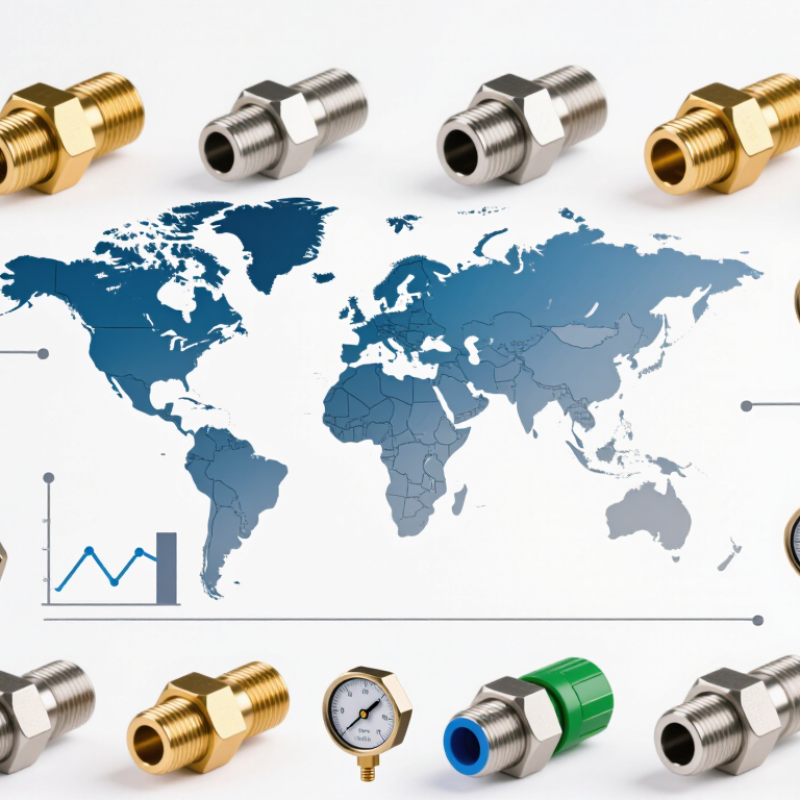
Fitting quick connects are detachable couplings that join hoses, pipes, or equipment without extended threading or special tools. A socket accepts a plug, while an internal valve can stop fluid flow during disconnection. This reduces spills and shortens maintenance time. The terminology is not perfectly standardized. Some suppliers call them quick disconnects, quick-release couplings, or push-to-connect fittings.
They are widely used in compressed-air lines, hydraulic machinery, coolant circuits, laboratory equipment, and mobile service tools. In a workshop, a technician may connect a pneumatic hose in seconds, even with gloves. Selection depends on media, pressure, temperature, flow rate, seal material, and connection size. Stainless steel suits corrosive environments, while engineered polymers can reduce weight. They are not automatically interchangeable. A mismatched profile may leak or restrict flow.
Market estimates show continuing demand. Grand View Research valued the global quick-release couplings market at about USD 1.7 billion in 2023 and forecast steady growth through 2030. MarketsandMarkets also identifies industrial automation, transportation, and fluid handling as major application areas. These figures vary because researchers define the product category differently. That matters when comparing suppliers. Buyers should request pressure-cycle testing, material certificates, dimensional drawings, and documented leakage results. A low purchase price can become expensive when seals fail repeatedly. Even experienced teams sometimes overlook dust protection. That small detail deserves more attention.
Fitting quick connects are detachable coupling systems that join hoses, pipes, or equipment without threaded assembly. They are commonly used in hydraulic machinery, pneumatic systems, coolant circuits, instrumentation, and chemical-fluid transfer. The chart shows representative maximum working-pressure levels for commonly specified coupling categories; actual ratings depend on connection size, sealing material, temperature, fluid compatibility, and safety requirements.
Selecting fitting quick connect suppliers worldwide requires more than comparing catalog prices. In field projects, I have seen a low-cost connector fail because its seal hardened near a hot pump. Evaluate material compatibility, pressure ratings, temperature limits, and connection cycles against your actual working conditions. Ask for dimensional drawings, test reports, and batch traceability before approving samples.
A reliable supplier should explain how fittings are inspected, assembled, and packaged. Request samples from regular production, not specially prepared pieces. Check insertion force, locking movement, leakage, and hose retention with practical tests. Independent certifications can support credibility, but they should match the intended market and application. Factory audits, quality records, and clear corrective-action procedures reveal more than polished brochures.
Delivery performance also matters. Compare lead times, minimum order quantities, spare-part access, and technical response hours. A capable engineering team should answer specific questions without hiding behind general claims. Communication across time zones may expose weaknesses. Keep written specifications and approval records. One detail is easy to miss: a fitting that works perfectly in clean water may perform poorly with oil, dust, or vibration. Supplier selection is rarely perfect, and field feedback may force a revised material or seal design. Test again.
| No. | Evaluation Dimension | Weight | What to Verify | Relevant Standard or Evidence | Recommended Benchmark |
|---|---|---|---|---|---|
| 1 | Product and Connection Coverage | 12% | Availability of hydraulic, pneumatic, instrumentation, and custom quick-connect configurations. | Dimensional drawings, interchangeability charts, CAD files, and product catalogs. | At least three connection families and documented dimensional compatibility. |
| 2 | Pressure and Temperature Performance | 14% | Working pressure, burst pressure, vacuum capability, temperature range, and derating factors. | Published pressure-temperature curves and test reports based on the applicable product standard. | Ratings must be stated for the complete coupling assembly, not only individual components. |
| 3 | Material and Corrosion Resistance | 10% | Body, valve, spring, ball, plating, and seal materials for the intended fluid and environment. | Material certificates, salt-spray results, chemical compatibility charts, and RoHS/REACH declarations. | Full material disclosure and application-specific corrosion guidance. |
| 4 | Sealing and Leakage Control | 12% | Seal compound, leakage rate, connection-cycle durability, and resistance to pressure surges. | Helium or air leakage test data, seal compatibility information, and cycle-test reports. | Documented leak testing for both connected and disconnected conditions where applicable. |
| 5 | Standards and Certification | 10% | Quality-management controls and compliance with the standards relevant to the application. | ISO 9001 certification; ISO 7241 for applicable hydraulic couplings; ISO 4414 for pneumatic safety principles. | Current certificates issued by recognized certification bodies and traceable scope. |
| 6 | Manufacturing and Quality Control | 12% | Process capability, inspection equipment, batch control, nonconformance handling, and final testing. | Inspection plans, calibration records, first-article reports, and statistical process-control data. | Lot traceability from raw material through final shipment. |
| 7 | Interchangeability and Installation Fit | 8% | Dimensional conformity, connection force, locking method, mounting envelope, and replacement compatibility. | Applicable ISO or industry dimensional specifications, gauge results, and fit-check samples. | Verified interchangeability with the required coupling profile and port configuration. |
| 8 | Supply Capacity and Lead Time | 8% | Standard lead time, production capacity, safety stock, minimum order quantity, and continuity planning. | Capacity statements, delivery-performance records, inventory policy, and business-continuity plans. | Written lead-time commitments and a documented response plan for shortages. |
| 9 | Technical Support and Customization | 7% | Engineering support, prototype capability, custom seals, special ports, and application troubleshooting. | Technical response procedures, sample-development records, and engineering change controls. | Documented technical contact and controlled approval process for design changes. |
| 10 | Total Cost and Commercial Reliability | 7% | Unit price, tooling, freight, duties, warranty terms, replacement cost, and payment conditions. | Formal quotations, warranty policy, Incoterms, return procedures, and total-cost analysis. | Compare landed cost and lifecycle cost rather than purchase price alone. |
| Total Evaluation Weight | 100% | Rank suppliers by verified evidence, application suitability, and delivered performance. | |||
The top 10 fitting quick connect suppliers worldwide are usually judged by engineering consistency, not advertising reach. Reliable suppliers offer connectors for pneumatic, hydraulic, water, and industrial fluid systems. Their catalogs should show thread standards, tube sizes, pressure ratings, temperature limits, and compatible materials. Brass suits many general applications. Stainless steel performs better in corrosive environments. Engineering drawings matter.
A dependable supplier also controls production tightly. Look for documented leak testing, batch traceability, and repeatable machining tolerances. Ask whether every shipment receives dimensional inspection. A quick connect should engage smoothly, lock firmly, and release without damaging the tube.
Small details matter. A poorly finished seal can fail after repeated cycling. Independent certifications and transparent test reports improve confidence, but paperwork alone proves little.
Purchasers should compare the leading ten suppliers by delivery performance, technical support, customization, and after-sales response. Regional warehouses can reduce delays, especially when maintenance teams need replacement fittings overnight. Samples should be tested with the actual tubing, pressure, vibration, and temperature conditions. No ranking is perfect. A supplier with the lowest price may create higher maintenance costs later. I would also question unusually broad specifications, because marketing language can hide application limits. Reliable decisions come from measured performance, clear communication, and evidence from real installation conditions.
Top 10 Fitting Quick Connect Suppliers Worldwide: Product Ranges, Materials, Standards, and Industry Applications
The leading ten fitting quick connect suppliers typically offer hydraulic, pneumatic, instrumentation, and fluid-transfer products. Their ranges may include straight couplers, elbows, tees, bulkhead fittings, and dry-break connections. Some suppliers also provide high-pressure flat-face couplings for excavators and agricultural machinery. Pneumatic lines often use compact push-in fittings, while process systems require stronger sealing control.
Material choice depends on pressure, temperature, corrosion, and fluid type. Stainless steel suits chemical processing and marine environments. Brass remains practical for compressed air and moderate-pressure water systems. Carbon steel supports demanding hydraulic equipment, but surface treatment matters. Thermoplastics reduce weight in low-pressure pneumatic applications. Common connection standards include NPT, BSPP, BSPT, SAE, and metric threads. ISO 7241 and ISO 16028 are useful references for hydraulic coupling dimensions and performance.
Field experience shows that catalog compatibility can be misleading. A coupling may fit mechanically but fail under vibration or repeated pressure pulses. Check working pressure, burst pressure, flow capacity, seal material, and interchange requirements. O-rings made from NBR, FKM, or EPDM behave differently with oils, heat, and chemicals. Cleanliness is critical. Small particles can damage valves quickly. One overlooked detail is thermal expansion. It can change sealing force. A universal fitting does not really exist. Supplier reliability also depends on traceable testing, consistent tolerances, and clear technical support.
When comparing the top ten fitting quick connect suppliers worldwide, price is only the opening figure. Request a written quote covering fittings, seals, packaging, tooling, and shipping. Confirm whether prices remain valid for a fixed period. Some quotes omit replacement seals or minimum order quantities. That omission can distort the real project cost.
Availability depends on material, thread type, size, and production capacity. Ask for current stock levels, realistic lead times, and regional warehouse options. Regional stock matters. Lead times should include inspection and export handling, not only factory production. For urgent maintenance, request sample dispatch dates and backup inventory plans.
Support often separates a dependable supplier from a cheap one. Technical staff should explain pressure ratings, temperature limits, media compatibility, and installation torque. Ask for drawings, test reports, material certificates, and traceability records. Documents matter.
Supplier selection should also consider quality controls, response speed, payment clarity, and after-sales handling. Review how complaints are recorded and corrected. Material compatibility deserves careful attention. Pressure ratings can change with temperature.
An impressive catalog proves little. During a previous sourcing review, a fitting matched the drawing but failed a practical clearance check. I should have requested a physical sample earlier. Independent sample testing is worthwhile. Check sealing performance, coupling force, corrosion resistance, and repeated connection cycles. Transparent communication is valuable, even when a supplier admits limited stock or a design concern. A perfect quotation may hide practical weaknesses.
By continuing to use the site, you agree to the use of cookies. more information
The cookie settings on this website are set to "allow cookies" to give you the best browsing experience possible. If you continue to use this website without changing your cookie settings or you click "Accept" below then you are consenting to this.