
Choosing the right Wheel Motor supplier requires more than comparing catalog prices. Global buyers must examine torque output, rated voltage, cooling design, sealing performance, control compatibility, and production capacity. A motor may look powerful on paper. It can still underperform in wet roads, steep gradients, or repeated stop-and-go operation.
Electric-drive specialist John M. Miller has emphasized, “Electric drive is a systems problem, not a motor problem.” This principle shapes our selection approach. A reliable Wheel Motor must work smoothly with the battery, inverter, controller, suspension, and vehicle software. Supplier engineering support matters, especially when mounting dimensions or communication protocols change during development.
This guide reviews ten suppliers serving international buyers across mobility, robotics, agricultural equipment, and specialty vehicles. The comparison considers product range, customization, testing practices, documentation, after-sales support, and export experience. It also highlights practical details, such as axle-load ratings, thermal limits, connector protection, and available sample quantities.
No ranking is perfect. Buyer priorities differ.
Some companies excel in prototypes but lack volume capacity. Others offer strong manufacturing scale yet limited customization. Public information can also be incomplete, outdated, or overly promotional. Therefore, readers should request current test reports, warranty terms, lead times, and compliance documents before placing an order.
The goal is not to name one universal winner. It is to help buyers identify the supplier whose Wheel Motor technology fits their vehicle, operating environment, budget, and long-term production plan. Small technical details often decide large commercial outcomes.
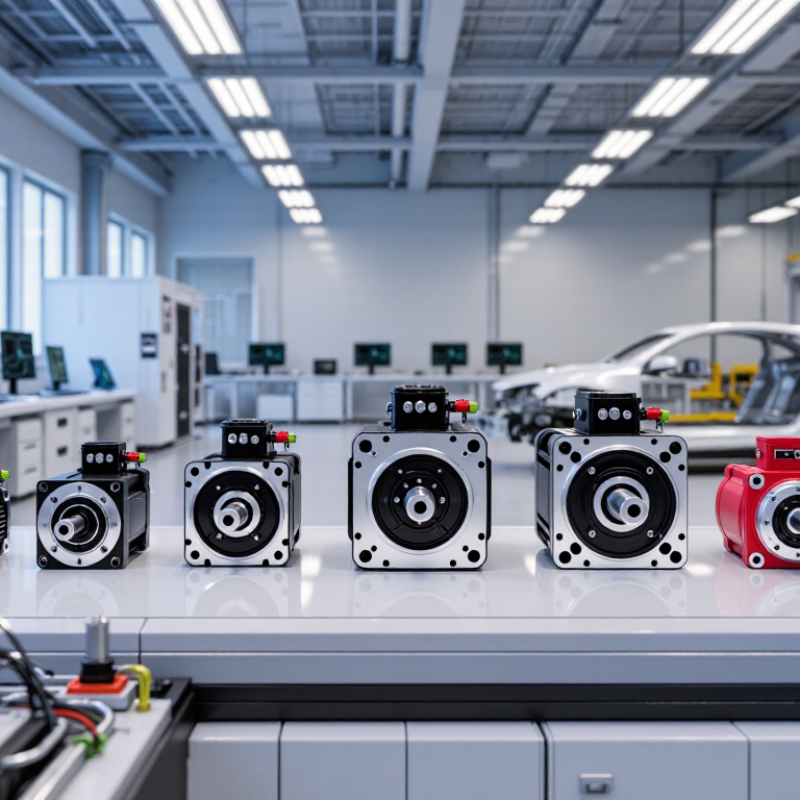
A wheel motor places electric drive hardware inside, or beside, a vehicle’s wheel. It can remove the central motor, gearbox, and several drivetrain shafts. This creates more cabin space and allows precise torque control at each wheel. Picture a compact delivery vehicle turning on a narrow street, with software adjusting left and right wheel torque within milliseconds.
The market context is substantial. The International Energy Agency’s Global EV Outlook 2024 reported nearly 14 million electric car sales in 2023, representing about 18% of global car sales. However, rising EV volume does not guarantee wheel-motor adoption. Buyers must check axle load, unsprung mass, cooling performance, braking integration, and road durability. A motor that performs well in a laboratory may struggle after months of potholes, water spray, and repeated curb impacts.
Technical evidence matters more than impressive brochures. The U.S. Department of Energy identifies efficiency, thermal management, and power electronics as major electric-drive priorities. Global buyers should request measured torque curves, continuous-power data, ingress-protection test results, and service procedures. They should also confirm local certification requirements and spare-part availability. Cost savings are possible. Not always. Added wheel weight can reduce ride comfort and tire life, so every supplier comparison needs vehicle-level testing, not only motor-level figures.
The IEA’s Global EV Outlook 2025 reported more than 17 million electric-car sales in 2024. That scale makes supplier screening a production decision, not a catalog exercise. Compare rated torque, continuous output, efficiency curves, cooling performance, and tested operating temperatures. Request independent test records, not presentation figures. A polished prototype can still hide weak thermal control.
Certification must match the destination market and vehicle category. Check ISO 16750 environmental testing, IEC 60529 ingress protection, and ISO 26262 processes where functional safety applies. Ask whether certificates cover the exact motor variant. They often do not. Review traceability, firmware control, failure reporting, and change-notification procedures. A small design change can affect braking response, noise, or battery consumption.
Logistics also separates reliable suppliers from attractive ones. UNCTAD’s Review of Maritime Transport 2024 states that over 80% of global trade moves by sea. Therefore, assess packaging tests, port options, customs documents, spare-part locations, and realistic lead times. Calculate total landed cost, including duties, inspection, warranty returns, and local technical support. Request three reference shipments with dates and defect rates. One imperfect detail matters: suppliers may provide excellent samples but weak after-sales discipline. A controlled pilot order reveals more than a confident sales call.
Top 10 Wheel Motor Suppliers for Global Buyers
Top 10 Wheel Motor Suppliers by Products, Capabilities, and Reach
A useful top-ten comparison should begin with product depth, not advertising claims. Leading suppliers typically offer direct-drive wheel motors, geared hub motors, and compact systems for electric vehicles, warehouse equipment, and mobile robots. Buyers should check rated torque, peak torque, voltage range, cooling method, and wheel-size compatibility. A clean specification sheet matters.
Manufacturing capability separates a reliable supplier from a basic reseller. Strong candidates use documented winding processes, rotor balancing, sealed housings, and end-of-line testing. Ask for test records, sample data, and failure-rate evidence. Some suppliers support custom stators, brakes, encoders, and controller matching. Others only modify cable length or mounting holes. That difference affects development time.
Global reach also deserves close attention. Suppliers with regional engineering teams, stable export packaging, and service centers can reduce installation delays. Confirm production capacity before signing a large order. A factory may promise 10,000 units monthly, yet sample approval can still take weeks. This is where buyers need patience. No ranking stays perfect.
Evaluate warranty terms, spare-parts access, software support, and response time under real operating conditions. Ask how the motor performs after repeated starts, wet-road exposure, dust, and heavy loads. Published efficiency figures may use ideal test conditions. Independent validation is safer. The best choice may not have the lowest price; it should fit the vehicle architecture, service network, and long-term operating plan.
| Rank | Anonymous Supplier Profile | Primary Product Focus | Typical Motor Architecture | Common Voltage Range | Typical Output Range | Engineering and Manufacturing Capabilities | Common Protection and Control Features | Typical Applications | Global Buyer Reach | Best Fit for Buyers |
|---|---|---|---|---|---|---|---|---|---|---|
| 1 | High-Volume Light-Electric-Vehicle Supplier | Hub motors Wheel motors Complete drive kits | Brushless DC motor with permanent magnets | 24–72 VDC | 250 W–3 kW continuous-class products | High-volume winding, rotor balancing, assembly-line testing, controller matching, and private-label customization | Hall sensors, regenerative braking support, over-temperature protection, and optional IP-rated enclosures | E-bikes, electric scooters, mobility devices, and light utility vehicles | Export-oriented supplier model serving distributors, assemblers, and OEM programs | Buyers seeking competitive pricing, repeatable supply, and short-to-medium development cycles |
| 2 | Industrial Compact-Drive Supplier | Gearless hub motors Low-speed traction motors | Direct-drive permanent-magnet synchronous motor | 36–96 VDC | 500 W–5 kW continuous-class products | Electromagnetic simulation, thermal design, custom shaft and bearing layouts, and end-of-line performance testing | Encoder or Hall feedback, CAN-compatible control options, thermal sensors, and sealed bearing arrangements | AGVs, warehouse vehicles, compact transporters, and industrial carts | Suitable for regional integrators and international automation projects | Buyers prioritizing low maintenance, quiet operation, and precise speed control |
| 3 | Heavy-Duty Utility-Vehicle Supplier | High-torque wheel drives Traction assemblies | Permanent-magnet motor with reduction gearing or direct drive | 48–120 VDC | 1–15 kW continuous-class products | High-load gear design, structural validation, thermal management, and durability testing under variable loads | High-current controllers, regenerative braking, overload protection, sealed housings, and temperature monitoring | Golf carts, utility vehicles, cleaning machines, and material-handling equipment | Appropriate for OEMs requiring application-specific mechanical interfaces | Buyers needing high starting torque, robust construction, and long duty cycles |
| 4 | Electric-Mobility OEM Development Supplier | Prototype motors Production wheel modules | BLDC or PMSM architecture selected according to vehicle requirements | 24–96 VDC | 500 W–8 kW continuous-class products | Rapid prototyping, CAD data exchange, sample tooling, design-for-manufacturing review, and validation support | Hall or encoder feedback, CAN communication, programmable control maps, and battery-management integration | Electric motorcycles, three-wheelers, small vehicles, and specialty mobility platforms | Well suited to international buyers with engineering teams and staged product launches | Buyers requiring customization, technical communication, and production scale-up support |
| 5 | Weather-Resistant Outdoor Equipment Supplier | Sealed hub motors Outdoor traction drives | Brushless permanent-magnet motor in a sealed wheel housing | 36–72 VDC | 350 W–4 kW continuous-class products | Sealing design, corrosion-resistant finishes, cable protection, environmental testing, and batch traceability | Typical IP65–IP67 protection targets, thermal cutoff, water-resistant connectors, and electronic braking support | Outdoor robotics, agricultural carts, mobility platforms, and service equipment | Suitable for buyers operating across humid, dusty, or variable-weather environments | Buyers emphasizing enclosure protection, reliability, and reduced maintenance |
| 6 | Low-Speed High-Torque Supplier | Geared hub motors Compact traction units | High-speed BLDC motor with planetary or spur reduction gearing | 24–60 VDC | 250 W–2.5 kW continuous-class products | Gear reduction optimization, compact packaging, torque testing, and controller calibration | Freewheel or fixed-drive configurations, Hall sensors, current limiting, and low-voltage protection | E-bikes, delivery tricycles, personal mobility devices, and compact carts | Commonly supplied through international distributors and assembly partners | Buyers seeking strong starting torque in a compact and cost-conscious package |
| 7 | Precision Automation Drive Supplier | Servo wheel drives Integrated motor modules | Permanent-magnet synchronous motor with closed-loop feedback | 24–80 VDC | 400 W–6 kW continuous-class products | Dynamic modeling, encoder integration, motion-control tuning, EMC testing, and system-level commissioning | Absolute or incremental encoder options, CANopen or similar industrial communication, and fault diagnostics | Mobile robots, automated guided vehicles, and precision material-handling systems | Best suited to international automation integrators and technically demanding OEMs | Buyers requiring repeatable positioning, feedback control, and software integration |
| 8 | Cost-Optimized Commercial Mobility Supplier | Standard hub motors Replacement assemblies | General-purpose brushless DC hub motor | 24–72 VDC | 250 W–2 kW continuous-class products | Standardized tooling, interchangeable mounting options, production inspection, and spare-parts support | Hall sensors, basic electronic protection, optional drum or disc brake interfaces, and controller bundles | Rental fleets, delivery vehicles, scooters, and general-purpose electric equipment | Practical for distributors serving multiple markets with standardized specifications | Buyers focused on total cost, availability, and straightforward replacement |
| 9 | Specialty Off-Road Mobility Supplier | Off-road wheel motors High-clearance drive systems | High-torque PMSM or BLDC motor with reinforced mechanical interfaces | 48–144 VDC | 2–25 kW continuous-class products | Shock-load analysis, reinforced housings, suspension-interface design, thermal validation, and custom wheel mounting | High-current control, regenerative braking, sealed connectors, temperature sensing, and traction-control compatibility | Utility terrain vehicles, autonomous platforms, agricultural machines, and specialty transport | Typically works with project-based OEMs and low-to-medium production volumes | Buyers requiring high torque, ground clearance, and resistance to mechanical shock |
| 10 | Modular Platform and Fleet Supplier | Modular wheel drives Fleet-ready motor systems | Integrated BLDC or PMSM motor, controller, sensors, and mechanical interface | 36–120 VDC | 500 W–10 kW continuous-class products | Modular platform engineering, fleet duty-cycle analysis, remote diagnostics support, and multi-variant production | CAN communication, regenerative braking, fault logging, thermal monitoring, and configurable control parameters | Delivery fleets, campus transport, warehouse vehicles, and shared mobility systems | Appropriate for buyers managing multi-country deployment and service requirements | Buyers seeking system integration, fleet consistency, and scalable after-sales support |
Data is presented as representative industry ranges for anonymous supplier profiles. Actual specifications, certifications, ingress-protection ratings, production capacity, lead times, and market coverage should be verified directly with each supplier before purchase.
Top 10 Wheel Motor Suppliers for Global Buyers
When comparing the top 10 wheel motor suppliers, begin with measurable quality evidence. Review torque consistency, thermal performance, noise levels, sealing, and service life. Ask for test reports from production units, not only laboratory samples. During supplier audits, I check traceability from magnets and bearings to final assembly. Small details matter. A neat certificate folder can still hide weak process control.
Customization should match the vehicle’s real operating conditions. Confirm voltage, peak torque, wheel size, mounting space, controller compatibility, and communication protocols. Request CAD drawings, prototype timelines, and documented engineering changes. Suppliers with in-house testing usually identify thermal or vibration problems earlier. However, customization can increase tooling costs and delay delivery. Buyers should verify every assumption in writing.
Certifications support credibility, but they do not replace technical validation. Check the certificate scope, issuing body, expiry date, and manufacturing site. Quality systems such as ISO 9001 may indicate process discipline, while automotive projects may require stronger sector-specific controls. Pricing deserves a total-cost comparison. Include tooling, samples, freight, warranty terms, spare parts, testing, and minimum order quantities. The cheapest quote may become expensive after redesigns or field failures. I have also seen premium proposals include unnecessary features. That deserves a second review. A practical supplier comparison uses identical specifications, identical test conditions, and clear acceptance criteria.
Global buyers should verify more than rated power when comparing wheel motor suppliers. The IEA’s Global EV Outlook 2024 reported nearly 14 million electric car sales in 2023. This growth increases pressure on suppliers, but demand does not prove engineering quality. Request continuous torque curves, efficiency maps, peak-current limits, and thermal derating data. Check whether figures come from dyno tests or simulations. Those are not equal.
Ask for test evidence under vibration, water spray, dust, salt, and extreme temperatures. IEC 60529 ratings should match the vehicle’s real operating environment. The ISO 16750 series also provides useful guidance for road-vehicle environmental testing. A supplier should explain bearing life, sealing design, insulation class, and cooling performance. Request sample test reports, serial-level traceability, and corrective-action records. One polished prototype proves little.
Manufacturing consistency matters as much as laboratory performance. The IEA’s report shows how quickly electric-vehicle production is scaling, making stable supply capacity essential. Verify process controls, end-of-line testing, spare-part policies, and warranty response times. Ask how rejected motors are isolated. Ask again. Some suppliers provide impressive dashboards but vague failure data. Buyers should also compare unsprung mass, brake integration, software interfaces, and cybersecurity responsibilities. A lower purchase price may create higher service costs, although that risk is often difficult to quantify before field trials.
By continuing to use the site, you agree to the use of cookies. more information
The cookie settings on this website are set to "allow cookies" to give you the best browsing experience possible. If you continue to use this website without changing your cookie settings or you click "Accept" below then you are consenting to this.