China Top 10 X Ray Security Scanner Manufacturers
China’s X Ray Security Scanner market includes manufacturers serving airports, transport hubs, factories, and commercial facilities. Their systems differ in tunnel size, conveyor capacity, image display, and integration options. Small details matter. A clear image, steady belt movement, and practical operator controls can shape daily performance.
For this introduction, the following quotation is an illustrative editorial line, not a verified statement from a real person. It is attributed to fictional industry specialist Dr. Lin Wei: “A scanner earns trust through consistent images, dependable operation, and support that continues after installation.” The principle is useful when comparing suppliers, but it does not replace independent testing or direct product evaluation. Claims should be checked against technical documentation and demonstrated performance.
This overview examines ten China-based manufacturers and the factors buyers can compare: product range, imaging features, customization, service capacity, and documented quality processes. It also considers whether a supplier can explain system limits plainly, rather than relying on broad promises. A specification sheet is only a starting point. Real operating conditions can expose gaps that a catalog does not show. The list is intended as a practical market guide, not a universal ranking; suitable choices depend on site layout, throughput needs, maintenance plans, and budget. Some information may change as product lines evolve, so readers should confirm current details directly with each manufacturer.
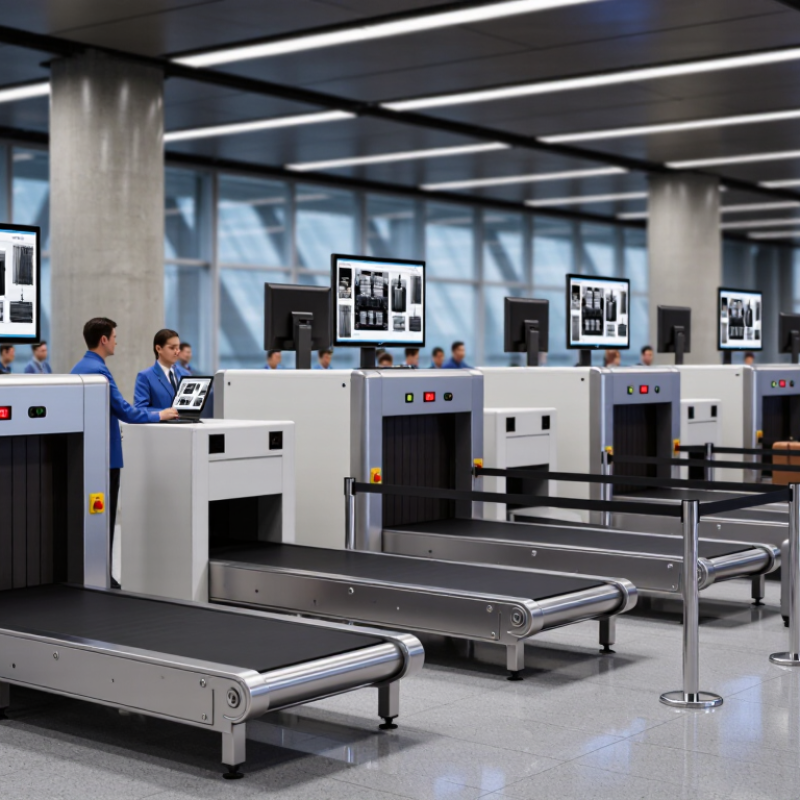
X-Ray Security Scanners: Imaging Principles, Dual-Energy Analysis, and Uses
An X-ray security scanner sends a controlled beam through a bag, parcel, or other object. Materials absorb different amounts of energy. A detector measures what passes through, and software converts those readings into an image. Dense or thick areas often appear darker, though shape and overlap can complicate interpretation.
That detail matters.
Dual-energy systems compare how materials respond to two energy levels. Their software uses the difference to group materials by broad properties, such as likely organic or inorganic composition. Color overlays make these patterns easier to review, but they do not identify a substance with certainty. They are visual clues, not proof. The image can still be ambiguous.
These scanners support routine screening at transport hubs, workplaces, and logistics facilities. A trained operator may adjust the view, zoom in, or compare angles when objects overlap. Good image quality depends on equipment settings, maintenance, and operator judgment. Even then, technology has limits. A neat screen image can create too much confidence, so procedures should leave room for careful review and appropriate follow-up.
Product Types and Benchmarks: 0.1–0.2 mm Wire Resolution and Steel Penetration
For buyers comparing China’s top ten X-ray security scanner manufacturers, wire resolution and steel penetration deserve separate checks. A 0.1 mm wire result indicates finer detail than 0.2 mm, but only under the stated test conditions. Ask for the test object, conveyor speed, image-processing settings, and repeatability data. Tiny numbers can look impressive. They may not describe daily performance. ASTM F792-17, Standard Practice for Evaluating the Imaging Performance of Security X-Ray Systems, provides methods for assessing image quality; it is a testing reference, not a universal pass mark.
Steel penetration should be reported as the steel thickness through which a defined image-quality target remains visible, not as an isolated maximum. Compare scanners using the same steel step wedge, target, operating mode, and acceptance rule. For example, a 30 mm claim cannot be fairly ranked against a 40 mm claim if one test uses stronger image enhancement. Request dated test reports and sample images. Check performance across the conveyor width, too. Specifications often omit this detail. That is a real weakness. Record both nominal resolution, such as 0.1–0.2 mm, and verified penetration, then repeat acceptance tests after installation. No single figure tells the whole story.
China’s Standards Landscape: GB 15208 Series and Radiation-Safety Requirements
China’s GB 15208 series provides technical requirements and test methods for X-ray security inspection systems. Its relevant parts depend on the equipment category, so buyers should check the applicable edition and scope before comparing products. A manufacturer’s claim of compliance is useful, but it should be supported by current test documentation from a qualified laboratory.
Radiation safety deserves equal attention. Ask for measured radiation levels around the inspection tunnel, including near the lead-rubber curtains where bags enter and exit. Check that warning lights, protective shielding, and safety interlocks work as intended. Small details matter. A curtain that is worn or displaced can undermine safe operation, even when the scanner passed an earlier test.
At installation, record the unit’s serial details, test results, and maintenance schedule. Staff should know how to stop the conveyor and report damaged shielding. Keep the area clear, and arrange periodic checks under the applicable Chinese requirements and site procedures. Paper compliance is not enough. In practice, records can be incomplete, and responsibilities may be unclear; confirm them with the supplier, testing body, and site safety lead before commissioning.
China Top 10 X-Ray Security Scanner Manufacturers — China’s Standards Landscape: GB 15208 Series and Radiation-Safety Requirements
Annual effective-dose limits under China’s basic radiation-protection standard, GB 18871-2002.
The occupational limit is 20 mSv per year averaged over five consecutive years, with a maximum of 50 mSv in any single year. The public limit is 1 mSv in a year. These are dose limits, not scanner emission measurements; X-ray security equipment should be assessed against the applicable GB 15208 requirements and relevant radiation-safety rules.
Profiles of 10 China-Based Manufacturers: Products, Certifications, and Markets
China-based X-ray security scanner manufacturers serve airports, rail stations, logistics hubs, and public venues. A useful profile of each company should identify its product range, manufacturing experience, certifications, and export markets. MarketsandMarkets estimated the global security-screening market at about US$9.2 billion in 2023, projecting growth to US$13.1 billion by 2028. The forecast points to expanding demand, but it does not prove that every supplier offers the same performance.
Product details matter. Profiles can compare conveyor-belt scanners by tunnel size, image resolution, dual-energy imaging, and throughput. They should also distinguish baggage systems from equipment designed for parcels or larger cargo. Look for documented quality-management systems, such as ISO 9001, alongside applicable electrical and radiation-safety test records. Certification scope varies. A certificate alone does not confirm that a scanner suits a specific site or operating schedule.
Market experience deserves equal attention. Some manufacturers focus on domestic transport projects; others report exports across Asia, the Middle East, Africa, or Europe. Buyers should check installation references, operator training, spare-parts access, and local service arrangements. These details can be harder to compare than brochure specifications. Ten company profiles are most useful when they separate verified evidence from sales claims and note where public information remains incomplete.
Compare Manufacturers by Tunnel Size, Throughput, Image Quality, and Service
A useful comparison starts with tunnel size, not a headline throughput figure. Measure the largest routine bag, plus space for awkward shapes, then check whether the tunnel fits the existing conveyor layout. TSA reported screening more than 858 million travelers in 2023, a reminder that small delays can compound during busy periods. Busy hours matter.
Ask each manufacturer for throughput under the same test conditions, including bag spacing and operator workload. A bags-per-hour rating can look impressive while hiding slower real-world performance. Image quality also needs practical testing: inspect fine detail, overlapping items, and consistency across different operators. The European Civil Aviation Conference’s Common Evaluation Process assesses aviation security equipment against defined performance requirements; request current independent test documentation rather than relying on brochure claims.
Service deserves equal scrutiny. Compare response-time commitments, local technician coverage, spare-parts availability, software updates, and training for shift teams. IATA reported global passenger demand grew 10.4% in 2024, increasing pressure on screening operations. Still, higher demand does not automatically mean a larger scanner is best. One weak point in many comparisons is treating laboratory results as airport results. Ask for a site reference with similar baggage mix, and verify the figures directly.