Who Is the Top China Bulk Oil Storage Tanks Manufacturer?
Who Is the Top China Bulk Oil Storage Tanks Manufacturer?
Choosing the leading China Bulk Oil Storage Tanks Manufacturer requires more than comparing prices or viewing polished factory photographs. A dependable supplier should demonstrate practical engineering experience, stable steel quality, accurate welding, and disciplined inspection records. Tank capacity matters. So does the operating environment.
Dr. John D. McCloy, a storage-tank engineering consultant, says, “Quality is not visible in a product photograph; it appears in design control, weld inspection, and years of service.” This observation offers a useful starting point for evaluating manufacturers. Buyers should examine material certificates, welding procedures, dimensional reports, coating systems, and pressure or leak-test records. Clear documentation builds confidence.
The strongest manufacturers can explain how their tanks handle temperature changes, internal pressure, foundation movement, and long-term corrosion risks. They should also support installation, maintenance planning, replacement parts, and technical communication after delivery. Small details matter. No manufacturer is perfect.
A supplier may offer competitive pricing but limited after-sales support. Another may provide excellent engineering but miss a project deadline. These weaknesses deserve honest attention. The best choice depends on the buyer’s product, volume, site conditions, safety requirements, and expected service life.
This article compares leading manufacturers through practical criteria rather than advertising claims. It considers production capability, customization, quality management, export experience, technical support, and customer feedback. The final answer may not be the cheapest option. It should be the supplier that delivers measurable reliability, transparent communication, and suitable tank performance over time.
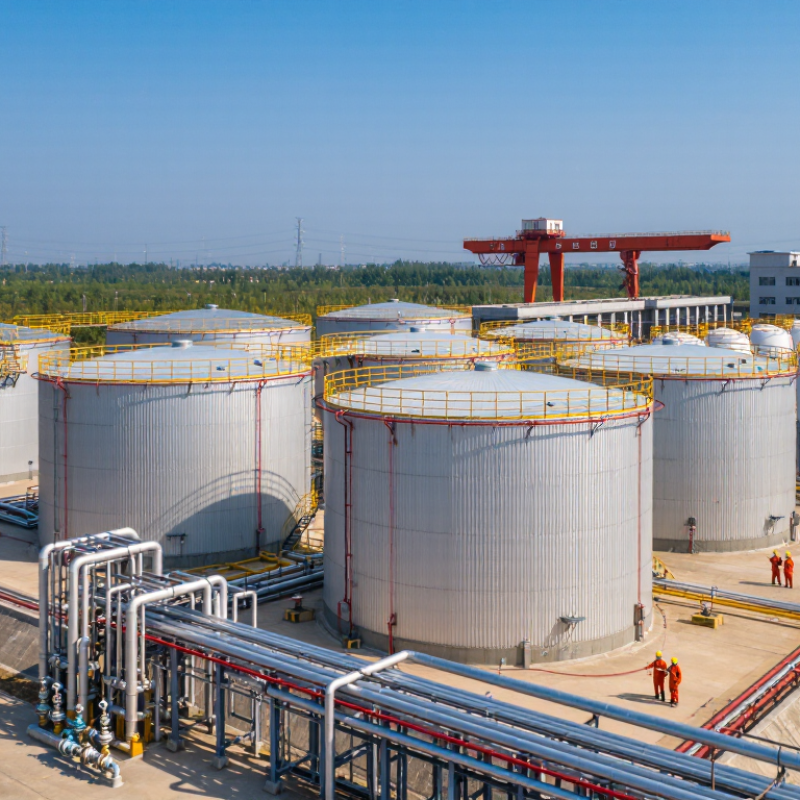
What Are Bulk Oil Storage Tanks? Types, Uses, and 100,000 m³ Capacities
Bulk oil storage tanks are engineered vessels for holding crude oil, refined fuels, lubricants, and other approved petroleum products. They support refineries, terminals, power facilities, and distribution depots. Their design depends on product properties, site conditions, and operating temperature.
Common types include fixed-roof tanks, floating-roof tanks, and horizontal cylindrical tanks. Fixed roofs suit products with lower evaporation risk. Floating roofs reduce vapor space above volatile liquids. Horizontal tanks often serve smaller storage volumes or day-to-day plant operations. Each tank requires suitable steel, corrosion protection, vents, gauges, secondary containment, and emergency drainage.
A 100,000 m³ tank is a major infrastructure project. It may measure more than 80 meters across, depending on its height and design limits. Such capacity demands careful foundation testing, settlement monitoring, wind analysis, and controlled welding procedures. Inspection teams normally check shell plates, roof structures, welds, valves, and leak detection systems. Small construction errors can become expensive problems.
Capacity alone does not prove quality. A tank should match the stored liquid, local climate, loading schedule, and maintenance plan. In practice, project teams sometimes focus too heavily on volume. That assumption is risky. Access, fire separation, inspection space, and future repairs also shape the final design. The best manufacturer demonstrates documented engineering controls, traceable materials, experienced fabrication, and clear commissioning records. Some plans still underestimate drainage. That detail deserves another review.
Which Chinese Manufacturers Meet API 650 and GB 50341 Tank Standards?
China’s strongest bulk oil tank manufacturers should be judged by documented compliance, not factory size or export claims. API 650 governs aboveground, vertical, welded steel tanks, while GB 50341-2014 addresses the design of vertical cylindrical welded steel tanks in China. These standards overlap, but they are not identical. A capable manufacturer should provide a clause-by-clause compliance matrix, approved drawings, material certificates, welding procedures, welder qualifications, and complete nondestructive testing records.
Market demand supports careful supplier screening. The International Energy Agency’s Oil 2024 report projected global oil demand growth of about 1 million barrels per day in 2024. China remains one of the largest petroleum consumers, increasing pressure on storage capacity and project schedules. However, API 650 is not simply a permanent “manufacturer certificate.” Compliance depends on the tank’s design basis, materials, fabrication controls, inspection, and site conditions. That distinction is often missed.
For Chinese suppliers, buyers should verify design calculations against both API 650 and GB 50341, including shell thickness, wind stability, seismic loads, annular plates, roof structure, and settlement tolerances. Factory audits should examine welding traceability and hydrostatic test procedures. Independent inspection is valuable. It may reveal weak documentation, even when workmanship looks clean. Some suppliers present impressive references, but incomplete records remain a serious concern. A reliable choice is the manufacturer that can prove each requirement with controlled documents, inspection evidence, and practical field experience.
What Safety Data Matter? API 653 Inspections Every 5 Years or Less
A reliable bulk oil storage tank manufacturer must support inspection-ready design, not only steel thickness and capacity. API 653 requires periodic tank evaluation by qualified inspectors. External inspections commonly occur at intervals of five years or less, depending on risk, corrosion rates, service history, and local requirements. Internal inspection intervals may extend further, but only when documented engineering analysis supports them.
Safety data matters more than marketing claims. Inspection files should include shell-thickness readings, settlement surveys, roof condition, weld findings, leak history, and coating performance. API 653 and API 580 risk-based inspection guidance connect inspection timing with probability and consequence of failure. A 2023 industry corrosion report from the European Federation of Corrosion also identified corrosion management and reliable inspection records as major controls for extending asset life. Numbers alone can mislead. A single thin spot may matter more than a high average thickness.
Tips: Request the last API 653 report, not a sales brochure. Check the minimum measured thickness, corrosion-rate calculation, and repair history. Confirm whether ultrasonic readings used a clear grid and calibrated equipment. Ask for settlement data after filling the tank. Small settlement changes can affect nozzles, seals, and floating roofs. Five years is not automatically safe. A tank exposed to water bottoms, contaminants, or severe weather may need shorter intervals. My practical concern is simple: many operators collect data, but fail to compare it consistently. That gap deserves correction.
Bulk Oil Storage Tank Safety Benchmarks
API 653-based inspection planning focuses on tank condition, corrosion rate, remaining life, and risk. External inspections are commonly scheduled at intervals of five years or less, while internal inspection intervals must be determined from engineering assessments and applicable API 653 requirements.
Who Leads China’s Market After Comparing Verified Projects and Certifications?
Who Is the Top China Bulk Oil Storage Tanks Manufacturer?
The market leader should be judged by verified projects, not polished brochures. A credible manufacturer can provide client references, delivery records, and site photographs with traceable dates. Its tanks should match documented capacities, materials, coating systems, and operating conditions.
Certifications matter, but only when checked carefully. Look for a valid quality management certificate, welding qualifications, material traceability, and compliance with recognized tank standards such as API 650, EN 14015, or applicable Chinese standards. Independent inspection records add stronger evidence. So does a clear factory audit.
Details reveal practical experience. Ask how the manufacturer controls plate thickness, weld inspection, roof alignment, and corrosion protection. Review drawings, inspection and test plans, hydrostatic test records, and packing methods. A reliable supplier explains these steps without hiding behind technical language. Good communication helps too.
Still, certification alone is not enough. A certificate may be current while a project team changes. My own comparison would remain cautious without speaking to recent customers. Delayed deliveries, weak documentation, or poor after-sales support can reduce the value of an otherwise impressive factory. The strongest candidate is the manufacturer whose verified projects and certifications remain consistent under independent review.