
China has become a major manufacturing base for Flue Gas Desulfurization Equipment used in power, steel, cement, and chemical plants. Its suppliers offer limestone-gypsum systems, seawater units, dry scrubbers, and compact modular designs. Choosing among them requires more than comparing catalog prices.
This guide examines leading Chinese manufacturers through practical and technical criteria. These include absorber design, corrosion-resistant materials, spray coverage, desulfurization efficiency, energy consumption, and wastewater control. It also considers engineering experience, factory capacity, quality systems, and after-sales support. A reliable supplier should provide process calculations, equipment drawings, testing records, and clear maintenance guidance. Site visits can reveal details that brochures often miss. Look for clean welding, organized assembly areas, traceable components, and realistic delivery plans.
Performance depends on the complete system.
A well-designed absorber may still fail when pumps, fans, or controls are poorly matched. Therefore, this overview does not treat “top manufacturer” as a permanent label. Project conditions change, and supplier strengths differ by application. Some companies excel in large utility projects, while others respond better to smaller industrial installations. Independent testing, reference checks, and contract review remain essential. These steps help buyers judge technical claims against operating evidence. The discussion also recognizes an uncomfortable point: published efficiency figures may not reflect long-term field performance. Careful verification matters. By combining engineering knowledge with documented project experience, readers can identify Chinese Flue Gas Desulfurization Equipment manufacturers that offer practical value, dependable support, and compliance-minded solutions.
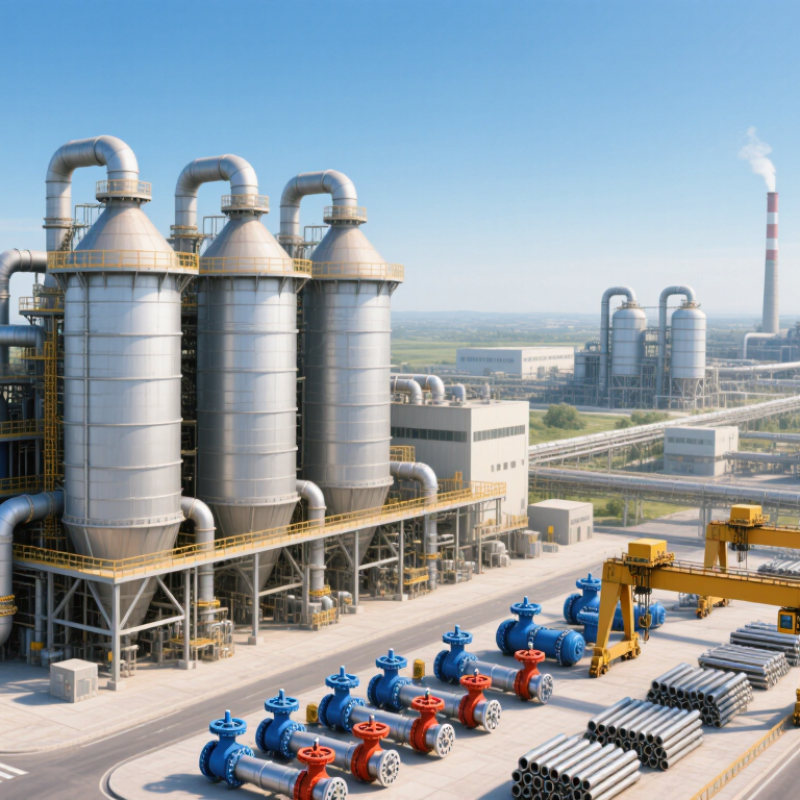
China’s flue gas desulfurization market is increasingly shaped by strict SO₂ control, especially the 35 mg/Nm³ benchmark used in ultra-low-emission projects. This figure is not a universal limit for every industry. Its application depends on the sector, fuel, boiler design, and local approval conditions. Coal-fired power plants commonly use wet limestone FGD because it handles large gas volumes and provides stable removal efficiency. Dry and semi-dry systems remain practical where water supply is limited.
Capacity is no longer judged only by absorber size. Engineers examine gas volume, sulfur content, operating hours, and future load changes. A system treating 2 million Nm³/h may need different spray layers, pumps, and mist eliminators than a smaller industrial unit. Limestone quality also matters. Poor reactivity can increase circulation demand and reduce control margins. Small details become expensive.
Field evaluations often find that maintenance decides long-term performance. Scaling, nozzle blockage, corrosion, and gypsum dewatering problems can quietly reduce availability. Continuous emission monitoring must match laboratory testing and operating records. Otherwise, a reported 35 mg/Nm³ result may look convincing but lack dependable evidence. Technology selection should therefore combine process data, pilot testing, and verified operating experience. No single FGD route fits every Chinese project. That assumption needs reconsideration.
Wet limestone flue gas desulfurization remains a proven route for controlling sulfur dioxide from coal-fired boilers. The U.S. EPA Air Pollution Control Cost Manual reports typical wet FGD removal efficiencies around 90–98%, depending on design and operating conditions. Properly engineered systems can exceed 95% SO₂ removal.
The process begins with limestone grinding and slurry preparation. Recirculation pumps then spray the slurry through an absorber tower. Sulfur dioxide reacts with calcium compounds inside the tower. Oxidation air converts the reaction products into gypsum. Key equipment includes spray headers, absorber vessels, mist eliminators, oxidation blowers, slurry pumps, dewatering units, and continuous emissions monitors.
Details matter. A small nozzle blockage can create uneven spray coverage. High chloride levels may accelerate corrosion. Poor pH control can increase limestone consumption and reduce removal efficiency. The European Commission’s Best Available Techniques reference document identifies absorber chemistry, liquid-to-gas ratio, and mist elimination as major performance factors.
Field operators often target stable outlet emissions, not short-term peak efficiency. That approach is sensible. A system achieving 97% removal during testing may perform worse during low-load operation or maintenance. Manufacturers should therefore provide verified operating data, material specifications, inspection access, and control logic. Independent performance testing remains essential, because impressive numbers on paper do not guarantee reliable plant operation.
China Top Flue Gas Desulfurization Equipment Manufacturers
Top Chinese FGD manufacturers serve coal-fired power plants, steel mills, cement plants, and waste-to-energy facilities. Their product lines commonly include limestone-gypsum scrubbers, spray towers, absorber vessels, slurry pumps, mist eliminators, and gypsum dewatering systems. Selection should match sulfur content, gas volume, outlet temperature, and local discharge requirements.
Plant scale varies widely. Some factories operate large welding halls with overhead cranes and automated cutting lines. Others rely on smaller workshops and outsourced fabrication. Buyers should inspect production records, pressure-vessel controls, coating quality, and spare-parts storage. A factory visit can reveal more than a polished brochure. Inspectors should also review corrosion testing and previous operating data.
EPC capability is a major difference among Chinese FGD manufacturers. Experienced contractors can complete process design, equipment fabrication, civil coordination, electrical integration, installation, commissioning, and operator training. They should provide mass-balance calculations, performance guarantees, instrument lists, and maintenance schedules. Clear responsibility matters when several subcontractors enter the site. Some proposals appear complete but exclude foundations, duct insulation, or start-up chemicals. That gap deserves attention. Independent testing remains necessary. Even reliable suppliers may underestimate gypsum handling problems or seasonal coal changes. A practical evaluation combines plant capacity, engineering depth, site experience, and transparent after-sales support.
Choosing FGD equipment from Chinese manufacturers requires more than catalog efficiency claims. In wet limestone systems, removal efficiency often reaches 95–99% under stable gas conditions. The Ca/S molar ratio deserves closer attention. A practical operating window is 1.03–1.07. Ratios near 1.03 can reduce limestone use. They also leave less room for poor mixing or changing sulfur loads. At 1.07, absorption is more forgiving, but reagent costs rise.
Energy comparison should include every major load, not only fan power. Spray towers consume power through slurry pumps, oxidation blowers, agitators, and mist eliminators. A compact tower may show lower pressure drop. Yet undersized pumps can weaken droplet coverage and reduce sulfur dioxide capture. Field checks should record inlet sulfur, gas volume, pH, slurry density, outlet SO2, and kWh per treated cubic meter. Small measurement errors matter. A 1% efficiency gain may demand disproportionate energy.
Experienced buyers should request performance data from tests using representative coal or process gas. Ask how the system behaves during startup, load swings, and nozzle fouling. Materials, pump redundancy, and limestone fineness affect reliability. In one comparison, the lowest calculated energy use seemed attractive. Operating data later showed frequent cleaning losses. That comparison was incomplete. Manufacturers should state assumptions clearly, including Ca/S control, liquid-to-gas ratio, and fan margin. The best equipment is not always the one with the highest advertised efficiency.
Choosing Chinese FGD suppliers requires more than comparing equipment prices. Compliance should be verified through design documents, emission guarantees, material certificates, and factory test records. Ask for measured sulfur dioxide removal rates, pressure-drop data, slurry density limits, and power consumption. These figures reveal more than polished presentations. Suppliers should also explain how their systems match local environmental requirements and recognized engineering standards.
Reliability depends on corrosion control and practical maintenance access. Inspect absorber lining details, pump materials, mist eliminator design, and spray-nozzle inspection methods. Request operating references from plants using similar coal quality and flue gas volumes. A supplier with clear failure records may be more trustworthy than one showing only perfect results. No project is risk-free. That matters.
Cost analysis should include shipping, installation, limestone use, water demand, electricity, spare parts, and downtime exposure. A low purchase price can hide expensive maintenance. Service capability deserves equal attention. Confirm commissioning staff, operator training, remote diagnostics, spare-part availability, and written response times. Review the proposed FAT and SAT procedures carefully. Some documents look complete but lack acceptance thresholds. Ask for revisions when assumptions remain vague. A reliable supplier will provide traceable data, realistic guarantees, and direct answers from qualified engineers.
| Evaluation Dimension | Data Metric | Reference Benchmark or Requirement | Recommended Verification Evidence | Weight | Priority |
|---|---|---|---|---|---|
| Regulatory Compliance | Applicable emission limit | Guaranteed outlet SO₂ concentration must comply with the project’s environmental impact assessment, operating permit, and applicable national, provincial, or municipal emission limits. There is no single universal limit for every Chinese power or industrial project. | Approved permit conditions, design-basis document, pollutant balance, and a written performance guarantee linked to operating conditions. | 12% | Critical |
| Regulatory Compliance | Standards and monitoring interface | Design should identify applicable Chinese standards for thermal power or industrial emission control, flue-gas sampling, continuous emission monitoring, electrical safety, pressure equipment, and environmental protection. | Standards register, compliance matrix, CEMS interface specification, calibration procedure, and inspection records. | 7% | High |
| Removal Performance | SO₂ removal efficiency | Wet limestone–gypsum systems commonly target approximately 95%–99% SO₂ removal, subject to inlet concentration, gas flow, liquid-to-gas ratio, limestone quality, oxidation conditions, and absorber design. | Process calculation, pilot or reference test data, guaranteed operating envelope, and acceptance-test method. | 12% | Critical |
| Process Selection | Technology suitability | Wet limestone–gypsum FGD is widely used for large continuous flue-gas streams; dry or semi-dry systems may be more suitable where water use, space, waste handling, or lower sulfur load is decisive. | Alternative-comparison report covering water balance, by-products, land requirement, maintenance, and lifecycle cost. | 7% | High |
| Reliability | System availability | A well-designed multi-train system may target annual availability of approximately 98% or higher, excluding planned outages and events outside the supplier’s control. | Availability calculation, redundancy philosophy, historical operating records, trip analysis, and planned-maintenance schedule. | 10% | Critical |
| Reliability | Redundancy and bypass philosophy | Critical pumps, fans, agitators, instruments, and control systems should be assessed for duty/standby capacity, isolation capability, safe bypass arrangement, and maintainability during operation. | Process flow diagrams, cause-and-effect matrix, equipment list, spare-capacity calculation, and failure-mode analysis. | 8% | High |
| Energy Efficiency | Auxiliary power demand | For large wet FGD systems, total auxiliary power demand is commonly evaluated in the approximate range of 0.8%–2.5% of host-plant gross generation, depending on gas flow, pressure drop, slurry circulation, oxidation air, and dewatering requirements. | Guaranteed power-consumption curve, motor schedule, fan pressure-drop calculation, and measured commissioning data. | 8% | High |
| Water and Materials | Water consumption and limestone quality | Water balance should include evaporation, purge, mist eliminator washing, gypsum moisture, and wastewater treatment. Limestone quality is often assessed using available CaCO₃ content, reactivity, particle size, and impurity levels. | Water-balance sheet, limestone laboratory analysis, slurry chemistry calculation, and wastewater discharge plan. | 7% | High |
| By-Product Quality | Gypsum utilization potential | Where gypsum is intended for sale or construction use, quality should be evaluated by purity, moisture, chloride content, particle characteristics, and consistency. Actual acceptance limits depend on the end user and local specifications. | Laboratory test results, dewatering design, product-quality guarantee, storage plan, and end-user acceptance criteria. | 5% | Medium |
| Capital Cost | Installed project cost | Budgetary cost must be normalized by flue-gas flow, sulfur load, gas temperature, absorber configuration, civil works, electrical scope, wastewater treatment, and taxes. A low equipment price may exclude major balance-of-plant items. | Itemized commercial offer, battery-limit definition, exclusions list, civil and electrical scope, taxes, logistics, and commissioning costs. | 8% | High |
| Lifecycle Cost | Operating and maintenance cost | Lifecycle analysis should include limestone, electricity, water, wastewater treatment, reagent handling, replacement parts, labor, inspection, waste disposal, and planned overhaul costs over at least a 10-year period. | 10-year total-cost-of-ownership model with declared assumptions, sensitivity analysis, and consumables price basis. | 8% | High |
| Delivery Capability | Schedule and project controls | Typical evaluation milestones include basic design, detailed engineering, equipment manufacture, factory inspection, shipment, installation support, commissioning, and performance testing. The schedule should include procurement lead times for fans, pumps, absorbers, and control equipment. | Integrated project schedule, quality plan, manufacturing progress reports, inspection and test plan, and delay-management provisions. | 5% | Medium |
| Quality Assurance | Manufacturing and inspection controls | Supplier quality systems should cover welding procedures, non-destructive examination, corrosion-resistant materials, coating systems, dimensional inspection, electrical testing, and traceability of pressure-bearing or rotating components. | Quality manual, ISO certificates where applicable, welding qualifications, inspection records, material certificates, and factory acceptance test reports. | 6% | High |
| Service Capability | Warranty, response, and spare parts | Commercial terms should define warranty duration, defect-response time, remote support, on-site service, recommended critical spares, software support, and availability of replacement parts throughout the expected service life. | Warranty certificate, service-level agreement, spare-parts list, response-time commitment, service organization chart, and support references. | 5% | High |
| Safety and Environment | Risk control and maintainability | Design should address slurry leakage, corrosion, confined spaces, rotating equipment, chemical exposure, electrical isolation, wastewater handling, access platforms, drainage, and safe maintenance procedures. | HAZOP or risk-assessment report, safety design review, corrosion-control plan, access drawings, emergency procedures, and training materials. | 5% | Critical |
By continuing to use the site, you agree to the use of cookies. more information
The cookie settings on this website are set to "allow cookies" to give you the best browsing experience possible. If you continue to use this website without changing your cookie settings or you click "Accept" below then you are consenting to this.