
A welding positioner can make a difficult weld feel almost routine. A drum turns steadily beneath the torch. A pipe joint rolls into reach, reducing awkward pauses and helping operators maintain a consistent working angle. For buyers comparing China’s top manufacturers and suppliers, the real question is not simply who offers the lowest price. It is whether the machine suits the workpiece, process, and production rhythm on the shop floor.
Welding Positioners range from compact manual tables to programmable, heavy-duty systems. Capacity matters, but so do rotation speed, tilt range, chuck design, controls, and access to service parts. Ask suppliers for load-rating details, test procedures, and references for similar applications. A polished product page is not proof of reliable performance. No catalogue tells the whole story.
Welding metallurgy expert John C. Lippold is known for research on weld quality and process behavior. A practical editorial takeaway, consistent with that field of work, is: “Stable welding conditions begin with control of the joint, the process, and the workpiece.” This is a summary, not a direct quotation. It points to a useful purchasing principle: a positioner should support repeatable setup, not merely rotate a part. Check how the unit behaves under load, how smoothly it starts and stops, and whether operators can reach the controls safely. Details matter. A small mismatch in capacity or fixture design can create daily friction. Supplier selection deserves the same care as machine selection.
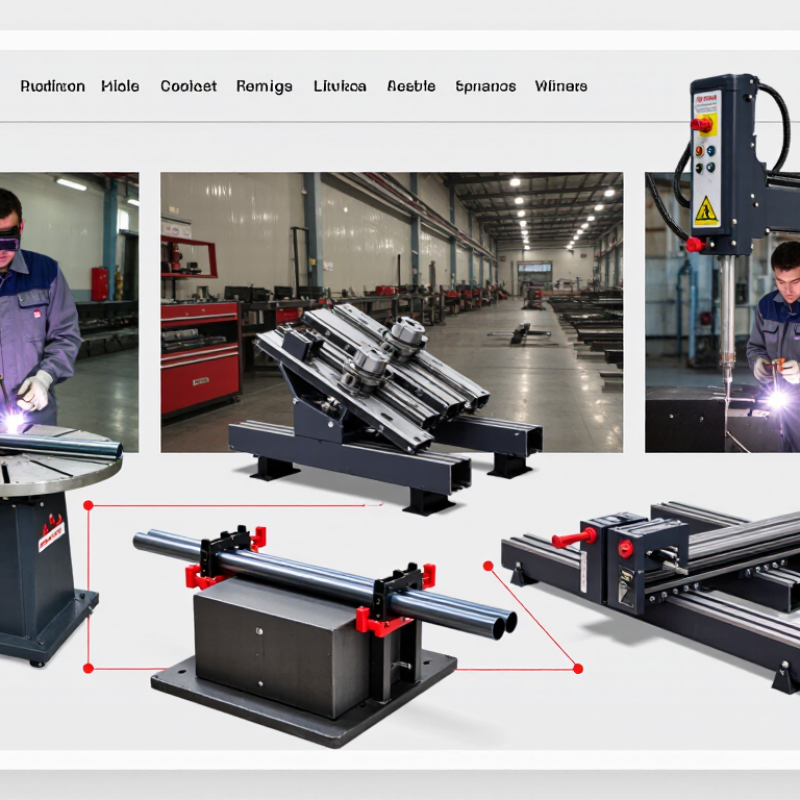
A welding positioner supports a workpiece and turns or tilts it during fabrication. A typical unit has a rotating table, adjustable controls, and fixtures that secure the part. This movement brings joints into a more comfortable welding position. The welder can maintain a steadier torch angle and travel path. Small details matter.
On a shop floor, that might mean turning a steel frame so a long seam faces upward instead of reaching beneath it. Positioners can reduce awkward handling and help operators access joints around large or irregular components. They do not automatically improve every weld. Fit-up, settings, material condition, and operator skill still matter.
Choose a positioner based on the workpiece’s weight, dimensions, and center of gravity. Include the fixture’s weight when checking the rated capacity, and consider how far the load sits from the table’s center. In practice, this calculation is sometimes rushed; it deserves a careful second look. Rotation speed, tilt range, and control access also affect daily use. A suitable setup can make repeated fabrication tasks more manageable, but poor fixturing may still allow a part to shift.
China’s welding positioner industry supports fabrication in sectors such as machinery, steel structures, and pressure vessels. Its growth sits within a wider automation trend. The International Federation of Robotics reported 276,288 industrial robots installed in China in 2023, about 51% of global installations. That figure signals strong automation activity, but it does not measure positioner sales. That distinction matters.
Common positioners include rotary tables, which turn smaller workpieces around one axis, and two-axis models, which rotate and tilt parts for improved weld access. Head-and-tailstock units support long components, while floor-mounted turning rolls handle large cylindrical work. Selection depends on load capacity, center of gravity, rotation speed, and the space available for fixtures. A mismatched rating can cause unstable movement. It’s a practical detail, often overlooked.
Chinese suppliers offer manual, powered, and programmable configurations. Buyers should check rated load at the actual workpiece offset, not just the headline capacity. Ask for repeatability data, wiring diagrams, and a witnessed load test where practical. Product descriptions do not always make duty cycle or mounting limits clear. That gap deserves careful review.
China Top Welding Positioner Manufacturers and Suppliers
Profiles of Leading Chinese Welding Positioner Manufacturers
Chinese welding-positioner manufacturers generally serve three needs: standard tilt-and-rotate tables, heavy-duty head-and-tailstock systems, and customized robotic cells. Their product profiles often differ in payload range, rotation control, fixture design, and integration support. For buyers, a useful comparison starts with the actual workpiece, not the largest capacity printed in a catalogue. A long, off-center pipe can stress a positioner differently from a compact, balanced assembly.
Automation is expanding the market around these suppliers. The International Federation of Robotics’ World Robotics 2024 report recorded 276,288 industrial robot installations in China in 2023, about 51% of global installations. This figure covers industrial robots, not welding positioners, so it signals a broader automation environment rather than direct positioner sales. Details matter. When reviewing a supplier, request rated payload at the specified center of gravity, repeatability data, rotation-speed limits, and examples of comparable fixtures. Ask how spare parts and control-system support are handled after delivery. A weak point in many comparisons is treating nominal payload as a complete performance measure; it is not. Shop-floor fit can still disappoint when cable routing, torch clearance, or operator access is overlooked.
Representative welding positioner specifications commonly include a 360° rotating table and a tilt range of up to 135°. Actual travel varies by model and manufacturer.
Values are representative specification examples, not market averages or a comparison of individual suppliers.
When evaluating welding positioner suppliers in China, look beyond catalog capacity. Ask how the rated load changes when a workpiece sits off-center. A 500-kilogram fixture can behave differently from a balanced test load. Request drawings, operating limits, and a clear explanation of the supplier’s sizing assumptions. Numbers matter.
Quality checks should cover more than a finished machine. Ask for inspection records for welds, bearings, wiring, and safety-related controls. If possible, observe a load test and watch for vibration, uneven rotation, or awkward control response. Check how the supplier handles nonconforming parts and documents changes between orders. A polished brochure can still leave gaps.
Technical capability shows in the questions a supplier asks about your process. Share workpiece dimensions, center of gravity, welding method, duty cycle, and required tilt range. A capable team should explain motor and gearbox choices, positioning accuracy, and maintenance access in practical terms. Ask for a sample test plan before production, then confirm who approves each result. Test it. One detail is easy to overlook: operator feedback after a full shift. It may reveal a control layout or cable route that looked fine on paper but proves awkward in daily use. Don’t treat every answer as complete; request evidence, and note what remains uncertain.
China’s welding positioner manufacturers and suppliers support work in pressure-vessel shops, steel fabrication, and pipe production. A positioner can rotate a heavy workpiece into a more comfortable welding angle, helping operators reach seams with fewer awkward movements. Capacity is only part of the choice. Check the workpiece’s center of gravity, rotation range, table size, and required tilt before requesting a quotation. A unit that looks suitable on paper may feel unstable with an uneven load.
Tips: Send a simple drawing and photos of typical parts. Include their weight, dimensions, and welding sequence. Ask how the supplier verifies load capacity and what maintenance access looks like. Small details matter.
Customization may involve fixtures, control modes, rotation speed, or integration with existing equipment. Be specific about power supply and workshop space; a custom design can add cost and lead time. For international sourcing, request clear specifications, inspection records, spare-parts details, and packaging dimensions. Confirm who handles installation guidance and technical support after delivery. Compare quotations line by line, not just by price. I would also leave room for questions: requirements often change once operators test the setup, and that is easy to underestimate.
| Equipment or sourcing area | Typical configuration | Common applications | Customization to discuss | International sourcing checks |
|---|---|---|---|---|
| Manual tilting positioner | A worktable that rotates and tilts, with manual adjustment or powered rotation and manual tilt. | Small and medium fabrication jobs, repair work, and weldments that need repositioning between passes. | Table diameter, rated load, tilt range, rotation speed, mounting holes, and foot-pedal controls. | Request the rated load and center-of-gravity limits, electrical requirements, operating manual, and spare-parts list. |
| Powered tilting positioner | Powered table rotation and powered tilt, typically controlled by pendant or foot switch. | Repeated production welding where operators need to bring joints into a more accessible position. | Rotation and tilt speed, control layout, positioning range, cable routing, and compatibility with fixtures. | Confirm supply voltage and frequency, control-circuit details, emergency-stop arrangement, and whether the unit is supplied with a fixture. |
| Headstock-and-tailstock positioner | A workpiece is held between a driven headstock and a supporting tailstock; the distance between supports can often be adjusted. | Long shafts, frames, pipes, and other elongated workpieces requiring rotation around a horizontal axis. | Support spacing, center height, chuck or faceplate, tailstock travel, rotation control, and workpiece-support method. | Share a dimensioned workpiece drawing and its mass distribution; verify allowable load, runout expectations, and transport dimensions. |
| Pipe welding positioner | A rotating chuck or roller-based setup designed to turn pipe or cylindrical sections for welding. | Pipe joints, cylindrical assemblies, and circumferential welds in fabrication and maintenance settings. | Pipe diameter range, chuck or roller selection, rotation speed, support stands, and synchronization with a welding process. | Check clamping range, load at the actual workpiece diameter, rotation stability, and whether accessories are included in the quotation. |
| Automated or programmable positioner | A motorized unit with programmable motion or an interface for coordinated operation with a welding system or robot. | Repeat production, robotic welding cells, and jobs requiring consistent workpiece orientation. | Motion axes, controller, repeatable positioning needs, communication interface, safety interlocks, and cell layout. | Agree on interface responsibilities, software and documentation, factory acceptance tests, installation support, and commissioning scope. |
| Capacity and workpiece fit | Selection should account for load, center of gravity, overhang, table size, and the position of the workpiece during tilt. | All applications, especially irregular, tall, or off-center assemblies. | Provide the maximum workpiece mass, dimensions, center of gravity, fixture mass, and required rotation or tilt range. | Ask for the load-rating conditions and a written confirmation that the proposed unit suits the complete workpiece-and-fixture assembly. |
| Electrical and control customization | Drive motors, control panel, pendant, foot switch, and safety devices configured for the intended installation. | Workshops and production lines operating under different site power and control requirements. | Local supply voltage and frequency, control language, cable length, control method, and required interface signals. | Specify the destination country and site supply before ordering; request wiring diagrams and applicable conformity documentation. |
| Safety and conformity | Risk controls may include emergency stops, guarding where needed, safe controls, and documented electrical design. | Every installation, with specific requirements depending on machine design, use, and destination market. | Clarify operator access, pinch points, integration with other equipment, and site-specific safety requirements. | Confirm which standards and conformity documents apply to the complete machine and intended market; do not rely on a logo alone. |
| Inspection and acceptance | Pre-shipment checks can cover dimensions, rotation and tilt functions, controls, load-related documentation, and supplied accessories. | Custom-built equipment and orders where fit, function, or integration matters. | Define inspection points, test procedure, acceptance criteria, documentation, and any customer witness requirements. | Put acceptance criteria in the purchase order and agree how defects, corrective action, and final release will be handled. |
| Shipping and after-sales support | Export packing, transport arrangements, installation guidance, warranty terms, and replacement parts are typically agreed during procurement. | Cross-border purchases requiring delivery to a factory, distributor, or project site. | Packing method, lifting points, documentation language, remote support, training, and recommended spare parts. | Clarify Incoterms, freight and insurance responsibilities, customs paperwork, delivery scope, warranty coverage, and service response arrangements. |
Note: Configuration and suitability depend on the workpiece, fixture, duty cycle, installation, and destination-market requirements. Confirm final specifications with the equipment supplier before purchase.
By continuing to use the site, you agree to the use of cookies. more information
The cookie settings on this website are set to "allow cookies" to give you the best browsing experience possible. If you continue to use this website without changing your cookie settings or you click "Accept" below then you are consenting to this.