Top 10 Fast EV Chargers for Global Buyers in 2026?
As the electric vehicle (EV) market rapidly expands, the need for efficient charging options becomes critical. Fast Ev Chargers play a vital role in enhancing the driving experience and reducing downtime. By 2026, we expect a plethora of fast EV charger models to enter the global market, each offering unique features and benefits.
Choosing the right fast EV charger can be overwhelming. Different regions have varying requirements and preferences. Some chargers provide ultra-fast charging speeds, while others focus on affordability and accessibility. It's essential to evaluate each option's specific advantages and disadvantages.
In this context, understanding the leading fast EV charger models will empower consumers to make informed decisions. We will explore ten top contenders for global buyers in 2026. These chargers not only promise efficiency but also showcase advancements in technology. However, challenges such as compatibility and infrastructure development remain. This analysis aims to clarify the current landscape and highlight areas for improvement in the charging ecosystem.
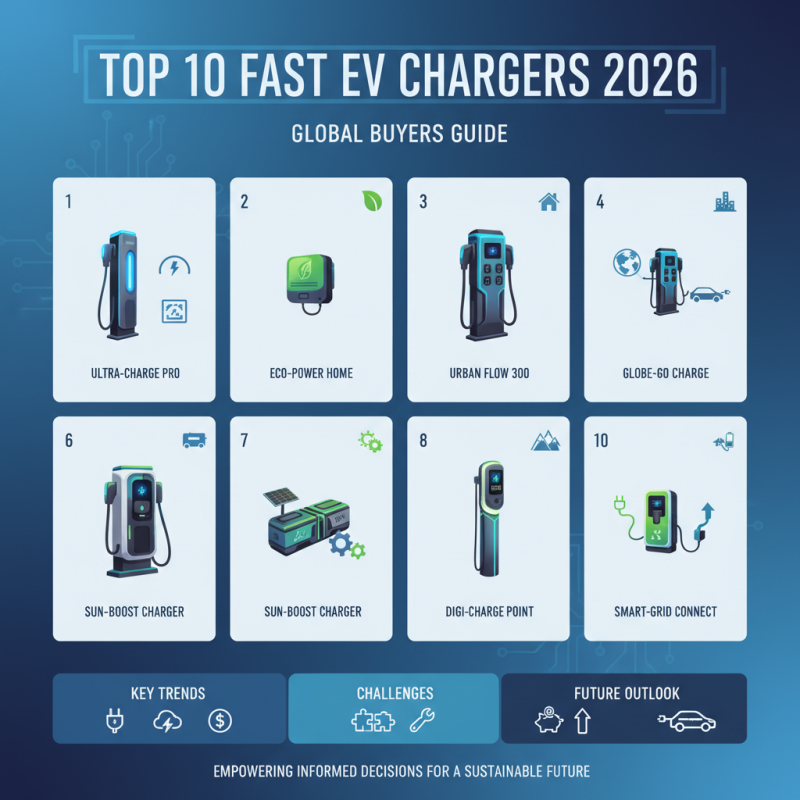
Overview of Electric Vehicle Charging Technologies in 2026
As electric vehicle (EV) technology evolves, the charging landscape significantly changes. By 2026, fast EV chargers will play a crucial role in enhancing the user experience. Reports indicate that the global market for EV charging infrastructure is projected to reach $40 billion by 2026. This growth reflects rising demand for efficient charging solutions.
Various charging technologies are gaining traction. DC fast chargers can deliver a substantial charge in just 30 minutes. These are vital for long-distance travel, allowing drivers to recharge quickly. Industry experts report that 80% of EV owners rely on public fast charging for longer trips. However, some regions still face infrastructure challenges. Not all locations have the same access to high-speed chargers. This uneven availability can affect EV adoption rates.
In addition, wireless charging technology is emerging. It offers convenience but is still developing. Current efficiency rates are yet to reach parity with traditional methods. The slow rollout of this technology highlights the need for continued innovation. Investing in advanced charging strategies will be essential to meet future demand. Maintaining reliable access to fast charging will enhance consumer confidence in EVs. This is crucial as we move toward widespread electric mobility.
Top 10 Fast EV Chargers Analysis in 2026
Criteria for Evaluating Fast EV Chargers
When evaluating fast EV chargers, several criteria come into play. Speed is a primary factor. The best chargers should provide significant power within a short time frame. This means assessing the kilowatt output, which impacts charging time significantly. Users often seek a balance between speed and the time spent at charging stations.
Another important aspect is compatibility. A charger must support a wide range of electric vehicles for broad appeal. This includes different plug types and protocols, ensuring users of various brands can access charging services without hassle. However, not all chargers achieve this level of versatility.
Reliability is also crucial. A charger should operate consistently and be easily maintained. Frequent downtime or technical issues can frustrate users. It's worth noting that some chargers struggle with reliability due to poor design or material choices. Evaluating customer reviews can provide insights into a charger’s long-term performance. Ultimately, while many chargers boast cutting-edge technology, their real-world effectiveness often reveals areas for improvement.
Top Fast EV Chargers: Features and Specifications
As electric vehicles (EVs) gain popularity, the need for efficient charging solutions becomes critical. Fast EV chargers are essential for enabling quick recharges, especially for long-distance travel. Upcoming models in 2026 focus on various charging speeds, ranging from 150 kW to over 350 kW, allowing users to replenish their EV batteries in as little as 30 minutes. These chargers typically support multiple connector types, ensuring compatibility with different EV brands.
Safety features play a crucial role in charger design. Overcurrent protection, temperature monitoring, and emergency shut-off mechanisms are some of the key specifications. Moreover, advancements in user interface design enhance the charging experience. Many chargers will feature large screens, offering real-time data on charging status and estimated completion times.
However, challenges remain in accessibility and installation. Urban areas might struggle to keep pace with the growing demand for charging stations. Inadequate infrastructure could lead to long waiting times. Future fast EV chargers must be easy to install and maintain to overcome these barriers. The development of smart grid technology will further enhance efficiency but requires careful consideration of energy sources and sustainability.
Market Analysis of Global Fast EV Charger Suppliers
In the rapidly evolving electric vehicle (EV) market, the demand for fast chargers is surging. A recent market analysis reveals that global fast EV charger sales are expected to exceed 1 million units by 2026, reflecting a compound annual growth rate (CAGR) of over 30%. This trend highlights the increasing reliance on robust charging infrastructure as more consumers shift towards electric mobility.
The supply chain for fast EV chargers is diverse, with various manufacturers emerging from different regions. Research indicates that North America and Europe dominate the market share, contributing nearly 70% of global sales in 2025. The expansion is driven by government incentives and rising consumer awareness regarding sustainability. However, challenges remain. The market is saturated with options, leading to fierce competition among suppliers. Many brands struggle with maintaining product quality and ensuring compatibility with multiple EV models.
Furthermore, while technological advancements have led to higher charging speeds, there are gaps in accessibility. Many developing regions lack sufficient fast charging stations. Industry experts suggest that addressing this disparity is critical for widespread EV adoption. Continuous investment in charging infrastructure is necessary. As stakeholders navigate these complexities, insights from current market trends will guide the way forward, creating opportunities for improvement.
Future Trends in Fast EV Charging Solutions
The future of fast EV charging solutions is rapidly evolving. According to a recent industry report by the International Energy Agency, the number of EV chargers worldwide is projected to exceed 10 million by 2026. This trend highlights a crucial shift towards sustainable energy. Fast EV chargers will play a vital role in this transition, allowing electric vehicles to recharge swiftly, improving the overall experience for users.
Emerging technologies are driving innovation in fast charging. Solid-state batteries, which promise shorter charge times and longer lifespans, are gaining traction. The global battery market is expected to reach $100 billion by 2027, furthering the push for efficient charging solutions. As adoption increases, fast chargers will need to meet diverse consumer needs. Accessibility and compatibility are essential factors for success.
However, challenges remain. Infrastructure development must keep pace with EV growth. Many regions still lack sufficient charging stations. This gap could hinder widespread adoption. A focused strategy must be implemented to address these obstacles. It will require collaboration among governments, businesses, and consumers. Balancing speed, cost, and environmental impact will be key to achieving a sustainable future in EV charging.