
Blog

China Top Home Audio Intercom System Suppliers?

China has become a major sourcing base for residential communication equipment. Its manufacturers offer indoor stations, door units, amplifiers, microphones, and network controls. However, finding reliable Home Audio Intercom System suppliers requires more than comparing online prices.

Dr. Floyd Toole, a respected loudspeaker researcher, stated, “The goal of sound reproduction is to reproduce the original sound.” This principle matters in intercom design. Clear speech should remain understandable beside a kitchen fan or a busy entrance. A strong supplier should explain microphone sensitivity, speaker output, echo control, wiring options, and system compatibility. Factory experience also matters. Ask for production photographs, sample testing records, and evidence of quality management. A polished catalog is not proof.

This guide reviews China’s leading Home Audio Intercom System suppliers through practical purchasing criteria. These criteria include product performance, customization ability, communication quality, after-sales support, and export experience. It also considers whether suppliers can provide stable samples before larger orders. Compliance documents should be checked carefully for the target market. Certifications may vary by product and destination. A supplier may appear impressive but respond slowly after payment. That warning deserves attention. I may still overlook smaller regional manufacturers, because supplier rankings change with technology, capacity, and service quality. Therefore, buyers should verify current factory conditions independently. The best choice is not always the cheapest quotation. It is the supplier that delivers consistent audio, clear documentation, responsive support, and dependable production over time.
China Top Home Audio Intercom System Suppliers?

What Is a Home Audio Intercom System?

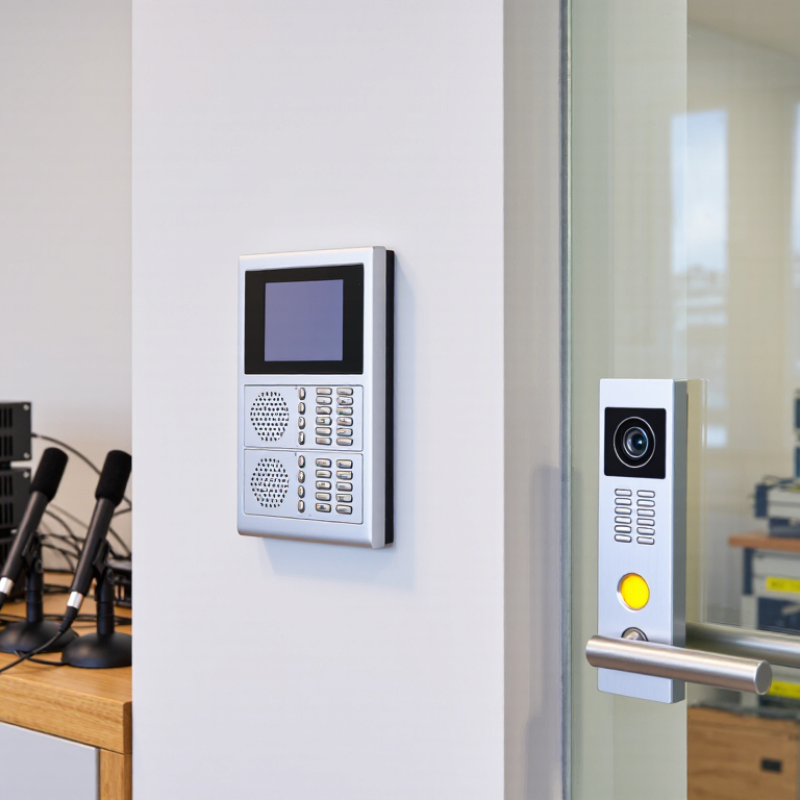
A home audio intercom system is a wired or wireless communication network for rooms within one residence. It lets household members speak without shouting across hallways. A typical system includes indoor stations, microphones, speakers, control buttons, and a central connection unit. Some models support hands-free calling, room monitoring, door communication, and whole-home announcements.

In practical use, clear audio matters more than impressive specifications. Echo cancellation helps voices remain understandable in kitchens, bedrooms, and noisy utility areas. A reliable system should offer stable connections, simple controls, and secure installation by qualified technicians. During home projects, I have found that microphone placement strongly affects speech quality. Thick curtains may soften sound, while hard walls can create echoes. Wireless systems are flexible, but signal strength can vary between floors. That weakness is easy to underestimate.

Tips: Test every room before final installation. Speak from normal positions, not directly beside the microphone. Keep stations away from televisions and loud appliances. Choose readable buttons for children and older adults. Check backup power needs, cleaning access, and warranty terms. A short trial often reveals problems that specifications miss.

Key Features of China’s Home Audio Intercom Suppliers

China’s home audio intercom suppliers increasingly focus on clear communication, compact design, and practical installation. A reliable system should support full-duplex speech, allowing both users to talk naturally without pressing buttons. Echo cancellation matters in rooms with hard floors and glass surfaces. Noise reduction also helps when children, kitchen appliances, or street traffic create background sounds.

Good suppliers usually offer microphone sensitivity tests, speaker distortion checks, and temperature testing before shipment. Ask for sample units and inspect voice clarity from different distances. A useful indoor station should produce understandable speech from three to five meters away.

Wired Ethernet, two-wire connections, and wireless options can suit different renovation stages. Some suppliers also provide customized housings, interface languages, mounting plates, and firmware settings for residential projects.

Security needs careful attention. Suppliers should explain device access control, software update procedures, and data protection measures in plain language. Factory quality certificates are useful, but they do not replace independent product testing. No supplier gets every detail right. I have found that a strong demo can still hide weak after-sales support. Request response times, spare-part availability, and written warranty terms. Installation manuals should include wiring diagrams and troubleshooting steps, not only attractive product photographs. Clear communication often reveals more than a polished catalog.

Leading Chinese Suppliers and Their Product Offerings

China Top Home Audio Intercom System Suppliers?

Chinese suppliers now offer more than basic room-to-room calling. Many OEM and ODM manufacturers provide wired intercoms, wireless units, SIP-based systems, PoE door stations, and touchscreen indoor panels. Their factories commonly support customized housings, multilingual interfaces, private-label packaging, and integration with access control or smart-home platforms.

MarketsandMarkets reported that the global smart home market could grow from USD 154.4 billion in 2024 to USD 231.6 billion by 2029. This growth supports demand for connected intercom products, especially in apartments, villas, hotels, and senior-care facilities. Chinese suppliers often compete through flexible minimum order quantities and rapid prototype development. However, product quality varies widely. A low quotation may hide weaker microphones, unstable mobile applications, or limited after-sales support. That deserves closer inspection.

Tips: Request a live two-way audio test. Check microphone clarity across three rooms. Ask for firmware-update procedures and failure rates. Verify electrical and wireless certifications for your target market. Review sample units before approving bulk production. In my experience, suppliers that document component sources usually appear more reliable. Still, documentation is not proof of long-term performance. One practical weakness remains: some factories promise broad compatibility but provide only basic software interfaces. Test integration early.

How to Compare Home Audio Intercom System Manufacturers

China Top Home Audio Intercom System Suppliers?

How to Compare Home Audio Intercom System Manufacturers

Comparing home audio intercom manufacturers requires more than checking unit prices. Start with product experience. Ask whether the system suits apartments, villas, or multi-room homes. Review microphone sensitivity, speaker clarity, echo control, and call response time. A sample test can reveal problems that brochures often hide. Test communication through two closed doors. Listen for voice distortion.

Examine the manufacturer’s engineering capability. Request wiring diagrams, installation guides, firmware update procedures, and failure data. Confirm whether the system supports the network standard used in your project. Check power requirements and backup options. Poor documentation creates expensive delays. It happens more often than expected.

Factory reliability also matters. Review production capacity, quality inspection records, and component traceability. Ask how the supplier handles defective units and urgent replacements. Independent certifications should match the destination market, not just the factory’s local requirements. Speak with recent customers when possible. Their installation experience may differ from sales claims. Compare sample quality, warranty terms, lead times, customization limits, and after-sales response in one written table. A low quotation may exclude testing, packaging, or technical support. That can change the real cost. No comparison is perfect. Leave room for practical doubts.

China Top Home Audio Intercom System Suppliers? - How to Compare Home Audio Intercom System Manufacturers

Evaluation Dimension What to Compare Reference Data or Industry Benchmark Recommended Verification Evidence Suggested Weight
Communication Protocol Compatibility with IP-based home networks and integration with existing systems SIP is commonly used for VoIP interoperability; analog systems may use 2-wire or 4-wire audio connections Protocol documentation, API details, interoperability test, and network topology diagram 12%
Audio Quality Voice clarity, echo cancellation, noise suppression, microphone sensitivity, and speaker output Common narrowband codec reference: G.711 at 64 kbit/s; wideband audio generally provides clearer speech than narrowband audio Independent listening test, audio-frequency response data, distortion results, and echo-cancellation demonstration 15%
Power Supply Power input, power consumption, backup options, and network-powered operation IEEE 802.3af PoE provides up to 15.4 W at the power-sourcing equipment and up to 12.95 W at the powered device under the standard specification Electrical specification, PoE class information, power-consumption test, and backup-power design 8%
Indoor and Outdoor Durability Resistance to dust, water, temperature changes, impact, and corrosion IP65 indicates dust-tight protection and protection against water jets; IP66 provides stronger water-jet protection Test reports issued under IEC 60529 or equivalent laboratory documentation; enclosure material specification 10%
System Capacity Number of indoor stations, door stations, extensions, groups, and simultaneous calls The required capacity depends on the project; the supplier should state both registered endpoints and simultaneous-call limits System architecture, capacity test results, call-flow diagram, and actual multi-device demonstration 10%
Security and Privacy Authentication, encrypted signaling, secure firmware updates, access control, and cloud-data handling TLS, HTTPS, role-based access, unique credentials, and regular firmware-update procedures are preferred controls Security white paper, penetration-test summary, update policy, password policy, and data-processing terms 12%
Compliance and Certification Electrical safety, electromagnetic compatibility, radio requirements, and market-specific conformity Typical market requirements may include CE for applicable European products, FCC requirements for applicable United States devices, and RoHS material restrictions Valid declarations, test reports, certificate scope, model numbers, and issuing-laboratory details 10%
Customization Capability Housing, buttons, language, logo placement, firmware, interface, packaging, and system integration Customization normally affects tooling, minimum order quantity, engineering fees, certification scope, and delivery time Written customization specification, tooling quotation, sample approval process, and change-control procedure 8%
Manufacturing and Quality Control Incoming inspection, process controls, aging tests, final inspection, traceability, and defect handling A documented quality system should define inspection criteria, sampling plans, corrective actions, and production traceability Factory audit, quality manual, inspection records, production photos, and pre-shipment inspection report 10%
Warranty and Technical Support Warranty duration, replacement procedure, remote support, spare parts, firmware support, and response time Warranty terms vary by contract; the coverage period, exclusions, shipping responsibility, and service-level targets should be written clearly Warranty document, escalation process, support ticket example, spare-parts list, and service-level agreement 10%
Total Cost of Ownership Unit price, accessories, installation, software fees, cloud charges, maintenance, shipping, and replacement cost The lowest purchase price may not be the lowest lifecycle cost; compare a complete bill of materials and recurring charges Itemized quotation, five-year cost model, spare-parts pricing, licensing terms, and shipping assumptions 5%
Comparison Method: Score each supplier from 1 to 5 for every dimension, multiply the score by the suggested weight, and verify all technical claims with samples, test reports, factory records, and written commercial terms.

Choosing the Right Supplier for Your Home Project

China Top Home Audio Intercom System Suppliers?

Choosing the Right Supplier for Your Home Project

Choosing the Right Supplier for Your Home Project

China offers many home audio intercom suppliers, but product price should not lead your decision. MarketsandMarkets estimates the global smart home market will grow from USD 154.4 billion in 2024 to USD 233.2 billion by 2029. This growth increases supplier choices, but also creates uneven quality. Look for suppliers with documented factory testing, stable software updates, and clear warranty procedures. Ask for samples before placing a project order. Test voice clarity through two walls. Check whether the system supports PoE, SIP, or your existing home network. Small details matter.

Parks Associates reported that over half of U.S. internet households owned at least one smart home device in recent research. This suggests stronger demand for connected intercom systems. However, integration failures remain common. A reliable supplier should provide wiring diagrams, installation training, spare parts, and response-time commitments. Request test reports for audio performance, temperature tolerance, and electrical safety. Certifications help, but they do not replace practical testing. A polished catalog can still hide weak after-sales support. I would not trust promises without written evidence.

Tips: Compare three suppliers using the same checklist. Confirm minimum order quantities and customization fees. Ask for firmware support periods. Protect user data with secure passwords and controlled access. Visit the factory remotely if travel is difficult. No checklist is perfect. Leave room for field feedback.

By continuing to use the site, you agree to the use of cookies. more information

The cookie settings on this website are set to "allow cookies" to give you the best browsing experience possible. If you continue to use this website without changing your cookie settings or you click "Accept" below then you are consenting to this.

Close