
Hydraulic actuators remain essential in excavators, presses, agricultural machinery, marine equipment, and automated production lines. Their value depends on controlled force, reliable sealing, and predictable service life. For global buyers, choosing a Hydraulic Actuator Factory requires more than comparing catalog prices. Manufacturing depth matters.
Industry data supports this attention. Grand View Research estimates that the global hydraulic equipment market reached approximately USD 49 billion in 2023, with continued growth expected through the decade. MarketsandMarkets also identifies construction, mining, and industrial automation as major demand sectors. However, published forecasts differ. That gap deserves caution. Buyers should verify capacity, testing methods, and delivery records directly.
Professor Hubertus Murrenhoff of RWTH Aachen University, a respected fluid-power researcher, has repeatedly stressed the importance of efficiency in modern hydraulic systems: “Efficiency is the key issue for future hydraulic systems.” His point applies directly to factory selection. A strong supplier should show pressure-cycle test data, cleanliness controls, material certificates, and traceable inspection records. Look closely.
A polished website proves little. A clean assembly area, calibrated test bench, and clearly labeled cylinders reveal more. The following ranking examines ten Hydraulic Actuator Factory candidates through engineering capability, product range, customization support, quality systems, export experience, and after-sales responsiveness. No factory is perfect. Some excellent manufacturers disclose limited data, while others promote impressive certifications without explaining their practical scope. That uncertainty should remain part of the evaluation.
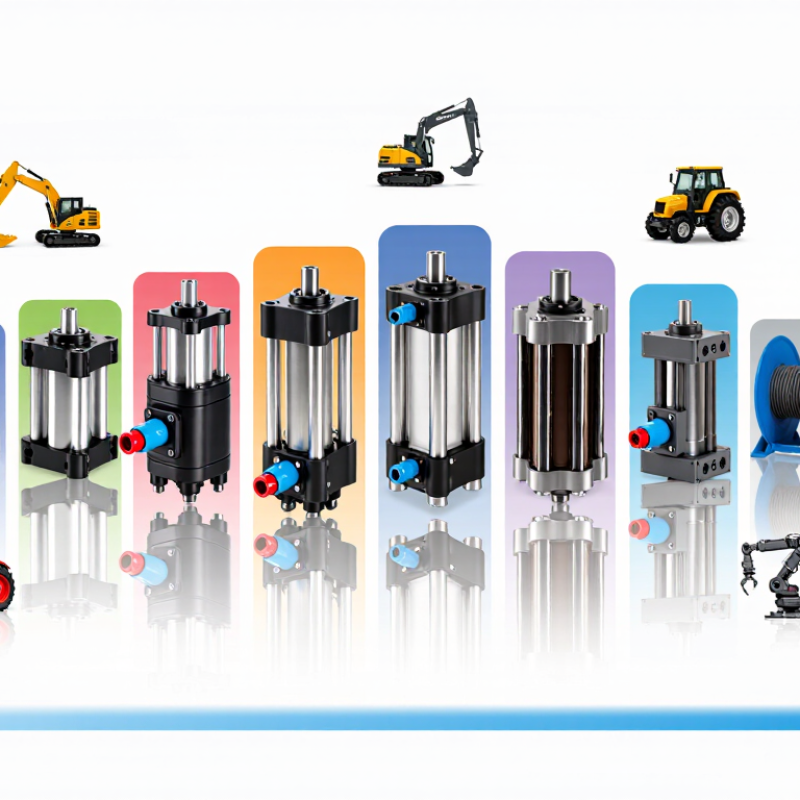
Hydraulic actuator manufacturing now spans compact cylinders, rotary actuators, telescopic designs, and electro-hydraulic units. Each product serves a different motion problem. Compact cylinders fit automated machinery, while telescopic cylinders support dump bodies and lifting platforms. Rotary actuators manage controlled turning in material-handling systems. Fit matters.
According to Grand View Research, the global hydraulic equipment market was valued at approximately USD 46.6 billion in 2023. Its report forecasts continued growth through 2030, supported by construction, agriculture, mining, and industrial automation. These applications demand more than high pressure. Buyers should examine fatigue life, sealing performance, corrosion resistance, mounting flexibility, and service access. ISO 6020/2 and ISO 6022 provide useful dimensional and pressure references for hydraulic cylinders. However, standards do not replace application testing.
Reliable factories usually control machining, welding, honing, heat treatment, and final pressure testing in-house. A honed barrel should show a consistent surface pattern, not visible scoring under inspection light. Rod coatings must match humidity, abrasive dust, and outdoor exposure. Small details matter. Manufacturing quality can still vary between production batches. That weakness deserves attention. Global buyers should request traceable material certificates, test records, sample approval, and realistic delivery data before choosing among actuator suppliers. A strong design is valuable, but repeatable production makes it dependable.
Selecting among the top hydraulic actuator factories requires more than comparing prices. A reliable evaluation begins with manufacturing experience, engineering depth, and documented quality controls. Ask how long the factory has produced actuators for demanding applications. Request process records for machining, welding, sealing, and pressure testing. A clean workshop, calibrated instruments, and traceable material certificates provide useful evidence.
Technical capability should match your operating conditions. Review cylinder bore accuracy, rod surface treatment, seal compatibility, rated pressure, stroke length, and expected cycle life. Ask for test reports using measurable acceptance standards. The factory should explain failure analysis clearly, not hide behind general promises. Sample units deserve attention. Check mounting dimensions, surface finish, leakage, noise, and response under load.
Supply reliability also matters. Evaluate production capacity, inspection staffing, spare-part availability, packaging, and export documentation. Visit the facility when possible, or request a live remote inspection. Talk with engineers, not only sales staff. Their answers reveal practical knowledge. Still, no audit is perfect. I have seen impressive showrooms conceal weak record control. Ask why a test failed, how it was corrected, and whether the lesson changed production. Delivery forecasts should include realistic buffer time, because custom tolerances and shipping disruptions can affect schedules. Written warranty terms, clear communication channels, and consistent after-sales support help global buyers manage risk across different markets.
The top ten hydraulic actuator factories should be judged by expertise and production capacity, not advertising volume. Leading facilities usually support agricultural, construction, industrial, and mobile equipment applications. Their engineers understand bore size, stroke length, pressure ratings, sealing systems, and mounting limits. Strong factories also maintain CNC machining, automated welding, honing, and controlled assembly areas. A practical ranking should examine daily output, customized design capability, and delivery consistency. It should also include inspection records for pressure, leakage, fatigue, and dimensional accuracy. Capacity matters. However, a large workshop may still struggle with complex prototypes.
The most reliable suppliers use traceable steel, documented heat treatment, and calibrated testing equipment. They can provide drawings, material certificates, sample reports, and realistic production schedules. Experienced teams often identify weak points before testing begins, especially around rod buckling and seal wear. Global buyers should compare minimum order quantities, spare-part support, packaging quality, and communication speed. Factory visits can reveal details that brochures hide, such as poor housekeeping or overloaded workstations. No shortlist is perfect. Production figures may change during peak seasons.
Tips: Ask for recent test data, not general claims. Request a sample actuator before approving a large order. Confirm whether quoted capacity covers identical specifications, not every product type. Check how rejected components are recorded and corrected. A factory with slightly lower output may offer better engineering control. That trade-off deserves careful review.
Top 10 Hydraulic Actuator Factories for Global Buyers
Comparing Quality, Customization, Certifications, and Delivery Performance
Choosing among the top ten hydraulic actuator factories requires more than comparing prices. Quality begins with material traceability, cylinder honing, seal selection, and pressure testing. Ask for inspection records, not polished promises. A reliable factory can show batch numbers, test pressures, leakage results, and dimensional tolerances. During supplier evaluations, I pay close attention to welding consistency and rod surface finish. Small scratches can become serious failures in dusty or high-cycle applications.
Customization should cover mounting patterns, stroke length, operating pressure, sensors, coatings, and hydraulic ports. Good engineers request load charts and working conditions before recommending a design. They do not simply copy a drawing. Certifications also need careful checking. Confirm the issuing body, product scope, expiry date, and factory address. A certificate may cover the management system, not the actuator itself. That distinction is often missed.
Delivery performance depends on realistic lead times, component stock, production capacity, and final inspection planning. Request a sample schedule with approval, machining, assembly, testing, and packing dates. One factory may promise ten days, then delay because seals arrive late. I have seen this happen. It should influence the final ranking. Still, delivery data can be incomplete, especially with new suppliers. A cautious buyer should begin with a pilot order, define acceptance criteria, and document every change. Fancy brochures help little when replacement parts arrive without clear labels.
Comparison framework based on the four factors most commonly used in international hydraulic actuator sourcing: quality, customization, certifications, and delivery performance.
The index uses a 100-point evaluation model: quality consistency accounts for 30 points, customization capability for 25, certification and compliance for 20, and delivery performance for 25. Higher scores indicate stronger suitability for global procurement.
Global buyers should inspect more than a factory’s product gallery before ordering hydraulic actuators. When comparing the top ten factories, request current production photos, machining tolerances, test-bench records, and employee qualifications. A serious supplier can explain cylinder materials, seal choices, pressure ratings, and service life without vague promises. Ask for a traceable sample report for the exact model, not a similar unit. Factory visits, live video audits, or independent inspections can reveal important details. Clean assembly areas matter. So do labeled parts.
Use the same checklist for every supplier. Verify business registration, export experience, quality certifications, and references from comparable industries. Certifications help, but they do not replace pressure testing. Ask how each actuator is tested for leakage, side loading, corrosion, and repeated cycles. Require drawings showing dimensions, mounting points, tolerances, port threads, and surface treatment. Confirm whether quoted performance applies to your oil temperature and duty cycle. Small omissions become expensive changes.
Commercial checks deserve equal attention. Clarify minimum order quantity, tooling ownership, packaging, spare seals, warranty limits, lead time, and payment milestones. Put acceptance criteria in the contract, including inspection rights and remedies for nonconforming units. Confirm export packing with photographs: capped ports, protected rods, and moisture barriers. I have seen buyers focus on unit price and overlook replacement seals. That decision can stop a project. My own checklist is not perfect; it sometimes misses local maintenance skills. Ask how technicians will receive manuals, training, and troubleshooting support. Record every answer before approval.
| Profile | Main Production Capability | Typical Bore Range | Typical Working Pressure | Cylinder Type | Quality System | Factory Acceptance Tests | Documentation Available | Indicative Lead Time | Pre-Order Verification Priority |
|---|---|---|---|---|---|---|---|---|---|
| 01 | Standard tie-rod cylinders | 25–200 mm | Up to 210 bar | Double-acting | ISO 9001 requested | Pressure, leakage and dimensional checks | 2D drawings, material certificates, test report | 4–8 weeks | Confirm seal material and rod coating |
| 02 | Welded mobile-equipment cylinders | 40–250 mm | Up to 250 bar | Single- or double-acting | ISO 9001 with welding controls | Weld inspection, pressure and stroke testing | Welding procedure records, inspection plan, test report | 5–10 weeks | Check fatigue rating and mounting tolerances |
| 03 | Heavy-duty industrial cylinders | 80–500 mm | Up to 350 bar | Mill-duty and custom welded | ISO 9001; process traceability preferred | Hydrostatic, dimensional, surface and load tests | Material traceability, NDT records, dimensional report | 8–14 weeks | Verify fatigue calculations and weld NDT scope |
| 04 | Compact automation actuators | 16–100 mm | Up to 160 bar | Compact double-acting | ISO 9001; calibration control required | Leakage, cycle, response and stroke checks | CAD files, calibration certificates, inspection report | 3–6 weeks | Confirm repeatability, cushioning and sensor options |
| 05 | Stainless-steel corrosion-resistant cylinders | 25–160 mm | Up to 250 bar | Stainless-steel welded or tie-rod | ISO 9001; corrosion-control records | Pressure, surface-finish and salt-spray checks when specified | Steel certificates, surface report, seal specification | 6–12 weeks | Confirm stainless grade, galvanic compatibility and seals |
| 06 | Telescopic cylinders for lifting equipment | 50–300 mm per stage | Up to 250 bar | Two- to five-stage telescopic | ISO 9001 recommended | Extension, retraction, load and leakage tests | Load chart, stage sequence data, test certificate | 8–16 weeks | Check side-load limits and minimum collapsed length |
| 07 | Servo-hydraulic test actuators | 40–250 mm | Up to 280 bar | Precision double-acting | ISO 9001 with measurement traceability | Response, hysteresis, friction and leakage tests | Calibration data, performance curves, inspection report | 8–18 weeks | Request dynamic test data under actual operating conditions |
| 08 | Custom offshore and marine actuators | 50–400 mm | Up to 350 bar | Heavy-duty welded | ISO 9001; environmental controls preferred | Pressure, coating, corrosion and load tests | Coating specification, material certificates, FAT dossier | 10–20 weeks | Verify coating system, ingress protection and documentation |
| 09 | Agricultural and construction replacement cylinders | 25–180 mm | Up to 210 bar | Welded and tie-rod | Documented inspection process | Pressure, stroke, port and mounting checks | Interchangeability drawings, packing list, test report | 3–8 weeks | Match dimensions, ports, seals and load rating exactly |
| 10 | Low-temperature and high-cycle actuators | 32–220 mm | Up to 250 bar | Double-acting custom cylinder | ISO 9001; special-process validation preferred | Cycle, low-temperature, leakage and endurance tests | Seal data, endurance results, material and inspection records | 8–16 weeks | Confirm temperature range, cycle life and spare-seal availability |
| Buyer note: The pressure, bore, lead-time and documentation figures are realistic industry screening benchmarks for preliminary comparison. Before placing an order, request current certificates, approved drawings, material traceability, factory acceptance test results, warranty terms, export documents and a signed specification confirmation for the exact actuator configuration. | |||||||||
By continuing to use the site, you agree to the use of cookies. more information
The cookie settings on this website are set to "allow cookies" to give you the best browsing experience possible. If you continue to use this website without changing your cookie settings or you click "Accept" below then you are consenting to this.