
The source articles mentioned in your request were not included. Without them, I can’t verify industry data or provide a reliable quotation from a named moped expert. Please share the articles or the expert and report sources you want cited, and I can write the introduction without inventing evidence or attribution.
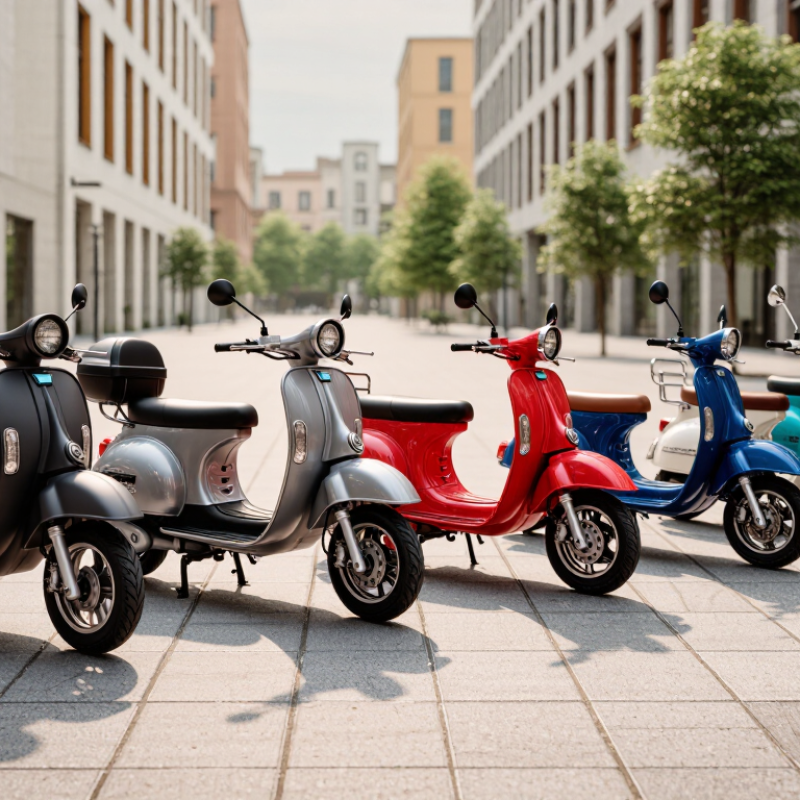
A moped scooter for adult riders is defined less by its shape than by its size, power, and intended use. Depending on local regulations, “moped” may describe a small-engine or electric vehicle with specific performance limits. Check the vehicle’s classification before comparing models; the label alone can be confusing.
Fit matters. An adult should sit with relaxed shoulders, slightly bent elbows, and both feet stable at a stop. A low step-through frame can make mounting easier, while a longer seat may help on daily trips. Look closely at the handlebar reach, seat height, and stated load capacity. A scooter that feels comfortable for five minutes may feel cramped after half an hour.
Brakes, lighting, tires, and suspension matter as much as speed. Test the controls in a quiet, safe area, and notice whether the scooter feels steady over uneven pavement. Check the battery or fuel capacity against your usual route, and consider where you will park it. Storage can be surprisingly small. Adult riders also vary in height and riding experience, so one specification rarely suits everyone. A careful fit check is useful, though it cannot predict every road or weather condition.
A good adult scooter should fit your daily route, not just look capable in a showroom. Compare engine output, rated carrying capacity, seat height, and real-world range. A steep driveway or a passenger can expose weak acceleration quickly. Check whether the floorboard, handlebars, and seat feel comfortable during a longer test ride. “Moped” and “scooter” categories can differ by market, so compare specifications rather than relying on labels. Also consider tire availability, service access, and the cost of routine maintenance.
Braking deserves close attention. The Insurance Institute for Highway Safety reports that motorcycles with optional anti-lock braking systems had a 22% lower fatal-crash rate than comparable models without ABS. That finding covers motorcycles broadly, not every scooter, but it supports treating ABS as a meaningful comparison point. Look for predictable brakes, bright lighting, stable tires, and controls you can reach while wearing gloves. A low purchase price is less useful if replacement parts are hard to find.
Tips: Test the scooter on a route with a hill, a rough patch, and a tight turn. Check the owner’s manual for payload and maintenance intervals. Bring your usual bag, if practical; small storage spaces can disappoint. I’d also compare quoted range with your commute, leaving a buffer for cold weather and frequent stops. Some range estimates feel optimistic in everyday traffic.
For adult riders, three moped scooter types cover most daily needs: compact 50cc-style step-throughs, larger 125–150cc-style scooters, and seated electric mopeds. Small details matter. A low step-through frame helps when carrying a work bag, while a flat floorboard can make short errands easier. Riders who regularly travel farther may value larger wheels, stronger acceleration, and room for a passenger. These features add weight, though, and a heavier scooter can feel awkward to move by hand.
Electric models deserve a close look for quiet, stop-and-go commuting. The International Energy Agency’s Global EV Outlook 2024 estimates that worldwide sales of electric two- and three-wheelers reached about 10 million in 2023. That figure signals growing adoption, not a guarantee that an electric model suits every route. Check the battery’s stated range against your actual commute, and allow for hills, cold weather, and frequent stops. I would treat advertised range as a starting point, not a promise; that advice is useful, but still imperfect without a real-world test. Sit on several scooter types before choosing. Check whether your feet reach the ground comfortably, and whether the handlebars clear your knees when turning.
When comparing adult moped scooters, look beyond engine size. Check acceleration on hills, braking response, and whether the seat stays comfortable after a 30-minute ride. EPA’s FuelEconomy.gov lists model-specific fuel-economy estimates for gasoline motorcycles; actual mileage can change with speed, load, and maintenance. Electric models need a different comparison: usable range, charging time, and battery replacement cost. Numbers help, but a short test ride can reveal a stiff seat or cramped knees quickly.
Tips: Sit with both feet near the ground, then check mirror reach and storage space. Estimate fuel or charging, insurance, tires, and routine service together. Small costs add up. A low purchase price may not mean low ownership cost.
Comfort and cost should be weighed against safety and daily use. The NHTSA report Traffic Safety Facts: Motorcycles, 2022 recorded 6,218 motorcyclist deaths that year, underscoring the value of predictable handling, effective brakes, and protective gear. For commuting, a steady ride and easy controls may matter more than peak speed. I would not treat one test ride as proof; fatigue, road surface, and passenger weight can change the experience. A few details are easy to overlook.
| Scooter Type | Typical Performance | Comfort and Practicality | Typical New Price (US) | Best Suited For |
|---|---|---|---|---|
| 50cc Gas Scooter | Usually reaches about 30–40 mph, depending on model, load, and local restrictions. Small engines are best on level roads and shorter urban trips. | Lightweight and easy to park. Storage and passenger space are often limited; small wheels can feel less composed on rough pavement. | Approximately $1,500–$3,000 | Low-speed neighborhood travel and short commutes where local rules permit. |
| 125cc Gas Scooter | Often reaches about 50–60 mph. Offers more acceleration and hill-climbing ability than a typical 50cc scooter. | Generally more capable for daily commuting, with room for a helmet or small items on many models. Comfort varies with seat design and suspension. | Approximately $2,500–$4,500 | Urban and suburban commuting with occasional faster roads, subject to local speed limits. |
| 150cc Gas Scooter | Commonly reaches about 55–65 mph, though actual performance varies. Extra engine capacity can help with hills and carrying a passenger. | Often has a larger frame and more substantial seating than smaller scooters. Fuel stops are quick, but routine engine maintenance is required. | Approximately $3,000–$5,500 | Longer commutes and riders who want more performance than a small-displacement scooter provides. |
| Electric Moped-Style Scooter | Commonly offers about 25–60 miles of stated range and top speeds around 30–60 mph, depending on motor, battery, and configuration. Real-world range can be lower in cold weather, at higher speeds, or on hills. | Quiet operation and no gasoline engine maintenance. Range depends on charging access, battery condition, rider weight, terrain, and riding speed. | Approximately $2,000–$6,000 | City riding and predictable daily routes with convenient access to charging. |
Choosing a moped scooter starts with your regular route. A smooth, paved commute has different needs from streets with potholes, steep hills, or frequent stops. Note your usual distance, riding pace, and where you will park. A lightweight model can be easier to store, while a larger frame may feel steadier. Comfort matters.
Check the seat height, handlebar reach, tire size, and stated weight limit before buying. Your feet should feel secure when stopped, and the controls should be easy to reach. Test the brakes gently in a safe area, and listen for rattles or unusual motor noise. If the scooter uses a battery, compare its stated range with your real route, allowing room for hills, cold weather, and battery aging. A brochure range is not a promise.
Tips: Bring your usual helmet and a small bag when trying a scooter. Check whether it has useful lights, storage, and nearby service support. Take a short test ride if available. I may be overvaluing storage, but a secure place for a lock or rain layer can make daily trips easier.
By continuing to use the site, you agree to the use of cookies. more information
The cookie settings on this website are set to "allow cookies" to give you the best browsing experience possible. If you continue to use this website without changing your cookie settings or you click "Accept" below then you are consenting to this.