
Blog

Who Are the Top Pneumatic Seal Manufacturers in China?

Pneumatic Seals may be small, but their performance can affect an entire pneumatic system. In a factory, a worn piston seal can mean air leakage, uneven cylinder movement, and unplanned maintenance. China has a broad supplier base, ranging from specialist seal makers to larger industrial manufacturers. That variety creates opportunity. It also makes comparison harder.

This guide explores how to identify leading pneumatic seal manufacturers in China without treating “top” as a universal ranking. Product range, material options, manufacturing consistency, technical support, and documented quality practices all matter. Buyers should check whether a supplier can provide seals suited to the cylinder’s pressure, temperature, speed, and operating environment. Ask about materials such as polyurethane, NBR, or fluorocarbon, but confirm compatibility for the actual application. A catalogue is useful. It is not proof of performance.

The following overview is intended to help engineers, procurement teams, and distributors ask better questions. Look for clear product specifications, responsive technical communication, and evidence of repeatable production. Where possible, request samples and test them under realistic operating conditions. A seal that fits on a drawing may behave differently in service. Rankings can be imperfect, too; company visibility does not always reflect product consistency or after-sales support. Careful verification remains essential when choosing a long-term supplier.
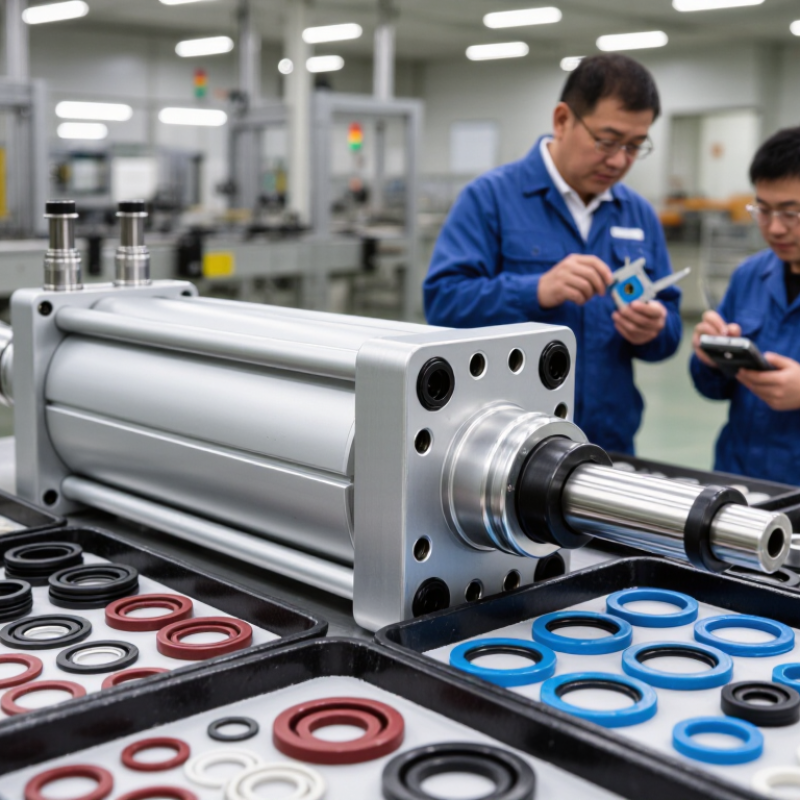
Who Are the Top Pneumatic Seal Manufacturers in China?

What Pneumatic Seals Are and How They Work

Pneumatic seals are shaped components that keep compressed air inside cylinders, valves, and fittings. They also help prevent dust from entering moving assemblies. Common types include piston seals, rod seals, and O-rings. Each sits in a groove and presses against a mating surface. The fit must be snug, but excessive tightness can increase friction.

Small parts matter.

When air pressure enters a cylinder, it pushes the piston forward. The piston seal limits air bypass, while the rod seal contains pressure around the moving rod. As the rod slides, the seal’s contact edge moves along a bore or shaft. Performance depends on material, pressure, temperature, speed, surface finish, and lubrication. Scratches, wear, or dry running may cause leaks and sluggish movement. Real equipment is not always as neat as a diagram; alignment can vary, and small defects are easy to miss.

Tips: Match the seal type and material to the cylinder’s operating conditions. Check the groove and shaft for sharp edges before installation. A seal that fits today may still wear quickly if lubrication or alignment is overlooked.

How China’s Pneumatic Seal Manufacturing Industry Is Structured

China’s pneumatic seal industry is best understood as a supply chain, not a single factory category. Upstream firms prepare elastomers and engineering plastics; component makers then form seals through molding, machining, and finishing. Downstream, equipment manufacturers and distributors specify dimensions, pressure ranges, and working conditions. The National Bureau of Statistics’ 2023 Statistical Communiqué reported manufacturing value added of 33.6 trillion yuan, up 5.0% year on year. That broad figure shows the scale of China’s manufacturing base, but it does not isolate pneumatic seals.

Many producers serve several industrial markets, from automation to packaging machinery. Larger operations may offer material testing and custom tooling, while smaller workshops often focus on standard profiles or short production runs. This mix can help buyers find flexible suppliers. It also makes quality comparisons harder. A catalog alone says little about compression set, temperature tolerance, or batch consistency. Public reports rarely separate pneumatic seals from wider rubber and sealing-product categories, so precise market-share rankings should be treated cautiously.

Tips: Request drawings, material specifications, and test records for the intended pressure and temperature. Compare samples from more than one production batch. A neat sample is useful, but it is not proof of stable production.

How China’s Pneumatic Seal Manufacturing Industry Is Structured

The chart shows a typical value chain: material compounding and tooling support seal production, followed by finishing and inspection, then supply to equipment makers and replacement-parts channels. The numbers indicate sequence only—not company rankings, market shares, or production volumes.

Which Chinese Manufacturers Are Recognized for Pneumatic Seals

Chinese manufacturers recognized for pneumatic seals generally fall into three groups: integrated pneumatic-component producers, specialist polymer-seal makers, and precision-molding suppliers. UNIDO’s International Yearbook of Industrial Statistics 2024 reports that China contributed about 30% of global manufacturing value added in 2022. That scale supports broad production capacity, but it does not prove seal quality by itself.

For buyers, useful evidence includes material traceability, dimensional inspection records, and test results under pressure and temperature cycling. ISO 3601 defines dimensions and tolerances for O-rings, a common seal type; it does not certify every pneumatic seal. Ask suppliers how they test leakage, wear, and compression set in the intended cylinder design. Look for clear drawings and batch records. Small details matter. A seal that fits a sample may still fail after repeated strokes or exposure to lubricant. I would also treat catalog claims cautiously: published data can be thin, and a polished factory tour is not a substitute for repeatable test records. Manufacturers with in-house compounding, tooling, and quality checks may offer tighter process control, though independent validation remains important.

How Manufacturers Differ in Materials, Quality, and Customization

In China, pneumatic seal manufacturers differ less by catalog size than by material control, testing, and customization. Nitrile rubber suits many standard air-cylinder applications; polyurethane often handles abrasion better, while PTFE can reduce friction in demanding conditions. These are not interchangeable choices. Temperature, lubricant exposure, pressure, and cycle speed all matter. Grand View Research estimated the global industrial seals market at USD 14.37 billion in 2022, with projected growth of 4.8% annually from 2023 to 2030. This broad market figure is not specific to pneumatic seals, but it signals sustained demand for reliable sealing components.

Quality depends on more than a material name. Ask how a supplier checks hardness, dimensions, surface defects, and batch consistency. Request test records tied to the actual seal compound and operating conditions. A polished sample may perform well, yet production variation can tell another story. Customization also separates suppliers: capable teams can adjust lip geometry, groove fit, and compound formulation, then validate prototypes in the intended cylinder. A drawing alone may miss real-world wear.

Tips: Share pressure, temperature, speed, lubricant, and target service life before requesting a quote. Ask for a sample and a clear inspection report. Small detail, big difference. Also check whether the supplier can explain why a proposed material fits your duty cycle; hesitation can be useful feedback, not just a sales issue.

Who Are the Top Pneumatic Seal Manufacturers in China? — How Manufacturers Differ in Materials, Quality, and Customization
Supplier Profile Common Material Options Typical Strengths Quality Checks to Look For Customization to Confirm Best Fit
High-volume standard-parts supplier Polyurethane (PU) and nitrile rubber (NBR) are common choices for general-purpose pneumatic seals. Broad coverage of standard piston, rod, and wiper seal sizes; suited to repeat orders and established designs. Ask for documented incoming-material inspection, dimensional inspection records, batch traceability, and a current quality-management certificate if required. Confirm available standard profiles, size tolerances, packaging, and whether non-standard sizes require a minimum order quantity. Standard cylinders, maintenance stock, and recurring production orders.
Custom-profile engineering supplier PU, NBR, fluorocarbon rubber (FKM), ethylene propylene diene rubber (EPDM), and PTFE-based compounds may be available, depending on the design. Can develop profiles for specific grooves, friction targets, pressure conditions, or equipment interfaces. Request a drawing review, material specification, sample inspection report, and validation plan for the intended operating conditions. Confirm custom cross-sections, compound selection, tooling ownership, prototype lead time, and approval-sample process. Original equipment designs, replacement seals with unavailable profiles, and application-specific projects.
Application-focused material supplier Material selection may include NBR for general air service, PU for wear resistance, EPDM for suitable water or weather exposure, FKM for many higher-temperature or chemical environments, and PTFE compounds for low-friction applications. Can help match compound properties to temperature, lubricant, moisture, wear, and media requirements. Ask for the exact compound designation and its supplier data sheet; verify that published limits apply to the selected grade and seal design. Confirm compound hardness, color, filler or reinforcement options, and compatibility with the actual lubricant and working medium. Applications where media compatibility, temperature, or friction is a primary concern.
Export-oriented production supplier Often offers commonly requested elastomer and thermoplastic seal materials; actual availability varies by product range. May provide export packaging, standardized documentation, and support for repeat shipments. Check inspection plans, calibration records for measuring equipment, lot identification, nonconformance handling, and any certification scope relevant to the order. Confirm drawing formats, labeling, packaging requirements, inspection-document formats, and sample retention policies. Overseas buyers needing controlled purchasing documentation and repeatable shipments.
Integrated seal-and-cylinder supplier Material choices are generally tied to the cylinder design and its specified operating environment. Can coordinate seals with cylinder grooves, assembly methods, and the broader pneumatic component design. Ask how the assembled cylinder is tested, what leakage criteria are used, and whether seal batches can be traced to finished products. Confirm whether design changes cover the seal only or also the cylinder groove, piston, rod, and assembly process. Projects sourcing complete pneumatic cylinders or coordinated component assemblies.
How to use this comparison: These are generic supplier profiles, not named companies or a verified ranking of manufacturers. Material suitability and operating limits depend on the specific compound, seal geometry, pressure, speed, temperature, and medium. Request current technical data, samples, and application-specific test results before selection.

What Buyers Should Evaluate When Choosing a Supplier

When evaluating a pneumatic-seal supplier in China, compare more than unit prices. Check whether its seals match your cylinder’s groove dimensions, pressure range, speed, temperature, and working fluid. A seal that looks correct on a drawing can still leak after installation. Small tolerances matter.

The U.S. Department of Energy’s Improving Compressed Air System Performance guide estimates that leaks can waste 20–30% of compressor output in poorly maintained systems. Ask suppliers how they test leakage and record results by production batch, rather than accepting a generic “passed” statement. Request material certificates, dimensional inspection data, and traceability for each lot. ISO 2859-1 provides sampling plans for inspection, but a standard alone cannot prove a supplier’s process is consistent. Ask to see recent inspection records.

Also evaluate communication and corrective-action practices. How quickly does the supplier investigate a failed sample? Can it explain the cause and document the fix? A polished audit does not predict every production problem. I would ask what went wrong in a recent batch, then check whether the response includes evidence, not just reassurance. Delivery reliability matters too, especially when custom tooling or replacement seals could delay maintenance.

By continuing to use the site, you agree to the use of cookies. more information

The cookie settings on this website are set to "allow cookies" to give you the best browsing experience possible. If you continue to use this website without changing your cookie settings or you click "Accept" below then you are consenting to this.

Close